A lot of what is deemed "woke" is important in the fight for a more just world. There are more sophisticated ways to discuss what's wrong with the left.
Just when it seemed as if interminable battles over “wokeness” may have finally died down, the New York Times has run an op-ed originally called “I’m a Socialist. Wokeness Is Still the Left’s Biggest Liability.” (It has now been retitled “Woke 1 Was Crazy — and It’s Still Here.”) I have a great deal of respect for the prior work of the writer, Meagan Day, whose piece on sabbaticals I use in my writing classes as an example of good prose. But her Times op-ed is a good example of a tendency that I think is unhelpful in trying to analyze left politics, namely using the vague word “wokeness” to lump together a bunch of different things that need to be analyzed separately.
Day begins by noting that socialists are doing well in American politics right now. Zohran Mamdani’s approval rating is high, DSA membership is soaring, and a new crop of democratic socialist politicians is heading to Congress. “The left has the best opportunity in decades to showcase its politics and values,” she argues. I agree with this: socialism’s moment is here. However, Day says, one thing threatens the left’s successes: the phenomenon that used to be called “political correctness, then call-out culture, then cancel culture and now wokeness.” She also calls it “identity politics,” saying that “if our movement doesn’t distance itself from identity politics, we could jeopardize everything we’ve achieved.”
The fact that this thing, or position, or idea, or tendency, goes by so many names—most of them applied pejoratively—should already make us worry that we might be talking about something rather ill-defined. “Cancel culture,” for instance, is different from “identity politics.” Identity politics sees shared group identities like race and gender as politically important, while “cancel culture” refers mostly to a style of social media discourse in which those who say something considered offensive are “canceled,” which in practice usually translates to being deluged with negative comments online. These two things are not the same, obviously, and you could believe that cancel culture is an unproductive way to engage with those we disagree with while also believing in the political importance of race and gender. Or you could see race and gender as relatively unimportant while believing that there is no moral or political problem with people getting deluged with negative comments on social media, since this is the mere free expression of public opinion.
To clarify what she’s referring to in her piece, Day gives a number of examples of this bad wokeness/identity politics/cancel culture/call-out culture/political correctness. These are:
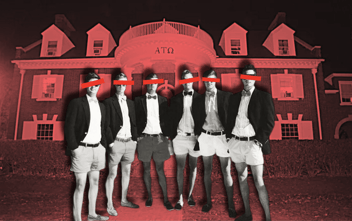
- When Day was a student at Oberlin College in 2009, some students held a Mexico-themed party. Rumors spread across campus that offensive costumes had been worn, and there was a protest.
- When Day was at Oberlin College, a group of students protested cliques in the dining co-op by holding up a rude sign.
- In 2020, Democratic lawmakers wore kente cloth and took a knee to demonstrate their sympathy for the Black Lives Matter movement in the wake of George Floyd’s killing.
- Columbia University cracked down on student Palestine protests in part because some Jewish students said they “felt unsafe,” which is a “woke term.”
- Some in DSA have argued that applause is ableist.
- The Twin Cities DSA argues for returning sovereignty over Minnesota to indigenous tribes.
- Ro Khanna celebrated Hakeem Jeffries’ leadership of the House as a victory for DEI.
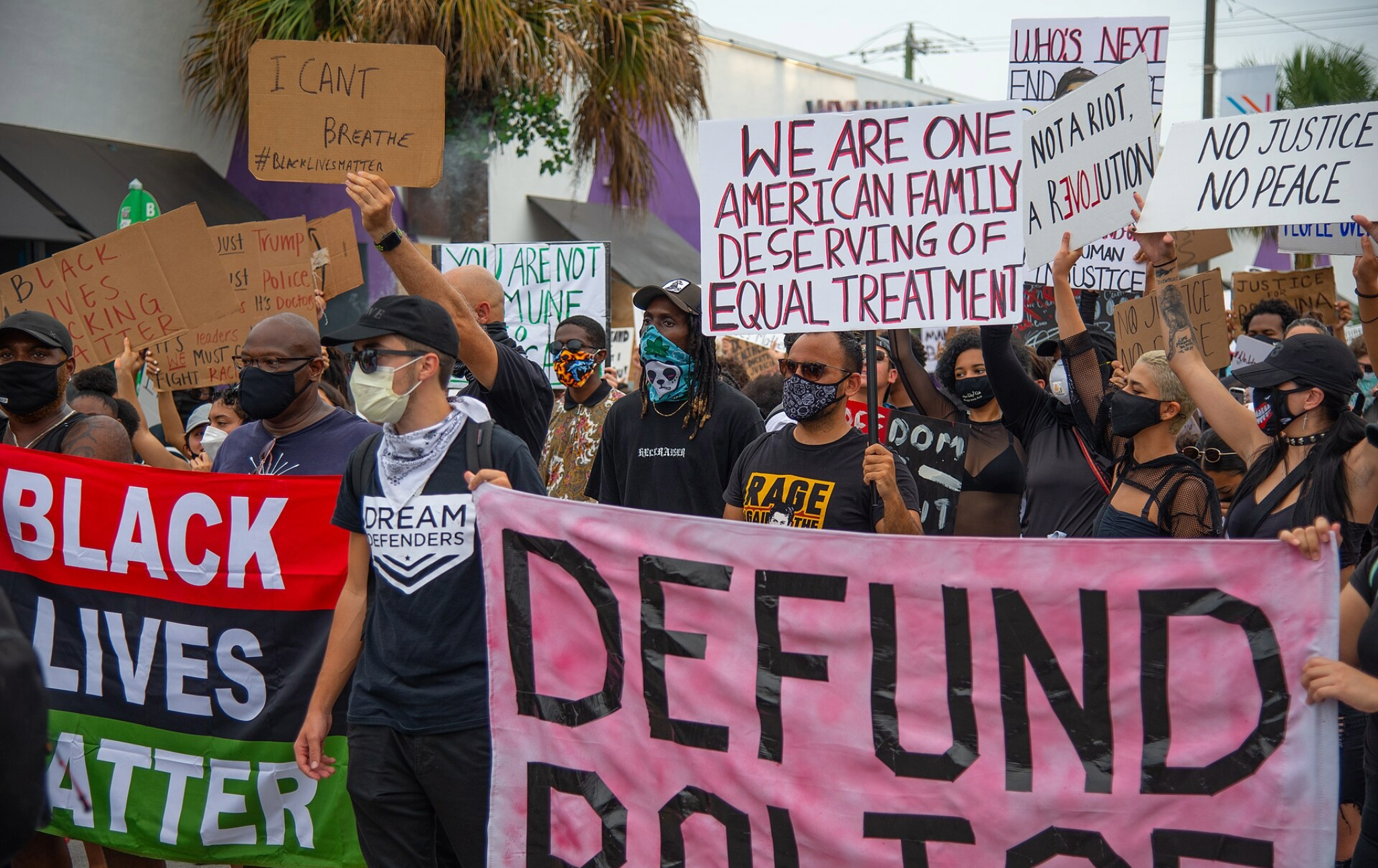
- Rashida Tlaib and Ilhan Omar supported 2020 “defund the police” protests.
- Those who issue “anything short of calls for complete prison abolition” have long been “met with reflexive accusations of racism on the left.”
Day summarized that:
Wokeness is not about a basic concern for social justice. It hyperfocuses on language and identity, fights dirty from the moral high ground and mandates deference to self-appointed spokespeople for marginalized groups. It conflates disagreement with harm, and keeps careful watch for heretics.
This may all look like it achieves precision in helping us understand what we are talking about when we talk about “wokeness,” but I think this list of disparate events actually only further reveals what a mess “wokeness” discourse is. As I read Day’s op-ed, I couldn’t help but sing that classic Sesame Street song “One of These Things (Is Not Like The Others)” when she began discussing police and prisons.
After all, I perfectly well agree with many of Day’s individual points, such as the critique of meaningless symbolic protests like Nancy Pelosi donning kente cloth. I also agree that “identity politics” is often used cynically by those in power to justify the status quo—what radical Black activists often call putting “Black faces in high places.” Making the pro-corporate, pro-Israel Hakeem Jeffries the Speaker of the House, and celebrating it as a victory for social justice, is an example of what happens when the narrowest conception of “DEI” is adopted. I also agree that college students do not always launch sensible protests, although I tend to think this is the predictable, well-intentioned, largely harmless behavior characteristic of young idealists learning activism, and not because they’re infected with what Elon Musk calls the “woke mind virus.” I also agree that excessive deference to subjective feelings of feeling “unsafe” is a bad justification for suppressing something, as the Palestine protests show.
On the other hand, I think some aspects of Day’s op-ed show insufficient interest in the concerns of anti-racist, Indigenous, and disability activists. I know everyone likes to use “clapping is ableist” as the example of peak woke nonsense, but the reason this debate exists within DSA is that DSA, unlike many other groups, actually tries to operate as if disabled people matter and should be accommodated. There are autistic people for whom it is difficult to be in a raucous, crowded room, and DSA makes efforts to create a space where they can still participate rather than simply having to avoid the convention. You might argue that clapping is such an important social ritual that it should not be ditched to accommodate a small number of people, or that silent clapping is performative rather than actually helpful. But that’s an argument that needs to be made. Mockery is not an argument.
On police and prisons, however, I think Day is simply wrong to lump prison abolition in with Ro Khanna honoring Hakeem Jeffries, or Oberlin kids protesting their dining hall. As civil rights lawyer Alec Karakatsanis explains, “the weaponization of identity—which was led by and benefits corporate, neoliberal, establishment forces—is entirely different from substantive critiques of the size, power, and profit of the policing and punishment bureaucracy.”
Day, in a subsequent exchange, called prison abolition “nonsensical,” a product of the “reflexive maximalism of woke dynamics.” But the belief that we should try to build a world in which prisons are unnecessary has a long tradition on the left. Prisons are hellholes, and leftists have claimed that instead of throwing people who misbehave into cages, we should try to build a society in which people do not harm each other to begin with. Prisons are an easy, cruel fix. As Angela Davis writes in Are Prisons Obsolete?, they create a “site into which undesirables are deposited, relieving us of the responsibility of thinking about the real issues afflicting those communities from which prisoners are drawn in such disproportionate numbers. This is the ideological work that the prison performs—it relieves us of the responsibility of seriously engaging with the problems of our society…”
Anti-prison politics has a proud heritage, from Eugene Debs (“While there is a soul in prison, I am not free”) to Johnny Cash. Here’s Clarence Darrow in his famous, forceful address to the inmates of the Chicago jail:
“There should be no jails. They do not accomplish what they pretend to accomplish. If you would wipe them out, there would be no more criminals than now. They terrorize nobody. They are a blot upon civilization, and a jail is an evidence of the lack of charity of the people on the outside who make the jails and fill them with the victims of their greed.”
Now, when people hear prisons as an institution condemned, they instantly think you’re suggesting letting all of the world’s serial killers out to roam free. We are not talking about that, though. I’ve written before about how seeing prisons as an inherent evil, and a social failure, does not mean that we think it is possible to rid ourselves of them by noon tomorrow, but instead to think about what the path toward a world that has neither prisons nor rampant interpersonal violence would be.
You may be extremely skeptical that such a world is possible. Day certainly is. When I said I was not so pessimistic as to think that we will always need to throw some people in cages, Day told me that she was this pessimistic, because she believes that a certain percentage of men are naturally prone to violence, and will always rape and kill unless they are threatened with punishment. She says there is a population “higher in aggression, lower in empathy, and have worse impulse control, regardless of the economic system.” Personally, I am highly skeptical of biological determinist statements in general, because I think we simply don’t know how much of the tendencies we see are the product of the society in which we find ourselves. With harms committed by men, there is good reason to think that at the very least, they can be vastly reduced. It’s true that men commit 90 percent of murders worldwide, but it’s also true that Japan’s murder rate is around 4 percent of the United States’ murder rate. When people criticize prison abolition, they sometimes concede that property crimes might be eliminable, but see violence as an ineradicable feature of human nature. But we know that it’s at the very least possible, even in the world we have today, for a society to have 95 percent less murder than the United States has.
And we also know that there are peaceful societies that have almost no violence, such as the Semai people in Southeast Asia, who socialize their members to react negatively to violence in a way that inhibits them from committing it as they grow older, and who stigmatize aggression and anger. I am not saying that building such a society is easy. But it’s easy for Americans to overestimate how violent humans are “by nature” because we happen to live in an excessively violent society. A nurturing and peaceful society can substantially reduce violence, just as a violent one creates a neverending cycle. Most of the people in our jails and prisons—84 percent, according to recent studies—were themselves victims of violence before being imprisoned, creating a “victimization-to-incarceration pipeline”
We also know that there are lots of ways in which male abuse is clearly a function of the kind of society we live in. Someone asked me online whether, as a skeptic of prisons, I think Russell Brand should be a free man. My answer is not that I think Russell Brand himself should have his conviction overturned, but that we should prevent the next Russell Brand from arising in the first place, so that there is neither the abuse itself nor the resulting imprisonment. Brand is an excellent example of how crime is enabled by conditions. He was rewarded for pushing boundaries, and protected by a “culture of silence” within institutions. Brand was given opportunities to commit harm, and protection from consequences, because of his fame and wealth.

It is of course unproven whether a human society could ever be constructed in which interpersonal harm never occurs. That’s outright utopian. But it’s also true that we don’t necessarily need prisons to deal with the harms that do occur. Even if Day’s biological determinist arguments about the inevitability of male aggression were proven true, this does not itself show that dangerous aggression cannot be identified early on and dealt with through treatment rather than through caging. We simply do not know the degree to which a compassionate and nurturing society, which treated harmful behavior as a medical problem rather than a problem requiring imprisonment, could succeed in eliminating violence, because we have never tried to build such a place. I hold with leftists like Eugene Debs that we should see prisons as a failure, and that until we have figured out a better way of keeping people from hurting each other, we cannot consider ourselves to live in a free society.
Day argues that today’s socialists are succeeding in part because they are laser-focused on the things that matter most: universal healthcare, a Green New Deal, building union power, and that “wokeness” is a distraction that will destroy our movement. I certainly agree that leftists should center these universal, material demands. But I also deeply appreciate the important social justice issues raised by Black Lives Matter, the trans rights movement, disability justice activists, feminists, and Indigenous activists, and I think we ignore those struggles at our peril. When we use “woke” as a pejorative, for instance, we are embracing the right-wing redefinition of the term as a catch-all for every left excess, when it was originally used by anti-racist activists to refer to the necessity of staying alert to racism. (The folk artist Lead Belly used the phrase “stay woke” as a caution to Black listeners after performing his 1938 song about the Scottsboro Boys, which I discussed in an fascinating conversation with blues musician Samuel James on the Current Affairs podcast a few years ago.) In the Guardian earlier this year, writer Andre Gee explained why he is exasperated by leftists casually adopting “woke” as a pejorative in the same way that right-wingers do:
[...]Ocasio-Cortez and Ossé evoking “woke” with the same pretense as these sectarian conservatives is cringeworthy. And when they do it to scoff at a movement against the police system’s predation of Black people, it’s dangerous. These comments come at the same time that Maga-world is engaged in a full-scale assault on Black people’s past, present and future, including the rollback of diversity measures leading to mass layoffs of Black employees, the systematic erasure of Black history from schools and attempts to repeal our voting rights. The phrase “Woke 1” is also off-putting because it’s dismissive of the work that abolition advocates and social justice organizations have been doing before and after 2020. What happened at the start of the decade wasn’t momentary advocacy; it’s in lockstep with what freedom fighters have been seeking since the inception of this country. It behooves some Democrats to realize the vitality of grassroots movement work isn’t dependent on photo ops and national headlines.
As a socialist, I certainly do not see wokeness as our biggest problem. In fact, Day’s op-ed seems a bit outdated. This battle has been won: activists against mass incarceration have been sidelined, prominent left politicians like AOC now talk of “Woke 1” as being dead and buried, and those deemed excessively “woke” (like Francesca Hong) are treated by many as an embarrassment. I think the risk right now is actually the opposite: that the new socialist movement, eager to win majority support and portray itself as moderate, will abandon causes that are deemed too unpopular or risky.
Of course, it’s true that there are tendencies among the social justice left that are anti-solidaristic and undermine the left. I don’t particularly like it when we treat fellow leftists as worthless or traitors when they have one bad opinion. I don’t denounce Jacobin as an institution when they publish one (or ten) articles I roll my eyes at. But I do think the New York Times probably published Day’s piece in part because they are anti-left. They don’t often let socialists into their op-ed pages, so it doesn’t surprise me that when they did, it was a socialist criticizing other leftists. The Times is not our friend, and they are delighted to stoke the revival of the wars over wokeness within the socialist movement. Personally, I think internecine fighting is actually a much greater threat than “wokeness” to the left’s potential, which is why I find it so depressing to see Day taking to the Times to mock other leftists, rather than trying to build bridges. Beefs, schisms, feuds: these, along with the rapaciousness of the billionaire class, seem to me a truly devastating potential threat to our future. And so to be clear, I do not have any kind of “beef” with Day. I simply disagree with one article she wrote. But we are, and must remain, part of the same socialist movement, and must resolve these disputes in a comradely spirit.
It seems to me like we can adopt a nuanced position: there are ugly features of “cancel culture” that we should abandon, neoliberal identity politics uses racial representation to make the elite look more just than it is, symbolic protests and fixation on linguistic choices are no substitute for class politics with meaningful demands—and, at the same time, much of what is deemed “woke” is a valid attempt to create justice for everybody across many identity groups.