
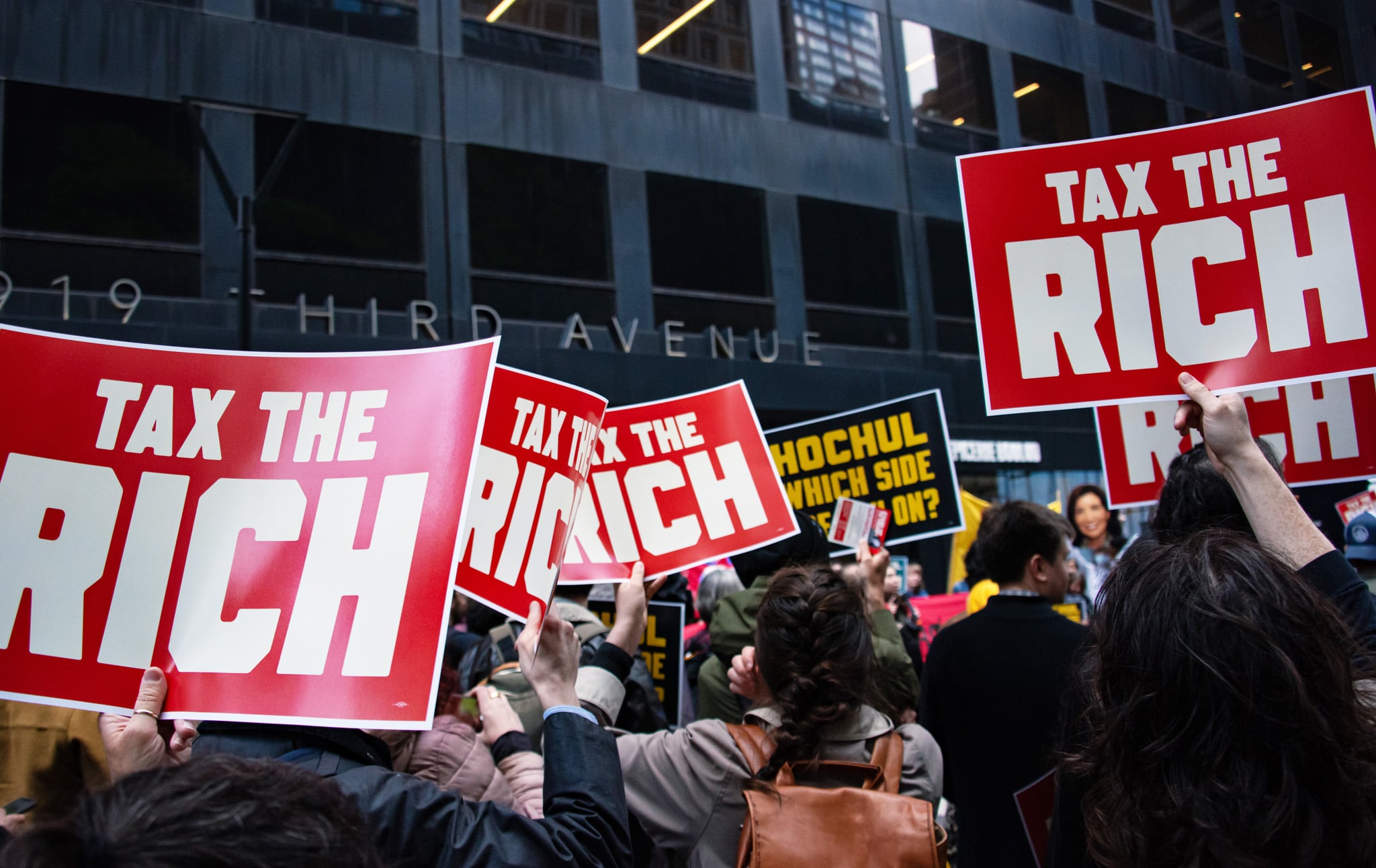
With a flurry of election victories, nonstop media attention, and a shift in public opinion, the fortunes of the American left are finally starting to turn.
I’ll confess that I have been, to use a British-ism, somewhat chuffed to read headlines in newspapers and magazines like the following:
- Socialism Is Here—and It’s Serious
- How Democratic Socialists Are Shaking Up the Midterms
- A Small Band of Socialists Is Sowing Panic in the Democratic Party
- How American Socialism Changed, and Stormed the Democratic Party
- America’s Democratic Socialists are having the summer of their lives
It goes on and on. The Washington Post reports that “for leaders of the country’s democratic socialist movement, 2026 has been a year of successes beyond anything they had dared to hope.” There are profiles of Hasan Piker in glossy magazines like Rolling Stone. Zohran Mamdani is on the cover of TIME. Fox News is having daily freakouts, where they recite the Radical Socialist agenda, and often make it end up sounding quite appealing. Membership of the Democratic Socialists of America (DSA) has soared to over 120,000, meaning it now has more members than the original 1900s Socialist Party had during the peak period of its success in the Eugene Debs era.
As the editor of a socialist magazine, I’ve been delighted to watch this unfold, especially because it took so long for us to get here. Being on the left in the United States has meant losing over and over again, then going back and losing some more, and hoping that someday if you just keep at it enough, eventually your ideas will catch on and build momentum and something will finally start to change. And I have to say, there were points (like when Donald Trump was elected for a second time) that it was hard to sustain that faith. But it’s finally starting to seem like all the work was worth it.
Back in the days of Occupy Wall Street, a crucial event for leftists of my own generation, the left was still kind of fumbling around, unsure of how to turn a general sense of dissatisfaction with the country’s economist structure into a clear set of ideas, a program, and a strategy for actually changing anything. Protesters occupied public spaces, furious at the size of the gap between the 99 percent and the one percent, but famously, the movement had no demands and no leaders. It did not run candidates for elected office.
In the years since, the left has gone from formless to professional, serious, and strategic. Jacobin magazine, founded around the time of Occupy, was something new in socialist literature: well-designed, well-edited, with pieces that argued the case for socialist ideas clearly and effectively. The 2016 Bernie Sanders presidential campaign, of course, was transformative. Bernie showed how a democratic socialist campaign built around a clear set of tangible demands, ambitious but within the realm of the plausible (expanding Medicare to cover everyone, raising the minimum wage to $15, eliminating college tuition, transitioning away from fossil fuels), could excite people and organize effectively, to the point of becoming nationally competitive against the “establishment” Democratic candidate. Sanders’ run ended in defeat, but he scared the hell out of many of the party leaders, winning 23 primaries and 43 percent of the vote. Furthermore, many people who voted for Hillary Clinton said they thought she was the candidate more likely to prevail in a general election. When she went on to lose to Donald Trump, it vindicated many of the arguments that Sanders had been making about the failure of centrist, pro-corporate Democrats to offer a politics that appealed to ordinary Americans. Some Democrats started to sound more like Bernie Sanders after he lost.
After Donald Trump’s 2016 election, DSA membership exploded. I’ve interviewed many people who joined the group in that time, and disaffection with the Democratic Party, and a belief that Sanders had been onto something, was hugely important in driving them into the socialist movement. There were, of course, plenty of people who arrived at socialism the “old-fashioned” way, seeing how bosses exploited workers, reading some pages of Eugene Debs or Karl Marx, and coming to understand class struggle as the most important framework for understanding the way the world works. But there were many others who simply saw that Sanders and the DSA were the only political factions in the U.S. that actually seemed to give a damn about the most pressing problems of our time. Socialists win “because they listen to people,” as a recent New York Times op-ed put it.
One of the reasons socialists and those on the non-socialist left (e.g., Abdul El-Sayed) were given a major political opening is that the mainstream Democratic Party has been objectively terrible at meeting the political moment during the last ten years. If you lose an election to Donald Trump, a con man, serial liar, abuser of women, and jabbering fool, you are bad at your job. Hillary Clinton failed to stop Trump because she was totally unable to convince Americans that she wanted to be president because she had plans for how to deal with the crises they faced, rather than because she simply felt entitled to the job. When Democrats did squeak into office in 2020—Joe Biden barely scraped into the role, even after Trump had overseen a catastrophic Covid response that resulted in hundreds of thousands of deaths—they had a president who was clearly in decline, and couldn’t possibly communicate effectively. Biden had to avoid media appearances, and as the cost of living continued to rise and people didn’t see much change in their lives, his administration made the disastrous decision to blame the media for people’s discontent. “Your life is going better than you think it is” is a terrible political message.
It is not the message that socialists have offered. The DSA program is called “Workers Deserve More!” Socialists lead by saying that all people have certain fundamental rights: we have a right to a decent job that pays well, where we are not exploited or abused; we have the right to good, healthy food, to a quality public education, to basic healthcare. We have the right to good roads, good public transit, and fair elections that aren’t bought by billionaires. We have the right to have our tax money spent to build parks and libraries, not to fight wars that the majority of Americans are against. For socialists, these rights are non-negotiable. If a society is not fulfilling them, for each and every individual, then it is failing. And since everyone can see that these rights are not being fulfilled for everyone, the 21st century U.S. is failing in its basic obligations, and therefore there need to be major political and economic changes.
This is the case that socialists make. It is tight and it is compelling, because it is true. And not only do socialists come with a case against things as they are, they come with plans for how to make them better. Bernie ran on Medicare For All, not because it is the most “socialist” plan one could imagine (it doesn’t nationalize healthcare, like the U.K., it just nationalizes the insurance system), but because it is a targeted way of addressing the frustrations people have with their healthcare—namely that they spend too much money on it. Our healthcare system is incredibly cruel. I know someone grieving their recently-departed spouse, who is being doubly overwhelmed by having to deal with the exorbitant medical bills for her care that are now showing up. Hitting people with tens of thousands of dollars in expenses at their worst moment? That’s sick and twisted. And worst of all, we know it doesn’t have to be this way because it isn’t that way in plenty of countries. (In the U.K., when you go to the hospital, you just go to the hospital, and you don’t get a bill or have to worry if your insurance is going to cover something. The only problem there is that decades of neoliberal governance have failed to adequately fund and staff the system.)

Socialists are the ones who think: Okay, we have a bunch of problems that people are facing, what can we do about them? Look at Zohran Mamdani in New York City. His campaign was laser-focused on the things that mattered most to people: the exorbitant costs of rent, childcare and groceries, and the speed of buses. In office he has focused first and foremost on delivering things people will see and feel immediately, whether that’s removing unsightly scaffolding, filling potholes quickly, or expanding free childcare. As Kyle Kulinski says, “what Zohran is doing is reminding people that the government has the ability to improve your life.”
Now you might say: Well, but Democrats have always said that there should be affordable healthcare and good government and the climate crisis should be addressed. If socialists are just saying “we should formulate policies to address major social problems,” how do they differ from mainstream Democrats? Here’s where it’s important to recognize the degree to which mainstream Democratic politicians have been utterly and completely full of shit. Take, for instance, healthcare. Barack Obama’s signature legislative accomplishment was something called the “Affordable Care Act.” In case you hadn’t noticed, it did not make healthcare affordable. This is not to say that it did nothing. It helped many people get health insurance who otherwise wouldn’t have had it. But it did not fix the fundamental problems with the system. Medicare For All is an effort to actually fix what is wrong, by eliminating private for-profit health insurance altogether, and along with it premiums, co-pays, and deductibles, saving the average family thousands on healthcare every year.
On every issue, Democrats have talked incessantly about the Middle Class, but then their proposals are weak rather than transformative, like Kamala Harris’s infamous proposal for a “student loan debt forgiveness program for Pell Grant recipients who start a business that operates for three years in disadvantaged communities.” Everyone knows that Harris’ “opportunity economy” would, amount to almost nothing once it had been watered down in Congress. People are sick of fake solutions that don’t actually change anything, and socialists are thinking boldly about how to make meaningful differences in people’s lives. Free college is meaningful in a way that “maybe your giant mountain of debt will be reduced after 20 years” isn’t.
Gustavo Gordillo, a leader of New York City DSA, says that “the No. 1 thing that brings people to the D.S.A. is that they want to not feel powerless, which is how most members respond to the economic reality… They’re motivated by economic struggle.” This is also why the two major parties’ establishments have been incapable of blunting the rise of the socialists. The two parties are either, in the case of Republicans, committed fully to corrupt crony capitalism, or in the case of Democrats, committed to neoliberalism and incrementalism that never makes fundamental changes—in other words, it’s the choice between the problems continuing to get worse, or getting better extremely slowly in ways you barely notice.
Socialists say: enough. This is a wealthy country with the resources to take care of everyone. There is no excuse for having people homeless, no excuse for having people drowning in student debt and medical bills. And socialists will continue to succeed because neither Republicans nor establishment Democrats have anything but bullshit to offer in response to this. Republicans simply repeat the usual hymns about how the glorious free market will provide for all if we really let it rip, and centrist Democrats come up with new slogans like Opportunity Economy that don’t actually mean anything. And that’s before we get to their spectacular failure to effectively counter Donald Trump. James Carville, who back in the ‘90s was the man who said “it’s the economy, stupid,” literally suggested that the best way to take on Trump was to roll over and play dead. If you want to understand why socialists are winning, it’s because this is the caliber of strategic thinking being offered by the best minds of the centrist wing of the Democratic Party.

So you might say that socialists today are simply The Party Of Taking Problems Seriously And Implementing Solutions. And in that case, you might think socialists are just policy wonks—certainly, many in Mamdani’s administration seem to think as much about scaffolding regulation and food truck licensing as about the means of production. “That’s not real socialism,” we will hear. But socialists are still just as grounded in class analysis as they’ve ever been. Socialists differ on what a “fully socialist” society would look like (some, such as the authors of the new book The Blueprint, think capitalism can be abolished while preserving market exchange, while others, such as myself, think that a fully “decommodified” society in which money simply plays no role in everyday life is conceivable). But all socialists envision an end to a society in which some people have billions of dollars and others have nothing. They do want to end capitalism, meaning they think that, at a minimum, large companies should be publicly owned or owned by their workers, rather than owned by wealthy capitalists. (This does not necessarily mean an end to all income differences, but a significant flattening from the present situation, in which CEOs often out-earn the ordinary worker hundreds of times over.)
I have been at my desk for ten years, doing my best to serve the socialist movement in the best way I can, by building an independent media organization that advances our ideas, and refutes the terrible ones on offer from liberals and conservatives. It has often been a fairly isolating life, filled with nonstop work toward a goal that often seems like it will never arrive. But it’s also been immensely gratifying to see all the decent, intelligent, caring people who have been “radicalized” into the idea that we have an obligation to fight for those we don’t know, and who accept Eugene Debs’ famous dictum that “while there is a lower class, I am in it, while there is a criminal element, I am of it, and while there is a soul in prison, I am not free.” What those who fearmonger about socialism do not understand is that the U.S. socialist movement is filled with some of the best among us. The young people who came out for Mamdani are the very thing conservatives say they want: they are hardworking, they care about their communities. The socialists I have met through this work are people who are not content to live selfish lives where they spend all of their spare time mindlessly doomscrolling or gambling on prediction markets or isolating themselves from their communities. Instead, they work their asses off trying to get other people healthcare or to protect their immigrant neighbors.
What people will come to understand, as the socialist movement succeeds, is that this is a project that can save this country. Far from being an “anti-American” endeavor, socialism today is a movement by Americans to repair their country, to halt the climate crisis that is threatening to destroy it, to halt the wars that are destroying the world’s stability, taking lives, and bankrupting us, to guarantee dignity at work and in retirement. The socialist moment is here, and the reason it’s here is that more and more people understand that socialists make sense, that we are not scary fringe lunatics, but that we are the only political faction in the country that has a clear and compelling vision for the human future. We have seen the grotesque endpoint of capitalist thinking: Donald Trump, a vile, selfish sociopath who would destroy the earth to make a buck. And we counter with something different and better: Mamdani, Sanders, and the millions of their supporters who want a world of solidarity and joy.


%20(crop).jpg?width=352&name=wile-e-coyote%20(resize)%20(crop).jpg)