This is both a silly way to criticize Trump, and a slander against socialism itself.
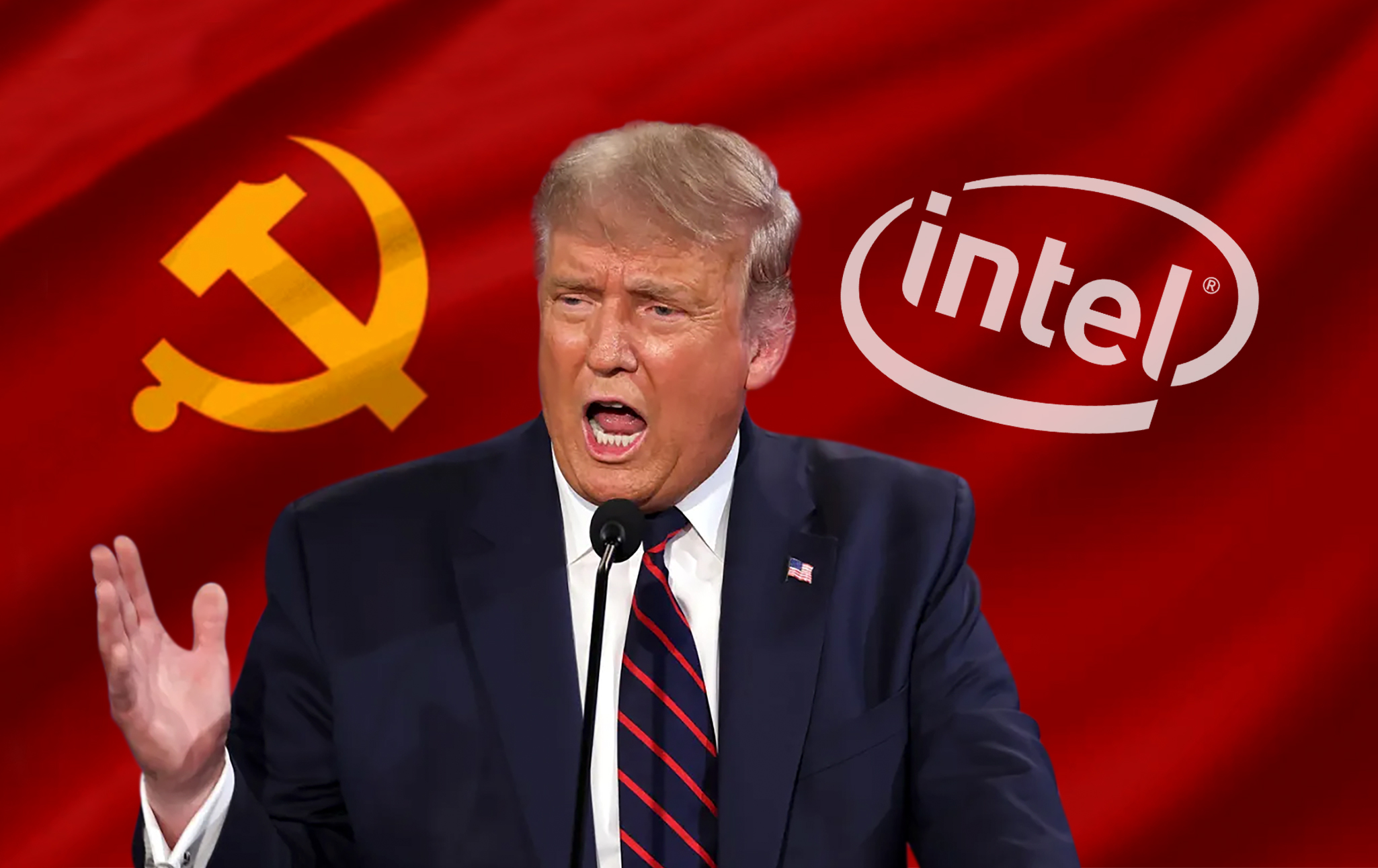
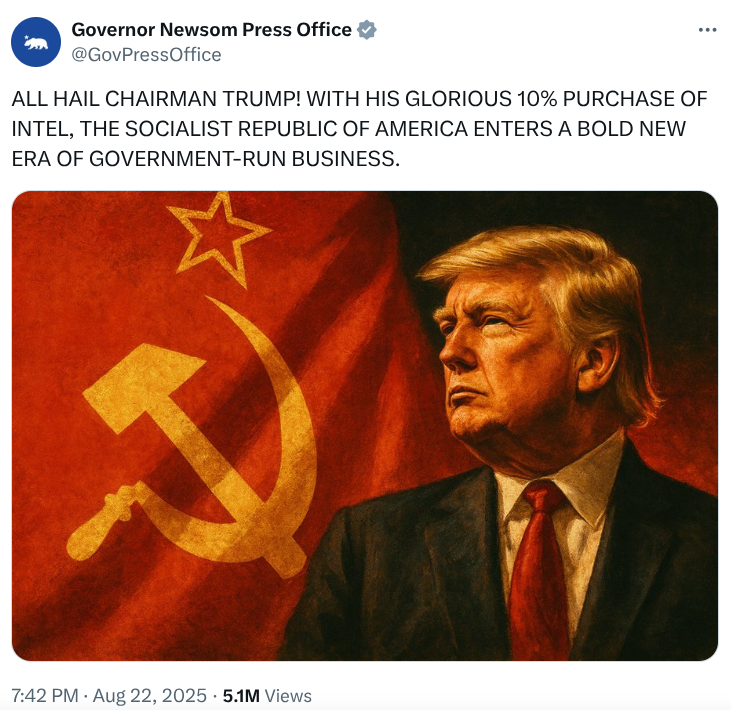
Either Governor Gavin Newsom doesn’t understand the meanings of basic economic terms, or he’s deliberately misleading people. Those are really the only explanations for his comments over the past few weeks, in which he’s repeatedly attacked Donald Trump by calling him, of all things, a socialist. Newsom and his staff have taken to posting sassy all-caps tweets mocking Trump’s speaking style (in lieu of actual political arguments), and they’ve made several posts on the topic: “ALL HAIL CHAIRMAN TRUMP! WITH HIS GLORIOUS 10% PURCHASE OF INTEL, THE SOCIALIST REPUBLIC OF AMERICA ENTERS A BOLD NEW ERA OF GOVERNMENT-RUN BUSINESS.” Or, more straightforwardly: “DONALD TRUMP IS A SOCIALIST! — GCN.” By themselves, these might seem to just be absurd memes, part of Newsom’s overall strategy of needling and annoying Trump however he can. But Newsom repeats this stuff in serious interviews, too. “This guy has completely perverted capitalism,” he said of Trump during a recent podcast, adding that “this guy is the leading nationalist and socialist of our time.”
Newsom isn’t alone in thinking this way. Since the Intel deal was announced on August 22, making the U.S. government a significant stakeholder in the tech company, there’s been a slew of news articles and op-eds solemnly warning about the rise of an orange-hued Trumpian communism. Variations on this theme have appeared in Fortune, the New York Times (twice!), the Guardian, the Wall Street Journal, Vox, Axios, Yale Insights, the Atlantic, the Free Press, Reason, and even regional newspapers like Indiana’s Indy Star. Superficially, there’s a lot of ideological diversity among the writers, with pundits ranging from liberal to conservative to libertarian. But their arguments all sound the same. “MAGA has gone Marxist and even, increasingly, Maoist,” writes Fortune. (They needed five writers on the byline to come up with that gem.) “President Trump is imitating [the] Chinese Communist Party by extending political control ever deeper into [the] economy,” frets Greg Ip at the Wall Street Journal. In an article titled “Trump Seizes the Means of Production at Intel,” economist Tyler Cowen warns that “taking equity shares will be a new means of control, a new means of steering and regulating the economy, a new way of enforcing political loyalties[...] Corporate property rights will never be secure again.” To hear these people tell it, we can expect Trump to swap his extra-long red necktie for a Chairman Mao suit any day now.
So, is there any truth to this idea? Is Trump really demolishing “corporate property rights” or launching an “assault on capitalism,” as the New York Times’ Bret Stephens says he is? Well, no. Unfortunately not. It would be a fine and worthwhile thing—in fact, a necessary thing—if he were, because corporate property and power is at the root of most of our problems in this country. Pollution and climate change, which are causing more and more Americans to drop dead of heat exhaustion, are caused by the property and power of Shell, BP, and Exxon. Soaring rents, and corresponding record highs in homelessness, are caused by the property and power of the corporate landlords who raise the rents. Glock, Sig Sauer, and their servants at the NRA have made mass shootings a near-daily occurrence; genocide in Gaza brings bountiful profits for Boeing and Raytheon. Elderly people are suffering and dying because insurance companies, like the infamous UnitedHealth, use AI to deny them medicine. At this point, a responsible president would be mounting an “assault on capitalism,” and doing everything in his power to break the backs of these companies. But Donald Trump isn’t doing that.
There are two different core assumptions on display here: first, that Trump’s acquisition of Intel stock fundamentally challenges American capitalism, making him some kind of socialist or communist. Second, that “socialist or communist” is a bad thing to be. Both are false, and detrimental to understanding how the United States economy—and Trump’s own politics—really work. Let’s examine why.

First, it’s important to understand what has actually happened at Intel, and what has not happened. Trump boasts that he “PAID ZERO FOR INTEL” and got shares “WORTH APPROXIMATELY 11 BILLION DOLLARS,” and at first glance, that does sound like some kind of half-baked plan to nationalize the company. But as usual, he’s playing fast-and-loose with the truth. The press release from Intel itself tells a different story, and provides more details. “Under the terms of today’s announcement, the government agrees to purchase 433.3 million primary shares of Intel common stock at a price of $20.47 per share,” it says—not “ZERO.” According to the press release, the money in question comes from federal grants awarded to Intel under the Biden-era CHIPS Act (a bundle giveaways and incentives for the chipmaking industry more generally), which haven’t yet been paid out. So what Trump has really done is renegotiate the terms of the CHIPS Act, so that the U.S. government makes a purchase of Intel stock rather than just providing a subsidy and getting nothing directly in return. Crucially, the press release adds that “the government’s investment in Intel will be a passive ownership, with no Board representation or other governance or information rights.”
So, Trump has not nationalized Intel. He has not changed its business model from a for-profit corporation to a non-profit government service. This deal is essentially just a simple quid-pro-quo: the government gives Intel money, and it receives Intel shares in return. There’s nothing compulsory about it, since Intel’s executives were free to reject the deal and forgo the CHIPS Act cash. As a transaction, it’s fundamentally no different than if a government pension fund invested a lot of money in the company’s stock, and wound up a 10 percent shareholder as a result.
With that context in mind, Gavin Newsom’s online bellowing about a “SOCIALIST REPUBLIC OF AMERICA” looks downright silly, and so do the pundits who repeat similar narratives. Take the claim from Tyler Cowen’s article that “Lip-Bu Tan might technically be the CEO of Intel. But if this policy comes to pass, Donald Trump will actually be running the show.” That just isn’t true. Yes, the U.S. government is now “the single biggest shareholder in the company,” as Cowen says. But as a holder of specifically non-voting shares, the government hasn’t gained any decision-making power over day-to-day operations at Intel that it didn’t already possess. (And even if the shares were the voting kind, you can’t win a vote with just 10 percent.) At most, Trump could abruptly sell off all the government’s Intel shares and cause a temporary drop in the price, but so could any other large shareholder, and someone else would just buy the stocks up again. Or he could use his bully pulpit as president, condemning any decision at Intel that displeases him—but again, he already had that ability, stock or no stock. If this is “MAGA Maoism,” it’s pretty weak stuff.
Alas, no.
Really, this deal is evidence of just the opposite economic philosophy. Biden’s plan was to simply subsidize the chip-making industry as part of his overall industrial policy. Trump has essentially scuttled that plan and turned it into a tit-for-tat business transaction. The shift shows that Trump sees the American government as a fundamentally capitalist institution, which should never do anything simply for the public good, but always needs to make a profit in some form. In the past, Trump has said he wants to “run our country the way I’ve run my company,” and that’s the rule he’s always followed as president. We can see it in foreign policy, where he’ll only agree to help Ukraine defend itself against Russia if the U.S. gets valuable minerals in return. We can see it in his bullying of American universities, where he expects administrators to become more conservative in exchange for continued access to federal funds. The public—or “social”—good is a foreign concept to him. Everything is a question of buying and selling. With Intel, it’s a good old-fashioned stock investment, and the government only makes money if Intel and its executives do. All of this cements property and profit as the ruling principles of American life. It doesn’t undermine them.
Socialism, real socialism, is something altogether different. There are many forms of it, from the friendly democratic socialism of a Zohran Mamdani to revolutionary Leninism (and dozens of other “isms” in between). But all of them start from the principle that profit, and private ownership of huge industries, are not legitimate ways to run a society. Socialism aims to eliminate the relationship between workers and owners that currently exists: the one where a tiny handful of people own and control everything, while most of us own nothing but our labor, and have to sell that labor to the owners to stay alive. Socialism says that all economic power rightfully belongs to the working people of the world—the ones who actually make all the goods and perform all the services—and that rich individuals like Lib-Bu Tan or Donald Trump have no business calling all the shots from their boardrooms. Socialism says food, housing, medicine, and other basic necessities are your universal human rights, regardless of how much or how little profit you generate for a company. Albert Einstein was a socialist. Thomas Sankara, the revolutionary leader of Burkina Faso who lifted his nation out of famine and illiteracy, was a communist. Donald Trump isn’t fit to be mentioned in the same breath.
Now, you might or mightn’t be onboard with socialism. But at the very least, everyone should be able to see that socialism is not just “government-run business,” the way Gavin Newsom describes it, or “political control” over the economy, as the Wall Street Journal says. In a recent interview with Current Affairs, the Marxist economist Richard Wolff spells out why that’s a complete misunderstanding:
Some people like to think of socialism as when the government owns and operates enterprises, the way they did particularly in the Soviet Union, and the way half of the enterprises in China today are organized. And I would argue that’s another mistake. Marx never said that what gets rid of capitalism is if you remove the private individuals and substitute state officials.[...]
[I]f you teach slavery, do you tell people that the state, in various slaveries, owns slaves? Of course you do, because that’s very well known in the historical record. Nobody in their right mind would suggest you no longer had slavery because the government coexisted with private slave owners, and the same is true of feudal plantations. So why did we develop in the West this bizarre idea that when the government does it, it’s somehow a different system? No, it isn’t. We ask the question, is the government functioning like an employer? And the answer is yes, it is, and therefore there is something that Marxists have developed, the notion of state capitalism. And that’s not socialism, which is a non-employer-employee arrangement.
The same principle applies here. When Trump buys 10 percent of Intel, it remains a capitalist business. Even if he nationalized Intel entirely, if that’s all he did, it would remain a capitalist business. After all, Saudi Arabia has a state-run oil company—Saudi Aramco—but there's nothing “socialist” about it, and the oilworkers certainly don’t control it. (In fact, the Gulf monarchies are a far more apt comparison for Trump’s economics, since he just gave the United Arab Emirates a lucrative chipmaking deal that raises all kinds of corruption alarm bells.)

The point is that government ownership, in and of itself, changes nothing about the “employer-employee arrangement” Wolff identifies as the central question. It doesn’t place any economic power into the hands of the working class. Today, if you work at Intel making computer chips, Trump’s “socialist” stock purchase (what a concept!) doesn’t give you any ownership of those chips, or the machine that makes them. You don’t get any more say in how many chips to make, or what kind, or for how long. You probably don’t even get a better wage within the existing arrangement. The working class, in fact, is nowhere to be found in Trump’s alleged “socialism.” That’s how you can tell it isn’t really socialism.
The whole idea is especially silly because Donald Trump has always been a ruthless enemy of socialism and socialists. For years, he’s been ranting about “the radical left Democrats, Marxists, communists” as inherently evil. He’s promised to weaponize immigration law and “order my government to deny entry to all communists and all Marxists.” He’s appointed firm ideological anti-communists like Marco Rubio to the most important positions in his cabinet, where they’ve deployed devastating sanctions against nations like Cuba, simply for having communist governments. (It’s not about human rights, since Saudi Arabia and Israel are still valued U.S. allies despite a laundry list of abuses.) In his 2019 State of the Union address, when Bernie Sanders was making headway in his second run for president, Trump proudly declared his “resolve that America will never be a socialist country.” (And Elizabeth Warren, shamefully, applauded. Don’t think I’ve forgotten.) More recently, when Zohran Mamdani won the New York City mayoral primary, Trump immediately started scheming how he could sabotage him, saying that “I don’t like to see a communist become mayor, I will tell you that.” And all of this makes perfect sense, because Trump is a third-generation landlord with a vast array of shady businesses and investment schemes across the world, from “$TRUMP” cryptocurrency to the nauseating plan for a “Gaza Riviera” development. Of course he’s still a capitalist.
Gavin Newsom is a capitalist, too. People forget this, but Newsom is a “multimillionaire businessman” with investments in “wine stores, wineries, restaurants, nightclubs, hotels and retail shops stretching from the Bay Area and Napa Valley to Lake Tahoe and Palm Springs.” That’s all thanks to a close relationship with the Getty family of oil billionaires, who “informally adopted” Newsom when his parents divorced in the early 1970s and invested in his first business venture, a wine store called “PlumpJack.” “I’m an entrepreneur. I believe in innovation[...] I believe in putting private capital to work,” Newsom says.
His political record bears that out. Last year, he vetoed a bill that would have given agricultural workers protections against extreme heat when they’re working outdoors. Like, say, on a PlumpJack vineyard. He also likes to spend his time personally going to homeless encampments and tearing apart poor people’s meager sleeping areas, apparently so he can look “tough” for photo-ops. In 2023, Current Affairs writer Stephen Prager warned that “Gavin Newsom is Not a Progressive,” and that’s true. But it’s deeper than that. He and Trump belong to the same class, and although they may personally dislike each other, their economic interests are ultimately the same.
So when you see Gavin Newsom, Tyler Cowen, or any other commentator denouncing Trump as a socialist, ask yourself why that’s the angle they favor. Then remember it cuts both ways. Yes, they’re attacking Trump by associating him with a cartoonish image of “MAGA Maoism.” But they’re also attacking socialism by associating it with Trump. Tellingly, in the same clip where he calls Trump a “leading nationalist and socialist,” Newsom also takes a passive-aggressive swipe at Zohran Mamdani, saying that “there’s a lot of anxiety around those views[...] as it relates to socializing, you know, grocery stores.” This isn’t just petty sniping at a younger, more charismatic politician (though it could be that too). Newsom knows, better than anyone, that there’s a civil war going on for the future of the Democratic party. He represents the pro-corporate, anti-worker centrist establishment—the faction rallying behind the so-called “abundance agenda” of deregulation. Right now, the primary goal of that faction is to keep the Democratic Party firmly capitalist, and ensure it doesn’t do anything that might frighten its wealthy donor class.
On a recent episode of the Lever Time podcast, former Sanders advisor David Sirota warns that Trump’s haphazard use of government tools like tariffs and equity stakes could give a bad name to any state intervention in the economy: “The scary thing long term is that in making these things thinkable, he might also have discredited them[...] if they come to be Pavlovianly associated with his own corruption.” The same thing is true of socialism, even though Trump isn’t practicing it. For pro-capitalist politicians and pundits, the wave of energy behind things like Bernie Sanders’ mammoth “Fighting Oligarchy” rallies, Mamdani’s mayoral campaign, and new candidates like Abdul El-Sayed and Kshama Sawant is an existential threat. In response, giving socialism a bad name by linking it to Trump and his sinking approval ratings is a perfect strategy.

The thing is, Newsom and his camp are losing that battle. According to a recent Gallup poll, “less than half of Democrats (42 percent) view capitalism positively” these days, an eight-percent slide since the last time the question was posed in 2021. In fact, it seems the Democratic electorate “views socialism more positively than capitalism — 66% to 42%, respectively.” That shouldn’t be surprising. Anyone who deals with a health insurance company or a landlord has good reason to hate capitalism; the shock is that it still has so many fans.
So really, if elected Democrats believe in democracy, they have no business supporting capitalism any longer, since that isn’t what their voters want. (Remember “popularism?”) Liberal newspaper columnists certainly have no business attacking Donald Trump from the right on economics, as if anyone will be persuaded by the argument that he’s insufficiently capitalist. A high school civics student could tell you that’s nonsense. And if the other possibility I mentioned earlier is true, and Gavin Newsom just doesn’t know what the word “socialism” means in the first place, he should probably ask for his fancy college tuition back.

%20(1).jpg?width=352&name=Parrots_by_a_nest_in_the_Green-Wood_Cemetery_gate_(61841)%20(1).jpg)