Driving through America’s back roads, the emptiness of the information superhighways comes into sharp relief.
Some of these places along here, they used to be somewhere.
Two decades into the 20th century, Route 66 tied half the country together. Before the interstate highway system, the Mother Road brought California harvests east, Chicago meats west. It took families on their first big road trips. During the hard times, the Great Depression and Dust Bowl, it brought a whole lot of hungry migrants anywhere there was work. It was a roadmap of opportunity.
The best infrastructure inspires a people. It creates opportunities. It builds and builds and when, finally, it dies, the ghosts linger and people pay for the ghost tour.
For a lot of people, and for decades, Route 66 delivered those opportunities right to the front door. It still stands as one of the best examples of collective cultural design in American history, and its legacy as a highway is unparalleled. At its 100th birthday this year, it remains a cultural reservoir for nostalgia, music, movies, and the classic road trip experience. A century on, the road is still out there, delivering opportunities.
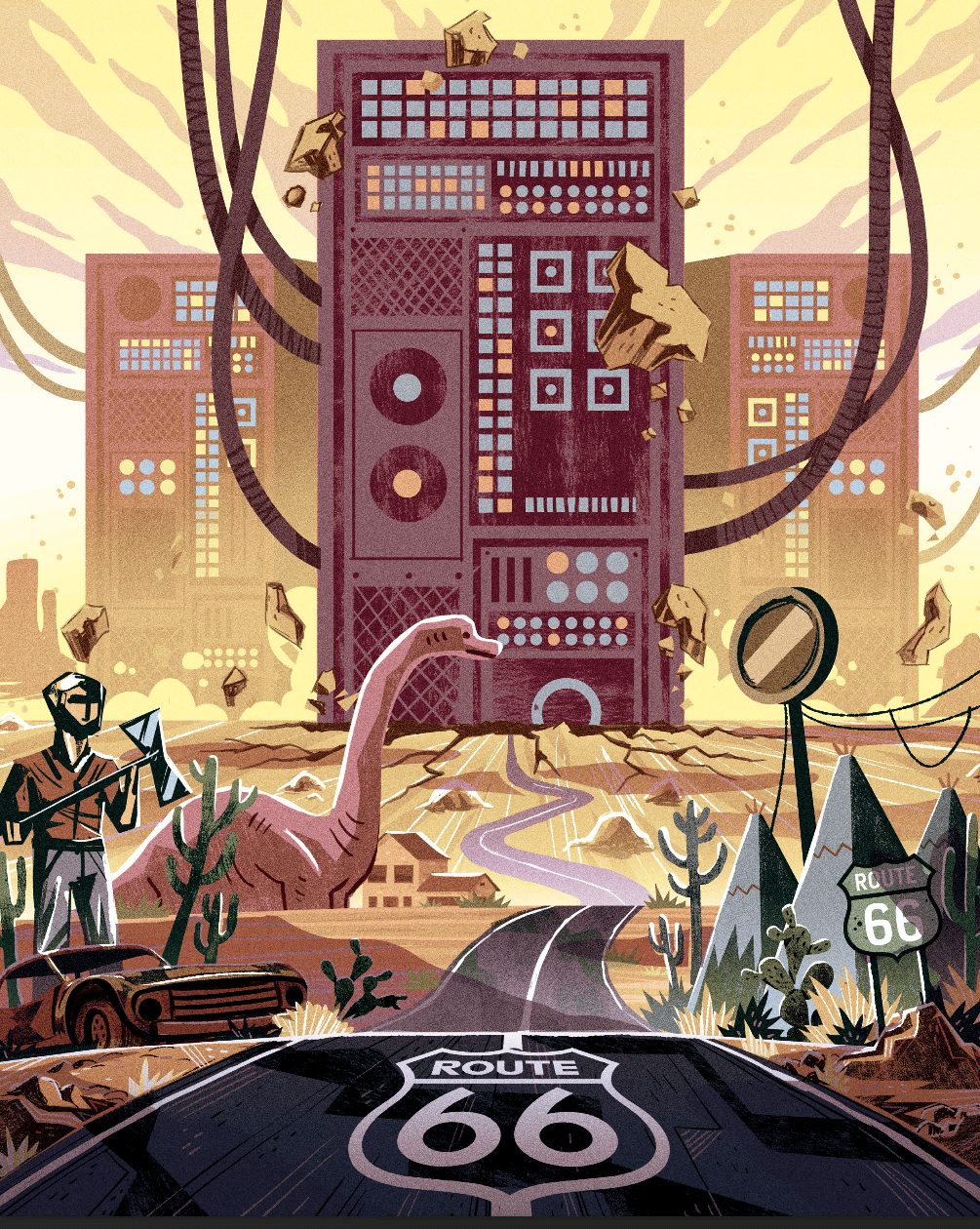
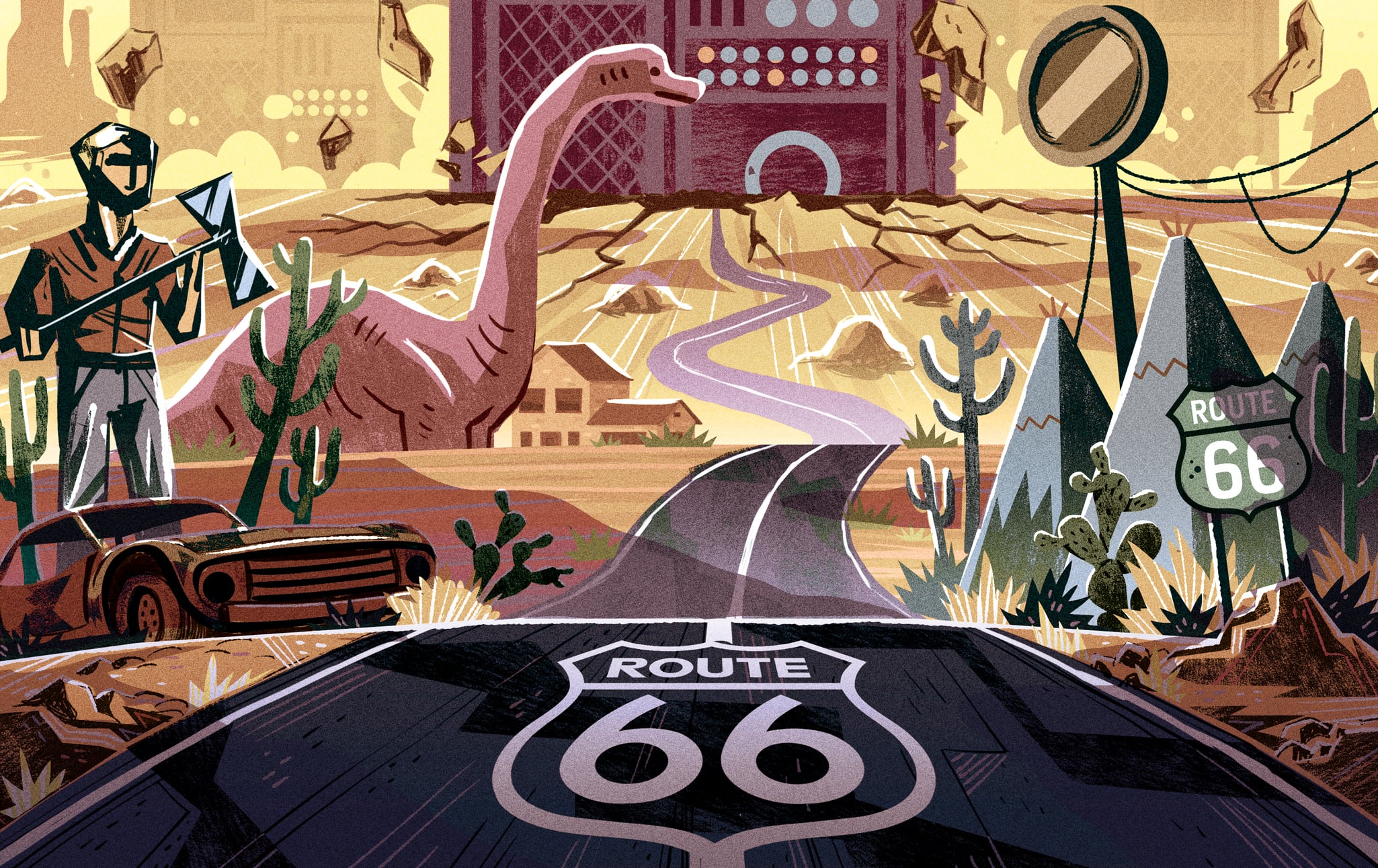
Art by Hugo Cuellar from Current Affairs Magazine, Issue 61, September-October 2026
“They come into 66 from the tributary side roads, from the wagon tracks and the rutted country roads. 66 is the mother road, the road of flight.”
— John Steinbeck, The Grapes of Wrath
The road was born on November 11, 1926, not the first highway but, from its birth, one of the most popular, connecting a bustling Midwest to a nascent West. It begins a few blocks from Lake Michigan, snakes a middle path through the Illinois prairie and hangs a left through the old Missouri mountains, jumps across the Missouri River, skips across the Kansan plains and, in Oklahoma, heads off west into the sunblasted sands of Texas, New Mexico, and Arizona, before resting, finally, after 2,448 miles, at the Santa Monica Pier and the Pacific Ocean.
It began as a collection of state and local roads, not really owned in whole by anyone or anything. Each state or city paid for a little at a time as they could and, by 1926, miles yet remained unpaved.
The road was a blank canvas to draw a 20th-century national identity, filled with dreams of cars and cities, hope and forward movement. Billboards burst out all over, advertising everything, anything. Reportedly, the billboards grew so numerous in places, it was impossible to read them all and critics claimed they caused accidents. Finally, in 1965, at the behest of First Lady “Lady Bird” Johnson, the Highway Beautification Act cleaned some of the billboards up. Of course, industry pushed back and the final bill contained a raft of compromises, and it took years for companies to comply, but it was at least an attempt at easing corporate claws from the landscape.
Johnson saw the highways and the roadsides as deeply important to the nation’s mental health, writing in her diary, “All the threads are interwoven—recreation and pollution and mental health and the crime rate and rapid transit and highway beautification and the war on poverty and parks[…] everything leads to something else.”
That wild road went tearing ass through the wild boondocks and backcountry into the golden sunset of California. It led to legend.
The road inspired songs, a TV show, and, in part, the movie Cars. Along its asphalt edges bloomed museums, dance halls, snake farms, gas stations, motels, and coffee shops. Cave tours, fudge, and cold AC awaited travelers—something new at every stop. All those travelers brought hunger, flat tires, empty gas tanks, curiosity, hope, and for a few decades, good times. And cash.
Those dollars came by car and left in country hands. Those dollars kept the road maintained and they kept the ice cream cold, the coffee hot and the snakes fed. The legend outlasted the federal highway.
In 1946, Bobby Troup wrote “(Get Your Kicks on) Route 66” and since then, the song has been covered by hundreds of artists, from all over the world. It was a hit every decade for the next 50 years, most recently in 2006, when John Mayer’s cover for Cars earned a Grammy nomination. Considering the song celebrates an American pastime—the car trip—along an American highway, it’s perhaps surprising that it caught on in England. But the Rolling Stones, fans of American music generally and Chuck Berry specifically, covered his 1961 cover on their debut record, released in 1964—omitting, mysteriously, Joplin, Missouri. Later, Depeche Mode covered it, presumably from the Stones as they, too, skip Joplin. English musician Billy Bragg covered it as “A13 Trunk Road to the Sea,” but reworking all the geography, making it distinctly English. He skips all the American towns.
In the 21st century, the route might be best known from Cars, the animated film set in a small Arizona town based on a town along Route 66. It’s about Lighting McQueen, a brash city race car who gets stuck in Radiator Springs, a small town on the decline. Over time, Lighting comes around to the charms of life off the beaten track, and he also learns about what happens when the highway moves on.
In real life, Seligman, Arizona—supposedly an inspiration for the film—today capitalizes on the fame. Rusty signs draw in tourists and some clever entrepreneurs have dressed up dead automobiles as movie characters.
But as in the movie, the interstate highway system really did pass Seligman—and a whole lot of other little towns—by. The kicks moved out of town, away from the annoying speed limits and stoplights which forced drivers to slow down and ponder an ice cream cone or a cave tour. The man behind the counter at the Historic Route 66 Motel in Seligman told me he was over the town, and was saving up to get out. Not a lot of jobs, no real future—the same story you’d hear from any 20-something in any small town.
Pretty soon, new gas pumps, chain hotels, and restaurants opened up a few miles away, just out of reach of the old motels and diners. In 1984, the last highway bypass was finished in Williams, Arizona and, with that, there was a faster, easier way west: Interstate 40.
In 1985, Route 66 was decertified, a federal highway no more. With that, it became a relic—the road itself just another roadside attraction.
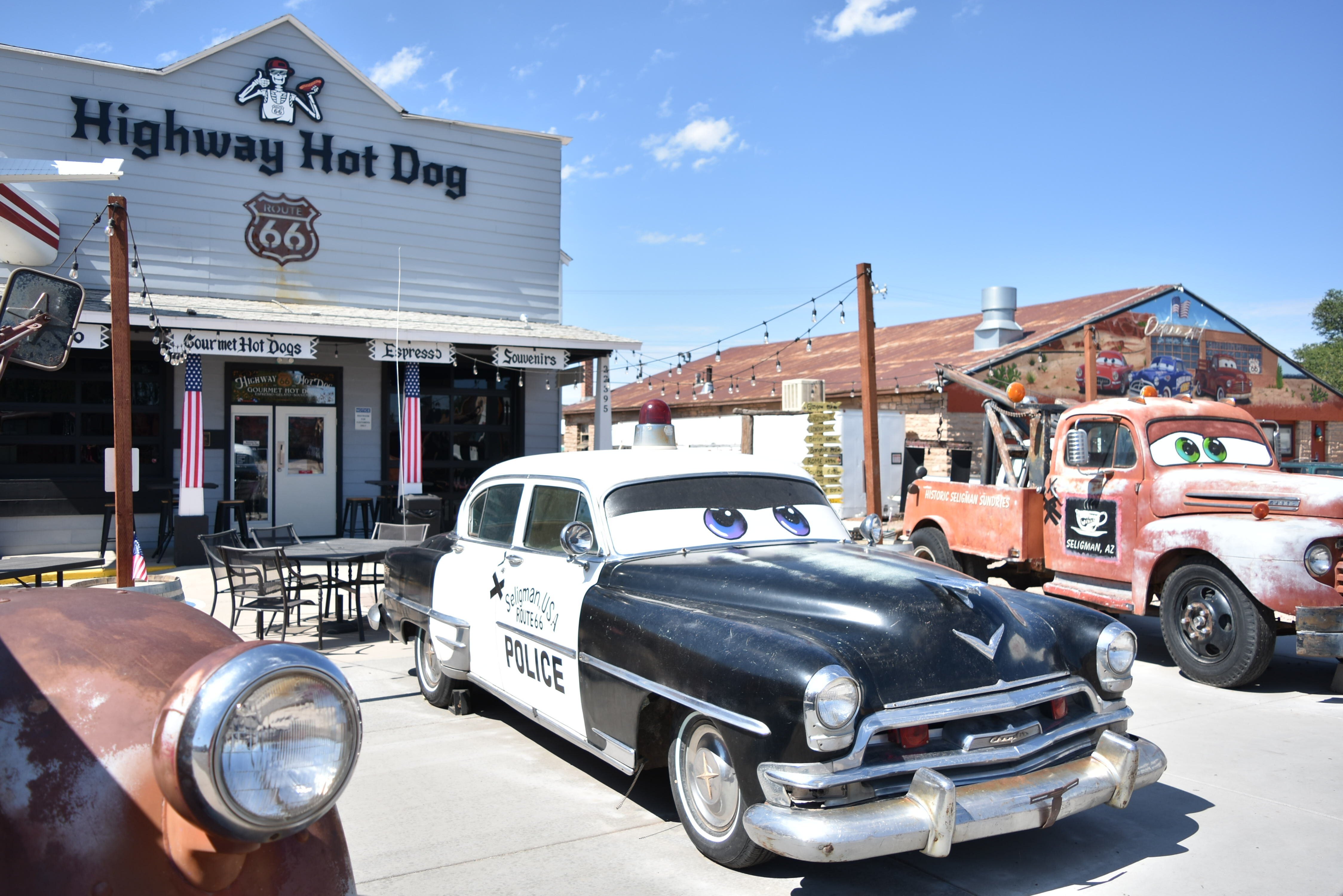
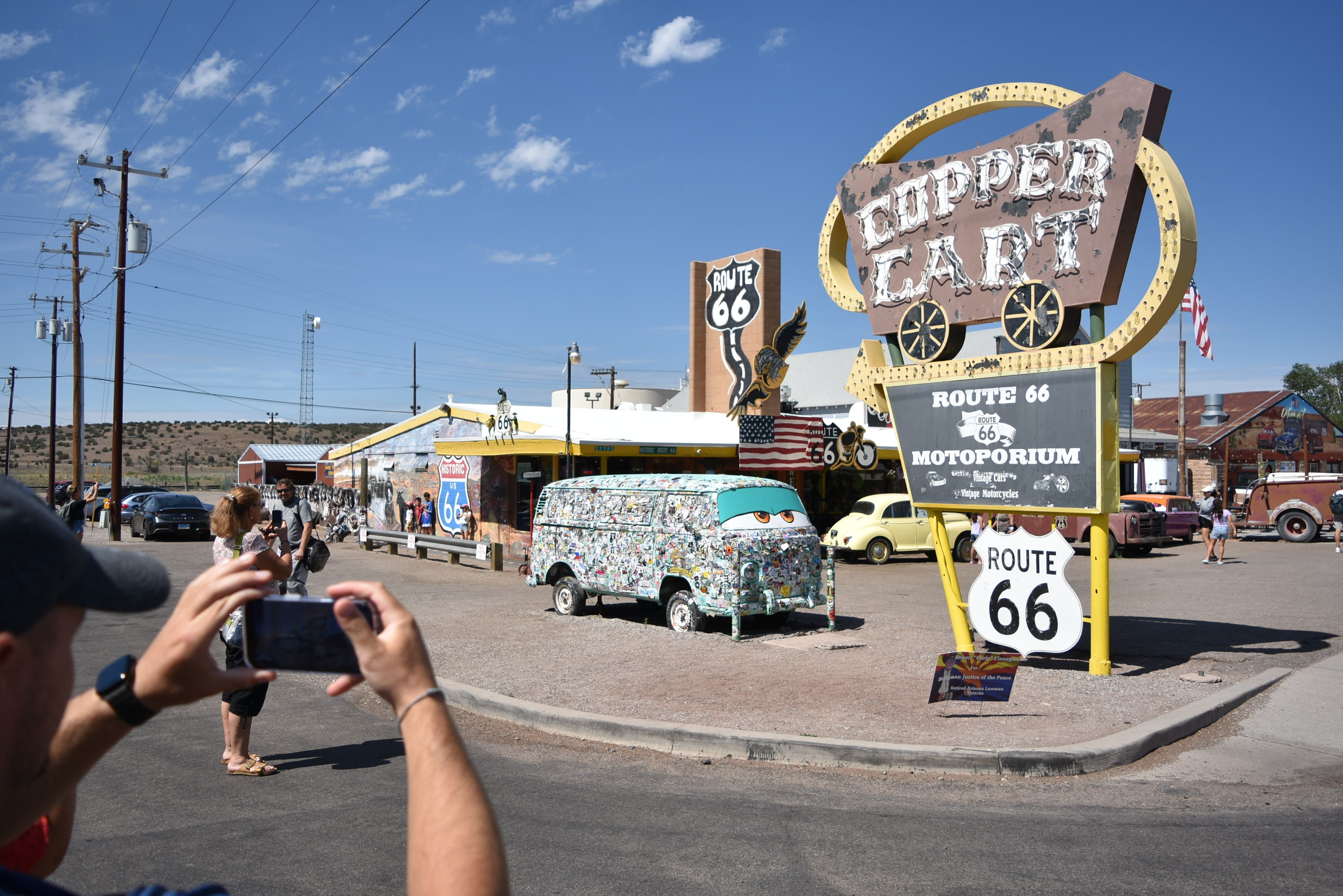
The charming town of Seligman, Arizona claims to be the inspiration for the animated Disney film "Cars," and features replicas of several of its characters. (Photos: Jesse Wright)
But what an attraction!
Evidence of that mid-century bonanza still litters the landscape. Open any page of any Route 66 travel book and any town will have the same broad strokes: Hotels, opened in the 1930s or ’40s, closed in the 1970s or ’80s—stop and see the old signs. Get a glimpse of what you missed.
Not everything on Route 66 is gone, of course. Some attractions, like the Meremac Caverns in Missouri, are doing big numbers, and little by little investors are snapping up the classic old motor courts, rehabbing them, sticking a classic car out front and luring in the summer motorists with the old signs, burning bright again, boasting “a TV in every room” and “cold AC.” And there are still a few cafés and custard stands around.
More than once, I ran into retired men—always men—who had bought property along the route and were in the process of rehabbing it, rebuilding, recreating or saving some version of the past. Young men wanted to leave these towns; retired folks stuck around to hang on to the past, or they came looking for it here.
In Miller, Missouri, Ed Klein, formerly of Chicago, was busy inside his old stone service station/post office/barber shop on July 4, doing carpentry work. He bought Spencer Station in 2022 after falling in love with Route 66 years ago. The concrete road in front of the store is, he says, the last untouched portion of Route 66 left—never paved over, never restored. Your car, he explained, can drive on the actual road here.
It’s a neat trip, if you can take the time off to drive it. Every year, thousands do, and they spend an average of $2,000 to get a whiff of what America once was. That’s 2011 numbers for a five-day trip; I just did the trip myself, and it was closer to $4,000 for a 20-day trip. Either way, there’s money in the nostalgia circuit. Cars still need gas and drivers still need coffee. Caves still need touring. The old guys need visitors to talk to.
Even so, it has faded. What was once a long line of ice cream stands, motor courts, oddball attractions and busy downtowns is, as of 2026, looking a lot emptier. On the most popular Route 66 app, a ghost icon pops up when something used to be there, but isn’t any longer.
Each ghost represents an empty gas station, hotel, store, or highway café. Turn and look at the ghosts. For all the wealth that road brought, when the highway passed it by, it left behind about 200,000 empty houses and 15 percent poverty, according to a 2011 federal study. At least these small towns have ghosts. One imagines what the poverty rate might be had the road never been built, had the dreams never materialized.
God help the country without anything at all.
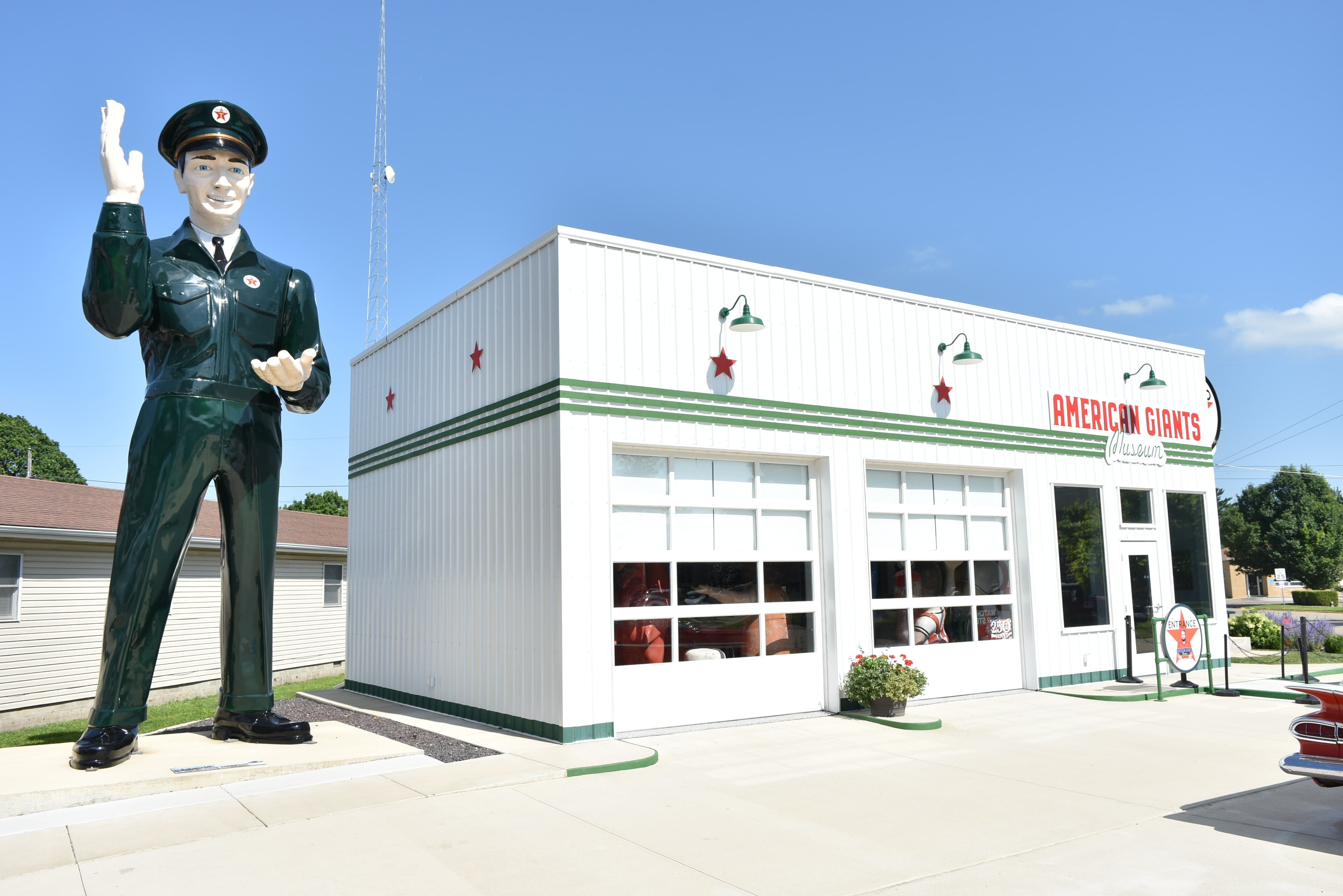
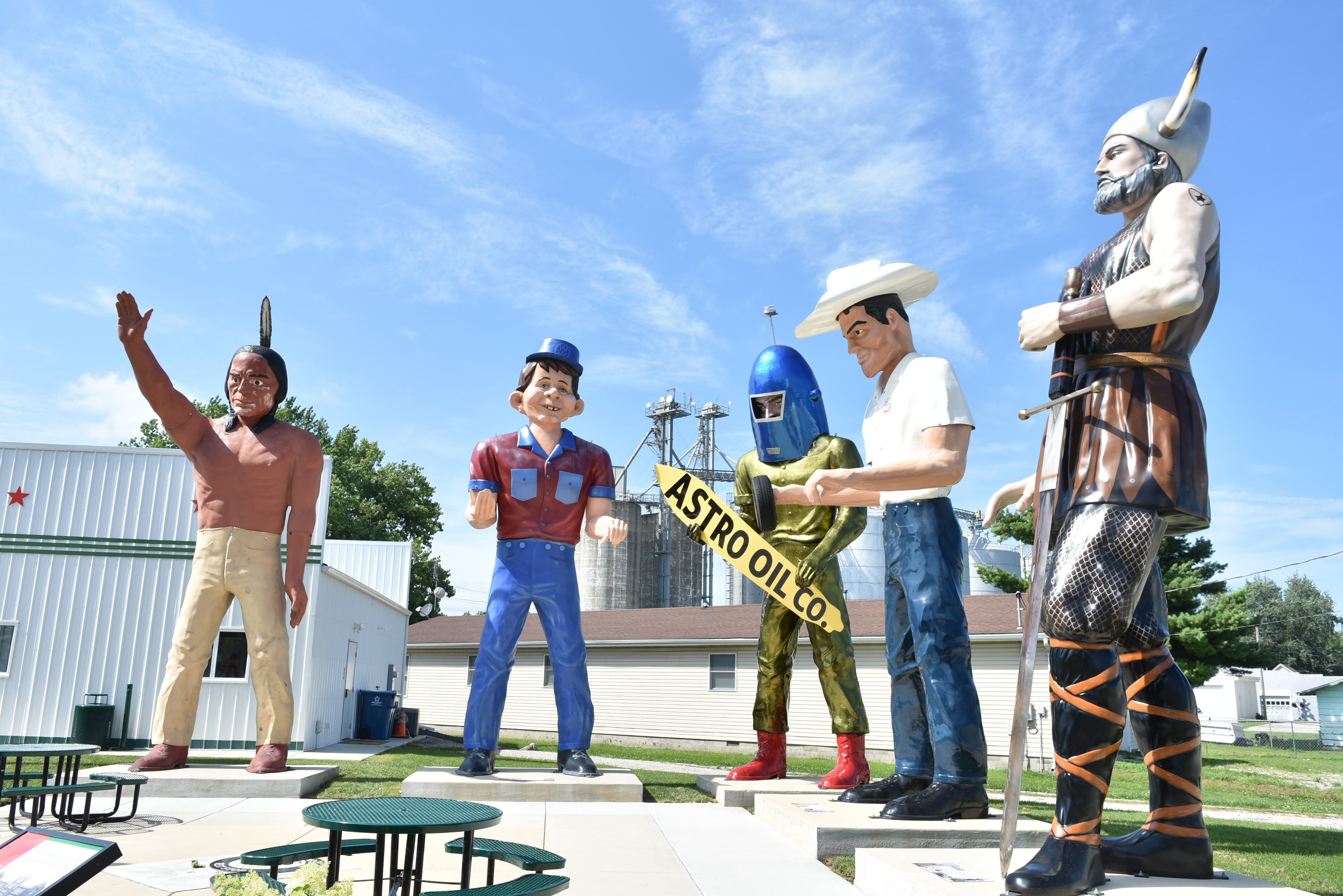
The American Giants Museum in Atlanta, Illinois is an early draw along the east-west Route 66, collecting roadside advertisements from long-gone businesses that once littered American byways in the middle of the 20th century. (Photos: Jesse Wright)
In 1985, the same year Route 66 was decertified, Peter Peterson and Stephen Schwarzman founded the investment company Blackstone, which is today one of the biggest landlords in the United States, owning 274,000 rental units. They’re everywhere, right in the heart of the country—but there’s nothing to see.
They own homes, apartments, and condos and, of late, they’re also the biggest private owner of data centers (they own QTS). They’re building data centers in communities all over the country. In May 2026, the company announced it would invest $5 billion in an AI company with Google. Blackstone is worth roughly $1.3 trillion. Google is worth over $4 trillion. All that money, and still nothing to see.
In July, the New York Times quoted unnamed “technologists” and wrote that “In size and ambition, this moment compares to the building of the railroads in the 1800s, President Franklin D. Roosevelt’s New Deal in the 1930s, and the Manhattan Project[...] in the 1940s.”
I’m leery of the salesman’s pitch here, but something big is happening. The difference is, those projects created stories, built a nation, made generations, and fed the myth of America. Those things, they built a country.
Data center developers are currently buying up whole neighborhoods, whole houses filled with lives left behind, tearing them down and building low-slung industrial sites. The New York Times reported in July that federal lands, thousands and thousands of acres, are being turned into data centers. Inside these centers, banks of electronics whir and hum, cooled by water and powered by natural gas, sitting on public land, fouling public air and delivering a promised ROI to far-away private investors.
What dreams must these machines draw? And for who?
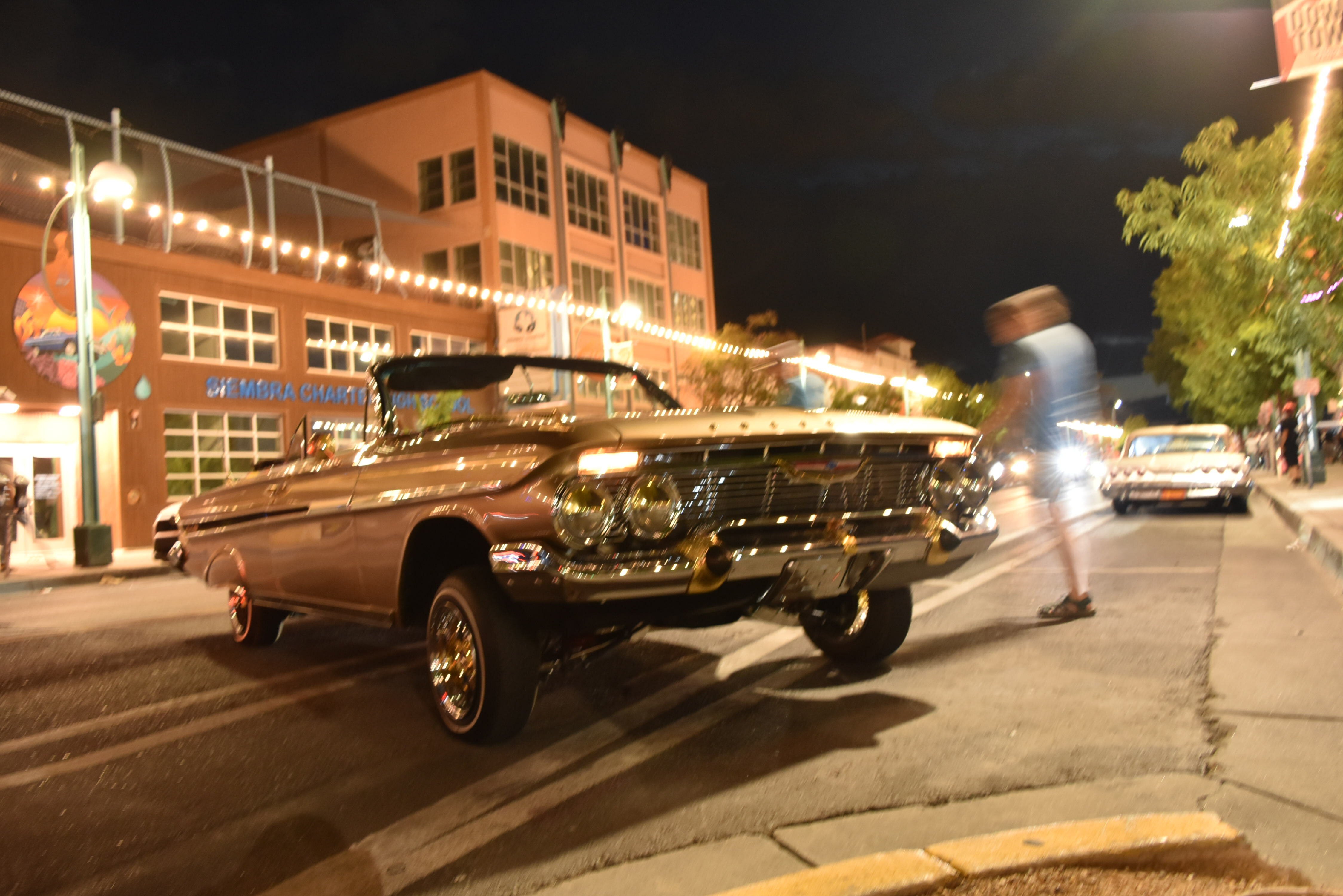
A classic car is parked out on Route 66 in Albuquerque on a hot July night. (Photo: Jesse Wright)
They build nothing. Neither a store nor factory, nor even a blank canvas—they leech, suck resources from communities, and hawk lies. Take a look at but one data center. The world’s largest supercomputer, the Elon Musk-baked xAI Colossus in Memphis, will supposedly bring 500 jobs, according to the Memphis Chamber of Commerce. The first Colossus moved into an old 785,000-square foot Electrolux plant, which laid off 530 people when it shuttered in 2019—down from a jobforce of 1,200 people in 2017. Yet, in 2026, one watchdog report puts the number of employees closer to 300 permanent positions—or about the same as a Walmart Supercenter, which takes up a small fraction of the space and doesn’t suck up natural resources.
But more to the point, Electrolux builds vacuum cleaners, washing machines, and actual home goods appliances everyone uses regularly. Colossus is, on the other hand, is “the most powerful supercomputer in the world,” also known as “the Gigafactory of Compute.” Furthermore, it powers Grok, xAI’s chatbot, which has become notorious for incidents where it randomly started calling itself “MechaHitler” and spouting Nazi rhetoric, or generated sexualized “deepfake” images of unsuspecting women. Common Sense Media, a nonprofit watchdog for parents and educators, calls Grok “inappropriate for kids and teens.”
So, users can talk to it, if they like. It won’t clean your house, but it can fuel your mania and psychosis.
And that’s the difference. From its outset, the Mother Road offered something real. But nothing lasts forever, and endless lamentation on the olden giants is so much cliché. So turn the seasons, so comes the age, so arrives the decay.
But what is new, perhaps, is the utter absence of even having been at all. The data centers’ legacy will be nothing. Their absence will be complete. Computer hallucinations leave no room for the dreams of humans. In 100 years, there will be nothing. Nobody will want to spend their vacation touring endless rooms full of rusty server racks.
And that’s the difference.
Some of these places, they used to be somewhere, and that place where they used to be, it is something to see. History, memory, and even the remnants of the ye olde whatever bring in visitors and money, inspire song and art. Anywhere there are people, people go to pay tribute to old ghosts.
In 50 years, what songs will they sing about the data highways paved and abandoned by AI centers? Will there be such a thing as a classic Cybertruck stuck out front of an old-timey charging station?
The paths forward we’re building put money into the pockets of a handful and they turn the land to dust, foul up the air, and leave a cultural legacy as bare-bones as the landscape, just drying up the imagination with artificial hallucinations, fake facts, and reassuring nonsense intended to assuage the most psychotic and hypochondriacal.
You’re free to believe as you like with AI; they’re notoriously sycophantic. You need not leave your house to get your kicks—and certainly there is no real place to get them with these things. The simulacrum is enough, the illusion is the thing. Just stay put; keep feeding the machine quarters.
So far, not too many people are feeding quarters. A CBS story from April 2026 reports about 2 percent of Americans are paying $20 a month for AI subscriptions. Those subscriptions are kept, on average, for seven months. Free and lower-cost tiers are available, some with advertisements. Presumably those ads meet users where they are—with exactly the products and services the AI predicts people need. Like yesterday’s highway billboards, promises of wonder lie just down the road a bit. With AI though, it’s always a bit further, always a bit deeper.
Skeptics point out current subscription revenue isn’t sustainable. In fact, there’s still no clear agreement on how much the big AI operations even cost to operate. Without a clear cost or a clear and consistent revenue stream, there will be a bust. But presumably those fears can be assuaged by AI, too—for a while, at least.
Just keep dropping quarters into the machine.
The quarters, presumably, will go toward more technology. More, bigger, faster AI. More data centers. The hands that snatch up those quarters, those hands are quite clean of any country dirt. They don’t live there.
These techno landlords, they buy up our homes, take our money, the water, the air. They strip away the local, the everyday and the dreamers, and they deliver us more hallucinations. Some places somewhere, turned into nowhere.
When the quarters run out, they leave not even ghosts in their wake. There is nothing to see, nothing to remember, nothing to inspire. The con, long gone. The lone and level sands, stretching far away.

“Wonder was the grace of the country. Any action could be justified by that: the wonder it was rooted in. Period followed period and finally the wonder was that things could be built so big. Bridges, skyscrapers, fortunes, all having a life first in the marketplace, still drew on the force of wonder. But then a moment’s quiet. What was it now that was built so big? Only the marketplace itself. Could there be wonder in that? The size of the con?”
— George Trow, “Within the Context of No Context”
Route 66 is a shorthand for something obvious—the size, scope and possibilities within the country. From its very birth it was that thing.
It’s no wonder it was so popular from its start. It wasn’t the first highway and it wasn’t the longest, but in the second decade of the 20th century it led straight to Los Angeles, a promised land growing fat on motion pictures, fruit orchards and, soon, military contracts building the war machines that would free the world. It was a road anyone could get on and find themselves a future.
Route 66 delivered about the only thing anyone can hope for out of progress, a chance to get somewhere and do something and make something of themselves. A chance to live.
I took that road west, from Lou Mitchell’s breakfast table in downtown Chicago, through every dusty dying town, hit every stop sign, stopping at every cave tour and highway motel that looked worth a damn until I hit the Santa Monica pier, where I parked, got changed, and walked into the warm Pacific waters. That trip took 17 days.
The road is still a shorthand for the size, scope and possibilities of the country. But it’s a symbol of what was. It’s a monument of that one time progress meant progress for everybody. For anybody. It’s filled with ghosts.
On the trip back, I took the interstate. Unbothered by stop lights, cave tours, museums and charms, I ran the car fast—right past everything and everyone in between.
It took two days. It’s filled with gas stations.
Jesse Wright is a freelance journalist and a high school teacher based in Chicago, formerly of the South.