

As Reaganism took hold nationally in the '80s, a Vermont socialist became a popular mayor. Bernie Sanders' first time in office offers lessons for the left in the age of Trump.
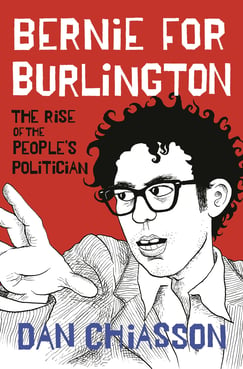
Today, Bernie Sanders is one of the most important figures in American politics. As biographer Dan Chiasson puts it, Sanders is “arguably the most influential leftist politician in the modern history of the nation,” and he’s consistently ranked as one the most popular American leaders of any kind, alongside Barack Obama. He may not have prevailed in his 2016 or 2020 presidential candidacies (and it’s unlikely there will be another, given Sanders’ advanced age), but he left a permanent mark on the generation that campaigned for him. As Chiasson writes, “Bernie’s influence will be long and profound, as his enthusiastic voters age into power and influence.” Indeed, one of his democratic socialist devotees, Zohran Mamdani, has just been sworn in (by Sanders himself!) as mayor of New York City. But Sanders’ national prominence is a relatively recent development, and even committed leftists may not know the full story of what came before. Chiasson’s new book, Bernie for Burlington: The Rise of the People’s Politician, is about Sanders’ first act, when in 1981 he improbably became the country’s only socialist mayor, just as the “Reagan Revolution” was sweeping the country. Today, Mamdani, Seattle’s Mayor Katie Wilson, and others are aiming to replicate something like what Sanders tried in tiny Burlington, Vermont. This makes Sanders’ origin story worthy of study, especially for those of us who want to know how the left can succeed.
Chiasson’s book is well-timed, because it offers one potential answer to the question of what “socialism in one city” might be like, for those curious how a Mamdani or Wilson administration will play out. But Bernie for Burlington is not just a study of the years of Sanders’ municipal governance. Coming in at nearly 600 pages, it is several books in one, comprising a dense political and cultural history of Vermont from the 1950s through the 1980s, a biography of Sanders from his Brooklyn childhood through his 1990 Congressional campaign, and a memoir of Chiasson’s own upbringing in Vermont, having spent his teenage years living in Sanders’ “People’s Republic of Burlington.”
Chiasson is clearly fascinated by Vermont and cannot resist throwing in every detail he uncovered during the course of his extensive research. Over the course of the book we learn about: the social etiquette of using a rural payphone in 1972 Vermont, the origins and corporate structure of Vermont’s public television station, the background and clientele of seemingly every diner and coffee shop in the downtown Burlington area, the sexual abuses committed by infamous local priest Father Baffa, the history of the Ben and Jerry’s ice cream company, the time during William H. Macy’s college years when he stumbled into the warehouse of the Bread and Puppet Theatre while stoned, the burning down of two Burlington cathedrals in 1970 and ’71, the economic significance of the state’s marble quarries, a controversially chaotic 1977 Supertramp concert, the time Chiasson’s weird childhood friend ordered him to make a diorama of heaven out of cotton balls, the time 9-year-old Chiasson was shown a bondage magazine in a woodshed, the reggae scene in Burlington’s music clubs, the lurid art on the pinball machines at Upton’s Ice Cream Circus across from City Hall, the history of various underground and independent newspapers in Burlington (The Queen City Special, The Vermont Freeman and Sanders’ own Movement), the SS uniform Chiasson once found in a trunk in his grandfather’s attic, the various foods Chiasson had to scrub from plates when he worked at a restaurant called Sneakers in the neighboring city of Winooski (“egg yolk, ketchup, or maple syrup, always with cigarette butts and ashes mixed in”), the time the kids who lived next to Chiasson were beaten by their otherwise-absentee father, Cyndi Lauper’s first impressions of Burlington upon moving there, the legend of the Lake Champlain Monster (“Champ,” who gets a full multi-page digression), the various cars Chiasson nearly bought in the spring of 1987 (a 1974 BMW, a cantaloupe-colored 1975 MGB, and a “fern-green Saab 99 with a stuck odometer” and a “badly slipping clutch”), and the mechanical defects that plagued the Volvo that Chiasson ultimately settled on. (I am only scratching the surface.)
I am tempted to say the book is rather in need of aggressive editing, but I realize Chiasson is doing all of this deliberately, to provide us with a kind of kaleidoscopic portrait of the milieu that Bernie Sanders emerged from, on the theory that unless you understand Vermont in all of its rich detail, you cannot understand the Sanders mayoralty, itself foundational to the American left in 2026. Perhaps this is so—and it did make me want to visit Vermont, to try a maple “creemee” and see the fruits of the state’s famous “billboard law” that preserves scenic landscapes from unsightly advertising signage. But readers who are not interested in minor Vermont lore—such as the time Orson Bean marched in the 1976 Burlington bicentennial parade, or the time in 1979 when neighboring Winooski adopted a bizarre scheme to build an inflatable dome over its town center, with the blessing of geodesic dome enthusiast R. Buckminster Fuller—may find themselves skipping around during the first 300-odd pages of the book. (Sanders is finally elected mayor on page 298.) You might be tempted to shout at Chiasson, Monty Python style, “GET ON WITH IT!”
Okay, so, Bernie Sanders. The short version is: The son of struggling Brooklyn parents who died young, Sanders was a star track athlete in high school before matriculating at the University of Chicago, where he became politicized and participated in the Civil Rights movement. Soon after graduation, Sanders bought farmland in Vermont, which was then cheap and drew young idealists from around the country. There, while working odd jobs as a carpenter and selling his homemade educational film strips to public schools, Sanders ran a series of quixotic campaigns with the newly-founded Liberty Union Party during the 1970s. After ten years as a “perennial candidate,” he finally became mayor of Burlington in 1981, running on the slogan “Burlington Is Not For Sale” and defeating the long-serving Democratic incumbent by ten (!) votes. The victory of a socialist made national news (he appeared on Donahue), and despite the predictable warnings that Sanders’ socialism would Destroy The Local Economy, Sanders turned out to be a popular mayor, serving four terms and being reelected by overwhelming margins each time. After leaving office in 1989, Sanders ran for Congress, where he would go on to become the longest-serving independent in U.S. congressional history, before launching his famous presidential campaigns.

Some of the parallels with Mamdani are striking. Sanders went up against a long-serving establishment Democrat, Gordon Paquette, who was totally unprepared to deal with an upstart socialist challenger. (Paquette called Sanders “Saunders,” just like Andrew Cuomo called Mamdani “Mandami,” and similarly resorted to ugly ethnic insinuations, saying Sanders would make Burlington “more like Brooklyn.”) He mobilized unexpected constituencies who had been disillusioned with city politics, particularly students. He used creative campaign tactics, for instance handing out sturdy reusable shopping bags to the elderly that said “FOR THE PEOPLE” on one side and “SANDERS FOR MAYOR” on the other. (Chiasson tells us that the so-called Bernie Bags “became a coveted item for years after” and would “often come up” when people talked about what sealed Sanders’ victory.) Like Mamdani, who disavowed his 2020 “defund the police” stance, Sanders walked back prior criticisms of cops (e.g., “There is no doubt that there are many Nazis on the force.”) In fact, he won the endorsement of the police union, who had felt neglected by the incumbent mayor.
Like Mamdani, Sanders did not speak the language of Marxist theory on the campaign trail, instead campaigning against the incumbent’s plan to raise property taxes and promising to “provide the quality of life that ordinary people are entitled to” and “address the problems that face the people of Burlington on a day-to-day level.” Asked by a reporter to sum up his stance in one word, he said “radical,” but when pressed on what “socialism” meant, he waved the issue aside, saying “we’re not discussing that now” and “That’s not relevant.”
Notably, both Sanders and Mamdani were brought to power the year after right-wing presidents had taken power, and both rode the waves of backlash. Chiasson quotes local observers saying there would have been no Bernie without Ronald Reagan, and we might wonder whether there could have been a Mamdani without Donald Trump. Horrible as they’ve been, Trump’s presidencies have also been fuel for left-wing organizing in this country, and it’s notable that the Democratic Socialists of America has grown during both Trump terms but shrank under Biden. Looking back at Bernie’s Burlington, one wonders whether right-wing successes can create unusual, unpredictable openings for the radical left that we must be prepared to take advantage of.
There are notable dissimilarities with Mamdani as well. By contrast with Mamdani’s meteoric rise, Sanders had spent ten years as a losing candidate. He was something of a fish-out-of-water as a brash Brooklynite in bucolic Vermont, which had attracted waves of “back to the land” hippie types during the ’60s and ’70s (including “puppeteers, foragers, goat farmers, draft dodgers[…] potters, glassblowers, poets, underage runaways.”) Sanders, too, was a ’60s activist lured by rural living, but he never joined the counterculture and was only ever “hippie-adjacent.” Sanders came to reject what a friend called the “symbolic politics” of the “lifestyle left,” actions that demonstrated commitments to radicalism without achieving policy victories.
 Illustration by C.M. Duffy
The Sanders of Bernie for Burlington is an endearingly recognizable figure. In the 1970s, he barnstorms the state in a rusty Mercury Comet, with “one windshield wiper, which he kept in the glove box.” At home, he “siphoned electricity from his neighbor,” and his toddler son called him “Bernard” or “Bernie” instead of “dad.” When Sanders proposed a new city concert series, he said there would “even [be] rock, which I personally have a hard time with.” A friend recalled that when he proposed going out for a beer, Sanders reacted like he was “suggesting an orgy.” Sanders’ orneriness is also on display. As mayor, his staff sent him a memo warning that he looked “bored and annoyed” in meetings, refusing to smile or chit-chat with people, and this was alienating people. Sanders ignored the memo and would continue to look bored and annoyed.
Once elected, Sanders quickly found that it was difficult to implement much socialism under the city’s “weak mayor” system, which gave him the constitutional power to appoint the harbormaster and the keeper of the dog pound but reserved the real power for the Board of Aldermen. “There was nothing terribly ‘socialistic’ we could do,” said one Bernie ally. “We weren’t going to take over the banks.”
That meant Sanders had to develop a slate of progressive allies to take over the board, and had to get creative in the uses of power, for instance by creating a “shadow government” outside the formal administration, and going to the courts and the press. He also introduced popular civic participation initiatives, like “Project Snowshovel,” which assigned teenagers to shovel the driveways of the elderly. By budgeting carefully and running the city well, Sanders earned praise even from Republicans and voters to whom socialism was anathema. One machinist told a local paper “He says ‘socialism’ and I want to see him deported, but if you stick around and listen some more, he starts to make sense.”
Sanders was red-baited by the local paper and businesspeople, of course. “Socialist principles have not worked anywhere in the world… they won’t in Burlington, either!” read one ad in the Burlington Free Press, whose anticommunist former owner had kept a literal enemies file full of damaging research on local activists. Sanders was accused of plotting a “reign of terror.” In one of his reelection campaigns, an opponent ludicrously compared Burlington under Sanders to “Nazi-occupied Poland, where my family helped many people evacuate,” where “people were forced to sit in the mud and excrement” while the Gestapo “painted yellow stars on the walls and doors.” Pressed on the comparison, she said Sanders was “not that different” in his methods from Hitler (a deeply offensive thing to say about a Jewish man who lost family in the Holocaust). This was overreach, and it didn’t work. Sanders’ enemies thought his administration would be a “blip” they could wait out, but he was easily reelected and remained in office for virtually the entire rest of the decade.
Sanders’ Burlington soon became “the place to see socialism in action,” and was spoken of “like it was fin-de-siecle Vienna or Sartre’s Left Bank.” It was an “epicenter of the anti-imperialist, anti-Reagan left.” Allen Ginsberg wrote a poem about Burlington socialism. Michel Foucault turned up for three weeks in 1982, “lured in part by the desire to behold this unique American experiment firsthand.” (Bernie himself was not much of a Foucauldian, turning to a friend during the great philosopher’s “Technologies of the Self” lecture and asking: “Do you think anyone in this audience knows what the fuck he’s talking about?”)
But Sanders was not universally beloved on the local left. Many activists felt betrayed when peace demonstrators staged a sit-in at the local General Electric weapons plant, and Sanders had them arrested. When Sanders claimed that he was simply defending the unionized plant workers (he had been “looking for opportunities to demonstrate his loyalty to organized workers”), the anarchist environmentalist writer Murray Bookchin, who became Sanders’ “fiercest local critic,” claimed he was “acting as a publicity man for GE, not the socialist mayor of Burlington.” In a harsh 1986 essay, Bookchin accused Sanders of being a “centralist, who is more committed to accumulating power in the mayor’s office than giving it to the people,” and disparaged Sanders’
[…]belief in technological progress, businesslike efficiency, and a naive adherence to the benefits of “growth.” The logic of all these ideas is that democratic practice is seen as secondary to a full belly, the earthy proletariat tends to be eulogized over the “effete” intellectuals, and environmental, feminist, and communitarian issues are regarded as “petit-bourgeois” frivolities by comparison with the material needs of “working people.”
The scholar and activist Michael Parenti had campaigned for office alongside Sanders on the Liberty Union ticket, and was a cause célèbre on Vermont’s anti-war left after being denied a teaching job for being arrested at a Vietnam protest. But Parenti, too, became disillusioned and became a “critic of Bernie’s accommodation of local capitalists.” (By 2015, Parenti’s verdict on Sanders was mixed.)
Indeed, Sanders took pains not to alienate the local business community, and when he ran for reelection it was “not as a brash revolutionary socialist but as a good government fiscal conservative who chased vice, debauchery, and rudeness out of the city of Burlington, made peace with developers, and shoveled every driveway.” This raises the question: much as socialists might delight in the story of a socialist administration that became “essentially unbeatable” at the polls, was the “socialism” something of an illusion? In other words, was Sanders much different to a “good government” Democrat, with a bit of radical branding? Bookchin and Parenti might have said he wasn’t, but Chiasson argues that there was something genuinely remarkable about Bernie’s Burlington. Sanders “transformed our city into a progressive, heterogenous place that particularly welcomed the young.” Despite being advised by aides to stick to local issues and avoid foreign policy (they thought it was “a bad idea that I hold a press conference on Chile”), Sanders used his mayoral pulpit to condemn Reagan’s Central American interventions and apartheid South Africa.

He fostered a public spirit that was widely felt, and during this “wacky, DIY civic experiment,” citizens found themselves debating questions like “Could Bernie win public access for our waterfront from greedy, mustache-twisting developers? Should Bernie succeed in stripping the kindly doctors at our beloved local hospital of their tax exemption? Should our mayor defy the Reagan administration and fly to Nicaragua to meet with our country’s bitter adversaries?” Even his public access TV show, “Bernie Speaks with the Community,” radiated respect for ordinary people and a desire to involve them in politics. In one episode that has become famous online, Sanders interviews teenagers dressed as punks at a local mall about why they’re dissatisfied with society, and treats their answers perfectly seriously, as if he were speaking to members of the Board of Commerce. Sanders has always believed that it is both the right and the obligation of everyday people to take part in democracy, a conviction that is not shared by conventional elitist politicians of either major party.
And there were initiatives that a more cautious Democrat would never have attempted, such as his attempt to municipalize the cable company, and the establishment of Burlington’s Community Land Trust, which provides affordable homes on publicly-owned land. Sanders was willing to take on large local institutions, including the utility companies, the university, and the hospital, and he is credited with keeping the city’s waterfront accessible to the public rather than allowing it to be developed into luxury housing.
Chiasson’s ultimate verdict on Bernie’s mayoralty appears overwhelmingly positive. He seems to regard these as magical years in Burlington, although his verdict is tinged by obvious nostalgia for his youth there. (Chiasson even personally knew the famous “mall punks.”) He makes a good argument that the Sanders administration was something remarkable:
In Burlington, Bernie, “the avowed socialist,” overcame the fears of the establishment with one smart, nonpolitical initiative after another. He brought a professional baseball team to Burlington; he plowed the streets and sidewalks efficiently, prioritizing the poor neighborhoods where people walked to church and school; he got a deal on cable TV for the elderly; he welcomed musicians, poets, and puppeteers to our streets; he built a land trust for affordable homeownership and wealth creation; he and his administration salvaged our city’s beautiful waterfront from scrap and toxins. Sanders won over Burlington by making even the businesspeople in our prosperous city feel they had an agile and imaginative government. By the end of his eight years, many of us realized we’d played a role in a one-of-a-kind, historic inquiry into the possibilities for human happiness in an American city.
Chiasson does not write as a committed socialist, but as someone from a fairly nonpolitical background who was captivated by the effect of Sanders on the city he grew up in. Chiasson’s family were not leftists—he recalls his grandfather shouting “don’t answer the door, it’s SANDERS!” when Bernie would come canvassing—and he had been told that socialism was “an evil ideology practiced by authoritarians doling out stale bread and block cheese.” Yet Chiasson saw firsthand that “entrusted to our new socialist overlords[…] everything about Burlington was getting obviously, dramatically so much better, crisper, more buoyant, before our eyes—as even the city’s businesspeople had to concede.”
There are a few lessons leftists can take from Chiasson’s exhaustive case study, even though Burlington in the 1980s comes across as singular and unlikely to be replicated. One obvious lesson is that every vote counts. Sanders’ ten-vote victory margin over a candidate who had gotten 70 percent of the vote two years prior is one of the great electoral upsets of all time. Another: don’t give up. Sanders had to lose many times before he won, and when he did win it was in part because the right political moment had arrived—the old mayor had blundered into supporting an unpopular tax hike, the opponents of Reagan were angry and ready to mobilize, the ’60s kids who had moved to Vermont were growing up and getting politically engaged. Sanders was ready for that moment when it came, and that was in part because he had been practicing for it. By 1981, he’d gotten some of the kookier stuff out of his speeches. (Chiasson says Sanders was for a long time inspired by, and adopted some of the rhetoric of, the somewhat fringe psychoanalyst Wilhelm Reich, who had complicated theories about a universal energy force called “orgone.”) He’d been through a few fights, fighting phone rate increases with the Vermont Telephone Boycott Committee and successfully forcing the public television station to air his Eugene Debs documentary. And so even though he found himself asking “What the fuck do I know about being the the mayor of a city?”, he had prepared himself well and flourished in the role.
We can see that Sanders believed he needed to be intensely pragmatic in order to succeed, to “distinguish his politics from the bourgeois orthodoxies of the activist left,” as Chiasson puts it. Whether that was true is not clear. Did Sanders really need to take the side of the weapons company workers over the peace activists? Chiasson provides some evidence that he didn’t, that the community was broadly sympathetic to the activists and Sanders may have gone too far in trying to prove he wasn’t a radical to be feared. Mamdani faces the same risk. Like Sanders, he has extended olive branches to the business community and the police commissioner, and seems determined to prove that he is a good-government mayor who will focus foremost on plowing the streets and picking up the trash. But how much compromise is too much? When does socialism become toothless? The questions do not have fixed or obvious answers.
Still, the impression one gets from Bernie for Burlington is that Sanders had a successful run in city government, brought some important lasting changes, remained popular with voters, and presided over a golden age for the city. Leftists who want to go from the fringe to the mainstream would do well to learn from this example. “Most people who hold our views do not hold public office in this country,” Sanders said in his 1989 farewell address. But for a few years, one did, and it showed that, at the very least, socialists in office do not lead a city to ruin. In ’80s Vermont, one remarkable socialist helped his city prosper, and left a lasting imprint.