
From killing endangered animals to civilian deaths in drone strikes, those responsible for the worst evils pretend that “intent” is what matters.
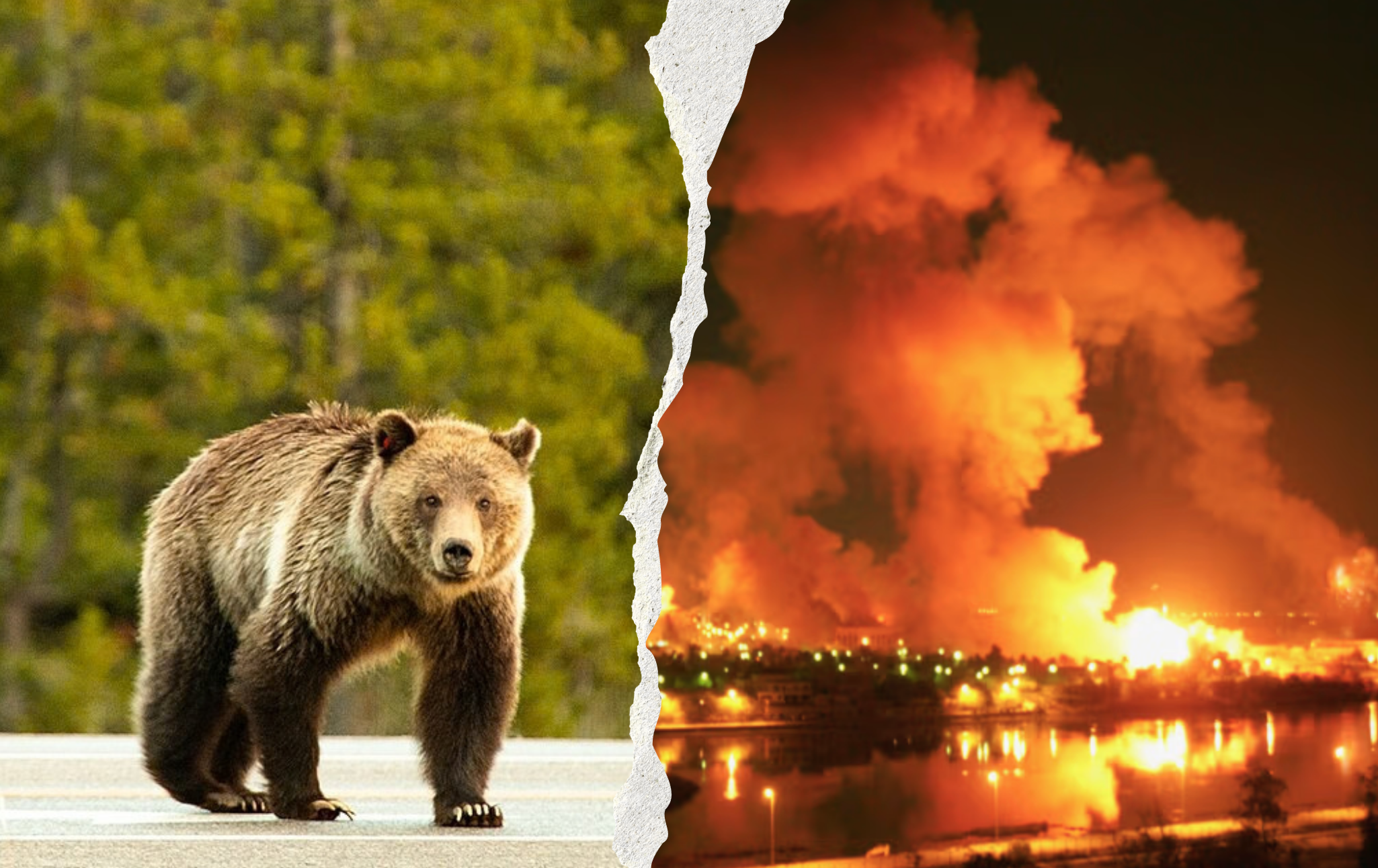
The Trump administration is attempting to render the Endangered Species Act incapable of protecting endangered species. At the moment, you’re not allowed to harm a federally protected animal. The Trump administration has reinterpreted the law to mean that you can’t harm a federally protected animal on purpose. Fish and Wildlife Service director Brian Nesvik, in a new memo, explained that under the new interpretation, if a logging company were to fell a tree containing an endangered bat species, this wouldn’t violate the law “unless the tree is felled for the purpose of killing or capturing them.”
This interpretation obviously renders the law virtually toothless, because what logging company is trying to kill the bats? They’re trying to cut down the tree, and simply don’t care whether there are bats in it, which is why the law has to step in and protect the bats if the species is to be protected from extinction. As Andrew Wetzler of the Natural Resources Defense Council explained, “the administration is telling every industry in America that killing endangered wildlife is fine as long as it wasn’t their primary goal,” even though “unintentional harm is exactly what is driving many species toward extinction.”
We can see here how an emphasis on “intent” can license horrific acts. If, say, my aim is to build a housing development, and it so happens that by doing so I will permanently end the existence of a dozen rare species, killing thousands of animals, what does it matter that my intent was to build a housing development? The result is the same, and I plowed ahead with my scheme knowing full well the damage it would cause. Clearly what really matters is not whether I intend to kill the animals, but what significance I give to their lives.
The Endangered Species Act reinterpretation is horrifying, because it basically permits corporations to extinguish every endangered species that gets in the way of their profits. After all, they’re not trying to kill, they’re just trying to make money, and if that causes a lot of deaths, well, their intent was pure (the noble calling of profit-making). Previous federal wildlife officials have come out strongly opposing this effort to render the ESA a dead letter. We can see here, also, how the effort by parts of the right to claim to lead on issues of animal rights is a fraud. The Trump administration is the ally of those who would “pave paradise to put up parking lot,” the corporations that would bulldoze the natural world and exterminate every species on earth (including our own) if it improves their quarterly returns.
But while the issue of endangered species protection exposes rather starkly how irrelevant “intent” can be in assessing an action, this isn’t the only domain where people fall back on professions of “benign intent” to justify committing heinous crimes. Recently, there has been (oh God) another round of media chatter about the opinions of controversial leftist Twitch streamer Hasan Piker, who claimed that the United States was a worse terrorist than Al-Qaeda. Shadi Hamid of the Washington Post disputed this characterization. He conceded that it is “technically true that the U.S. has killed more civilians than al-Qaeda,” but argued that there are important differences, namely that “the U.S. is a superpower of 350 million people and al-Qaeda is a relatively small terror group,” and “U.S. policymakers for all their faults do not deliberately try to kill Muslim civilians. Al-Qaeda does.”

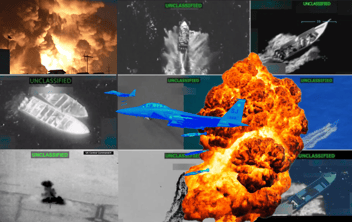
Hamid at least admitted that the U.S. kills a lot of civilians. Neera Tanden of the Center for American Progress said that there was “simply no universe where there's some comparison here” because “Al Quaeda [sic] beheads civilians.” I hate to break it to Tanden, but the U.S. beheads civilians as well. What does Tanden think happens to the human body when it encounters one of our 2000-pound bombs—you know, the ones the Trump administration is resuming sending to Israel so it can drop them on residential buildings in Gaza? Does she think that people’s heads consistently stay attached to their bodies during drone strikes? Would she like to see photos of the aftermath of our attacks on a wedding party or an elementary school in Iran? What about the time we bombed a Doctors Without Borders hospital in Afghanistan? What about the boat strikes in the Caribbean? Would you like to see what people’s heads look like after these incidents? No, if there is a moral distinction to be made, it cannot be on the basis of who cuts off civilians’ heads, because we commit plenty of acts of gruesome violence through aerial bombing, and they not only remove heads, but sometimes vaporize victims entirely. My god, we napalmed Vietnamese villages. We dropped two atom bombs on cities, an act that is still widely approved of (by Americans, if not Japanese people). What does she think happened to the kids in those places?
Since Tanden is presumably aware that (1) we do engage in wars, (2) in those wars we drop bombs, (3) those bombs often fall on civilians, and (4) when they do people often do not retain their heads, I assume her real argument would be something like Hamid’s: ah yes, but we don’t do it on purpose. When we behead people, it’s collateral damage, while al-Qaeda beheads people on purpose. (We will grant this, for the purpose of argument, while noting several facts: that in this day and age it’s the Islamic State, more than al-Qaeda, which is known for gruesome public beheadings, that U.S. ally Saudi Arabia, to which we supply billions of dollars in arms, systematically publicly beheads people including political dissidents, and that the U.S. has proved more than happy to support former al-Qaeda terrorists when they are willing to be geopolitical allies.)
Now, the “we don’t do it on purpose” argument is making a fairly limited claim. They’re not claiming that we don’t drop the bombs on purpose. And they’re not claiming we don’t drop them on schools and weddings. (A bipartisan act, since Obama, too, bombed weddings.) They’re not claiming that people aren’t terrified and traumatized by these actions. Rather, they’re claiming that there is an enormous distinction between committing the exact same act (dropping a bomb on a school and incinerating little kids) negligently versus deliberately. An enormous amount of American moral superiority rests on this distinction. Our enemies target civilians on purpose, we target them by accident, therefore our enemies are evil and we are good.
This moral distinction is not as clear as it first looks. If I shoot a gun into the windows of an elementary school, I could claim that I didn’t know there would be children inside, and was only trying to shoot out the windows for fun, or even that I thought a dangerous criminal could be inside the school. But I should have known that children are inside schools, and I therefore bear full responsibility for having fired a gun into a classroom. I might blow up a plane because I want to destroy its cargo rather than its passengers, but what difference does my intent make? I still set off a bomb on a plane.
Certainly, intent makes zero difference to the victims. None. What does the parent of a dead Iranian schoolchild care whether their child was killed because Pete Hegseth relishes killing Muslim kids, or because he is an ignorant Islamophobe who just drops bombs wherever? Intent is just what helps a killer keep their conscience clean despite committing the exact same act that they would call “heinous terrorism” if committed against them. When the IRA put bombs in pubs, they may have preferred that there were no civilians present when the bombs went off (they tended to give warnings beforehand so that people could escape, an excuse also deployed by Israel). Does anyone think the warnings make bombing a pub less of an act of terrorism? No, when our enemies kill, we don’t ever pause to think: “Well, was Vladimir Putin trying to kill the Ukrainian people he dropped the bombs on, or was he trying to target something else and the people got in the way?” We only extend that moral generosity to ourselves.
Before this debate was “Piker vs. Tanden,” it was had between Noam Chomsky and Sam Harris in an infamously crabby email exchange. Harris was trying to prove a massive moral distinction between the U.S. and al-Qaeda, returning to the issue of intent. And what Chomsky tried to explain to Harris was that in some cases, unintentional killing can actually be worse than intentional killing, if we treat human life like we are “killing ants while walking down the street.” Chomsky pointed out that if you simply assign a value of zero to the people you might kill through “collateral damage,” not caring how many of them die as a result of your actions because you’re not thinking about them at all (but not intending to kill them), it’s not clear why you deserve moral credit over someone who kills deliberately to achieve what they see as a just end. Again, we all agree it makes zero difference to the victims what’s in the heart of a person dropping a bomb on them. The question is: how much does it really matter when evaluating the perpetrator?
As we see in the Endangered Species Act case, “benign intent” is the refuge of someone who wants to do things that they know will have heinous results. But I didn’t intend to kill everything in the forest, just to demolish the forest, which I knew would have the effect of killing everything in it is an absurd defense. We can surely see that with regard to the Trump administration’s new policy. But can we see it with regard to U.S. and Israeli terrorism?
One final comment might be due on Hamid’s other, supposedly critical distinction between a mighty superpower and a small terror group. Hamid says that, yes, our body count is higher, but to compare a superpower to a terror group is “apples and oranges.” Here I can only be reminded of a quote from Saint Augustine that Chomsky was long fond of using:
A fitting and true response was once given to Alexander the Great by an apprehended pirate. When asked by the king what he thought he was doing by infesting the sea, he replied with noble insolence, ‘What do you think you are doing by infesting the whole world? Because I do it with one puny boat, I am called a pirate; because you do it with a great fleet, you are called an emperor.’
When they do it, it’s called terrorism. When we do the same thing, on a much bigger scale, causing much more harm, we’re a benign superpower. Because after all, we mean well.

%20(crop).jpg?width=352&name=wile-e-coyote%20(resize)%20(crop).jpg)