Whether a candidate can inspire people, organize them, and deliver for them matters more than where they stand on an imaginary ideological continuum.
There is a popular—and completely wrong—view of politics that candidates who are “extreme” stand no chance, while candidates who are “moderate” are more “electable.” To its proponents, this can seem like a truth so obvious that it is virtually a mathematical deduction. The median voter theorem says that if voters are distributed along an ideological spectrum, the candidate closest to the median voter will prevail. Therefore, centrism is not just a set of beliefs about ideal public policy, it is a science of winning elections.
But the belief that centrist candidates are inherently more “electable” is dangerously fallacious. Adopting it will lead to the selection of candidates who go down in flames—after presenting themselves as the “electable” choice.
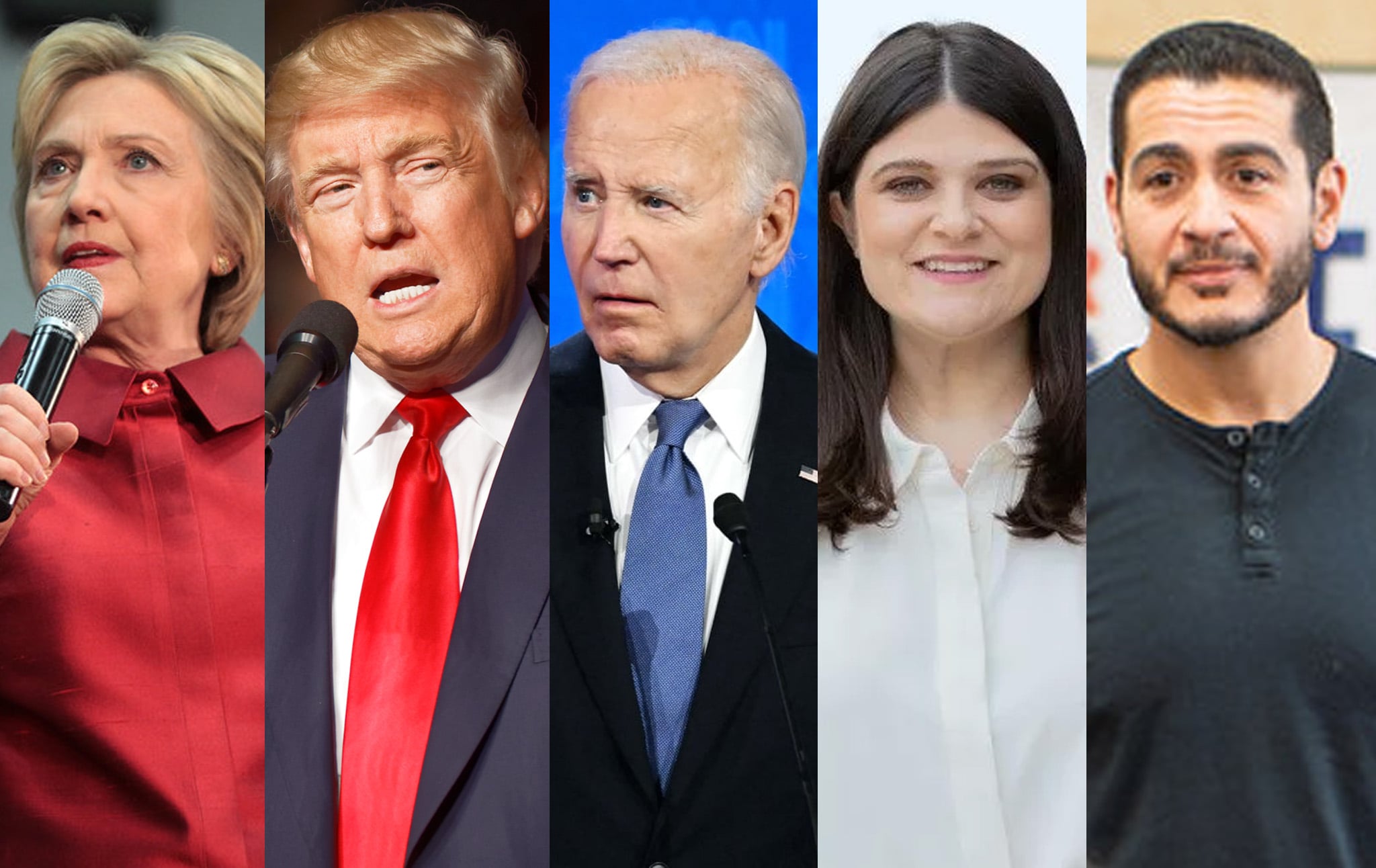
It’s kind of astonishing that this needs saying, ten years after the 2016 election demonstrated the point conclusively. When Hillary Clinton ran against Bernie Sanders, the centrists made the familiar case: Sanders was off to the left of the spectrum, Clinton was closer to the center, therefore Sanders was less electable, and Clinton was the better candidate to run against Donald Trump. This argument persuaded Democratic voters. By December of 2015, less than half of Democratic voters thought Sanders had a “good chance of defeating the Republican nominee” but 87 percent thought Clinton did. Plenty of these Democrats may have declined to vote for Sanders even if they agreed with him on policy, because they suspected the majority of Americans disagreed with him on policy, and they thought a candidate they were less aligned with personally was a better bet for a general election in which Democrats, Republicans, and independents all vote.
At the time, a few people, including myself, were tearing our hair out in frustration, because we felt that this argument totally overlooked some crucial facts about how politics, and human beings, work. The “median voter theorem” is the most simplistic model of political behavior imaginable: voters line up their beliefs along a spectrum, and pick the candidate closest to them on this imaginary line. Note that this assumes that voters don’t care about competence, they don’t get inspired by soaring rhetoric, they don’t feel disgust about scandals, in fact they don’t have any emotions at all. It assumes that organizing doesn’t matter, that whether you make your arguments well doesn’t matter, that whether you start muttering “we beat Medicare” at a debate doesn’t matter. The model also assumes that left-right spectrums are good models to understand voters and the world, which is only partly true. (I think “the left” is a meaningful concept, but I also think the world is complicated: Donald Trump was both more and less “extreme” than other Republicans. He’s more open to letting white nationalists into his orbit than mainstream Republicans had previously been, but less committed to cutting Social Security. He’s had more antiwar rhetoric than other Republicans, but is nevertheless an imperialist hawk. Are tariffs right-wing? How can we possibly locate Trump on any simple spectrum?)
If you ditched the simplistic theoretical “centrism maximizes vote-share” model, and thought about how the world actually works, Hillary Clinton looked like a terrible candidate and Sanders looked vastly more “electable.” After all, Clinton was under investigation by the FBI. Where does that fit in the equation? She was the ultimate insider candidate, running against an outsider politician whose entire pitch was that D.C. was a “swamp” filled with corrupt elitists. My own argument at the time was that Sanders was the one best positioned to counter Donald Trump’s pseudo-populist appeal, because he could say he agreed that D.C. was corrupt, and expose that Trump was not offering real solutions to the problems he diagnosed.
The election result in 2016 showed that those who argued Clinton was “electable” had a totally false notion of what electability really is, and they’d overlooked some important factors. Trump was capable of inspiring devotion in his followers, at huge rallies. Clinton could not pack stadiums and had trouble relating to ordinary people. It’s easy to think elections are just about ideology. But look at 2024. Joe Biden was plenty “electable” on paper, but he happened to be suffering from age-related decline in his capacities that sank his candidacy.
Right now, there’s a Senate primary going on in Michigan, and all the old debates about “electability” are being had. Abdul El-Sayed is a progressive supporter of Medicare For All and abolishing ICE, while Haley Stevens is a more centrist supporter of, well, “sticking it to ‘em,” and the Gaza genocide. Stevens’ supporters are arguing that El-Sayed is too “radical” and therefore an electoral risk against Republican Mike Rogers in November. As one Stevens adviser said, “Michigan is a purple state, and Abdul’s taken a number of positions that are out of line with the kind of persuadable voters we need to win over in the general election… We believe, and the data shows, that Haley’s the strongest candidate to run against Mike Rogers.” In fact, the data does not show that. Some of the data suggests El-Sayed would actually be a stronger candidate against Mike Rogers than Stevens. But those who talk this way are not really making an argument about what “the data” shows, they’re making an argument about what their ideological assumptions show. Their fixed assumption is that centrism makes you more electable, so it doesn’t matter if the data aren’t actually showing this.
Here’s the thing about the Michigan race: there’s actually good reason to think Stevens would be a much weaker candidate than El-Sayed in a general election. Her fundraising has been weak compared to El-Sayed; she raised around half what he did in the last reported period, and is being buoyed by massive outside spending, largely from AIPAC. AIPAC can’t be counted on to help her in a general election. All they care about is that El-Sayed is defeated, since he wants to cut off U.S. military aid to Israel. In a general election between Stevens and Rogers, both candidates will be supporters of Israel, and since Democrats now face immense pressure from the party base to break with Israel, AIPAC actually might have a slight preference for Rogers. This means that if Stevens wins the primary her engine of support may disappear overnight, and her seemingly strong campaign will be exposed as hollow and weak.
That weakness is evident on the ground in Michigan. When I was there earlier this month reporting for the Nation, the enthusiasm for El-Sayed was palpable. He was packing halls and rousing supporters with punchy speeches. Stevens barely held public events, had few volunteer opportunities, and evaded questioning even from friendly press like Vox, which concluded that she and other moderates were “in hiding.” (Her campaign didn’t reply to my repeated requests for an interview, even though I was there with the Nation, a hugely important magazine for reaching Democratic-leaning voters.) El-Sayed rejected the idea that he was “far left,” arguing that he was for common-sense values like giving people guaranteed healthcare, ending corrupt deals that favor corporations over everyday people, and stopping giving American tax dollars to a genocidal regime.

Israel factors into electability. The Stevens electability argument, like the electability argument for Joe Biden and then Kamala Harris in 2024, requires the assumption that Democratic voters will turn out in a general election for a candidate that has supported a regime that most Democrats now strongly oppose. For instance, Stevens recently had an encounter with a community leader, Jai Singletary, who said he voted for El-Sayed because as a soccer coach for 6-year-olds, Israel’s murders of Palestinian children deeply disturb him. Stevens walked away, but think about how this factors in to “electability”: we are required to believe that voters like this can be relied on to swallow their disgust and turn up in November for a candidate who supports a state actively murdering children. This assumption was exposed as foolish when Kamala Harris showed contempt for pro-Palestine protesters, refusing to meet with Gazan families or allow a Palestinian speaker at the DNC. If you’re going to treat the base with contempt, they’re not going to give you the dedicated effort that you need in a hard race.
Our electability conversations are so strange, because they adopt a model of politics in which basic things like “the ability to inspire people and communicate ideas clearly” simply do not matter. Too many people are stuck inside a rigid idea of how they think politics operates that bears no resemblance to reality. For instance, the Democratic commentator David Pakman says that “extremists” on the left are hijacking the Democratic party, which is now showing “early signs of the same disease that destroyed the Republican Party.” Pakman is so committed to his mental model that says extremism is politically harmful that he fails to notice that the Republican Party, far from being “destroyed,” actually now controls all three branches of the federal government and most of the state legislatures! You might assume that going too far right would have destroyed it politically. But it didn’t.
Politicians like Zohran Mamdani and Abdul El-Sayed may be “on the left” in the way that term is typically understood, but importantly, the divide between them and the centrists in the Democratic Party is also a divide between a politics focused on delivering material benefits for ordinary people and a politics that speaks in empty platitudes. Mamdani, for instance, while on the “fringe,” talks about rent, childcare costs, the cost of a bus ticket. El-Sayed is telling people that he’s going to save them money on their healthcare. The electability question is not “can the far left win in general elections.” It’s “how are you going to win a general election if you don’t have a clear, powerful message on the issues that matter most to people?” Once we understand that caring about people’s material needs makes them more likely to want to vote for you, our entire understanding of an “electable” candidate is flipped on its head.