If there’s a visual language that connotes credibility and authority, why not take advantage of it?
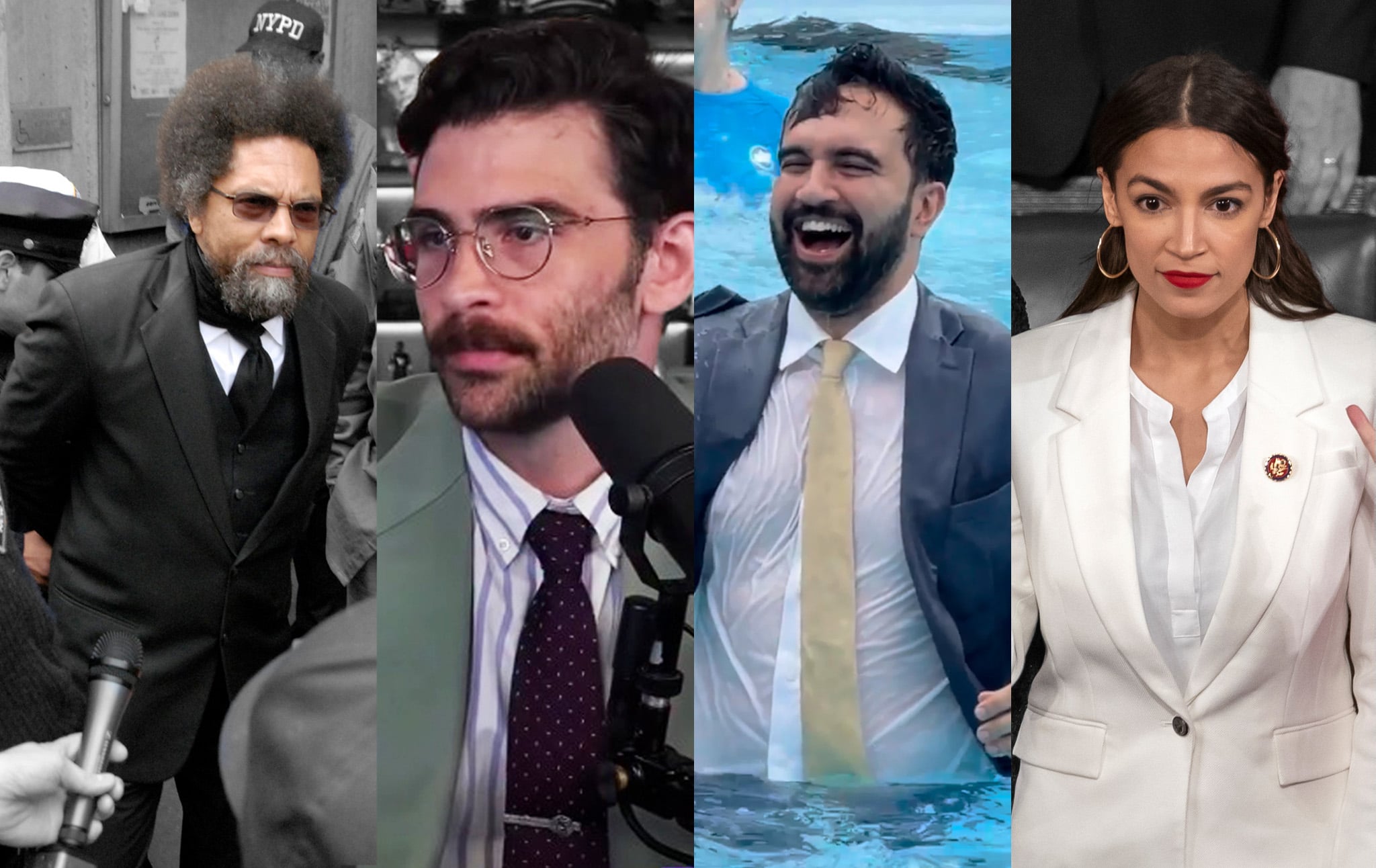
Leftist Twitch streamer Hasan Piker says “I’m a suit guy now.” The reason is simple, he explains: “Moms and dads are watching.” Piker has said that when he wears suits, people’s grandmas think he’s serious, respectable, and handsome. And because he’s trying to maximize the reach of his political message, well, that means putting on a tie. He has joked that “wearing a suit is lingerie for old conservative ladies,” and if he’s in quality menswear “they’re a lot more receptive to what I have to say. This is how we spark the revolution.”
That may be a slight hyperbole. But socialist New York mayor Zohran Mamdani is also known for his commitment to virtually full-time suit-wearing, to the point where he has repeatedly worn one to jump into bodies of water. City & State New York, in an article titled “Why Mamdani won’t take off that damn suit,” notes that “whether on a boat in triple-digit temperatures or playing pickup soccer… Mamdani has gotten a reputation for adhering to his uniform.” The publication quotes Mamdani spokesman Andrew Epstein, who says that the mayor is “somebody who thinks that the left should be organized and professional in their presentation at all times.”
I’m partial to suits, too, although here in the New Orleans summer heat, wearing a blazer is almost unbearable. And I think Piker and Mamdani are onto something with their use of suits as a kind of strategy. For those trying to advance radical politics, clothes are worth thinking about and selecting with care. Like it or not, we live in a culture where images, not just words, communicate messages. You might wish we lived in a world of pure intellectual rationality, where people evaluated only the contents of an argument, and didn’t pay any attention to looks, branding, and design. But in the world we have, aesthetic choices convey meaning to people.
Today’s socialists don’t all wear suits, but it’s certainly the case that the contemporary left has a lot more conscientious thinking about branding and design than the American left used to be known for. The Democratic Socialists of America puts out a design guide which claims that “second to organizing skills, creating a cohesive look and feel for a campaign is helpful in creating community awareness and buy-in” and claims that “visual identity is a key part of a campaign’s communications strategy.” There is a specific prescribed DSA color palette and even a DSA-specific font (Manifold DSA). Mamdani’s campaign was conscientious about visual identity, and ultimately came up with visuals that “didn’t look like political graphics at all, [but] looked like they were inherently part of the Big Apple—a multilingual, electric and somewhat unruly urban cosmos,” featuring the decidedly bold choice to heavily feature the yellow-orange of taxicabs and MetroCards.
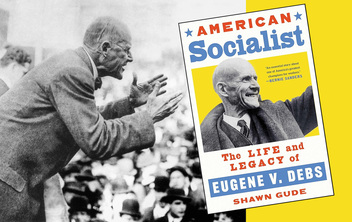
Wearing a suit makes a statement. That statement can be interpreted a few ways. You might interpret it to mean that someone is conservative. Menswear expert Derek Guy says this connotation is mistaken, and while we tend to “assume every man who wore a suit in the far past must have been a staunch conservative,” in fact “the people who wore and made suits came from diverse backgrounds and held diverse views, [and] many were pro-immigrant and pro-labor because they were non-Anglo immigrant workers themselves.” You might see someone in a suit as serious, professional, ready to do business. You might think they belong in the Senate or a boardroom. That’s certainly what Mamdani is trying to convey with his suits. He understands that socialists face a challenge: we’re considered fringe. People think we don’t belong among those making important decisions. The suits are a subtle way of asserting the legitimacy and authority of socialist ideas.

I get it, because I thought similarly when I was designing the first issue of Current Affairs. I knew we would be pushing bold ideas that sat outside of the political mainstream (although why the idea that society shouldn’t have a class of rich rulers and a class of poor laborers is “outside the mainstream,” I do not know). I wanted our design to say: no, these ideas are reasonable, they belong next to the ideas in The Economist and The Atlantic, so I picked conservative typography (Garamond for body text, Oranienbaum for our logo) that would make us blend in seamlessly with far larger publications. I even picked our boring name deliberately; I didn’t want the connotations that, say, Jacobin carries with it. (“We’re going to break out the guillotines.”) These communicative choices are strange, in a way, because someone should evaluate a magazine’s arguments by whether it supports them effectively and not by whether the typography looks good. But typography, like suits, carries meaning. If I set the magazine in Comic Sans or Papyrus, I promise you, you would have a harder time taking us seriously, even if every word was the same. If this website looked like a ’90s Geocities site, you would raise a skeptical eyebrow. You might not realize that design choices make a difference to you, but if I ask you which one of these looks “shady,” I bet you’ll have no trouble telling me:

Now, I happen to love handmade leftist zines, and I love graffiti, and I love everything rough and handmade. I love ugly sweaters and tacky Hawaiian shirts and gaudy neckties and all of it. But if I’m giving a speech or going into an important meeting, you’d better believe I’m wearing a suit. Even if people understand on some level that it’s irrational to give “suit points,” they can’t help but notice how you’re dressed.
I actually think that a lot of white men in particular choose not to wear suits even in formal settings because they know they can get away with it. John Fetterman, for instance, walks around the halls of the U.S. Senate in a hoodie and shorts. You don’t see Raphael Warnock doing that. Do you think Warnock would have been as easily elected if he’d cared as little about his image as Fetterman?
I think I’ve told this story in this magazine before, but it’s always guided my thinking about this: In college, I had a young professor who wore a tie every day, just like I usually did. Few other professors still wore ties at this point. And out of some strange hunch I asked my professor: “Were you the first in your family to go to college?” He said he was. So was I. And it confirmed my idea that those who have to scale the status ladder often take seriously ideas like “dressing for success” that people who are born into success don’t have to think about. I wore ties in college in part because I took the privilege of being in college very seriously, and I wanted to dress in a way that conveyed my seriousness. My professor, who was white, also told me an anecdote about being at an important function, which he’d kind of underdressed for. He ran into a Black colleague who was dressed to the nines. His colleague pointed to my professor’s slovenly attire and said: “Look around the room. You don’t see any of the people of color dressed like that.” From then on, my professor was always conscientious about dressing appropriately.
The fact is that Zohran Mamdani and Hasan Piker are both, as Muslim men, subject to Islamophobic bigotry in this country. Mamdani used to wear kurtas in office as a state legislator. He switched to suits when he ran for mayor, presumably in part because he thought kurtas would make it that much more difficult to overcome the idea pushed by his political enemies that he was culturally alien. And you might say: Well, that shows that suits are a kind of “respectability politics.” 1950s and ’60s civil rights marchers put on suits in part because they wanted to demonstrate their “dignity,” but they shouldn’t have had to accept a standard of dignity designed by white people. Backlash to that notion led Black radicals to adopt more Afrocentric dress in the late ’60s and ’70s.
I completely agree that we shouldn’t live in a world where there is a stigma around the clothes of other cultures, or where they’re considered unprofessional. And I actually think that often, we need more defiance of suit-wearing. I love the fashion choices of labor leader Chris Smalls, who wears colorful, eye-catching streetwear. His clothes send a message, and the message is: This is what a labor leader can look like. His fashion is subversive and powerful. I also think Mamdani’s choice to wear kurtas as a state senator was similarly impactful, forcing multiculturalism into the halls of power. What I’m arguing here is not, in fact, that suits should be the official socialist aesthetic. I’m arguing that clothing choices should be made deliberately with an understanding of the message they are trying to send. Mamdani was trying to send one kind of message when he was a state legislator, and now he’s trying to send a different one. And I think there’s more to it than simple “respectability politics.” As Brooklyn borough historian Asad Dandia told City & State, he’s “saying that this is not just something for the Anglo-Saxon class but that an African born, Asian, Shia Muslim socialist can embody all of these things just as well as anyone else.” The sapeurs of the Congo are not internalizing colonialist norms of dress, but playing with them, reclaiming and subverting them. Cornel West, who never appears without a black three-piece-suit, says his suit is “armor” he wears to the intellectual battlefield, and it makes him feel “ready for combat.” I want a socialist movement that has clothing choices like Smalls’ and clothing choices like West’s, but what I do not want is a socialist movement that assumes clothes simply don’t matter.

Some readers may wonder where women fit into this analysis. But I don’t think I actually have to tell women that visual presentation matters for a person’s reception, because women are forced into negotiating this fact. It’s men, and particularly white men, who are granted the luxury of not having to think much about their appearance, because when you have power, you are released from wondering how small stylistic choices could advance or inhibit your goals. Again, the Fetterman comparison is helpful: no woman in the Senate has had a controversy about violating the dress code, because no woman would be in the Senate in the first place if she was as lackadaisical about appearance as Fetterman. AOC has said that “dress is a form of communication,” and been open about the fact that she thinks very conscientiously about it, and has to as a woman:
“Just being a woman is quite politicized here in Washington… There’s this really false idea that if you care about make-up or if you care, if your interests are in beauty and fashion, that that’s somehow frivolous. But I actually think these are some of the most substantive decisions that we make — and we make them every morning.”
Many of the “rules” of aesthetics in our society are unfair, oppressive, and arbitrary. I do think we should always be trying to subvert, challenge, and remake those rules. I find a lot of menswear conventions to be ridiculous and snobbish (never wear a tie lighter than your shirt, no brown shoes after 6p.m., etc.) and real dandies have always been experimental, as is vibrantly shown in Natty Adams and Rose Callahan’s wonderful book of “elegant gentlemen” around the world (including many queer and transgender dandies). I want a gender-bending world of women in menswear and men in womenswear. My aesthetic ideal is Mardi Gras, with its stunningly rich and diverse panoply of looks. But here’s the thing about Mardi Gras: people spend ages working on and thinking about their costumes. Everyone might have differences of opinion about what to wear, but they share in common the belief that what you wear matters. And I think we need, and are getting, a leftist movement that takes design, fashion, and style seriously. So when the revolution comes, it’s going to look fantastic.