Shortly before my father’s 1974 emigration to New York City, he’s an aspiring politician in post-colonial Jamaica, whipping support for democratic socialist Michael Manley’s bid to become prime minister, riding People’s National Party vans to Kingston, canvassing voters, not returning home for days. He’s 16 years old. Beneath a coconut tree on his family’s modest plot of land, he delivers speeches into the tropical dusk, readying himself for his life’s work: he will be Jamaica’s Fidel Castro, leader of another island nation looking to rebuke the colonial boot. Crickets chant his name.
My mother’s connection to the Cuban Revolution is less precocious, but no less immediate. Also a Jamaican immigrant, she later recalls the presence of Cuban healthcare professionals, sent around the world by the Castro government. After President Trump’s Department of War abducts Venezuelan President Nicolas Maduro in January and assumes control of its government—sparking speculation that Cuba could be next in line for a neocolonial takeover—she resorts to Facebook. Mom shares a screed: “In 1976, the first group of Cuban doctors and nurses arrived in Jamaica. Their arrival followed an agreement between Prime Minister Michael Manley and Fidel Castro. Countless individuals regained their quality of life because of Cuban doctors.”
I slide my finger over the “Like react.” I change it to “Care.”
It’s the year 2000, and I’m a high school dropout and juvenile delinquent, sitting in a Seattle community college classroom, reading Howard Zinn’s A People’s History of the United States, learning for the first time how American corporations spearheaded campaigns of imperial conquest into the Caribbean. I’m 16, and Zinn is unsparing: “In 1959[...] American companies controlled 80 to 100 percent of Cuba’s utilities, mines, cattle ranches, and oil refineries.” I learn from my father that one of these corporations, the United Fruit Company, later rebranded as “Chiquita,” hoping to distance itself from the history of U.S. intervention in Latin America that it had helped to write in blood. I never look at a banana the same way again.
I also begin to see myself differently.
Two decades later, not long after I’m elected to the Washington State House of Representatives in 2024, I revisit the vast online repository of Fidel Castro’s media appearances. In the upcoming legislative session, I’ll be introducing a corporate payroll tax on the most lucrative companies in the state. I want examples of how a socialist salesman goes about pitching ideas seen as radical to a mainstream audience.
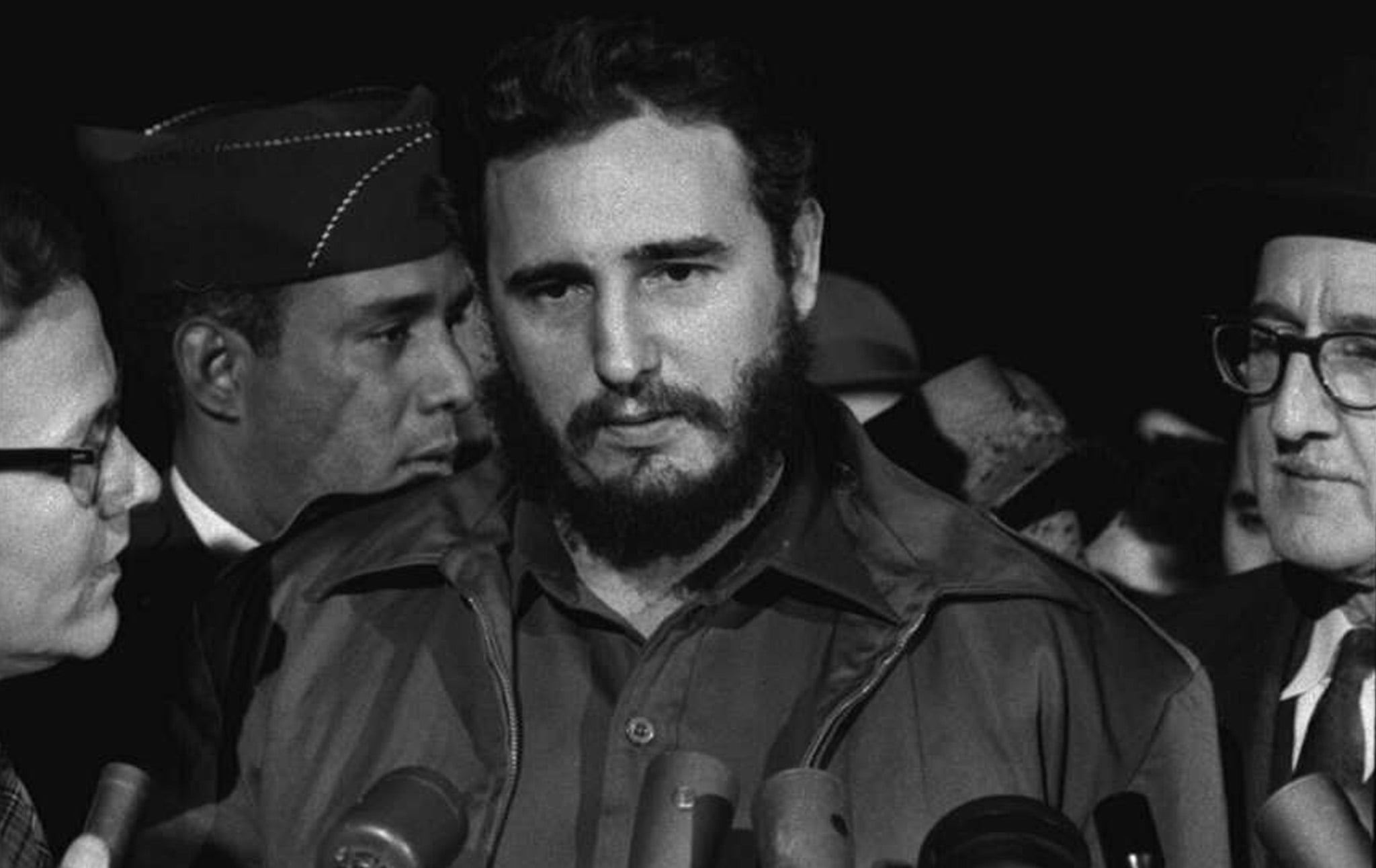
Fresh off his triumph over the U.S.-backed puppet dictatorship of Fulgencio Batista in 1959, Castro went on a tour of Yankee media. His charm offensive was an olive branch to the American people, whose government he’d just defeated in six years of combat going back to the failed “M-26” rebellion of 1953. On film, he’s three-dimensional: here’s Fidel Castro on Face The Nation declaring Latin America’s right to self-determination while smoking a cigar and wearing two Rolexes. Here’s Castro in his pajamas, casually discussing guerilla warfare with Edward R. Murrow on evening television. We see him again, accepting an invitation to the New York Press Photographer’s Ball beside a foursome of conventionally attractive journalists. In New York, “the applause was prolonged and the crowds huge everywhere [Castro] went,” writes historian Ada Ferrer in her Pulitzer-winning history Cuba: An American History.
Castro presaged contemporary socialists who thrive in the heart of capital: “In Queens,” Ferrer writes, “he posed for photos with Cuban American boys and girls wearing green caps and beards. (An American toy manufacturer had recently released one hundred thousand Fidel cap-and-beard sets.)”
Returning as a state representative to Castro’s media tour, I see him with fresh eyes that weren’t mine when I first learned of him as a wayward teenager. A Gen-Z’er today may say he has “rizz,” short for charisma, possibly attributing the quality to his star sign. Born August 13, 1926, Fidel Alejandro Castro Ruz is lit aflame by attention in a way that prompted a 1961 CIA psychological evaluation to conclude “egoism is Castro’s Achilles heel. He is unable to obtain complete emotional gratification from any source but the adulation of the masses.”
Did Castro risk his life for Cuba’s masses—or did it never occur to him that he could lose? A few years shy of age 30 on July 26, 1953, he had directed a daring attack against the Batista regime, assaulting a heavily armed military barracks at Moncada. It was an utter failure. His squadron of 160 sustained dozens of casualties; Castro himself was jailed. Behind bars, he devoured books about history and political philosophy sent to him by his lover Naty Revuelta, turning his incarceration into an international amnesty cause celebre. Because of his incessant campaigning, the Batista regime released Castro after just 19 months, abrogating a 15-year sentence. Upon his release, the now-familiar visage of the Latin American comandante comes into focus.
Out of jail, Castro trades his prim mid-century slacks for suit coats and military fatigues. He grows a beard. In Mexico, he meets Che Guevara while traveling the Americas to raise funds and recruit soldiers for a new coup attempt. Then, after two years of combat in which they’re heavily outgunned and outnumbered, Castro’s new cohort of rebels win popular support: first in the mountains, then in Cuba’s cities, toppling Batista’s regime at last on December 31, 1958. Newsreels distributed to a global audience show emancipated Cubans celebrating in the streets, destroying the property of the island’s old oligarchs.
Fidel Castro is ready for his closeup.
Faced with a charismatic spokesperson for anti-imperialism in their own hemisphere, El Presidenté’s adversaries in the U.S. State Department figure that if they can’t kill him outright, then they could assassinate his aura. Cuban officials estimate over 600 CIA-directed attempts on Castro’s life; the Yankees once attempted to de-beard him using thallium salts ground into his boots. Watching Castro jab the hypocrisy of American foreign policy on national television, it’s clear why our government wanted him dead: “The United States speaks of democracy,” he says in a thick Cuban accent on Face the Nation; “but it forgets the democratic feeling of the people of Latin America.”

An impressionable outer-borough teenager is among those inspired by Fidel Castro’s 1959 media tour of New York City. Later asked about the Cuban Revolution as a grown man in the 1970s, he says “I was a kid, and it just seemed right and appropriate that poor people were rising up against rather ugly rich people.”
Fidel Castro was briefly celebrated in America after the McCarthy crackdown on real and suspected leftists in the 1950s; his six decades in power overlapped with the birth and rise of neoliberalism. With Republicans and Democrats alike scaremongering against communism while gutting social services, Castro and his traveling doctors and his commitment to universal literacy and his socialism were for many years in America portrayed by mass media as the fringe of the fringe.
The teenager he inspired never wavered. His respect for the Cuban leader remained with him in his advanced age, as did his heavy Brooklyn dialect: “There were a lot of folks in Cuba at that point who were illiterate. He formed the literacy brigade, and they helped people learn to read and write. You know what, I think teaching people to read and write is a good thing.”
A CNBC headline of February 24, 2020, summarized the remark’s fallout: “Bernie Sanders hammered by Democrats over Fidel Castro defense.”
The Cuban Revolution passed into popular culture as the inspiration for Mikhail Kalatozov’s 1964 film Soy Cuba, a movie called “one of the most hypnotic ever made” by Martin Scorsese.
The medium was the message. The fractal vignettes of Soy Cuba traverse the social hierarchy of pre-revolutionary Cuba, visiting the fictive tenant farmers, prostitutes, and disaffected youths to whom Castro’s revolution appealed. Its uncomfortable close-ups bring us to intimate terms with the oligarchs who leeched onto Cuba’s jazz clubs and hotels, doing what they wished with the country’s land, labor, women. The majestic tracking shot of the film’s conclusion—copied by Paul Thomas Anderson in Boogie Nights—is a panorama of the Cuban masses that Castro risked his life to free from colonialism.
Soy Cuba puts flesh and skin to the dry skeleton of recited history. It’s one thing to read President James Polk say, at the dawn of America’s colonial ambitions in the Caribbean in 1849, “Cuba is already ours, I feel it in my fingers’ ends.” It’s quite another to see a depiction of elites taking advantage of school-age girls in seedy lounges. In the age of Epstein, these kinds of fictionalizations of history come with added heft.
Of course, Fidel Castro was an irreformable philanderer whose sexual politics as a leader on the world stage should come under close scrutiny in the durative #MeToo era. If the need for affection from “adulating masses” fictionalized in Soy Cuba informed how he governed, the way Castro sought and negotiated intimacy is a deeper look into the world he created as a head of state.
A first glimpse of Castro’s attitudes towards women and family comes in 1954 when, writing from prison, he mixes up the addresses on separate letters intended for his wife and mistress, revealing his infidelity to his wife. The marriage is over when his bride relocates with their son to the United States while it was bankrolling Batista’s repression of Cuba; absorbed by Castro as an unforgivable affront, the motivating event of the divorce was dramatized in the 2002 David Attwood biopic Fidel. Castro’s mistress, meanwhile—the wealthy socialite Naty Revuelta—is married to another man when she has a daughter by Castro after he’s released from prison. Though she refuses to marry Castro because she believes he will die during his second attempt at insurrection, she nevertheless pawns all her jewelry and hands him her life savings to help him finance the Cuban Revolution. Biographer Tad Szulc describes Revuelta as “one of an extraordinary contingent of beautiful and/or highly intelligent women who, in effect, dedicated their lives to him and his cause.”
Shortly after taking power in 1959, Castro begins a tryst with a German woman named Marita Lorenz. After they separate, the CIA recruits Lorenz to assassinate him—but she accidentally falls back in love, screwing El Presidenté instead of shooting him on the night she’s supposed to take his life. Still another bedmate in the post-revolutionary period is ABC journalist Lisa Howard, who portrays Castro as initially walking a line between consent and carnal intent: “He kissed and caressed me with restrained passion[...] but would not go all the way.” When the two finally defeat temptation by yielding to it, Howard has no complaints: “He made love to me quite expertly and it was, of course, thrilling and ecstatic—as much as anything I have ever experienced.”
Power, women, and books appear the three great loves of Castro’s life. These romances were tangled: behind bars after the Moncada coup attempt, it was Naty Revuelta who introduced Castro to the socialist authors who would solidify his personal revolutionary ideology, sending him copies of Rousseau’s Discourse on Inequality, Marx’s Eighteenth Brumaire, Lenin’s State and Revolution, midwifing Castro’s intellect by discussing these works with him in their passionate extramarital prison letters. In turn, Castro governed as a feminist: in his first two years in power, Cuba’s Federacion de Mujeres Cubanas helped some 385,000 women become literate as part of El Presidenté’s self-professed mission to aid the entry of a million Cuban women into the country’s workforce.
It’s plausible that Castro was as obsessed as he was with rescuing his motherland from the groping hands of U.S. imperialism in part because of the indignity of seeing American elites use their influence to have their way with Cuban women, and also girls; likely that Castro’s lust and revolutionary politics were linked en libido.
What’s definitely true is that Jeffrey Epstein and his associates viewed Castro’s exit from power in 2008 and his death in November 2016 as a golden opportunity: “Cuba’s location is the best, no shortage of land,” wrote Epstein to an Emirati businessman in 2009.
On July 20, the Epstein associates in charge of the American federal government supplied a most sparkling tribute to the Cuban Revolution.
The U.S. State Department’s “Cuba: The Capital of 21st Century Communism” casts the island as the spiritual epicenter of socialism since 1960. Reading the document’s description of DSA members attempting to distribute aid to Cuba—the contemporary left’s remittance for years of Castro support for American radicals like Malcolm X and the Weather Underground—it’s hard not to experience extreme feelings of missing out.
On April 7, I had applied for a U.S. passport renewal to travel with DSA’s “Socialists in Office” delegation to the country that sparked the ambitions of my father’s youth; that earned my mother’s respect. To my surprise, the credential arrived seven short days later, prompting a comrade to joke via text, “wow trump must REALLY want u outta the fkn country ASAP.” Fine! I would take a direct flight from Seattle to Havana.
In Cuba, I would see the resilience of a revolutionary government delivering healthcare and education despite the suffocating grip of U.S. sanctions. I would travel with medical supplies. Through enchantment with Cuba’s intrepid experiment with socialist governance, I would be replanted in my sense of purpose as the first socialist to serve in the Washington State legislature since 1914. Alongside other socialist politicians, I would lay claim to a rich inheritance.
Only, I would get an e-mail from DSA three weeks before the trip: It was cancelled. Our plot didn’t survive the Trump Administration’s legal review of international travel. Our plans to visit this hub of socialism set near sunny beaches and brilliant skies denied, the icy glow of a smartphone would have to suffice.
“We’re in the heart of Havana,” the leftist streamer Hasan Piker says in a YouTube docu-special about his travels to Cuba. “I’m hit with how beautiful the city is.”

Posted on Instagram by the account @resistance.archives on May 3, 2025, a clip of Fidel Castro denouncing capitalism for “poisoning the waterways, the atmosphere, the earth” has garnered 1.5 million views and 112K likes as of this writing. The eco-socialist jeremiad found a large audience, jibing with viewers who see socialism more favorably than capitalism, who would vote for Bernie Sanders for president for a third time if they could, who watch AOC livestreams.
In the pantheon of socialist politicians in the century since the Red Scare of the 1920s, Fidel Castro has a permanent place. He’s the bridge between a dustier legacy of pre- and early-twentieth century socialists and the mass media flare of the contemporary left. If Representative Alexandria Ocasio-Cortez and Mayor Mamdani both cite Bernie Sanders as primary political inspirations, and the first politician who inspired Sanders was Castro, then something like a family lineage is clear.
Because Castro is likely the favorite socialist of your favorite elected socialist’s favorite socialist, the shadow of his influence on the left in America shouldn’t be hard to find, and it isn’t. Influence also moves in two directions, allowing us to see both the world Castro created and how it passed him by.
Let’s start with the positives. Contemporary liberals, and too many socialists, are resigned to bearing witness to suffering, helplessly sharing clips of human rights abuses on social media. Castro put his arms where his aspirations were, training Palestinian resistance cadres and directing aid to Angolan forces when South Africa’s apartheid government invaded to suppress the Black nation’s newfound independence. South Africa’s regional defeat was a crucial first domino in the eventual fall of apartheid. Nelson Mandela was forever grateful: “To the Cuban people internationalism is not only a word,” he said, “but something which they have put into practice for the benefit of large sectors of mankind.”
During his many decades in office, Cuban doctors under Castro’s direction flew missions around the world, delivering healthcare to countries denied it by poverty and privatized medicine. Castro’s “army of white coats” has continued into the present, vexing American officials who have imposed sanctions on countries that collaborate with Cuban doctors. If Jamaica has historically punched above its weight culturally—exporting reggae, ska, and early versions of hip-hop, watching obscure regional styles turn into global genres—then Castro’s Cuba is its political counterpart: a tiny island nation that upset U.S. hegemony through the power of example.
The local leader who made his country into an international force first had to make the intellectual journey from child of privilege to earnest liberal, and then—only then—to avowed leftist. Historian Jonathan M. Hansen’s book Young Castro: The Making of a Revolutionary frames him as a reluctant rebel, the son of propertied parents who becomes a lawyer in his 20s.
Through 1952—the year Castro set out to run for Cuba’s national Congress; the year the U.S. installed Fulgencio Batista, who cancelled elections—Castro had been a liberal constitutionalist looking to advance, in his words, “man’s right to a decent standard of living.” Even as a revolutionary, Castro often spoke in radical-liberal tones about freedom, about democracy, about the rule of law. He insisted that these values could not be realized without the economic justice of state-distributed medicine, of education, of collective ownership of Cuban energy and utilities. “We haven’t chosen this struggle,” said El Presidenté while wearing military fatigues and brandishing a rifle in 1967; “It’s been imposed on us.”
In a manner of speaking, Castro’s first political love was a kind of enthickened liberalism, for which his affection was so strong that he was compelled to become a revolutionary to defend it. He eventually wedded communism in a marriage of necessity. But the embers of the earlier romance remained. Nothing could ever change that his earliest political ambition was to be an elected Representative in Cuba’s Congress. El Presidenté would be at home in the current political moment of compelling democratic socialist candidates, because once upon a time, he was one.
Seven decades hence, Castro’s best-known speech is still “History will Absolve Me.” Delivered in self-defense at his trial for sedition in 1953, it was distributed by Naty Revuelta for publication while he was still behind bars. If ever there were a place to abandon the feint promise of legal justice that underpins the liberal tradition, jail was it. Instead, “History Will Absolve Me” finds Castro probing Cuba’s legislative history to paint Batista and his henchmen as the real criminals, buttressing his arguments with descriptions of the economic desperation endured by everyday Cubans under colonial rule. The true traitors to law and order, in Castro’s telling, were not the so-called dissidents of Cuba, but the plutocrats who plundered it: “The nation’s future," he writes, “cannot continue to depend on the selfish interest of a dozen big businessmen, nor on the cold calculations of profits that ten or twelve magnates draw up in their air-conditioned offices.”
The root of Castro’s appeal to American media in the late 1950s was in his expression of a strong nationalist program for economic justice, articulated at a time when the notion made more sense than ever. After World War II, American social programs were funded with federal taxes on personal and corporate wealth that reached their highest point in the country’s history. Freed from the economic pressure of high costs for housing, healthcare, and higher education, Americans in these “baby boom” years married and started families; they gathered around the evening television to learn more about the dashing revolutionary who promised to bring prosperity to Cuba. As a statesman, Castro was at his best when he asserted how socialism was needed to achieve the liberal ideals that were stymied under free-market capitalism.
At the same time, El Presidenté was at his worst as a dictator who ruled undemocratically. The customary military fatigues; the strident hours-long speeches; the greying beard: by the end of the 20th century, they all appeared the gamey trappings of an aging autocrat.
Important as Castro’s domestic economic policy and forays into foreign affairs were to how we see the world today, an equally valuable contribution would have been demonstrating the compatibility of socialism with the construction of liberalized institutions in Cuba: a free press, a democratized legal system, and open elections.
The color negative of Castro’s savvy at manipulating film media was his oft-restrictive attitude towards writers, artists, and the domestic press. In 1962, he made a lifelong enemy of the most famous Cuban on the planet besides himself—the singer Celia Cruz—when his young administration barred her from returning to the island to bury her dead mother, simply because Cruz was not a fan of Castro’s politics, nor him personally.
In Castro’s world, sex was power: a matter of personal pleasure, but also public policy. Because Yankee hegemony was most clearly displayed in the Havana hotels and jazz clubs where American elites reached for Cuban flesh, among the Castro government’s first acts after the revolution was the defenestration of the country’s entertainment industry. Subsequently, under Castro’s Federacion de Mujeres Cubanas, former Cuban prostitutes were compelled to join re-education camps; they were joined there by gay and lesbian Cubans. For the latter—that is, for the inexcusable incarceration of LGBTQ Cubans—Castro at least apologized: same-sex relations were officially decriminalized in Cuba in 1979, a quarter century before the United States.
Initially a supporter of Castro’s government, Susan Sontag became critical of Cuba’s involuntary commitment of gay and lesbian Cubans: “The discovery that homosexuals were being persecuted in Cuba shows, I think, how much the Left needs to evolve.” At least one woman in his life cared enough about Castro and his cause to speak truth directly to power: “To make an honorable revolution,” Lisa Howard told El Presidenté, “you must give up the notion of wanting to be prime minister as long as you live.”
When Castro asked whether she believed he had constructed a police state, Howard was blunt: “Yes, I do.”
There was a moment during then-Assemblymember Zohran Mamdani’s October 2025 appearance on The View when the future Mayor of New York City fielded a loaded line of questioning from Joy Behar: “Just what kind of a socialist are you?”
On the one hand, there are the family-friendly socialists—the Nords; the social democrats of Germany and other North Atlantic nations; the pinkos who are often the first of all leftists to be accepted as an edgy but none-too-threatening left flank of capital. On the other hand there are the reds; the communists; the often as not pigmented socialists of Global South extraction who appear darker still for standing in Castro’s shadow. When Michael Harrington founded the organization that became DSA in 1982, the deliberate inclusion of the word “democratic” signaled a break from the illiberal politics that are a damnable part of Castro’s legacy.
Mamdani being Mamdani, Behar’s grenade query was diffused with a verve that actually echoed the early grace with which Castro handled American media during his New York tour of 1959: “I’m a democratic socialist, which means I believe in dignity for all people.”
And yet the fact that Castro—even as a spectre—still inspires controversy is a net positive for the American left. Contemporary socialists in the public eye gain respectability points by rebuking him (‘at least you’re not THAT kind of leftist’), but somehow retain credibility through association (‘now that’s a REAL socialist’). To remain a standard bearer a decade after one’s death—a full century after one’s birth—is to achieve immortality.
Americans in 2026 celebrate the centennial of another 20th century titan: Miles Davis, who once said “at least one day a year, all musicians should put down their instruments and give thanks to Duke Ellington.”
For remaining foundational after a century, socialists owe a similar debt of gratitude to El Presidenté.
Rep. Shaun Scott represents the 43rd Legislative District in the Washington State House of Representatives. He is the author of Heartbreak City: Seattle Sports and the Unmet Promise of Urban Progress.

%20(crop).jpg?width=352&name=wile-e-coyote%20(resize)%20(crop).jpg)