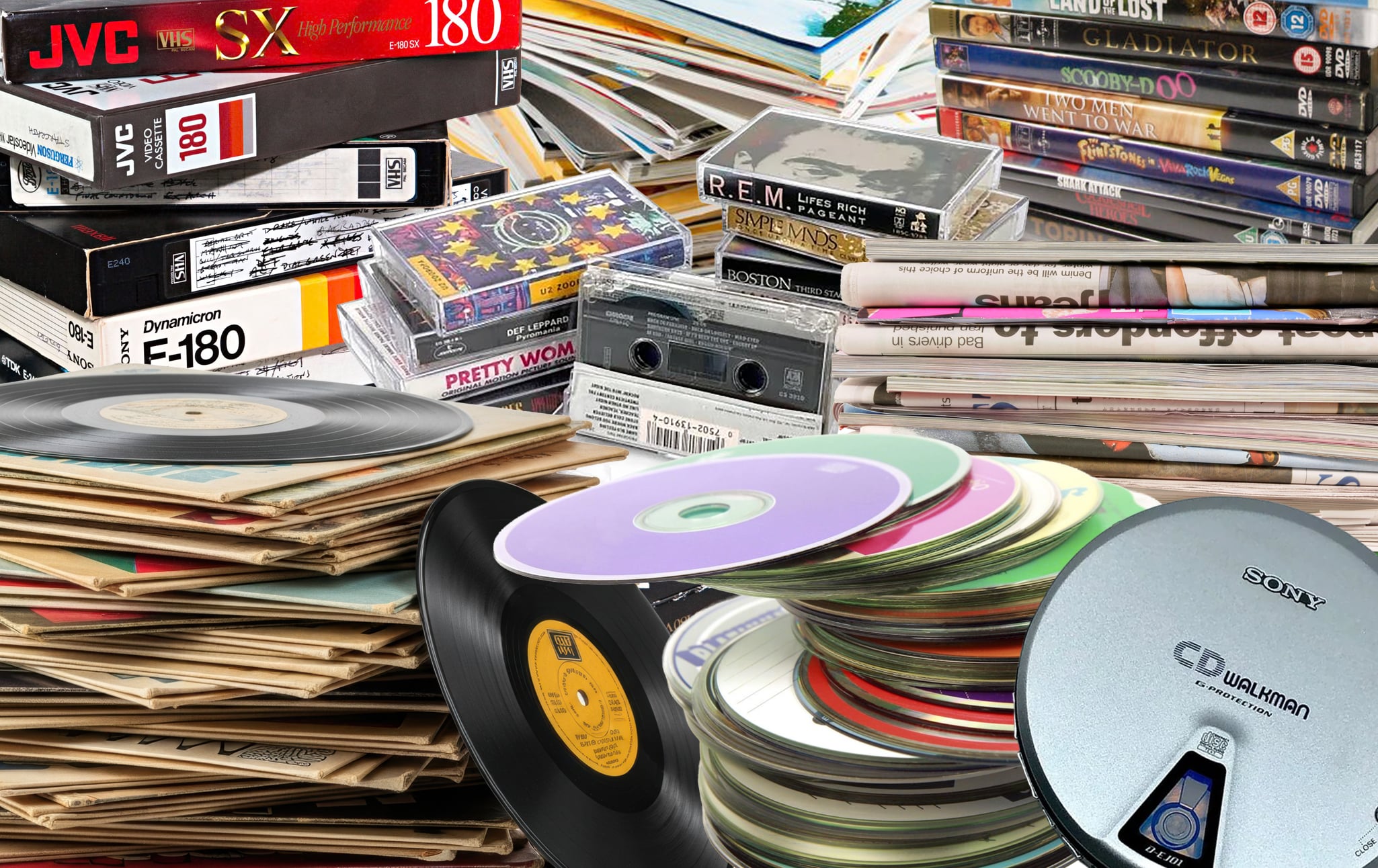
From Playstation Games to ebooks and family photos, corporations are replacing ownership with temporary access. But we don’t have to accept that.
Last week, Sony—the largest video game company in the world—announced that it will no longer produce physical discs for any new titles on its PlayStation platform starting in 2028.
More than 330,000 outraged fans have signed a petition in response, while a Dutch consumer group launched a $457 million lawsuit against the company, claiming the shift will create an industry-wide monopoly on game pricing—but Sony doesn’t seem too fussed. Company stock climbed nearly seven percent after the announcement, at which point CEO Hiroki Totoki sold more than half of his shares. Enshittification pays when you’re sitting in the C-suite.
On a personal level, I’ll admit that the change won’t impact me much. The depth of my gaming experience comes from playing Zoo Tycoon (a 2001 Microsoft game where you tried to build a profitable zoo, or could just release animals into the crowd and watch them eat people) and RockBand, where my brother usually left my guitar unplugged and I failed to notice.
But Sony’s digital-only change is an alarming reminder. As physical media disappears, and subscription models and cloud-based storage take its place, we risk never truly owning anything—from games, to our favorite songs, to photos of our grandchildren. Meanwhile, the things we do “own” can be altered by companies at a moment’s notice. It is much easier to snatch something out of someone’s hand when they were never really holding it in the first place.

It was only a little over a decade ago, at the 2013 Electronic Entertainment Expo in Los Angeles, that Sony executives railed against their competition doing away with physical game discs: “When a gamer buys a PS4 disc, they have the rights to use that copy of the game,” Jack Trenton, the CEO of Sony Interactive Entertainment of America, told the audience. “They can trade in the game at retail, sell it to another person, lend it to a friend, or keep it forever.”
Today, the concept of “keeping media forever” is quickly going extinct. Digital purchases are much less like buying a house (something most of us are unfamiliar with anyway) and more like renting an apartment: one where your greedy landlord can hike rent whenever they please, or evict you on a whim. Sometimes, they’ll simply sneak in and paint the walls a different color while you sleep.
In 2023, for example, ebook owners across the globe realized that the content of their books had been edited overnight to be more sensitive to modern audiences. According to the New York Times:
In Britain, Clarissa Aykroyd, a Kindle reader of Dahl’s “Matilda,” watched a reference to Joseph Conrad disappear. (U.S. editions of Dahl’s books were unaffected.) Owners of [R.L.] Stine’s “Goosebumps” books lost mentions of schoolgirls’ “crushes” on a headmaster and a description of an overweight character with “at least six chins.” Racial and ethnic slurs were snipped out of Christie’s mysteries.
Of course, the argument here isn’t about the artistic merit of Agatha Christie using slurs. The issue is that readers purchased a book in one form, only for it to be retroactively altered without their knowledge or permission. What if you’d bought Murder on the Orient Express for your thesis on racial stereotypes in 20th-century mysteries? What if you’d simply rather not pretend that our literary heroes were infallible figures uninfluenced by race, class, and other -isms of their time?
In the original version of Roald Dahl’s 1983 Witches, according to the Guardian, “women were described as being supermarket cashiers or letter-writers for businessmen,” while “in the new edition, women are top scientists or business owners themselves.” Editing a decades-old book to pretend sexism never existed is obnoxious, and even dangerous. But it could easily go in the opposite direction too: what’s to stop George R. R. Martin from having a John Fetterman-style stroke and then editing the ebook versions of A Song of Ice and Fire to make all the heroes red-pilled? What’s to stop J.K. Rowling from taking a digital pen to Harry Potter and making Voldemort transgender? If you didn’t own a physical copy of the books, and were reading them for the first time, you might never realize.
We’ve already seen it happen with countless federal government sites during the Trump administration: the overnight erasure of all references to race, sexuality, and other scary keywords; pages mentioning climate change replaced with dead 404 links. Why wouldn’t our fiction come next?
Other times, digital alterations are less ideological in nature and more like blatant money-grabs. It’s now routine for the “covers” of ebooks to be edited to match their new TV or film adaptation—ensuring that when readers of both Dune and Little Women sit down to immerse themselves in another world, they are forced to imagine Timothée Chalamet’s face. It’s all but inevitable that when a corporation has access to something in your home, they’ll impose advertisements that are difficult or impossible to escape. (Remember last year, when Samsung started streaming commercials into people’s $2,000 smart fridges?)
It used to be that Kindle users could download books to their computer as EPUB files—a format similar to a PDF—to ensure this wouldn’t happen. But Amazon yanked that option away in February 2025, as Android Police reports, “closing a loophole that had, admittedly, been used to crack ebook DRM from files in order to send them to other e-readers or users.” Ah, yes, that nefarious “loophole” of lending your friend a book you purchased.
Amazon rolled back some of the changes after significant backlash, ultimately leaving it up to publishers to decide if they’ll allow users to download their books. Admittedly, it makes sense why some authors feel differently about sharing digital downloads vs. physical copies: if I lend a friend a book, I usually want it back, while if I forward them a PDF, we can both access it forever. But if downloading an ebook is the only way to be certain it stays the same, then what do you expect from your readers?
But it’s not only that your favorite media can be edited; unless you own a physical copy of it, it might disappear altogether. In order to cut costs and avoid paying residuals, major streaming platforms have increasingly purged films and television shows from their libraries as if they never existed. In 2023 alone, Warner Bros. Discovery removed dozens of titles from Max, including Westworld, The Nevers, The Time Traveler's Wife, Minx (before another company rescued it), Raised by Wolves, and the children's programs Infinity Train and Summer Camp Island. Disney+ followed suit, scrubbing original series like Willow, The World According to Jeff Goldblum, Y: The Last Man, and The Mighty Ducks: Game Changers. Many of these weren't failures by any ordinary definition, boasting dedicated audiences and critical acclaim. They simply weren't profitable enough to justify keeping around.
For most of the last century, once a television show or film had been made into a DVD or VHS tape, it couldn't be taken back. A network might stop airing it, but if you owned a copy, no matter how rare, you actually owned it. Today, executives often find it more financially advantageous to erase a show entirely than continue paying the relatively modest residuals owed to the people who created it.
And unlike the DVD era, there often isn't a backup. Many streaming originals are never released on Blu-ray or DVD at all. If they vanish from a platform, there is nowhere else to watch them legally, and unless someone happened to pirate the files before they disappeared—or an archivist ignored the law and preserved them anyway—the work is effectively lost forever.
The loss of public culture is one thing, but our private memory is at risk too. These days, we not only rent entertainment, but access to our entire archives of personal history. From family photos to home videos, baby pictures, and voicemails of loved ones, the record of our existence now lives on servers owned by Apple, Google, Microsoft, Amazon, and a handful of other corporations. Calling it the “the cloud” makes it seem as if these memories exist just out of sight, in some benevolent corner of the sky; in reality, they've simply been moved onto someone else's computer.
All it takes is forgetting your password enough times, or failing to pay a monthly fee, for everything to disappear. Take iCloud: if you stop paying for extra storage, Apple automatically demotes you back down to their free plan of five gigabytes. What’s less clear is what happens to all your existing data. According to Wired:
The official documentation implies, but doesn't specifically say, that your files will be kept in a read-only state, with no backups completing until you delete files or increase your storage plan. The iCloud terms and conditions state that if you've not backed up a device for 180 days, Apple “reserves the right” to delete any existing backups (including photos and videos)—so it may delete your files, and it may not.
Other sources, like TechSpot, suggest there’s really only “a 30-day window during which you can access and download your content before the risk of permanent deletion grows.” God forbid you get sick, or go to jail, or lose your job, or forget to check the spam inbox of whatever decades-old email you used to sign up for iCloud in seventh grade. Before you know it, all your pictures from the last ten years—or whenever you stopped printing them—are gone. It’s the equivalent of a house fire decimating your family photo albums, all because a $0.99 autopay ran out.
But there is something else we sacrifice when everything becomes digital, a loss that's harder to quantify than ownership. Just last night I visited the last Blockbuster video store on Earth, in Bend, Oregon, and was struck with a surreal sense of nostalgia while perusing the blue-and-yellow aisles.
The store was pretty busy for a Tuesday evening. Parents in their 40s and 50s dragged their teenagers through the shelves, reminiscing about Friday-night movie rentals while lamenting that “kids these days can just get whatever they want on the internet.” I was reminded that renting a movie used to be a social endeavor. So did buying a new album, browsing a bookstore, or getting the film back from your camera. Basically everything required some level of interaction with another person: you talked to the clerk behind the counter, argued with your friends about which movie to pick, maybe picked up a pizza on the way home.
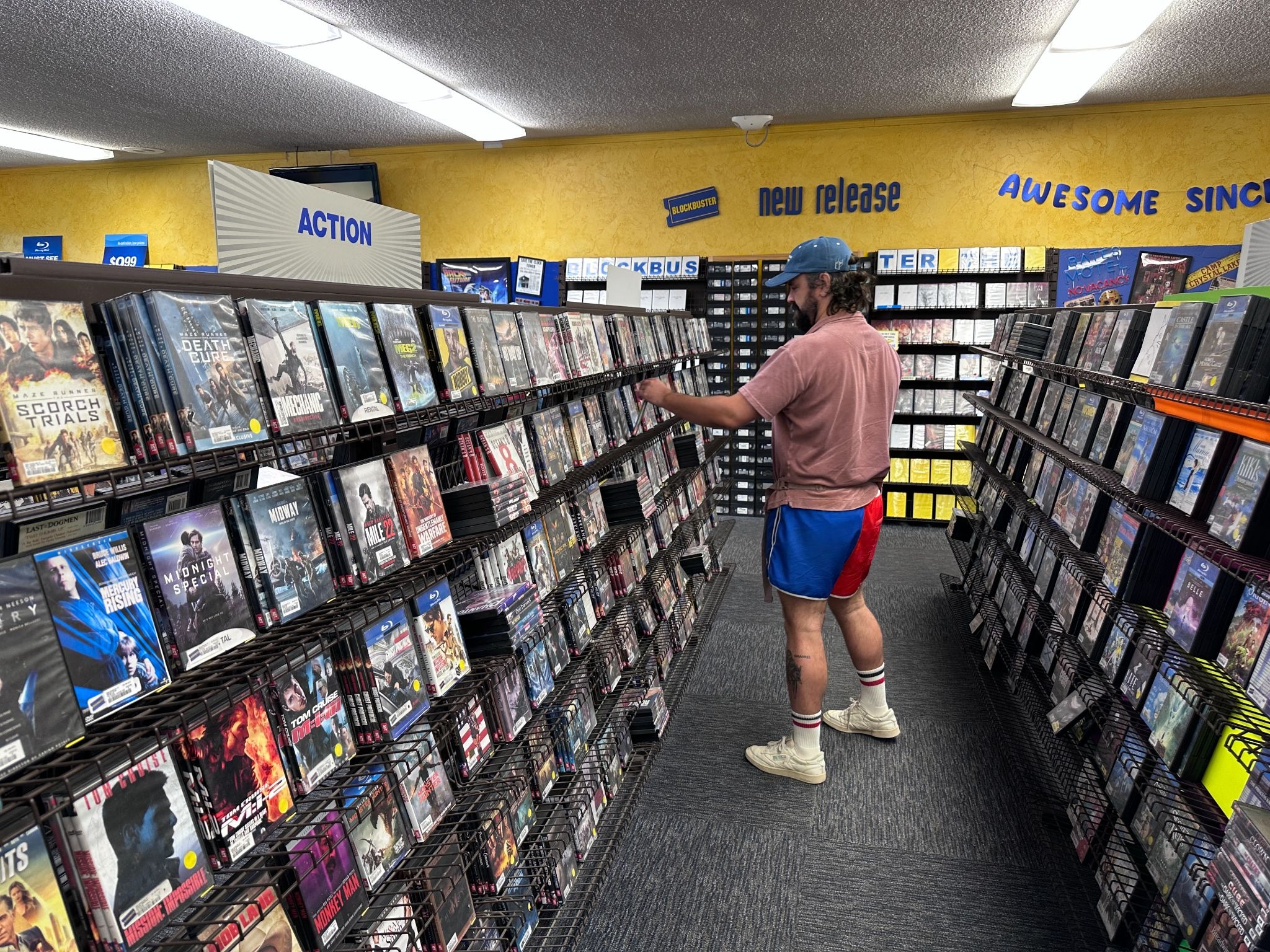
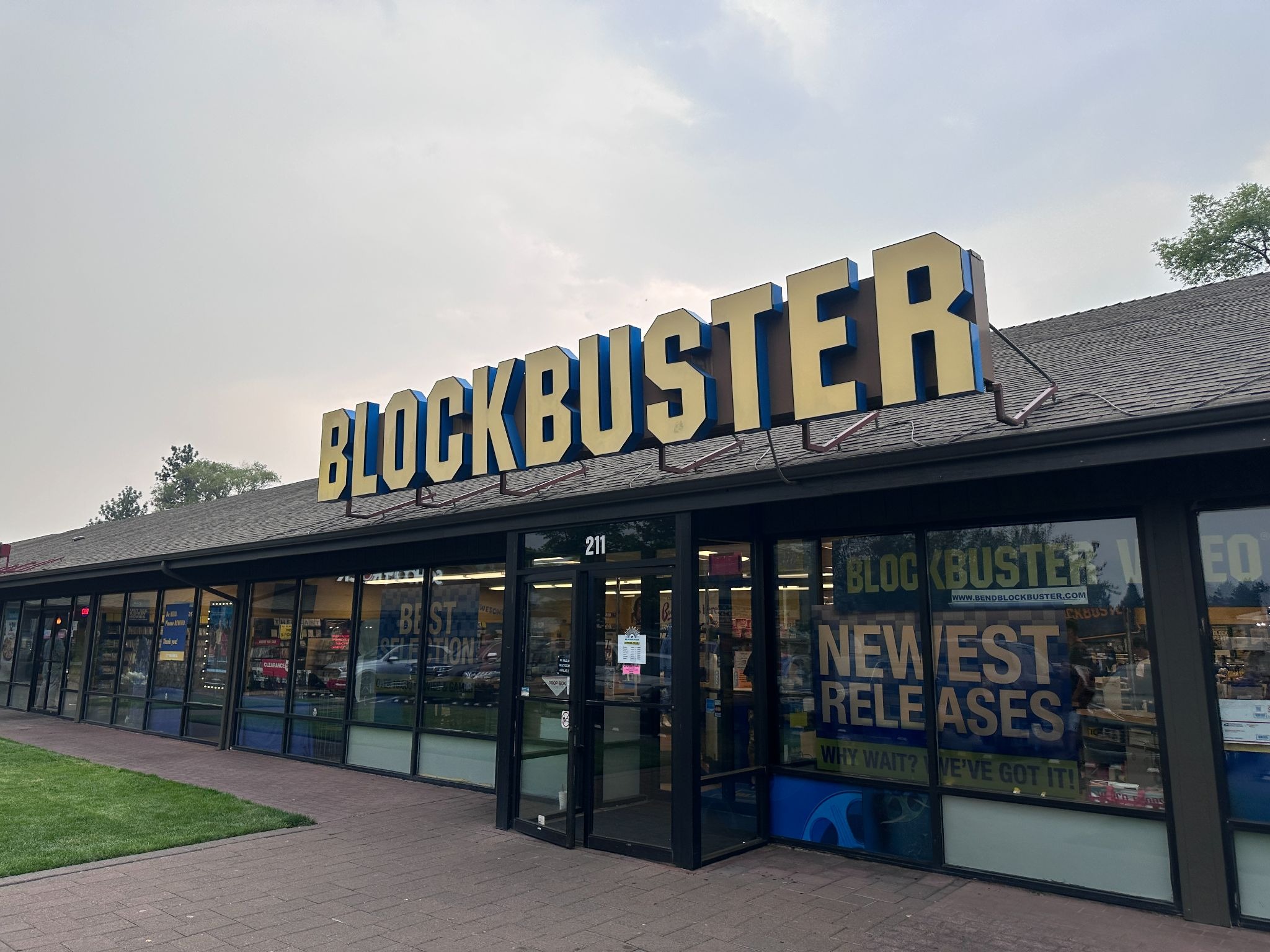
Photos: Emily Topping
In making media infinitely convenient, we’ve also made it solitary. It was Kurt Vonnegut who once described the magic of leaving the house to buy a single envelope:
Oh, [my wife] says well, you’re not a poor man. You know, why don’t you go online and buy a hundred envelopes and put them in the closet? And so I pretend not to hear her. And go out to get an envelope because I’m going to have a hell of a good time in the process of buying one envelope. I meet a lot of people. And, see some great looking babes. And a fire engine goes by. And I give them the thumbs up. And, and ask a woman what kind of dog that is. And, and I don’t know. The moral of the story is, we’re here on Earth to fart around. And, of course, the computers will do us out of that. And, what the computer people don’t realize, or they don’t care, is we’re dancing animals.
Vonnegut understood that sometimes the inconvenience is the point. The solution to all of this, on a personal level at least, is simple. We’ve got to stop trusting tech companies to digitally lease us music, movies, our own memories, and whatever else they can get their grubby hands on. You could start tomorrow: first, by downloading all of your photos to a hard drive so that Apple or Google never gets a chance to delete them. Then, you should probably glue your favorites into a book so they’re even safer, and you can actually look at them once in a while.
If there’s an album that you’d be devastated to never listen to again, consider buying it on CD or vinyl record. The artist will certainly thank you, and there’ll be no chance that Spotify ever revokes access to your favorite song. (Or, you won’t have to worry that the artist themself will edit it after release, like Kanye West did to his Yeezus album in 2016.)
If there’s a TV series you like—one you stream over and over again—you should really think about purchasing a DVD set (if one exists). The multiple box sets of Planet Earth in my living room have come in handy more times than I can count: when the internet is down, or I don’t feeling like scrolling through hundreds of options of TV shows, or when I just want to hear David Attenborough’s soothing voice without being interrupted by dozens of commercials for GLP-1s. You could also set up a Plex server, which allows you to create a local library of your own media, sans DVD player.
It’s a long and arduous process to replace “instant access to everything” with “permanent access to your favorite things,” but it’s absolutely worth it.
Ultimately, though, where we choose not to spend our money is equally important to how we invest it. While hundreds of thousands of people have demanded that Sony Playstation continue to make physical game disks, it doesn’t look like the company is planning to change course. So perhaps, when 2028 comes around and they release a new title—betraying that decade-old promise that fans could access their games “forever”—you simply shouldn’t buy it. (I know, I know. That’s easy for me to say. I’ve still got my copy of Zoo Tycoon 2002 at my desk).