The widespread negative reactions to Trump’s crackdown show that a strong left can eliminate the ethno-nationalist threat. But if the left stays weak, that threat could still metastasize…
Nearly 30 years ago, in writings published in 1997 and 1998, the philosopher Richard Rorty offered some spookily prescient speculations on the future of the United States. Looking at the widening gap between rich and poor, and Americans’ increasing pessimism that their children would have better lives than them, Rorty warned we were headed for a society “divided by class differences of a sort which would have been utterly inconceivable to Jefferson, or to Lincoln, or to Walt Whitman.” The Clinton-era Democratic Party had been “distancing itself from the unions and from any mention of redistribution, and moving into a sterile vacuum called ‘the center,’” meaning the party that should have been talking about inequality was silent as it continued to worsen. Rorty pointed out that only “scurrilous fascists like Pat Buchanan and, in France, Jean-Marie Le Pen, seem willing to talk about” economic insecurity.
“We know what happens,” Rorty said, “when a middle class realizes that its hopes have been betrayed, that the system no longer works, that political leaders no longer know how to shelter it from catastrophe.” The middle class will “look around for a scapegoat—somebody to blame for a catastrophe which they did nothing to deserve.” They will “decide that the system has failed and start looking around for a strongman to vote for—someone willing to assure them that, once he is elected, the smug bureaucrats, tricky lawyers, overpaid bond salesmen, and postmodern professors will no longer be calling the shots.”
Rorty was not the only one to anticipate a steadily brewing political calamity. He drew on the work of Edward Luttwak, who in 1994 offered the dire warning that “fascism is the wave of the future,” for the simple reason “neither the moderate Right nor the moderate Left even recognises, let alone offers any solution for, the central problem of our days: the completely unprecedented personal economic insecurity of working people, from industrial workers and white-collar clerks to medium-high managers.” It was a counterintuitive prophecy, coming as it did during the height of “end of history” triumphalism.
The two Trump presidencies would appear to be the fulfillment of Rorty and Luttwak’s predictions. A strongman. Scapegoats. The promise of sticking it to the elites. And yet something peculiar has happened both times Trump has been elected, something neither Rorty nor Luttwak seem to have anticipated. Shortly after being given their pseudo-populist, anti-globalization strongman, the American people have soured on him.
Donald Trump’s approval ratings are “abysmal,” with only 39 percent of Americans approving of the way he is handling his job. All of Trump’s signature policies—a harsh immigration crackdown, tariffs, imperialist aggression from Iran to Greenland—are wildly unpopular. Republicans are now panicking about this year’s midterm elections, with speaker of the House Mike Johnson warning that if the party loses its House majority, the Trump presidency will be effectively over. (Sadly, this is an overstatement.)
From the moment he descended his golden escalator in 2015, blaming immigrants for America’s problems has been at the center of Trump’s political method. In that speech, he would rant about how “the United States is becoming a dumping ground for the world,” with Mexico “bringing drugs... bringing crime,” and bringing “rapists.” His rhetoric has only gotten more dehumanizing as the years have gone by eventually descending to outright neo-Nazi imagery about foreigners “poisoning the blood of our country.” At the 2024 Republican National Convention, attendees held “MASS DEPORTATION NOW!” signs, and Trump vowed to stop the “greatest invasion in history.”
Over the last year, Trump has been far more aggressive against immigrants than during his first term. As the Migration Policy Institute notes, in his second term Trump “has dramatically reshaped the machinery of government to target unauthorized immigrants in the country, deter unauthorized border arrivals, make the status of many legally resident immigrants more tenuous, and impose obstacles for lawful entry of large swaths of international travelers and would-be immigrants.” He has flooded American cities with immigration agents, made ICE the highest-funded U.S. law enforcement agency, and is building a “nationwide ‘ghost network’ of concentration camps.” The administration has succeeded in creating an atmosphere of terror, not just for undocumented people, but for anyone who worries they might be mistaken for an undocumented person. He has made immigrants afraid of going to work, the hospital, or even walking down the street.
These developments, combined with moves like Trump’s effort to “nationalize” elections (perhaps through the assertion of “emergency” powers), can raise fears that the U.S. is on a steady march toward totalitarianism. As ICE lowers recruiting standards, expands the ranks of its lawless paramilitary force by the tens of thousands, and deploys new mass surveillance tools, it may seem like our remaining basic freedoms are perilously close to being permanently extinguished. Yet, encouragingly, the past year has also made clear that deportation on the scale Trump promised is essentially impossible. We already knew it was essentially logistically impossible. In 2024, journalist Radley Balko calculated what it would take to actually deport the full undocumented population, concluding that it would require a sum of money “about 14 percent more than the annual budget of the U.S. Army,” establishing “more than 1,800 [immigration] courts and [hiring] over 17,000 judges” (there are presently around 70 courts and 650 judges), and adding “530,000 additional immigration enforcement officers.” And if all of that were even feasible, it would also wreck the economy, knocking trillions off the GDP.
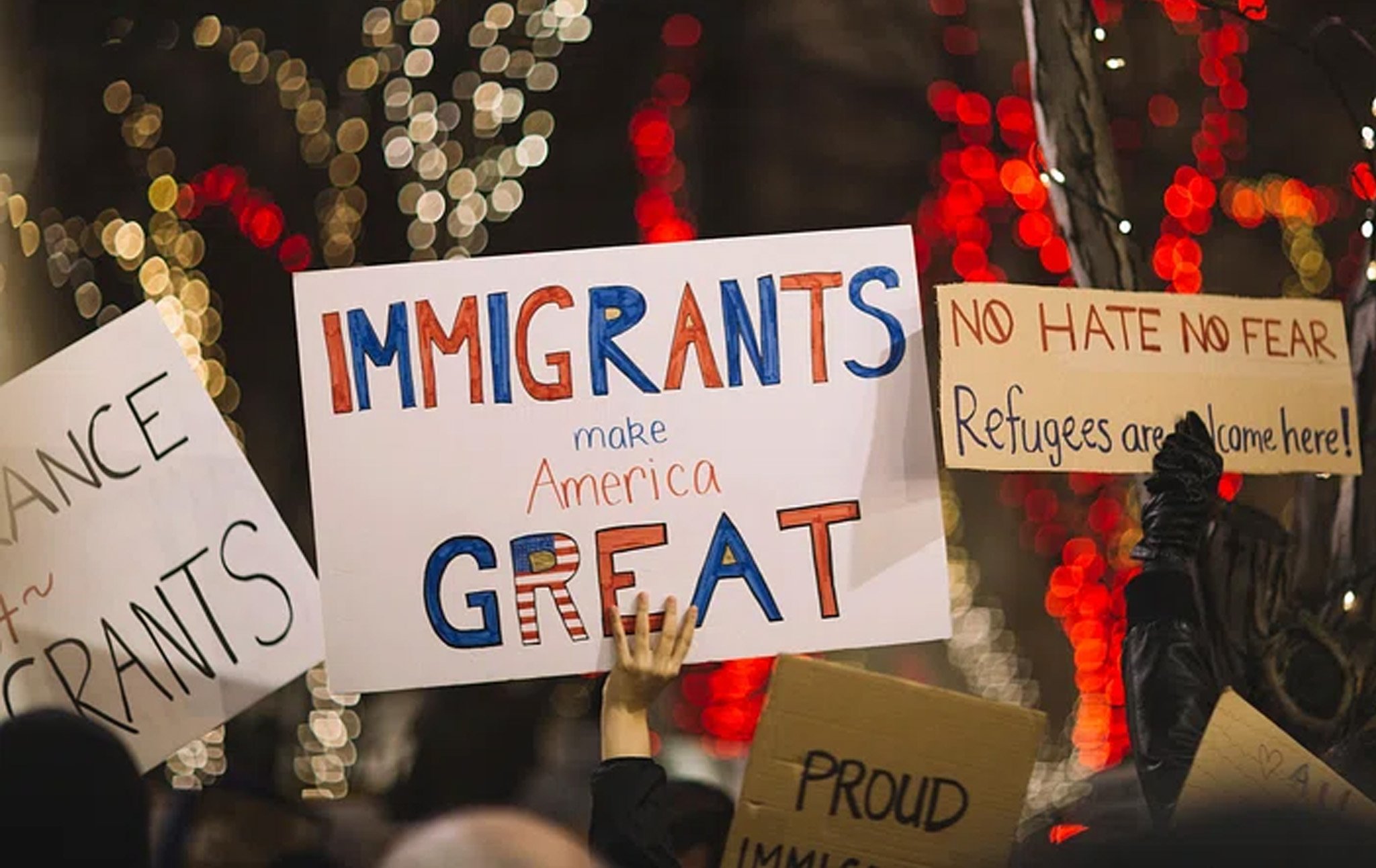
But in addition to being logistically impossible, Trump’s maximalist dreams are also politically impossible. As Trump has moved to deliver on his campaign promise of extreme brutality, it has triggered massive public protests. Interestingly, this is what Lisa Sherman Luna, the executive director of the Tennessee Immigrant and Refugee Rights Coalition, had told Balko would happen. She noted in 2024 that while it’s “easy to get people behind you when you say you want to deport undocumented people,” we might “start to see resistance once people realize what that really means. It means soldiers and police going door to door, pulling families out of their homes and arresting them. Neighbors, friends, parents of their kids’ friends, people you go to church with—perhaps people you didn’t know were undocumented—will start to disappear.”
It turns out that many people do actually care about their neighbors and friends, and as the disappearances began, so, too, did the popular pushback. The resistance has sometimes been unbelievably courageous—multiple Americans have now lost their lives in the effort to defend their communities. In this magazine, Hamilton Nolan reported on how local New Orleans residents have not only been “registering their pissed-off-ness by holding protests against the immigration action on a near-daily basis,” but established a grassroots network of ICE spotters to warn neighbors of immigration enforcement action:
The trainers told the crowd how to properly record ICE spottings: date and time, description, exact cross streets. This information can be spread instantly through a network of both citywide and neighborhood-specific group chats that hundreds or perhaps thousands of New Orleanians now participate in. If agents try to arrest someone in Metairie or Algiers or the Mid City or the West Bank, someone will see or hear and this information will in very short order be spread and investigated and verified and then posted online by Unión Migrante, the definitive source that immigrants can use to learn where the danger is today. For an effort that is run completely by volunteers and dependent on the zeal of regular, unpaid citizens, it is a fairly spectacular underground intelligence service.
That kind of response has not been unique to New Orleans, and activists have developed tools to track ICE activity all over the country. Crowdfunding campaigns for immigrant families have helped people take care of themselves while unable to work. There are the mass protests of tens of thousands of people on the streets, and then there is the “hidden network of resistance” coordinating mutual aid. Churches and community centers have become organizing hubs. Benefit concerts are raising impressive sums of money for immigrant rights organizations. In this magazine, Deborah Copperud recently reported on how aid groups in Minneapolis and St. Paul are responding to the crisis, with a group called Haven Watch supplying coats and money to help those released from detention, and “The People’s Laundry” offering to pick up laundry for people who cannot leave their homes. Copperud writes that along with the fear has come a spirit of joyful solidarity, and people work together to shield one another from harm:
Across the Twin Cities, people are palpably desperate for the ICE assault to leave the state. But there’s a steely energy behind the desperation, a drive to continue to come up with creative ways to resist the federal occupation. There’s also a sunny perspective that all of the protests, constitutional observing, and mutual aid efforts will crystalize into lasting change, making us more resilient and interdependent, and able to serve as a model for other sanctuary cities that will be subject to whatever horror the administration unleashes on blue states next.
Even previously “apolitical” people are finding themselves out in the streets, becoming the protesters they never thought they’d be. A Minnesotan dad named Chris Ostroushko spoke for many in a viral, profanity-laden interview: “I have friends that got detained and all they were doing was fucking driving home from work. What the fuck?... I'm not fucking paid to be here [protesting] like everybody fucking says… I gotta work in the goddamn morning, just like everybody else. I'm just here trying to stand up for community, dude.” Despite looking “more like an ICE agent than someone opposing their operations,” and having “never protested in my life,” Ostroushko took to the streets against what seemed to him like a plain case of abusive and unjust state action. “I'm not the big rabble-rouser type guy,” Ostroushko told The Bulwark. But the circumstances had politicized him.
Perhaps, then, those who have feared the coming of American fascism have underestimated how many of their fellow Americans would put their lives on the line to stop such a horror from arising. The political analyst John Ganz notes that, despite the unprecedented calamity of the multiple Trump presidencies, “the reality of the past decade or so has been much less dark than I envisioned,” for the simple reason that Ganz “did not foresee the resilience and the goodness of the American people, how they would fight hard for their freedoms and their neighbors, how they'd sacrifice their safety and comfort for those causes.” Citing the George Floyd protests, Ganz comments that “I did not imagine the Americans could be so enraged by the murder of one man as to take to the streets in the millions.” When he thought about a Trump presidency, “I saw the kinds of political forces that were mustering on the right” but “I imagined them having no opposition or pushback” and therefore “the worst-case scenario instantly happening.”

Some of the country’s favorite cliches about itself—“a nation of immigrants,” “a freedom-loving people,” turned out not just to be true, but to be politically meaningful. It is not easy to build an outright ethno-nationalist project in a country where so many Americans are the children or grandchildren of immigrants, or are immigrants themselves, or have immigrants in their extended families, workplaces, or friend networks. (Even the ICE agents who killed Alex Pretti were Latino.) There is of course a deep irony to any kind of anti-immigrant politics being practiced in this country, given that the entire territory was colonized and expropriated from its original inhabitants. Even if that inconvenient fact can be set aside, the national identity is so firmly rooted in two heroic narratives—the settler crossing the water to build a new life, and the freedom-loving nation that fought fascism. Both are partly mythological, but they have lasting power.
That does not mean we can be sanguine that the United States will never lapse into outright autocracy. A “freedom-loving people” can still be subjugated, and the history of the country from slavery to the Chinese Exclusion Act to Japanese internment shows how white dominance can be formalized, and white Americans’ fear of usurpation or uprising has many times led to brutal racial repression. Today, resistance in the streets may be strong, but resistance can be crushed by a sufficiently powerful state, no matter what public opinion polls may say. The fact that a policy has little popular support does not mean it will not continue, or even escalate. The history of postwar American foreign policy, for example, is the history of politicians explicitly ignoring the American electorate’s stated interest in peace and international cooperation.
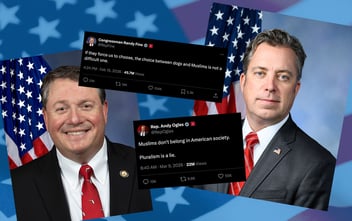
Certainly, dark forces have been rising. The past ten years have seen a disturbing explosion of ethno-nationalist rhetoric. Views that in the 1990s would have been voiced by fringe figures like David Duke and Pat Buchanan are now heard by those who have the president’s ear, like J.D. Vance and Tucker Carlson. White House social media accounts now post neo-Nazi memes. Nick Fuentes, an open admirer of Hitler who has dined with the president, has announced his plan to put ten thousand of his “groyper” followers into the ranks of government. (Judging from the federal government agencies’ Twitter feeds, he’s already successfully embedded a few there.)
The political uses of anti-immigrant rhetoric are obvious. Trying to explain to Americans why they can’t afford housing, JD Vance said it was “because we had 20 million illegal aliens in this country taking homes that ought by right to go to American citizens.” Point to the construction worker next door, in the hopes that the public will avoid looking at the American oligarchs (like Vance’s friend and mentor Peter Thiel) who are actually hoarding the country’s wealth. Nativist “populism” looks like it’s for the people, but it doesn’t threaten capitalists, instead targeting the weakest and poorest among us, accusing them of the crime actually being committed by the top 1%.
The only encouraging thing about this is that it cannot really “work,” meaning that no immigration crackdown is ever going to deliver the affordable America that the MAGA right promises. And because immigrants are not creating the affordability crisis, because putting them in concentration camps will not do anything to improve the quality of life for citizens (while inflicting monstrous human rights abuses on non-citizens), popular support for harsh anti-immigrant policies is hard to maintain. Americans already think Trump is going too far, even before the full escalation of ICE’s capacity. Popular opinion becomes more pro-immigrant the more that public policy becomes anti-immigrant, and now “a record-high 79% of U.S. adults say immigration is a good thing for the country,” and “the share wanting immigration reduced dropping from 55% in 2024 to 30% today.” Most Democrats now think ICE should be outright abolished. Even with Trump given the bully pulpit of the presidency, the people of the United States are simply not becoming more xenophobic.
This magazine has long made the case that Trump’s success is less a result of his policies having mass appeal than of the spectacular failure of the Democratic Party to meet people’s basic needs and expectations. The party abandoned labor and became the party of Silicon Valley elites and Wall Street, opening a path for the right to position themselves as “anti-elitist.” This is precisely what Richard Rorty was warning about in the ’90s, when he cautioned that Democrats needed “a politics which centers on the struggle to prevent the rich from ripping off the rest of the country.” Unfortunately, “it is as if the distribution of income and wealth had become too scary a topic for any American politician… ever to mention.” That meant even as the country was crystallizing the “formation of hereditary castes,” the choice between the two parties became a choice between “cynical lies” (the Republicans) and “terrified silence” (the Democrats).
Richard Rorty admitted that he didn’t know what would actually occur once a bigoted would-be dictator came to power. “Once such a strongman takes office,” he said, “nobody can predict what will happen,” although he did anticipate that the strongman would “quickly make his peace with the international super-rich” and “will be a disaster for the country and the world.” (Check and check.) Rorty mistakenly thought that the primary target of the strongman’s hostility would be African Americans. There has been plenty of anti-Black racism on the MAGA right—second-term Trump has been purging Black officials from government (seemingly on the racist assumption, once voiced by Charlie Kirk, that any Black person in a position of authority is likely to be an unqualified DEI hire), and many of the national groups targeted by Trump (Somalis, Haitians) are Black. But anyone non-white has been a target, with Afghans, Venezuelans, and Palestinians variously being targeted (while white South Africans have been embraced by the administration). The administration has also indicated that anyone “anti-Christian” or “anti-capitalist” is to be regarded as a potential terrorist threat.
But Rorty did correctly foresee that part of the new reactionary politics would be a backlash to political correctness. He anticipated that “jocular contempt for women will come back into fashion,” “the words n—er and k-ke will once again be heard in the work place,” and “all the resentment which badly educated Americans feel about having their manners dictated to them by college graduates will find an outlet.” We have not yet seen the re-normalization of the n-word, thank God, but Fuentes’ “groyper” followers lap up his misogynistic diatribes about women’s only suitable roles being “mothers, whores, or nuns.” Followers of male beauty influencer Clavicular call women “targets” or “female humanoids,”
Rorty called this the return of “sadism,” a reversal of the social gains and reforms that activists in the ’60s had worked so hard to achieve. To address it, he argued that we needed not just a reassertion of the principles of feminism and antiracism, but a class politics that would neutralize the economic appeal of the hard right. Rorty was writing at a time when the academic left was intensely focused on deconstructing race and gender hierarchies. He argued that there would be no victory for the forces of equality without a strong labor movement. To neutralize the appeals of racists, the left would need to “talk more about money.”
We have seen recently a vibrant and successful model for what this popular anti-fascist politics would look like in Zohran Mamdani’s successful campaign for New York City mayor. Mamdani did not follow the advice of centrist think tanks to throw trans people and immigrants under the bus. The centerpiece of his campaign was an economic agenda, but anti-racism did not disappear. In fact, Mamdani forged a true “rainbow coalition” that celebrated working-class people of color, especially immigrants. He recorded campaign ads in Spanish and drew graphic design inspiration from Bollywood film posters. He has filmed “know your rights” PSAs for dealing with ICE. He appears to have used his political capital with the president to get a New Yorker freed from ICE detention.
Mamdani explicitly positioned himself as a counterpoint to the Vance-Trump vision in which ancestry grants a superior claim to the country. At a press conference last October, I asked Mamdani about Vance’s comments that Americans have a right not to want to live next to people who speak a different language. Mamdani said that Vance’s language “betrays so much of the promise we have as a nation,” that he was proud to be an immigrant, proud to be in a borough “where there are more languages spoken than in many cities.” He spoke these words in Diversity Plaza, an area known as the “world district” where over half the population are migrants.
The Mamdani playbook shows how social democratic politics can neutralize nativist appeals. Andrew Cuomo’s efforts to cast doubt on Mamdani’s patriotism through ugly insinuations backfired. True, New York is a city of immigrants, where demographics alone mean that white nationalism has no chance of attaining broad appeal. But the 2016 and 2020 Bernie Sanders campaigns offered a glimpse of what this kind of class-first, multiracial social democratic politics might look like. It’s long since been clear that Sanders would have beaten Trump in 2016, and it’s painful to contemplate how different the history of the last ten years might have been had the Democratic primary of that year gone differently.
There are international examples, too. The U.K., like the U.S., is threatened by a rising nationalist right, with the Reform Party aiming to replicate the success of American MAGA politics. Keir Starmer’s Labour Party has been incapable of sustaining popular support, attempting to neutralize Reform through a hardline approach to immigration. The Green Party under Zack Polanski, on other hand, has mixed anti-establishment “eco-populist” economics with a firmly pro-immigrant stance. In one test of the strategy, the British Greens just defeated both Labour and Reform in a by-election victory, electing a 34-year-old plumber to Parliament. This small but “stunning” result is further evidence that to build political strength, the left should mix unapologetic embrace of immigrant communities with an economic agenda that delivers for everyone, rather than running to the right for fear of being labeled “soft on border security.”
The ethno-nationalist threat is real and terrifying. As climate catastrophe creates new refugee waves, and hundreds of millions are displaced by worsening disasters (and by U.S. foreign policy), pressure to turn the country into an armed fortress will escalate. We will see the same dynamic around the world—fascism may return to Europe within our lifetime. But here in the United States, we have seen an encouraging countercurrent. We have seen that militant xenophobia has, so far, a somewhat limited appeal, especially once Americans realize that acting on it requires abridging everyone’s freedom, and notice that it yields no material benefits. This gives an opening for Mamdani/Sanders-style democratic socialist politics, which foreground the issues that matter most to the broad public and thereby render concerns about immigration effectively moot or irrelevant.
This kind of politics, which identifies the real villains (i.e., the plutocracy) has an inherent advantage, in that its diagnosis happens to be true. The good news is that we may just have a formula for ending anti-immigrant politics. But unless the left gets organized, can throw out the feckless Democratic Party leadership and mobilize the country around authentic populism, the hard right will continue to have a chance of building the horrifying militarized ethno-state of their dreams.

.jpg?width=352&name=SNAP-Benefits-Online-Image1%20(2).jpg)