
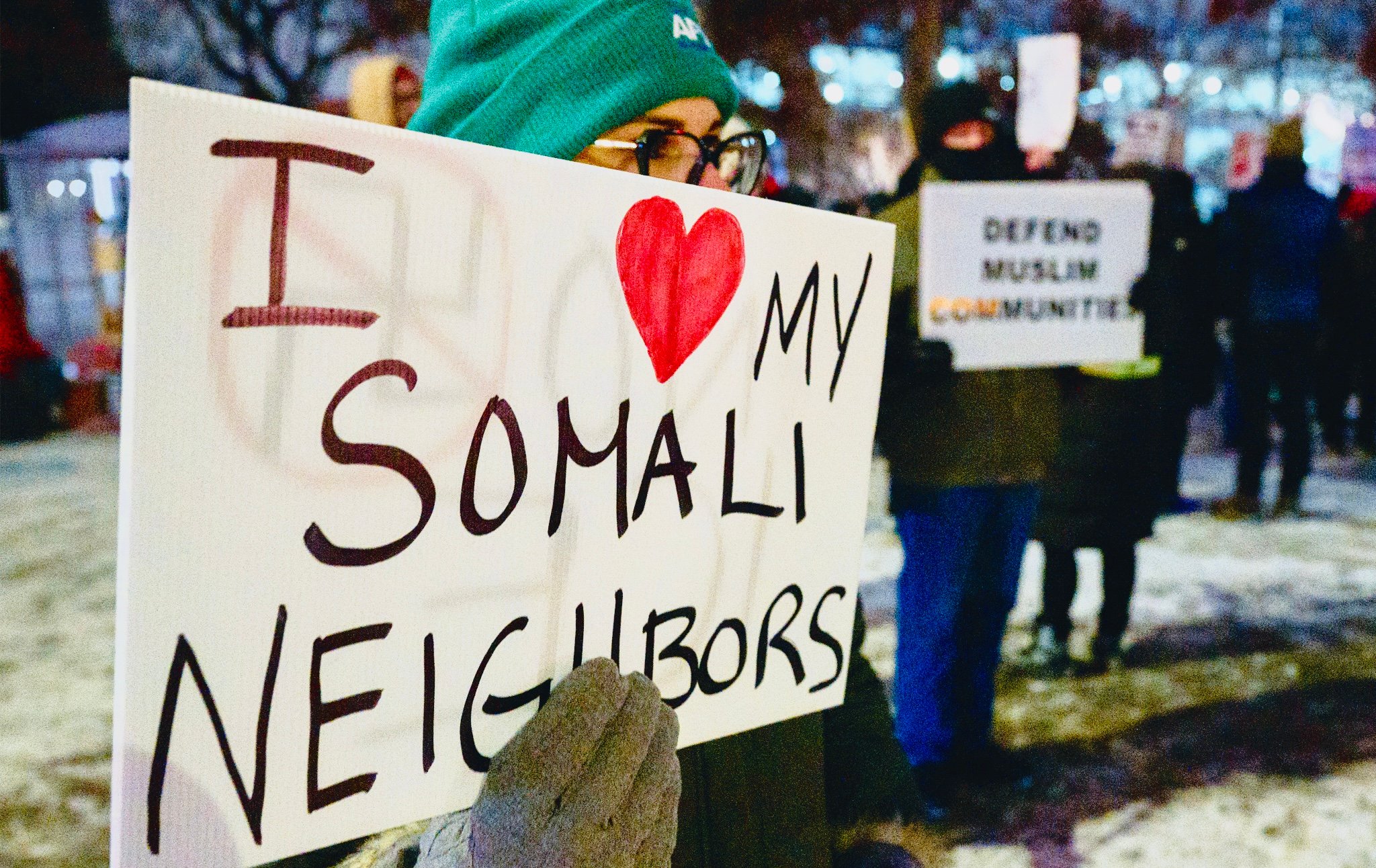
Right-wing ideologues like Christopher Rufo are pushing a narrative that paints Somali immigrants as welfare-dependent criminals. It’s nonsense, and the data prove it.
The conservative Manhattan Institute recently claimed that Somali Americans are siphoning “billions of taxpayer dollars” to a militant Islamist organization in Somalia called Al-Shabaab. The context for the allegation, made by the Institute’s City Journal, is a scandal implicating several dozen people from Minnesota, mostly of Somali descent, who defrauded the government through an autism service, housing program, and pandemic-era NGO called Feeding Our Future.
The Trump Administration used these allegations to end Temporary Protected Status for Somalis, forcing hundreds of people to soon leave the country or face deportation. President Donald Trump first announced the plan shortly after the City Journal story went viral—blustering on Truth Social that “Somali gangs are terrorizing the people of that great State, and BILLIONS of Dollars are missing. Send them back to where they came from. It’s OVER!”
The fraud part of the scandal is real and not particularly new. Minnesota and FBI investigators have pursued the cases for years, including against Aimee Bock, the white woman who led Feeding Our Future. What City Journal authors Christopher Rufo and Ryan Thorpe do is ignore the scheme’s white ringleader and other white suspects. They vastly inflate the numbers, blame Somali culture, and demand Somalis be deported en masse. Their evidence, too, for the Al-Shabaab connection is remarkably thin; key sources within the story itself have since called it “bullshit.”
Given Rufo’s track record (he once offered a $5,000 bounty for “proof” that Haitian Americans in Ohio were skinning cats for meat), his rumor-based reporting is not trustworthy. But facts are no obstacle to Rufo’s imagination: in his words, “Somalis in Minneapolis are stealing billions from American taxpayers, loading bags of cash onto commercial flights, and funding terrorism back in Mogadishu.”
Right-wing media has used the story to reinforce an emergent narrative that Somali Americans 1) are criminals, 2) drain welfare, and 3) don’t assimilate. Public attention has inspired imitators, including a widely-discredited video by YouTuber Nick Shirley on Minnesota daycares. Deadly ICE raids on Minneapolis have followed. A closer look at the allegations, however, reveals how detached they are from reality. Rufo and his colleagues are charlatans who incite hatred and division, but their lies are not sophisticated. They rely instead on cheap rhetorical tricks and statistical distortions. Agitators like Nick Shirley similarly borrow from the visual language of investigative journalism, but actually just manipulate their viewers with cheap editing.
The truth is that Somali Muslims in Minnesota are a law-abiding community with the same or lower crime rates than other Americans, as shown below. Their rates of self-sufficiency are high, and measures of assimilation are also high relative to the historic record. So why the bigotry? The lies serve to distract attention from bigger fraudsters and divide working people from confronting those with real power over their lives.

The Right’s Argument
Rufo’s “welfare piracy” story combines two worn stereotypes of the Reagan-Bush eras into a toxic brew: the Black welfare queen and the Muslim terrorist. MAGA influencers like Matt Walsh, Laura Loomer, Benny Johnson, and Chaya Raichik eagerly slurped it up. Fox News’ Laura Ingraham and Jesse Watters gave the story primetime coverage. Tucker Carlson said that the choice to “import primitive Somali tribes” is meant “to destroy the country.” The Atlantic’s Bush-era neocon David Frum chimed in that “Somali immigration to Minnesota was proving to be an assimilation failure.” Meanwhile, Rufo gloated that his story achieved “liftoff in record time,” boosted by coverage in the New York Times and CBS News that humored the premise.
In response, Trump ended work permits and protected status for 1,100 Somalis. Federal agents have descended on Minneapolis to abduct, harass, and kill people. The Treasury Department has announced new restrictions on Somalis sending personal income to family abroad. This is part of a broader policy arc: in June 2025, Republicans in Congress imposed new taxes on remittances. The same month, Trump suspended the issuance of visas to people from 12 countries, including Somalia, to “protect the United States from foreign terrorists.” This included bans on the children and spouses of U.S. citizens. Secretary of State Marco Rubio has since expanded the hold on immigrant visas to 75 countries.
The president, mired in revelations of his ties to sex trafficking, has blown off steam by indulging his obsession with Minnesota lawmaker Ilhan Omar and giving ugly rants about Somalia (“Filthy, dirty, disgusting, ridden with crime”). He then demanded the departure of all Somali Minnesotans, 91 percent of whom are U.S. citizens.
The Ideological Worldview
To the right, the justification for this vitriol is obvious. In Matt Walsh’s words, “Third world countries are the way they are because third world people are the way they are.” Immigrants are, in other words, static vessels of their degenerate culture. In comparison, Europe and its white successor states (“the West”) are the font of civilization in this worldview, and to decide which of its minorities deserve rights and privileges, one just needs to compare their cultures. “Jews excel in science, business, academia, arts, and entertainment” writes Rufo, while “Somalis excel in welfare fraud.”
For other conservatives, the Somali difference is not cultural; it’s rooted in their flesh. Steven Crowder, repeating a flawed IQ statistic by eugenicist Richard Lynn, concludes that Somalis are “inbred” and on average “retarded.” To Laura Loomer, Somali women in Minnesota are “clitless.” To conservative Dinesh D’Souza, the Somali physique verges on the physiognomically grotesque, characterized in D’Souza’s AI slop by a pimple-encrusted, engorged skull.
According to the right, liberals are too Minnesota-nice to face these timeless truths of the Somali condition and have allowed Somalis to take advantage of our “generous” welfare state and “high-trust society.” According to the White House deputy chief of staff and top ideologue on immigration Stephen Miller, the result has been the “Somalification of America.” Somalis commit “80% of the crimes” in Minnesota’s Twin Cities, according to Tom Emmer, majority whip in Congress. “They just run around killing each other” according to Trump; their gangs are “roving the streets looking for prey.” For Miller, “virtually every single member of the population is receiving welfare.”
The solution, for conservatives, is legalizing discrimination on the basis of religion and ancestry and ethnic cleansing by mass deportation. Vice president of the Edmund Burke Foundation Will Chamberlain calls it “remigration” in a nod to the European far-right lexicon. Loomer says we must “deport every single Somali ‘refugee’ who is living in our country.” Republican mega-donor Elon Musk says “Remigration is the normal position.” Chasing out immigrants, according to Miller, is insufficient; we must deal with their descendants, who “recreate the conditions, and terrors, of their broken homelands.” At the limit, the Department of Homeland Security announces that a fully-purified America “after 100 million deportations” will at last return to harmony, to the “peace of a nation no longer besieged by the third world.”
The Truth About Al-Shabaab And Welfare “Fraud”
Is there any basis for this vile hysteria? Let’s start with City Journal’s Al-Shabaab story, which is so riddled with errors, one even wonders how much of it was actually written by a human. (I found at least two “utm_source=chatgpt.com” tags in their article—here and here—which they forgot to scrub.) To buttress their story about Al-Shabaab, they cite a retired cop in Seattle, whose unspecified “human sources” apparently told him that “significant funds were being sent from America to Al-Shabaab networks in Somalia.”
The cop, Glenn Kerns, has since clarified that the story is “bullshit” and City Journal twisted his words. He was the only named source for the Al-Shabaab connection. Despite Rufo and Thorpe’s sensationalist spin, the claim is not new either, and has been discredited before; Fox 9 made essentially the same allegation eight years ago before it was dismissed by state auditors.
Former fraud investigator Kayseh Magan, who was cited in the story, also came out in the Minnesota Reformer saying that the allegations don’t make sense and are “little more than an effort by the right-wing propaganda machine to whip up hatred against Somali Americans.” Prosecutors, for instance, revealed extravagant purchases by the fraudsters, including luxury cars and real estate, but not in Somalia. This is odd if the real destination for the funds was Al-Shabaab. Moreover, as Magan explained:
If federal prosecutors had any inkling that the ill-gotten gains were going to a terrorist organization, don’t you think they’d have brought charges? The U.S. Attorney in Minnesota is no stranger to charging Somalis for ties to al-Shabaab and ISIS. Why on earth would they hold off in this instance?
Indeed, the U.S. prosecutor on the case, Joe Thompson (quoted extensively in Rufo’s article but never actually interviewed) as well as his former boss, U.S. attorney Andrew Luger, disputed City Journal’s characterization, clarifying the defendants “were looking to get rich, not fund overseas terrorism.”
The amounts cited in the story were also wrong. Rufo cited a billion-dollar figure for fraud in the Medicaid-related programs. Trump’s Center for Medicaid Services head, television pundit Dr. Mehmet Oz, also claimed that “a Somali fraud ring in Minnesota stole over $1 billion from Medicaid” and ordered Minnesota to “freeze high-risk Medicaid enrollment.” Actual fraud uncovered so far is much lower: 1.4 percent of Oz’s estimate in the autism therapy program ($14 million) and one percent of that in the housing program ($10 million).
Through a deceptive turn of phrase, Rufo and Thorpe also misrepresented “billions of dollars” as the total defrauded; the Minnesota Star Tribune puts the actual estimate at $218 million, about $4.6 million per convict on average and $2 million at the median. Such exaggerations are common: Fox 9 once claimed Minnesota’s childcare program had lost $100 million annually to fraud in 2011-2016. Auditors later confirmed one percent of that estimate in childcare fraud during that period (five to six million).
Rufo repeats a reframe popular in conservative media that the welfare state is “drowning in fraud.” Trump froze all federal childcare funding under this pretext. Governor Tim Walz has since launched audits into 14 Medicaid services and paused payments to dozens of housing providers.
But nationally, welfare fraud is rare. Despite substantial funding and bipartisan demand for fraud prevention, fraud control units across the United States combined could not find fraud in 99.9 percent of Medicaid healthcare spending in fiscal year 2024.1 For nutrition, state agencies combined collected only 0.06 percent of SNAP receipts in fiscal year 2023 attributable to recipient trafficking or application fraud. For Minnesota, it was .04 percent.2 Among for-profit retailers (grocery stores), the trafficking rate of SNAP benefits is higher, about 1.3-1.6 percent of receipts depending on the year.3 For childcare funds, the national error rate (which includes things like underpayment and insufficient documentation), is 3-4 percent and has trended downward for years.

The COVID-19 pandemic was arguably unique, as the emergency surge of CARES Act money, distributed to prevent imminent economic immiseration to hundreds of millions of people, took priority over fastidious controls. But convictions show that the state has caught up, and those who diverted relief funds for personal gain now have to forfeit their Porsches and go to prison. Here conservatives also miss the bigger pandemic-era fraud scandal, which was not means-tested welfare to poor people but public loans to for-profit businesses. For those loans, SBA’s Office of Inspector General estimates a fraud rate of 17 percent.
For welfare programs that do not rely on private vendors or ensnare people in complex and ever-changing eligibility rules, fraud is even more rare. This is true for the largest entitlement program in the United States, Social Security, which has a fraud rate less than 0.001 percent. To put these numbers in perspective, the Minneapolis police department blew out its 2025 budget by an unexplained $19.6 million (8.5 percent), the U.S. military failed its 8th consecutive financial audit, and one out of every six dollars owed to the IRS in taxes is not paid. Other Western countries where Somalis live in significant numbers are similar. In Ontario, auditors found the fraud rate in income taxes is 20 times higher than in welfare.
As Kaaryn Gustafson wrote in her 2012 book Cheating Welfare, most welfare fraud is committed by private, especially for-profit organizations, but it’s ordinary poor people who get entangled in ever-shifting rules and shoulder the criminalization of welfare and the stigma of fraud. The sad truth is that poor Somali Americans, like poor whites, are more often victims of these schemes than perpetrators—their identities stolen, services denied to them, and public trust in their programs eroded.
The Truth About “Somali Crime”
When rich white people commit fraud, they enjoy the privilege of being treated as individuals. When Black Muslims do it, they are viewed as representing a culture. Benjamin Franklin may have complained in the 18th century about “swarthy” Germans and Swedes, but no one talks seriously anymore about “crime in the German-American community.” They do for Somalis. This reinforces what psychologists call cultural mis-attribution bias, “the tendency to see minorities as members of a group whose development is shaped primarily by culture” whereas whites are perceived to act based on their individual psychology. So do Somalis actually commit more crime, or is that bias?
One challenge to answering this question is that crime is a rare event in the average person’s life, and Somalis are an extremely small population. Americans already wildly overestimate the size of their minorities. Despite conservative hysteria about Somali takeover, people of Somali descent are less than .06 percent of the U.S. population and less than 1.6 percent of Minnesota’s, according to the most recent census. Within the seven counties of the Minneapolis-St. Paul region, 96 percent of residents have no Somali heritage. Within Ilhan Omar’s congressional district, 97 percent of her constituents are not Somali. As Omar herself recently pointed out, “My district is literally a majority white district.”
The first place to look, then, might be highly aggregated time trends. Has Minnesota become more violent since opening its doors to Somalis? No, crime rates are falling. In 2024, Minnesota crime rates were at a 60-year low. In 2025, Minneapolis recorded “50 fewer shootings, nine fewer homicides, and a third fewer carjackings and other robberies” compared to the year prior. The state gets safer every decade, even as it records more newcomers than ever. Here is Minnesota’s crime rate and foreign-born population from 1990 to 2016, the last year before Trump’s Muslim Ban ended Somali immigration4:
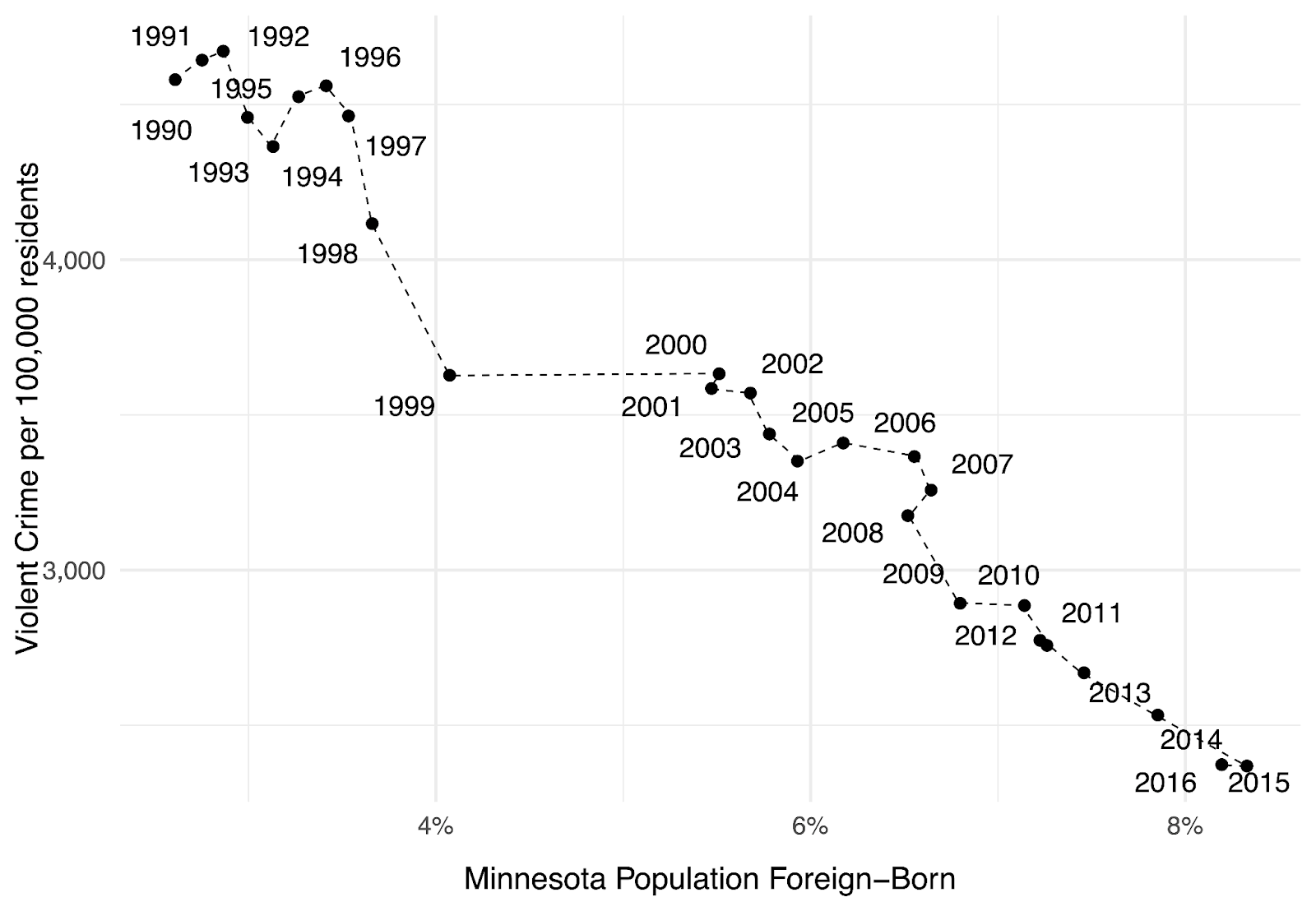
Figure 2: Minnesota is safer and more diverse than ever.5
This pattern mirrors crime rates nationally; today, the United States as a whole is the safest and most diverse it’s been in half a century. We see it at the city level, too. Lewiston, for instance, is the second largest city in Maine and hosts a well-known Somali Bantu refugee community.6 Deindustrialization had been unkind to the mill town; before 2000, Lewiston reported the lowest family income per capita in the state. Lewiston was also nearly all-white. Then Somalis began arriving: the Black population jumped from 0.7 percent (1990) to 1.6 percent (2000) to 7.8 percent (2010) to 10-12 percent (2016). A journalist in 2007 even claimed Lewiston had the “highest concentration of Somalis anywhere in the country.” If Somalis were going to raise the crime rate anywhere, it would be in Lewiston. Instead, it plummeted:
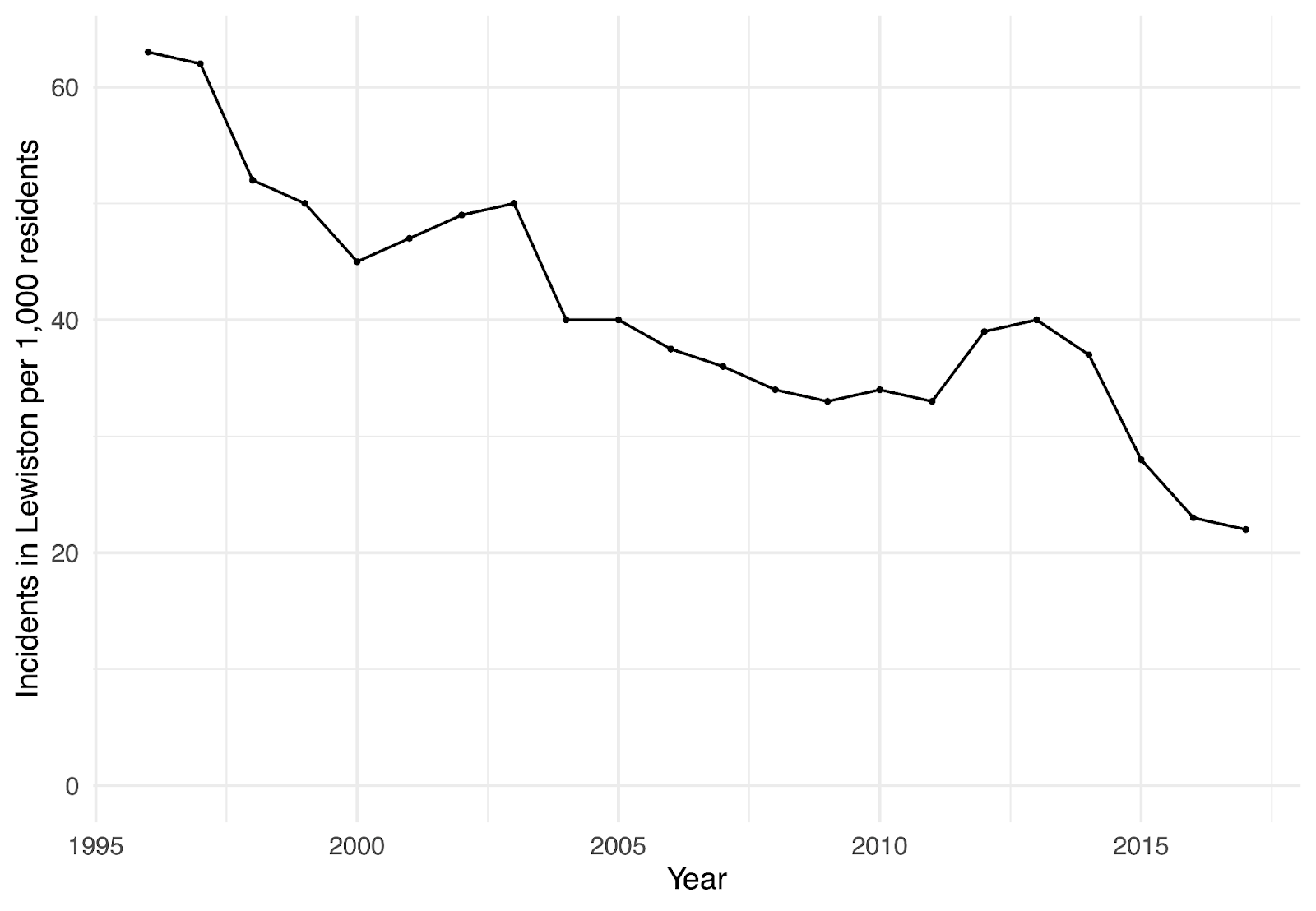
Figure 3: Criminal incidents in Lewiston, Maine. Data-source: Maine State Police crime reports, 1996-2016.
For crime that does happen, do Somalis commit “80 percent” of it, as Republican whip Tom Emmer alleges? No. Most crimes are done by white people, who are the majority of the population. In 2024 Minnesota recorded more white people getting arrested for crime than any other racial group, including for fraud, embezzlement, assault, sex crimes, and narcotics. Nationally, white people are the majority of those convicted of murder, mass shootings and white-collar crime. In terms of political violence, even the FBI admitted—ironically for an agency founded by white nationalist J. Edgar Hoover—that the most lethal domestic terrorism threat in the United States comes from white supremacists.
What about crime scaled by population? On a per capita basis, immigrants like Somalis are more law-abiding than native-born Americans. Here’s the libertarian Cato Institute, hardly a friend of the left: “Immigrants Have Lower Lifetime Incarceration Rates than Native-Born Americans.” The rate is 50 percent lower for undocumented immigrants and 74 percent lower for all immigrants. People also tend to commit criminal offenses where they live and against people with similar demographics, so reports of victimization can also indicate whether immigrant communities have higher crime rates. Cato again finds that “from 2017 to 2023, immigrants were 44 percent less likely than US-born Americans to be victimized by violent criminals.”
This finding is systematic: in Republican-controlled Texas, which has a higher immigrant share than Minnesota and where you might expect the most retributive, tough-on-crime attitudes, foreign-born Americans are less likely to show up as convicted murderers and less likely to be in jail. Over the long run of 1870-2020 immigrants are consistently less likely to be incarcerated than native-born Americans, and the gap widens after 1960. We know cities with higher immigrant populations have lower crime rates. We also know that within cities, neighborhoods with more immigrants have lower crime rates.
When right-wing commentators claim they know that the crime rate for just Somalis in Minnesota is higher than for non-Somalis, they are lying. That’s because when people get arrested or convicted, authorities do not record national ancestry. The closest I could get is a very rough approximation based on counting Muslim or Somali names on offender lists (Farah, Abuzok, Hirsi, Mohammed, Warsame etc) and comparing it to the Muslim or Somali population share in their respective counties or the state.
I hand-coded several thousand unique names on Minnesota’s sex and meth offender registries, Ohio’s habitual alcohol offender registry, jail rosters in Minnesota counties with significant Somali population (Dakota, Anoka, Stearns), and the arrest warrant list for Kandiyohi county, seat of Willmar city (9.5 percent Somali). For thoroughness, I also included all convicted prison inmates in Hennepin and Ramsey counties, the seats of Minneapolis and St. Paul. Results suggest that Muslims are either less likely to be offenders or statistically indistinguishable from their peers.
Many caveats apply here—some people may share these names but are not Muslim (Arab Christians) or converted and adopted a Muslim name in prison but have no prior Muslim identity. I have also not adjusted for any factors like age or poverty. Correcting for these “false positives” or confounders would push the evidence further against right-wing claims. On the other hand, some Muslims on the list may evade my name detection method and be false negatives—it’s impossible to truly know. In any case, there is certainly not statistical evidence showing a specific “Somali crime” rate higher than the general one.
Lest one dismiss these results as driven by a “soft on crime” approach, police tend to have more coercive and surveillance power in cities, where non-white minorities like Somalis live. Within cities, they police Black neighborhoods, racial boundaries, and Black persons more often than predicted by race-specific estimates of crime participation.
Minneapolis police in particular are no woke pansies; they inflict appalling racial violence. Recall for instance that in 2020 MPD murdered a Black man, George Floyd, in an act so brazen in its racism and cruelty, it provoked a national uprising. Both Minnesota’s Department of Human Rights and the U.S. Department of Justice released reports in 2023 from two-year probes into MPD describing a “pattern or practice of race discrimination.” According to 2022 data, they were also the fourth most likely to use physical force among all U.S. police departments.
It is thus remarkable that the carceral data, unadjusted for factors like age or poverty or more aggressive policing, still show that Muslims in Minnesota are no more likely than anyone else to wind up in jail, prison, or offender registries. So why do we see mugshots of Somali youth plastered across right-wing web pages? Or click-bait statistics about migrants committing “40% of sexual assaults” in London, per Reform UK party leader Nigel Farage?
The simplest explanation is that people selectively amplify the crime reports that fit their narrative. This is true for political violence, where attacks by Muslim perpetrators receive about 3.6 times more news coverage than attacks by non-Muslims. It is also obvious on a more mundane level to anyone who trawls through the “Minnesota Mugshots” Facebook page; mugshots of black, migrant-coded youth provoke far more discussion than white mugshots.
Another common trick is to assume an erroneously low estimate for the immigrant population, which makes it seem like the people committing crimes in that (illusory) small population represent a larger percentage than reality. This was true about Farage’s London story for instance. Bad statistics, cooked up by groups with bland, official-sounding names such as the “Centre For Migration Control” are then circulated by influencers and tabloid outlets next to the day’s cherry-picked migrant crime story. By flooding the discourse, you can get Danish people, for example, to overestimate immigrant crime in Denmark by orders of magnitude.
Most crime and arrest activity also involves young men irrespective of their ethnic group, and the incidence sharply tails off as we age. Immigrants tend to be younger, so their haters love to narrate these young newcomers in an aging society in terms of their ethnicity or “foreign” culture instead of their age, preying on people’s prejudice and ignorance of the age structure. This can be effective in Minnesota for example, where 85 percent of Somalis are below 44 years of age, compared to about 58 percent of the general population.

The Myth of Somali Welfare Dependency
This fact is useful for exposing the lie that Somalis in Minnesota are uniquely dependent on government aid. This idea is widespread. A curious study by the Center for Immigration Studies (CIS) claims that “81% of Somali families in Minnesota are on welfare vs 21% of American families.” The author, Jason Richwine, is no stranger to creative accounting on welfare use and once argued that non-whites are genetically endowed with less intelligence. Such concerns were evidently no hang-up for conservative media like Fox News, which circulated his graph and made it the basis of Trump’s own dubious remarks.
The correctness of this estimate depends on which year of data you use, what programs you count as welfare, and how much you trust self-reporting. CIS for instance gives an estimate that 54 percent of Somali American households in Minnesota receive nutritional assistance (SNAP). This is based on self-reported ACS surveys over 10 years up to 2023. But the most recent 2024 ACS survey estimates the share considerably lower, at 35 percent. The majority of Somalis in Minnesota are not currently on SNAP. Trump’s tax-cut bill further narrowed SNAP eligibility and ended the waitlist waiver for refugees.
We know from actual use data that the majority of SNAP beneficiaries in Minnesota, as well as the U.S. as a whole, are poor whites. Medicaid enrollees in Minnesota are majority-white. Somalis take a miniscule share of welfare expenditure (<1 percent) because they are a miniscule share of the population. In per capita terms, SNAP participation rates among immigrants are in general slightly lower than among all U.S.-born households. This is also true for Medicaid: immigrants under 65 are less likely to be covered by Medicaid than U.S.-born citizens. Some methodologies show that immigrants in general use fewer means-tested welfare and entitlement benefits than native-born Americans on a per-capita basis.
Somali Americans may participate in certain programs at higher rates than other populations, but this is not surprising given their recent arrival fleeing war and famine as the poorest nationality of all U.S. newcomers. Many of these Somalis are also children, so naturally they qualify for programs aimed at children. Almost half (47 percent) of Somali Minnesotans are children below 18. Somalis in Europe are also quite young; in Norway, 47 percent are below the age of 20. In England, it’s 48 percent below 21. As any parent knows, kids are budget net-negatives no matter their ethnicity. Their peak income years are still a ways off.
For programs that do disaggregate statistics by ethnic group, Somalis top charts of self-support. Minnesota has two cash grant programs for low-income families, the Minnesota Family Investment Program (MFIP) and the Diversionary Work Program (DWP). Minnesota uses these programs to fit an annual Self-Support Index for eight racial/ethnic groups of interest, based on what share of participants left cash assistance and work 30+ hours a week three years later. For 2025, Somalis’ success rate is one of the highest (81 percent vs 62 percent overall) and higher than whites (67 percent). This trend holds for all years we have data. Similarly, Besteman’s study of Lewiston, Maine found that by 2010 Somalis drew on state and local welfare at lower rates than the rest of the population.
Time trends also suggest convergence. Since 2000, Somali Minnesotans reduced their poverty rate by almost two thirds (63 to 23 percent) and boosted home ownership (1.7 to 13.4 percent) and workforce participation (46 to 70 percent). Among working-age men, labor force participation (76 percent) is comparable to the state itself (81 percent). They generate about $1.9 billion annually in income and taxes. Their income is generally not hoarded in financial vehicles but funneled back into the real economy, creating multiplier effects. Somali Minnesotans’ record is in fact so impressive that Swedish economists have even come to Minnesota to study its success story and compare it to the Somali experience in Malmö.
Minnesotan remittances are a lifeline for Somalia. Globally, the Somali diaspora sends about $1.7 billion annually to relatives at home—more than the Somali government’s budget, and surpassing all development and humanitarian aid combined. That wouldn’t be possible if immigrants were subsisting on meager welfare rolls. Remittances have special counter-cyclical properties unlike other kinds of international capital movement—surging during busts and ebbing during booms. This helps stabilize exchange rates and pool risk across Somalia. At scale, these flows can even offset the economic shocks which induce impoverished people to migrate in the first place.
Finally, what qualifies as government support is not a trivial accounting question. When CIS includes only means-tested programs or the Earned Income Tax Credit but not other kinds of tax credits, that is a political choice. As political scientist Suzanne Mettler points out, many welfare policies are part of the submerged state that circulates wealth upward to the upper middle class and ultra-rich; examples include the mortgage interest deduction, charitable tax deduction, and preferential treatment of capital and dividend income. In accounting terms, these supports are the fiscal equivalents to handouts. The Congressional Budget Office even categorizes them as expenditures, and they are expensive:
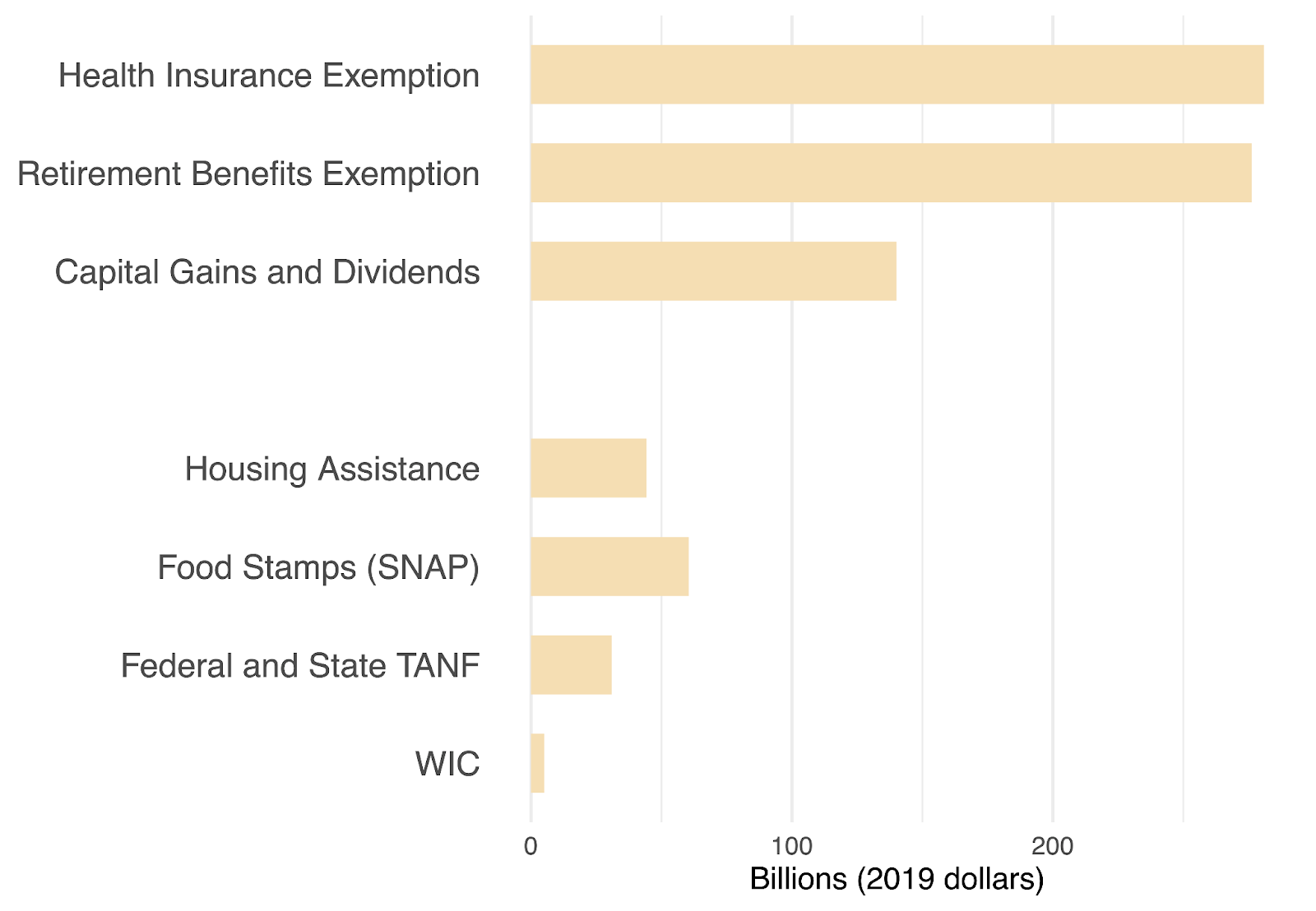
Figure 4: Three tax expenditures compared to selected welfare programs in FY2019. Source: Congressional Budget Office (2019).
They also primarily benefit the wealthy:
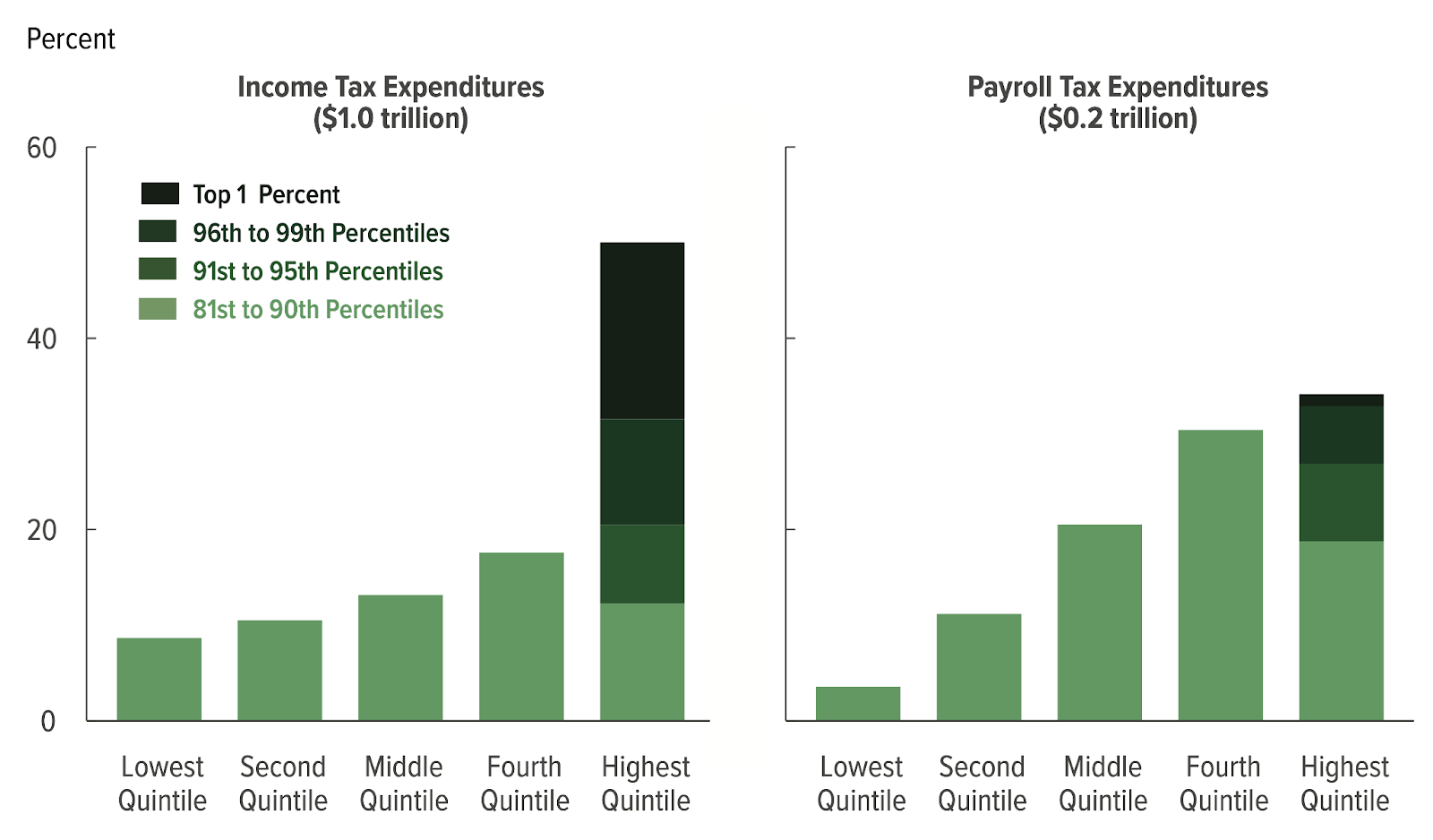
Figure 5: Most income and payroll tax expenditure benefits accrue to the richest households in the income distribution. Source: Congressional Budget Office (2019).
For political reasons, tax expenditures are buried in the tax code, where few Americans recognize them as handouts. But counting all benefits, 96 percent of Americans rely on direct aid from the government. Households with annual income above $150,000 take the lion’s share of itemized deductions. Per person, the richest 400 Americans (or 10,000 Americans) certainly take more government benefits in the form of tax expenditures than poor families receive in public cash or in-kind welfare. That’s because welfare is generally capped by month or by recipient, while many tax expenditures increase with income, and income for the rich is not capped. So who is the real welfare queen?
The Truth About Somali Integration
The final myth is that Somali Americans refuse to assimilate. Three common measures of assimilation are English proficiency, intermarriage, and wage convergence. As the Manhattan Institute itself has admitted, the current wave of immigrants since 2010 is the most assimilationist in history: English proficiency is higher among the current immigrants than those of the 20th century. The median wage gap between immigrants and natives has been closing since 2010, and the education gap is the smallest ever. Rates of intermarriage have also risen steadily since the 1960s.
Somalis follow that pattern. According to a 2019 study, about 86 percent of Somalis who have lived in the US for 10-plus years speak English well. About 11 percent of Somalis marry outside of their group. This may seem low compared to other immigrant groups, but it is twice as high as the inter-ethnic marriage rate for the U.S. population in 1980 and is equal to the current inter-marriage rate for whites. Wage convergence continues, as we’ve discussed. Somali uptake of U.S. citizenship is also higher than average immigrant groups.
Of course for leftists, assimilation is not a self-evidently desirable or feasible goal. As one Somali American explains, she does not want to assimilate into the aspect of American culture which expects her to abandon her parents to a nursing home when they grow old. In Somali culture, one cares for aging parents. Is that so terrible? Harms of assimilation are evidently a personal concern of Christopher Rufo himself, who is the son of a migrant, remains a dual citizen with Italy, speaks its foreign language at home to his kids, romanticizes the family “clan,” and visits his father’s village often so that his children can “maintain the connection to their roots.”
This reflects a fundamental hypocrisy in nativist political culture. When white people have clans or herd sheep, it’s sexy and masculine—the stuff of Braveheart, kilts, and bagpipes. When they run organized crime rings, it’s dramatized with sympathetic characters like Tony Soprano. When they defraud, it’s a clever Leonardo DiCaprio in Catch Me If You Can or The Wolf of Wall Street. When the U.S. confiscates an oil tanker and holds it ransom, it’s national defense. But when Somali fishermen hijack illegal fishing trawlers, they are terrorists. When they defraud, they are leeches. When they have clans, they are primitive.
Conservatives, likewise, rip their hair out over migration from the Global South but ignore how it’s shaped by their policies of destabilization and plunder—vividly illustrated by Somalia’s own history. If conservatives truly opposed migration, they would oppose the forces that induce people to migrate, such as mass sanctions, climate damage, and hoarding of wealth and opportunity on one side of the border. They would oppose the construction of volatile and exploitive foreign markets for Somali gold and incense, livestock, and sea resources. Or they would oppose the CIA arming a warlord alliance and foreign invasion of Somalia in 2006, which led to further state collapse.
Somalis can at least take some solace in the fact that sweeping, offensive stereotypes about migrants are not new. Italian Americans once faced similar complaints about clannishness and criminality. In Minnesota, insults were levied against Scandinavians, who were imagined as dirty, non-white “Roundheads,” “China Swedes,” and “Jackpine Savages” in the early 20th century. But like Italians and Swedes, the Somali diaspora in the U.S. has its stars: the world champion runner Abdi Bile, the elegant supermodel Iman, astrophysicist and NASA director Ali Omar. Somalis are chefs, doctors, scientists, and jazz musicians.
How different American images of Somalia would be if we viewed Hollywood movies like Black Hawk Down and Captain Phillips with a little skepticism. Somalia has produced great poets like Hadraawi and Warsan Shire. It is a land of gold, frankincense and myrrh—the trees of which are endemic to the Somali Punt and Cal Madow, and have for centuries supplied the incenses that perfume the cathedrals of Europe. Somalis have made a home in the United States since the 1920s, when sailors from the Horn of Africa manned steamships on the Great Lakes. They even have their own Christian conservative ideologues, like Ayaan Hirsi Ali. What could be more assimilationist than that?
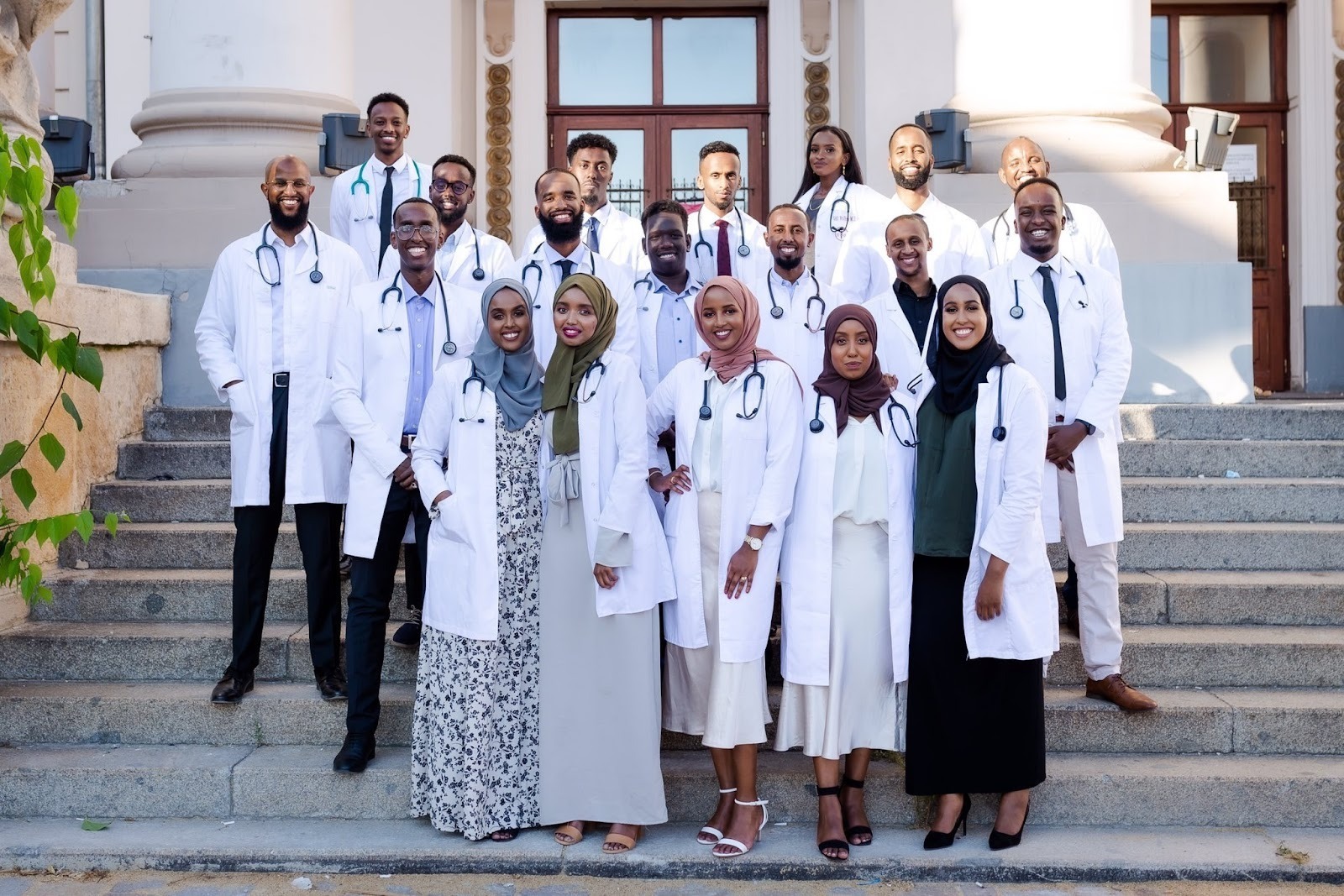
Somali diaspora graduates from a medical program in Romania (August 28, 2020). Mostly from Finland, also USA/Canada, Germany, UK, and Sweden.
Who Benefits from the Lie?
Having demolished the myths about Somali crime, welfare dependency, and assimilation failure, a question remains: why do these lies persist? Lies about Somalis serve a number of plausible, overlapping ends for the right: embed Somalis into a social category of permanent suspicion so that violence against them, and against Somalia, becomes more acceptable, scandalize Democrats like Governor Tim Walz (who is no longer seeking reelection), erode public trust in welfare programs so they can be dismantled, and diminish record public support for immigration by attacking a perceived weakest link.
Another goal is to obscure the bigger fraud scandals. One example is healthcare mogul Philip Esformes, who bilked $1.3 billion from Medicaid and Medicare through his nursing home empire, where he entrapped patients by giving them fentanyl addictions. Less than a year after conviction, he had his sentence commuted by Donald Trump. Another example is Rick Scott, a Florida man whose firm pled guilty to 14 felonies of healthcare fraud and paid $1.7 billion in fines in 1997. Did he face bars? No, he became Florida’s governor in 2011. As Senator, he recently opposed efforts to end stock trading in Congress.
Fraudsters like Scott, Esformes or those in Minnesota today are motivated by greed. Their greed is emboldened by the retreat of the state from welfare provision, as public services are “contracted out” to for-profit or loosely regulated non-profit sectors, and the state is hollowed of its capacity. Neoliberals justify this move with the naïve pretense that competitive market actors can more efficiently deliver. The perennial risk is that it ends up rewarding fraud, moral hazard, monopoly, and malpractice.
That risk is everywhere. We see it in the increased use of private healthcare providers to deliver NHS services in England, the for-profit UnitedHealth company fleecing Medicare of billions with dubious diagnoses, the scandalized “Shangri-La Industries” pilfering $160 million intended for homeless housing in California, the recent childcare scandal in Australia, and public-private partnership schools across the Global South. Fraud has flourished in the deregulated hustle culture and widening inequalities of our capitalist era, visible among both exploited victim and worker of the industry’s “scam compounds.”
Fraud also proliferates under conservative rule. Trump’s Securities and Exchange Commission is on track to prosecute the fewest audits and fraud cases since Ronald Reagan. Trump fired two FTC commissioners and the head of the Consumer Financial Protection Bureau (CFPB). He then attempted mass firings at the CFPB and ordered staff to stop work. Attorney General Pam Bondi told prosecutors to deprioritize corruption and bribery cases. She then dismantled the Department of Justice’s “kleptocracy team” and issued guidance against “overbroad and unchecked corporate and white-collar enforcement.” Republicans routinely gut the enforcement arm of the Internal Revenue Service to such a degree it effectively no longer audits private equity and venture capital. Trump’s recent budget proposal cuts the IRS even further.
Then there are the pardons. Donald Trump pardoned billions of dollars of corporate misconduct and ended an estimated $1.3 billion of restitution payments to fraud victims by July 2025. He pardoned Joseph Schwartz, who ran a $38 million Medicaid fraud scheme, and David Gentile, who ran a $1.6 billion Ponzi scheme. His acting CFPB director, Russell Vought, dismissed a lawsuit against Zelle’s bank consortium for allowing fraudsters to steal $870 million from customers. There is now a pardon industry, where white collar convicts pledge money to Trump and his allies, and he pardons them. Asked why he pardoned Changpeng Zhao, founder of the crypto exchange Binance (fined $4.3 billion for money laundering), Trump replied: “I don’t know. He was recommended by a lot of people.”
People like Chris Rufo get paid to distract from such abuses and give a shoddy, intellectual veneer to bigoted ideas. This is not a figure of speech; the Manhattan Institute is literally paid by corporations in the oil and gas industries, the Koch brothers, and billionaires like hedge fund manager Paul Singer. City Journal exists to serve their class interests. (One could juxtapose their funding model with that of a publication like Current Affairs, which refuses corporate money and relies on independent subscribers and small donors.) The real-life effect of their propaganda is not to reveal fraud but to obscure it, preventing ordinary people from uniting against those with wealth and power.
1: See the Office of Inspector General’s Medicaid Fraud Control Units Annual Report: Fiscal Year 2024 listing $1.4 billion recovered, which is about 0.1% of the $909 billion in total Medicaid spending.
2: For national recipient fraud amount in FY 2023 of $68.1 million, see Table 39 in the U.S. Department of Agriculture’s SNAP State Activity Report and divide it by total SNAP issuance of $106.8 billion. For Minnesota, divide $565,242 in recipient fraud collected by $1,507,819,897 in total SNAP issuance.
3: See Congressional Research Service report Supplemental Nutrition Assistance Program: Errors and Fraud (Updated April 7, 2025) by Randy Aussenberg.
4: Replication data, code, and instructions for this and subsequent plots can be found here.
5: Source for violent crime data is Minnesota Department of Public Safety’s Historical Crime Index. For 1990, 2000, and 2006-2016, foreign-born share is from the census and American Community Survey. For other years, the foreign-born share is interpolated from the Immigration and Nationality Service’s Yearly Statistics of Arrivals and the Minnesota State Demographic Center.
6: See Catherine Besteman’s (2016) Making Refuge and Andrea Voyer’s (2013) Strangers and Neighbors.