
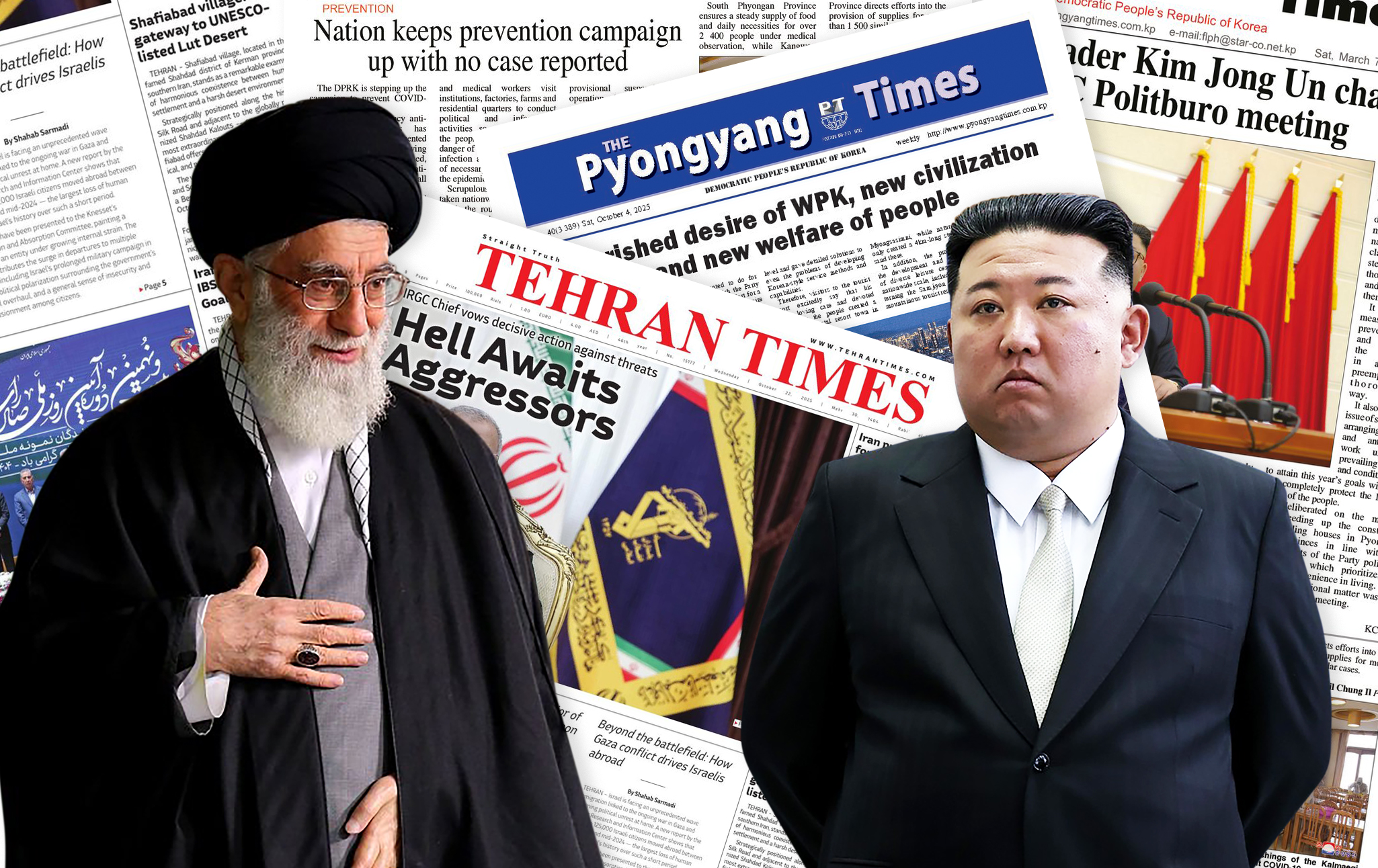
The Pyongyang Times and the Tehran Times are both ludicrous propaganda outlets. In that way, they’re just like our media in the United States.
Everybody’s got their favorite newspaper or magazine—the one they turn to first thing in the morning, breakfast fork in hand, for a look at what’s going on in the world. Noam Chomsky, famously, prefers the Financial Times, calling it “more open, more free, often more critical” because it’s where the rich and powerful speak frankly to one another. Joan Didion praised the Berkeley Barb, the Open City, and the other “underground” papers of 1960s California as among “the only American newspapers that do not leave me in the grip of a profound physical conviction that the oxygen has been cut off from my brain tissue, very probably by an Associated Press wire.” Your own periodicals of choice might be the Detroit Free Press or Drop Site News, or if you have especially good taste, Current Affairs. But there are some papers I read regularly that are a little different from those. Almost nobody else in the United States reads them, but I think they tell us some important things about our country and the world, though probably not in the way their writers intend. You see, I’m a loyal reader of the Pyongyang Times and the Tehran Times.
Now, it’s not that I’m a political supporter of the Islamic Republic of Iran, or of the ironically named Democratic People’s Republic of Korea (DPRK), better known as North Korea. Far from it. And it’s not that I even think these papers convey much in the way of accurate or useful information. In fact, their pages contain some of the most blatant propaganda I’ve ever seen. They’re often absurd, abhorrent, or both at once. But that’s precisely why they’re so valuable, because in their crude sledgehammer proselytizing for their particular regimes, they give us a blueprint for how to recognize more subtle forms of propaganda when we encounter them right here at home.
Let’s begin by opening a crisp new Pyongyang Times—or rather, looking at the paper’s somewhat janky website, since physical copies are hard to come by here in the States. Founded in 1965, the Times is the only English-language newspaper in North Korea. It’s a weekly, usually 12 pages long, and most of the articles are translated from either the Rodong Sinmun (which serves the entire DPRK) or the more regional Pyongyang Sinmun. Like most things in North Korea, all of the above are state-owned and run. By itself, this isn’t necessarily a bad thing; after all, so are PBS and the BBC, and while they have their problems, they’re perfectly serviceable news outlets. More so, in fact, than privately-owned ones in the same countries, like the Daily Mail or Fox News. But when you read the Pyongyang Times, it’s obvious that they’re not exactly publishing straightforward news coverage. Instead, you get all the Juche that’s fit to print.
The first thing you notice on the Pyongyang Times website is that a high percentage of the headlines start with the words “Respected Comrade Kim Jong Un,” followed by something completely banal. At the time of writing, the paper’s top story was “Respected Comrade Kim Jong Un guides construction of Sinuiju Combined Greenhouse Farm again” —the “again” is a lovely little cherry on top, suggesting that he wasn’t quite satisfied with it the first time. A few days prior, it was “Respected Comrade Kim Jong Un sees grand mass gymnastics and artistic performance with participants in celebrations and support team members.” Before that, “Respected Comrade Kim Jong Un visits Kumsusan Palace of Sun.” All of these stories, if you can call them stories, are compiled in a sidebar called “GENERAL SECRETARY KIM JONG UN’S REVOLUTIONARY ACTIVITIES,” which seems to serve the purpose a weekly sports column or Garfield comic might in an American newspaper.
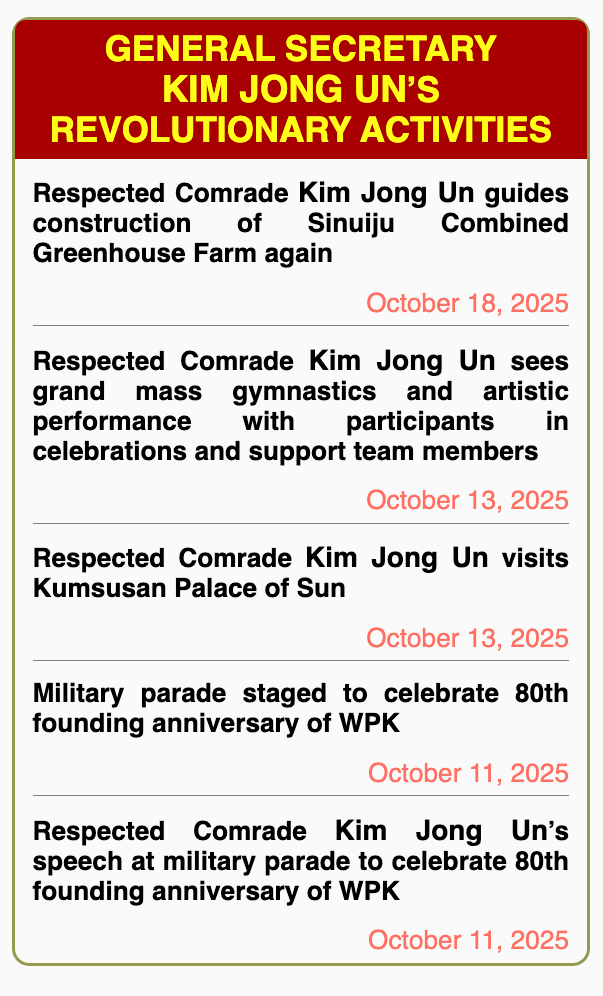
Thank you, Chairman Kim, very cool.
Apparently, the editors don’t mind that the REVOLUTIONARY ACTIVITIES aren’t very, well, revolutionary. There are countless high-res photos of Kim Jong Un getting on and off trains, standing around at construction sites, writing letters to the leaders of whichever countries are still speaking to him, and just generally peering off into the middle distance. Kim is never criticized, obviously, and there’s a notable lack of specifics about any political decisions he might have made. If your only source of news was the Pyongyang Times, you’d get the impression he was a kind of lovable national mascot, rather than a world leader. I wouldn’t put it past the paper to publish “Respected Comrade Kim Jong Un Eats Nice Sandwich” one of these days; it wouldn’t look particularly out of place.
In fact, a running theme in Pyongyang Times articles is that the topics covered are so boring, they circle back around and become absurd. The editorial line appears to be that the DPRK is a paradise on Earth (thanks to Respected Comrade Kim Jong Un, naturally), so there are few actual problems there. No crime, no political unrest, no poverty or inequality; only the occasional bout of “extreme weathers” or disease. So that leaves the writers with pretty thin fare to report on. When they’re not covering their leader’s every move, we get riveting stories like “Factory strives to increase kinds of children’s foodstuffs” or “Spring water widely used as drinking water.” (The latter informs us that “People’s interest in spring water is growing day after day.” Is it? Is it really?) And for a hint of color, there are a few advertisements for things like Koryo Bean Paste Liquor (“it leaves lingering aftertaste on the drinkers”).
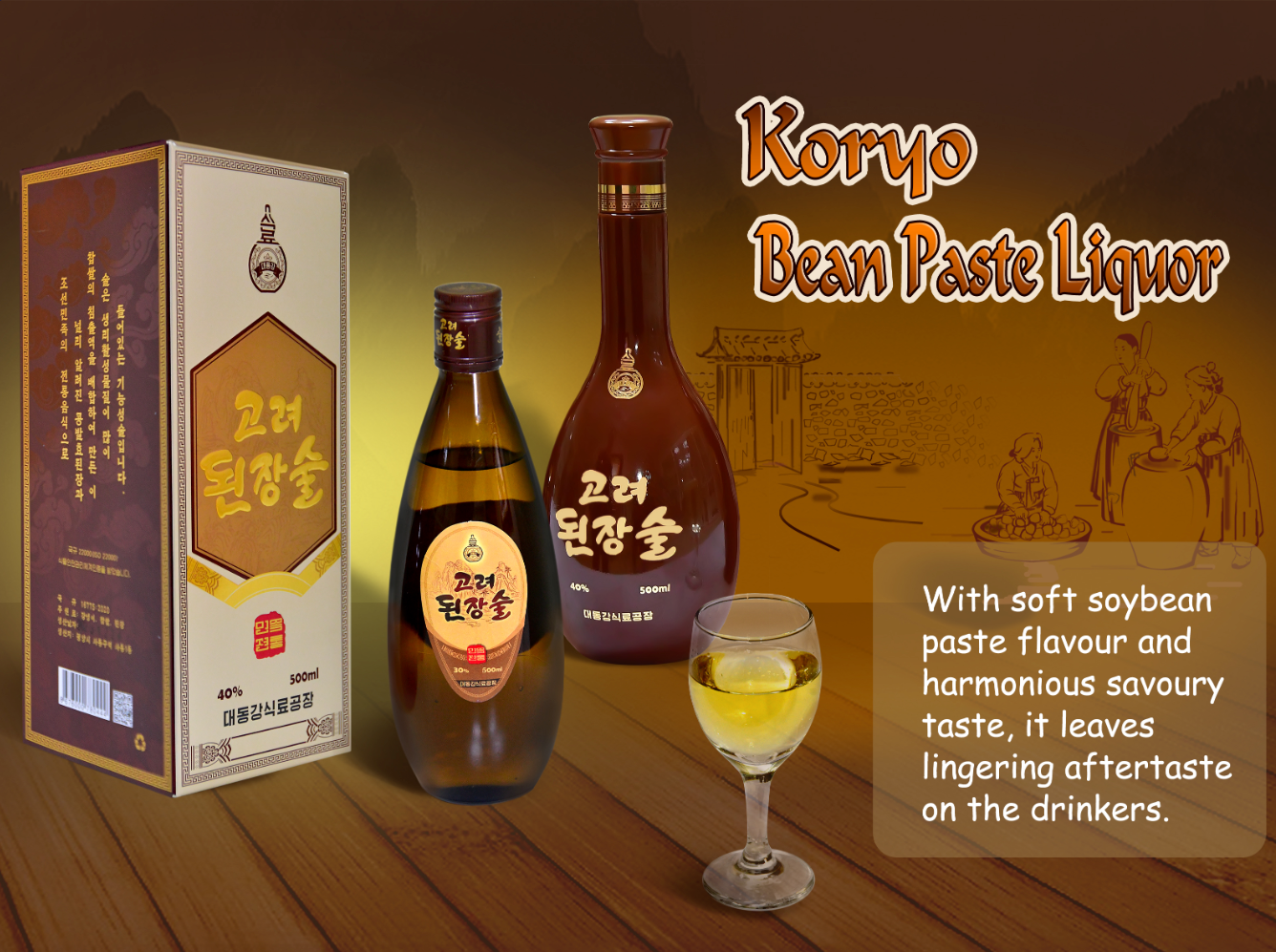
Comic Sans: The People’s Font.
The exception to this idyllic tone comes when the paper makes fiery denunciations of the U.S., South Korea, Japan, and the rest of the DPRK’s official enemies (which, these days, include Ukraine). These articles aren’t frequent, but when they come up, they’re jarring. One of the most extreme examples is called “The scum should be completely annihilated,” from October 17, 2024:
I can hardly suppress the surging indignation at the news that the puppet ROK [Republic of Korea] scum dared to commit such an indelible crime of scattering dirty rubbish over the sky of our capital city.
Merciless annihilation is the only medicine for the puppet ROK scum, the clan of nasty pieces of work.
The “indelible crime of scattering dirty rubbish,” here committed by “the scum,” refers to an incident where South Korean activists sent pro-democracy leaflets over the DPRK’s border attached to weather balloons, which apparently merits “merciless annihilation” in the eyes of the writer. And in typical Pyongyang Times style, this little tirade was immediately followed by a story about Kim Jong Un sending a nice gift basket to an old lady on her 100th birthday.
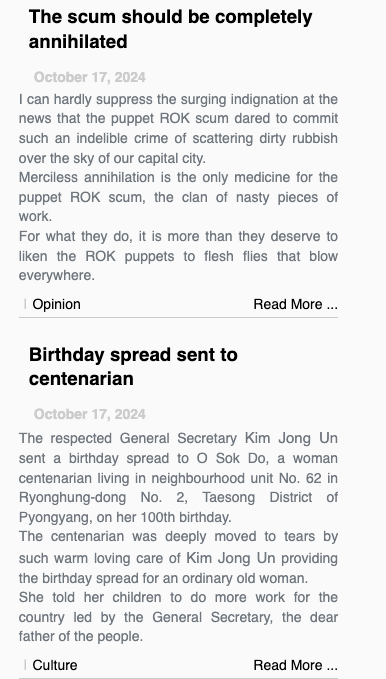
Getting a hint of tonal whiplash here, guys.
Apparently, it’s always been like this. In a little-read memoir called A Year in Pyongyang, a British expatriate named Andrew Holloway relates how he was employed by the government of North Korea in 1987-88 as a translator. Holloway was hard up for a job, and after seeing a notice posted on a Leeds University bulletin board, he flew to Pyongyang to relieve the previous translator—a Zimbabwean man named David Richardson—who wasn’t allowed to leave the DPRK until he recruited a replacement. Along with the collected works of Kim Il-Sung, one of the projects Holloway worked on was the Pyongyang Times, and he describes it like this:
The front page of the Pyongyang Times is devoted to the President and always carries a picture of him with the week's most important foreign delegation. The next four pages record the brilliant successes in the technical, ideological and cultural revolutions, none of which would have been possible without the wise guidance of the great leader or Dear Comrade Kim Jom Il, whether it be the construction of the West Sea Barrage or the cultivation of the Pyongyang variety of thick-headed spring cabbage.
Along with veneration for the incumbent member of the Kim dynasty, the other running theme is horror stories, either exaggerated or entirely made up, about South Korea:
On 21st November 1987, the Pyongyang Times carried a photograph of two men carrying cameras and wearing gas-masks. The caption read, “Reporters are obliged to wear gas-masks for news coverage in pollution-ridden Seoul.” It evidently did not occur to the editorial board that the presence of riot police in the same photograph might suggest to the reader a different explanation for the gas-masks[...]
Reporting an AIDS epidemic in South Korea, the Pyongyang Times for September 12th 1987 stated that this is more than just attributable to the presence of the GI's. The US government actually posts AIDS-infected GI's to South Korea as a deliberate policy. “The aim of dispatching AIDS carriers from the US is to enable the transmission and effects of the AIDS virus to be studied experimentally using Korean people as guinea pigs.”
Holloway describes himself as having “some qualms” about all this, but a paycheck’s a paycheck, and he doesn’t exactly have the option to quit. Ultimately, he concludes that the propaganda he’s helping to churn out is “so stupid that hardly anyone was ever likely to read it and no-one could possibly take it seriously.” At the end of his year’s contract, he takes the money and runs, writing that he has “no nostalgia for North Korea whatsoever.” Almost 40 years later, the paper he helped to Anglicize is still going strong.

Now, it would be easy to laugh at all this, especially from a U.S. perspective. So much of what you find in the Pyongyang Times is strange and goofy, from the daily bulletins about “revolutionary activities” to the op-eds denouncing “the scum.” By taking itself extremely seriously, the North Korean leadership has always given Americans plenty to make fun of, from Team America: World Police to The Interview. But there’s also something vaguely Orientalist about looking at an Asian country, even a dictatorship, and scoffing at it as if we’re so much better. As if propaganda, censorship, surveillance, repressive policing, and brutal inequality weren’t scourges we have in the supposed “free world” as well. And when you peruse certain Western news outlets, there’s a distinct whiff of Pyongyang Times about them.
Recall that the basic propaganda model we’ve seen in Pyongyang has two modes: rage-inducing denunciations of designated enemies, and banal fluff that placates and reassures the reader while flattering the regime. Then, open the website of Newsmax, a favorite network for U.S. Republicans. What do we find? Well, here’s some “Dear Leader” material, with an op-ed from Representative Anna Paulina Luna about why Donald Trump deserves the Nobel Peace Prize. (Luna has previously proposed carving Trump’s face on Mount Rushmore.) And here’s some red-faced condemnation of the enemy, with another op-ed called “Democrats Oppose Anyone Just Doing Their Job” where liberals are accused of “fomenting and condoning violence” against ICE agents and the police. Troops occupying major cities are painted as heroes, while anyone who dissents against the occupation is a villain. The tone is slightly more subtle; nobody is outright called “the scum.” But the model is the same. Rhetorical carrot in one hand, stick in the other.
Or, for another example, consider the New York Post. Here, we find more sycophancy. There’s an op-ed in praise of Trump’s decision to demolish the East Wing of the White House and install a huge, gaudy ballroom: “Trump treats the WH with reverence – and he’s rebuilding our nation’s pride with historic renovations.” Or, in another article, “Trump’s sanctions on Russian energy are a massive step toward peace,” rather than economic warfare. Or “Trump battles cartels and Communists to make the Americas great again.” There’s even an article from Kemi Badenoch, the leader of the British Conservative Party: “Under Trump, America has the kind of leadership we in Britain desperately need.” This isn’t serious reporting. It isn’t even serious opinion writing, because every serious publication occasionally criticizes political figures to whom it’s sympathetic. There’s no way not to, because no politician alive is right 100 percent of the time. This is propaganda, no better than “Respected Comrade Kim Jong Un receives flower baskets from foreign personages.”
The role of South Korea, meanwhile, is played in the Western conservative press by a rotating cast of figures. Right now the most prominent is Zohran Mamdani, who keeps getting denounced in more and more outlandish ways as New York City’s mayoral election draws near. “Over 25% of New Yorkers will consider fleeing NYC if Mamdani wins,” says one article in the New York Post, which is somewhat implausible, considering that would be an exodus of over 2 million people. Imagine how many U-Hauls they’d need! “A vote for Mamdani is a vote for LITERALLY more criminals on NYC streets,” we’re told. “Mamdani threatens Jewish safety.” Mamdani is a “man who has never dealt with reality” (this from Douglas Murray, a writer who’s pretty reality-challenged himself). In the Times of London, they were so desperate for anti-Mamdani content that they recently published an interview with Bill DeBlasio bashing his policies, only to discover that it was not former Mayor Bill de Blasio (note the small D), but a random man with a similar name. Editorial standards are at an all-time low, because providing quality journalism is not the point. Enforcing an anti-socialist political line is.
Mamdani’s not the only one under attack. There are also countless snide and demeaning articles about transgender people in these papers, including one repellent example from the New York Post where a trans girl on a basketball team is described as an “obviously naturally born boy” in the headline. At this point, they might as well just print “the scum should be annihilated” and get it over with. It would be more honest.
Then, in place of tedious updates about the production of “foodstuffs” and the popularity of spring water, U.S. news outlets give us tedious information about the lives of C, D, and E-list celebrities. Turn again to the New York Post and its mind-numbing “Page Six” section: “Frankie Muniz reunites with his ‘Malcolm in the Middle’ brothers.” “Kylie Jenner styles her sports bra and bike shorts with a $3,600 bag.” The Mets, it seems, have re-signed a left-handed pitcher to a one-year contract. On the Post website, this stuff is far more prominent than actual news. If you got your information exclusively from there, you would have little idea there was such a thing as climate change, for example, or that China was having a huge “Fourth Plenum” conference to decide its economic policy for the next five years.
Or consider CBS, now under the editorial direction of Free Press propagandist Bari Weiss. Along with sacking the actual professionals, her first moves at the network included commissioning her sister Suzy Weiss to present a feature on the groundbreaking news that lab-grown diamonds exist. (Seriously, that’s the entire point of the segment.) The goal of this kind of content—and it is “content,” rather than journalism—isn’t to inform the reader or viewer. It’s to distract and mollify them with meaningless mental junk food. Tune in any day for “Spring water widely used as drinking water.”

Now, let’s take a trip approximately 4,000 miles south and west—from the rainy streets of Pyongyang, to a newsstand in sun-baked Tehran. Here, we can pick up a copy of our second dictatorship newspaper, and find an Iranian street cafe with a nice view of the Alborz mountains to read it in.
The Tehran Times has been around since 1979, just one year after the Iranian Revolution deposed the Shah (and his U.S. backers) and brought Ayatollah Khomeini to supreme power. Unlike the Pyongyang Times, it’s not technically state-owned. State-aligned might be the better word, as it was founded by Mohammad Beheshti, a prominent ally of Khomeini who served as head of Iran’s Supreme Court. Its first edition declared it a “voice of the Islamic revolution”—a phrase the paper still has painted on the exterior wall of its headquarters—and its content has been “generally supportive of the Islamic Republic of Iran’s ideology” ever since.
Compared to the weirdness of its North Korean counterpart, the Tehran Times looks a lot more like a modern paper, and its articles are more readable. For one thing, there’s no daily diary of what Ayatollah Khamenei is up to. Nor is the general existence of agriculture treated as front-page material. Instead, you get actual news coverage. It’s clearly slanted news, with boastful features about how Iran is building new solar energy plants and winning international literary awards paired with stories like “Suicide epidemic exposes Israel’s military defeat.” You’ll be hard-pressed to find anything positive about Iran’s geopolitical opponents, especially Israel and the U.S., or anything critical about the Ayatollah, the Revolutionary Guard, or the Iranian state as a whole. But at least the events being covered actually happened, and they’re all pretty much newsworthy, to the extent that a lot of Tehran Times coverage (eg “Diplomatic meltdown marks Kabul-Islamabad dialogue”) could appear in a European paper like Le Monde and not look out of place. This is a more subtle propaganda model, where the individual stories aren’t actually false, and nothing reads like a government press release, in the way the Pyongyang Times does. It’s the choice of topics, the emphasis and tone, and what’s omitted that create the paper’s ideological bias—and that’s true of plenty of Western outlets, too.
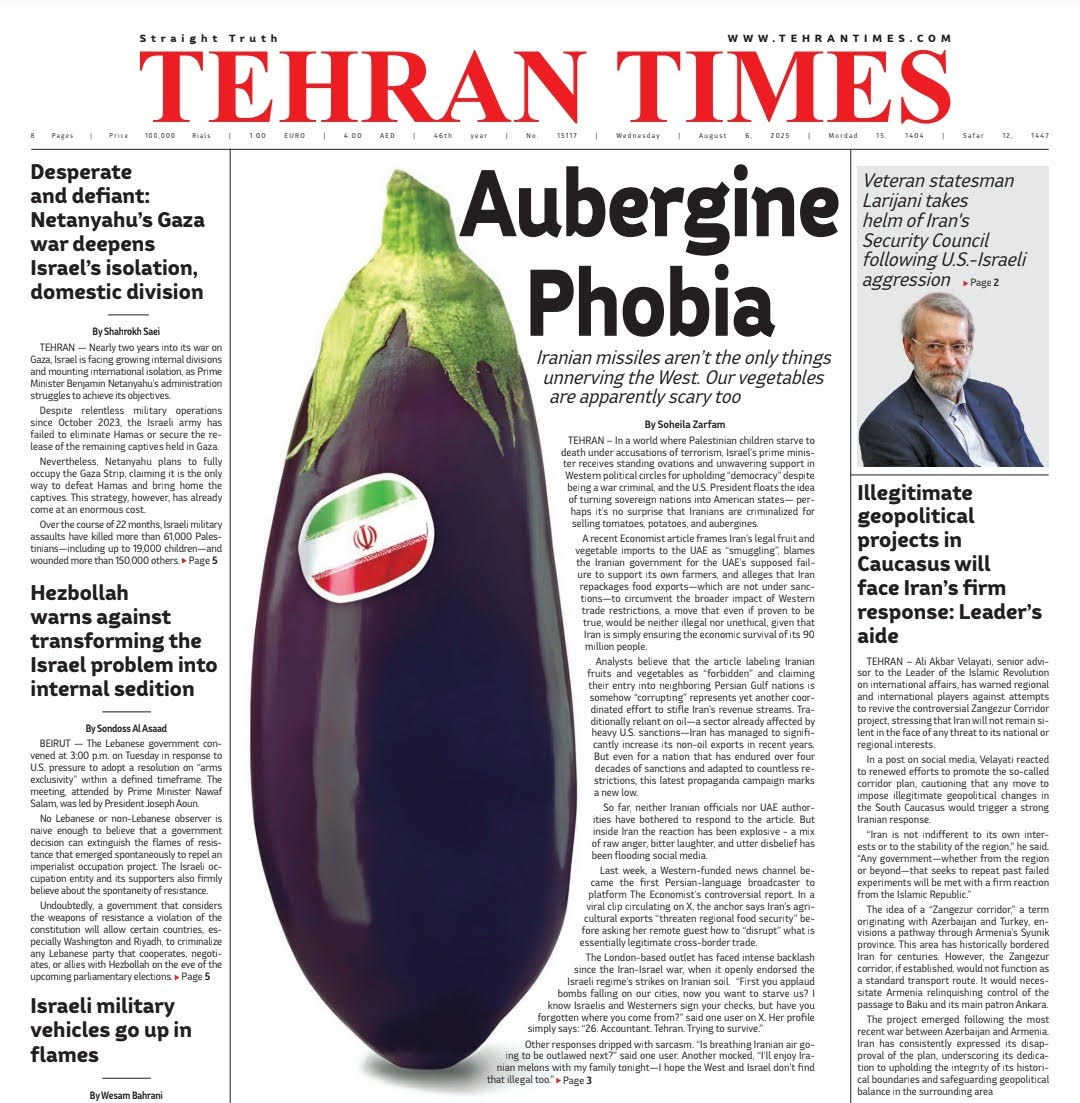
In fact, the writers of the Tehran Times are self-aware enough to directly contrast their paper to the ideological misadventures of the Western press, and sometimes they score a win. In one recent incident, the Economist ran an article that was silly even by its standards, claiming that Iran was “corrupting” its neighbors by selling them vegetables. “Iran now supplies nine out of ten cauliflowers, tomatoes and watermelons imported by the UAE,” the author frets, and thus threatens to become a “veggie-melon hegemon.” This is bad, according to the Economist, because it allows Iran to “dodge” U.S. sanctions. The right of the U.S. to sanction whichever countries it likes is not questioned in the article, nor are the devastating effects of such sanctions on Iranian civilians who have nothing to do with the Ayatollah’s decisions. There’s just a lot of scaremongering about “Iran’s green invasion,” including “Rootless veggies and undercover kiwis.” So the Tehran Times responded in their August 5 edition, mocking the Economist’s produce-aisle panic:
Iranian missiles aren’t the only things unnerving the West. Our vegetables are apparently scary too.
In a world where Palestinian children starve to death under accusations of terrorism, Israel’s prime minister receives standing ovations and unwavering support in Western political circles for upholding “democracy” despite being a war criminal, and the U.S. President floats the idea of turning sovereign nations into American states— perhaps it’s no surprise that Iranians are criminalized for selling tomatoes, potatoes, and aubergines[...]
So far, neither Iranian officials nor UAE authorities have bothered to respond to the article. But inside Iran the reaction has been explosive - a mix of raw anger, bitter laughter, and utter disbelief has been flooding social media[...] “Is breathing Iranian air going to be outlawed next?” said one user.
The editors also put a giant image of an upright eggplant on the paper’s cover. (One suspects they know about its symbolism as an emoji.) And they were right, where the Economist was wrong. It’s pretty bad when the state-aligned newspaper of Iran’s capital city can roast your publication for peddling absurd propaganda, and the Iranians have a point.
The arts and culture section of the Tehran Times, too, is fascinating. You almost never hear about Iranian artists or intellectuals in the U.S. press, unless it’s in the context of them being imprisoned by the regime—something that happens all too often, like in the case of Iranian rapper Toomaj Salehi, who was sentenced to death for his lyrics in 2022 before eventually having his sentence overturned. As scholar John Ghazvinian explained in an interview with Current Affairs last year, U.S. leaders discuss Iran only in the context of it being a “global menace,” and the media follows suit, leaving the average American ill-informed about the country. The image we’re sold is of a grim dystopia with little culture to speak of. But the pages of the Tehran Times show a lively, multifaceted art scene. There’s plenty about domestic Iranian filmmakers and painters and even puppet theaters, and these are, of course, framed as sources of national pride. Some of the art on offer has a propaganda element too, like a documentary about the “martyrdom” of Yahya Sinwar or a contest for Iranian cartoonists to make fun of Donald Trump. But a lot of it is just good art, and there’s also a real cosmopolitan and international aspect to the coverage. You can read about an all-Iranian production of a Woody Allen play, or another of The Odd Couple, or an academic book about Hegel that’s been newly translated into Persian, or a screening of Billy Wilder’s Witness for the Prosecution that’s scheduled for a Tehran movie theater. Really, if the Tehran Times is anything to go by, the paper’s readers probably know more about great American books and movies than the average American does, while we know nothing about their country’s cultural output.
But then, just when you’re starting to feel like Iran might not be such a bad place to live, the paper reminds you it is, indeed, produced under a dictatorship. Toomaj Salehi, the rapper Iranian leaders slated for death, is nowhere to be found in the Tehran Times culture pages. Instead, the one mention I could find of his name is buried in an article called “Changing balance in region with the effective strategy of Raisi administration,” which condemns anyone who “assume[s] a human rights position towards security convicts in Iran,” accusing Salehi of being affiliated with “the Zionist regime” because people painted graffiti of him in Jerusalem. (Salehi has, in fact, “bitterly criticised Israel’s strikes on his country.”) On other issues, the editorial stance is even worse. A 2023 op-ed called “Normalization and legalization of all sins!” condemns LGBTQ rights as a “great distortion” spread in Western nations by “the financial and human capital of the Jews.” Its language wouldn’t be out of place in a neo-Nazi publication. And when you look for coverage of women’s rights in Iran, it’s just plain ugly. One article from 2018 repeats, uncritically, a claim from a “judiciary spokesman” that women who take off their hijabs in protest are only doing so because they’re “under the influence of drug abuse.” And in a truly disgusting 2023 article about the death of Mahsa Amini and the subsequent wave of “Woman, Life, Freedom” protests, the writer—one Javad Asgharirad—blames her killing in police custody on lax parenting:
This can easily be seen in the case of Mahsa Amini’s sad demise and the rest of those who began to rise for her. Mahsa was the daughter of a Kurdish family who had cherished her during her childhood (her father had written a letter asking for a change of job because of his daughter’s head surgery early in her childhood) and the fact that she left her hometown without her parents, to visit Tehran and her friends, shows how easygoing her family was. But what she did not know was that society and government have their standards eventually different from those of her family.
Her defiance of the morality police, which she mistook for her parents, led to her custody and sorrowful destiny.
This, then, is the Tehran Times propaganda model. The culture pages are actually quite good, and can lure you in. The actual journalism is largely unremarkable, if biased in its emphasis and what it leaves out. And the really diabolical stuff is in the op-ed pages, laid bare for the world to see.

Does that sound familiar? It should. It’s how the New York Times operates, too. Where right-wing outlets like Newsmax and the New York Post use a crude, obvious propaganda model, akin to the Pyongyang Times, the Grey Lady has a more subtle one, which makes it far more dangerous. You can find all kinds of good book reviews, stuff about film and ballet, even poetry criticism in there. The sports page is solid, and the crossword. And the actual reporting of world events is usually fine, though there are glaring gaps (like saying that Palestinians “have died” rather than being “killed by Israel,” or not covering Africa enough). But then you turn to the op-eds, and you get the political worldview that’s been curated by the paper’s owners, raw and unfiltered, and it’s a nasty one. You get articles like Bret Stephens’ “We Absolutely Need to Escalate with Iran” or “No, Israel is Not Committing Genocide in Gaza.” You get Mike Pence arguing that women’s reproductive rights should be taken away. You get UnitedHealth CEO Brian Thompson, a corporate jackal who was responsible for countless elderly people having their healthcare denied by AI, eulogized as a saintly family man by another UnitedHealth executive. You get told that Zohran Mamdani doesn’t “deserv[e] a spot on New Yorkers’ ballots,” but “Charlie Kirk was Practicing Politics the Right Way.” Like the Tehran Times, it’s a perfectly readable newspaper, with plenty of talented writers. It just happens to be owned and operated by closet reactionaries, and sometimes the genteel mask slips.
And that, in turn, is why I keep reading the Pyongyang Times and the Tehran Times. They remind me what to look out for. Malcolm X warned us that “If you’re not careful, the newspapers will have you hating the people who are being oppressed, and loving the people who are doing the oppressing,” and in the internet age that’s more true than ever. We’ve all got to be very, very careful not to fall into patterns of thought where we uncritically accept what we’re told, by big news corporations or anyone else. So seeing an extreme example of propaganda and mendacity at work can be a useful shock to the system. Every time you see a news story, especially on a controversial topic, remember to ask: why are you being shown this? What’s being left out? Is it really true? Or is it just a domestic equivalent of the Pyongyang Times, telling you the factories are producing important foodstuffs like never before?

.png?width=352&name=Screenshot%202026-09-04%20at%204.00.52%20PM%20(1).png)
%20(1).jpg?width=352&name=miasma-1%20(1)%20(1).jpg)