For decades, a combination of EDM and drug culture have helped to numb the horror of occupation, apartheid, and genocide.
It’s 6:29 AM on a Saturday. A drum machine repeats the base four kicks on a four-beat measure; 1/2/3/4 for up to 150 beats per minute. EDM fans pour through the dance floor with tribal tattoos, piercings, and canopies dye-printed with Ganesha fluttering in the wind. Israeli DJ Yarin Illovich plays, under his stagename Artifex, to a crowd dressed in pashmina scarves, bindi forehead jewelry, and loose-fitting shalwar trousers. Dancers pulse to mushrooms, pills, ecstasy, LSD, DMT, and ayahuasca. Like other psychedelic trance festivals worldwide, it is a well-funded dream of Hindu paganism. Attendees float outside their environment and consciousness, smoking opium and building a Xanadu pleasure-dome near the desert stream of Wadi Nahabir. Suddenly: a massive boom. Sirens. Cracks. Pops. Hisses. And screeches. A universe is broken and remade by the warfare that nurtured it into being.
The Supernova Sukkot Gathering is a festival planned for the holidays of Simchat Torah and Sukkot, the Feast of Booths. It is an Israeli spinoff of Universo Parallelo, a Brazilian psytrance festival founded 23 years earlier. The festival takes place biannually in the state of Bahia in the depleted remains of Brazil’s eastern rainforest following slavery, genocide, industrialization, cattle ranching, and other intense colonization of the Bay of All Saints. “The legendary Universo Parallelo festival is set to land in our small but vibrant land!” proclaim the promoters for a group of scene regulars called Tribe of Nova in an official announcement, translated from the original Hebrew. “The meaning of the words ‘Universo Parallelo’ is ‘Parallel Universe’ in Portuguese, the native language of the land of Samba.”
The Israeli live music events company Nova promotes the Gathering and brings together well-known artists like Artifex, Astral Projection, and NoFace. It switches to the site near Kibbutz Re’im only two days before the event. In Rolling Stone, Israeli entrepreneur Yoni Diller explains that “it’s quite known that we do these events around the Gaza area. There’s a lot of open areas. Most of us did the army, so we’re not scared. It’s not our first time being in the Gaza area. It’s not supposed to be a dangerous area.” After the initial explosions, NoFace tries to calm the non-Israeli musicians backstage. “[We’re] used to having alarms about missiles. We didn’t think the shooting part would arrive,” he recalls. Qassam rockets smashing into missile interceptors is as common as bird calls in Khirbet Shalala.
Two squadrons of Hamas’ Al-Qassam Brigades storm out, leading fedayeen fighters from every major Palestinian faction. The Gathering is spotted by militants originally deployed to the city of Netivot; they are surprised to find it and later head to Kibbutz Be’eri. Most festival goers flee, but others are caught in the crossfire. Some are killed by Israeli police and security forces. News spreads worldwide, as Palestinians raid installations, take hostages, fight through another smaller festival called Psyduck near Kibbutzim Nir Oz and Nirim, and pull back into the Gaza Strip with heavy losses. Shocked, the Israeli military rapidly mounts a huge bombing campaign in retaliation, later declared a genocide by a special commission of the United Nations. Earlier that year, the Tribe of Nova lingers on the concept of a supernova in its original announcement: “the explosion of a massive star, causing an immense burst of light in galactic terms. What can one imagine when these concepts intertwine during the upcoming Sukkot holiday?”
11 Points in the Naqab (77 years before 7 October)
Seventy-seven years and a day earlier, Kibbutz Be’eri emerges near the river Wadi Nahabir. Three years later, shortly after the ethnic cleansing of Palestine known as the Nakba, Kibbutz Re’im is founded near the Green Line with Egyptian-administered Gaza. The Green Line is drawn as part of the 1949 Armistice Agreements between Israel and several countries including Lebanon, Jordan, and Syria. Article 5 of the Egyptian-Israeli Armistice Agreement says explicitly that the Green Line is temporary and “not to be construed in any sense as a political or territorial boundary.” Six years later, in 1955, Kibbutzim Nirim and Nir Oz are established on land that was the ethnically cleansed village of Ma’in Abu Sitta, also known as Al-Ma’in. The Labour Zionist and socialist paramilitary called the Haganah had attacked and destroyed the village just hours before David Ben-Gurion declared Israeli independence. Kibbutzim Nirim and Nir Oz are within eyeshot and walking distance from Al-Ma’in’s expelled inhabitants in Gaza.
Palestinians cross the Green Line to visit their lands, harvest crops, retrieve their possessions, and keep track of any changes to the landscape. Israel brands the refugees “infiltrators” and criminalizes the crossings. Fedayeen begin launching violent robberies and guerilla attacks, recruiting many of the refugees. Gaza becomes a major focal point of feda’i activity in addition to Jordan, Syria, and one day Lebanon as well. Like settlements in the West Bank and Gaza decades later, the kibbutzim are meant to create new realities on the ground that enforce Israeli control over physical space. Two years before the Nakba, partly as a response to the July 1946 Morrison-Grady proposal for dividing Palestine into semiautonomous Arab and Jewish zones, the Jewish National Fund, Jewish Agency for Palestine, Mekorot Water Company, and Haganah Defense Forces secretly agree to the 11 Points Plan. After the breaking of the Yom Kippur fast, 11 groups of settlers are quietly sent to 11 locations. Four of the points border the current Gaza Strip, including Kibbutzim Nirim and Be’eri. (One of these, Kfar Darom, is actually inside modern-day Gaza, and would be evacuated in 2005.) The new settlements successfully push the boundaries of a Zionist state far into the Naqab/Negev, with water and grain serving much the same purpose as guns, fencing, roads, and army bases.
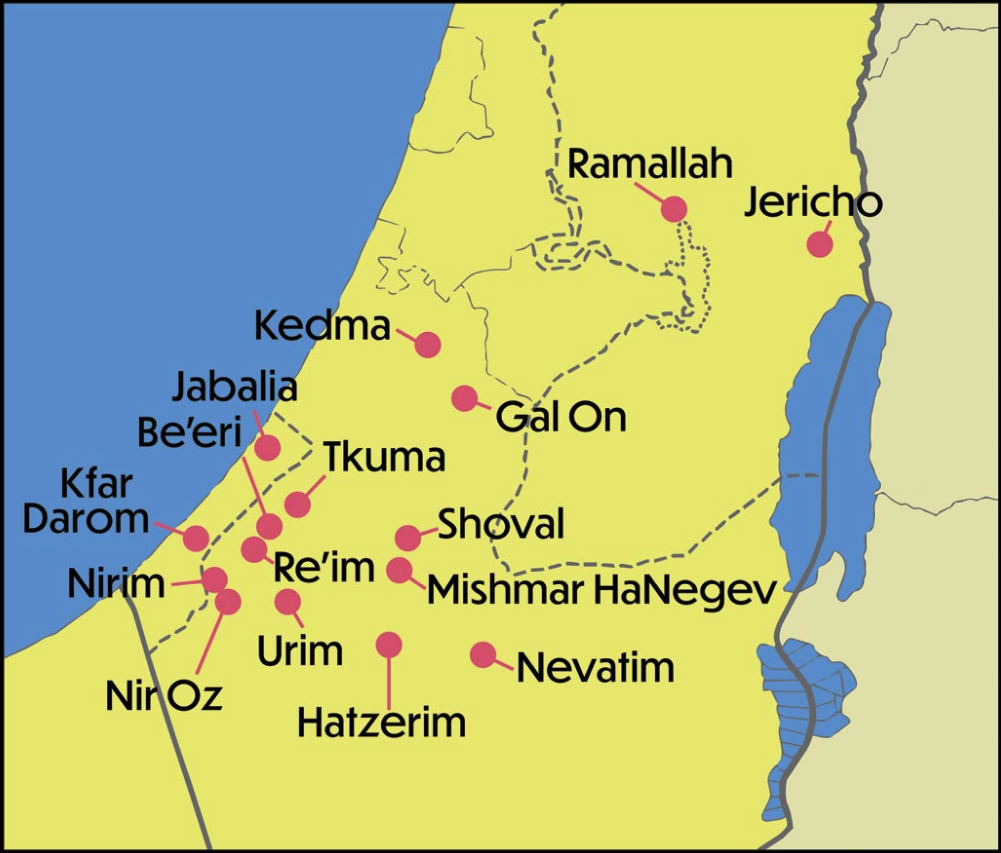
The kibbutzim are military-agrarian complexes. They combine the security and policing needs of the Israeli military establishment with the agricultural requirements of farming, irrigation, water management, and market distribution. Depending on the era, each individual kibbutz exists on a spectrum between socialist collectivism and capital-intensive agribusiness. Regardless, farmers are essentially tools of social erasure. They plant a new landscape that is called Israeli and extend Zionist territorial control through it. Their communalist values are at best tolerated as part of a broader policy of settlement and conquest. Tel Aviv’s priority is now to manage the risks associated with large concentrations of Palestinians. The kibbutzim project strength long before the building of Camp Re’im, the IDF base attacked on the same day in 2023 as the festivals.
When Yoni Diller tells Rolling Stone about “a lot of open areas” that are “not supposed to be dangerous,” he is speaking of an unacknowledged social process. Music scenes often develop through the same dynamics of resource enclosure and commercial exchange that those who live through them typically ignore. For instance, it would be dishonest to speak of Chicago house music without some understanding of land theft, racial segregation, environmental neglect, and wealth inequality in the North American Great Plains. The same is true of Israeli rave and EDM. Culture never develops in isolation, and electronic music is a reflection of the political systems—in this case, colonization—that allows it to thrive. It is through that system, especially its security and policing guarantees, that land is stolen, reallocated, remade, and finally positioned to force permanent exile on its refugees living nearby.

“The Lie is in Israel” (36 B7O - 13 B7O)
A mukhayam refugee camp sits two dozen kilometers from Kibbutz Re’im. By 1987, four decades after the Nakba, Jabalia is a dense city with over 100,000 people, and by far the largest camp in Palestine. An Israeli army vehicle rams into a row of parked cars, killing four Palestinians, including three refugees from Jabalia. Two decades of anger at living under the racist military occupation of the Six Day War explodes, fueling a mass popular uprising with strikes, boycotts, stone-throwing, and sympathy protests worldwide. Israeli police and military authorities launch sweeping crackdowns on the Intifada for five years, continuing into 1992, killing over 1,100 Palestinians, and injuring and jailing well over 200,000. Simultaneously, 4,400 kilometers east, in the former Portuguese colony of Goa on the western coast of the Indian subcontinent, Israeli expatriates are thriving on beaches, mountains, and forest plateaus.
Soldiers freshly out of drafted service, in particular, are enjoying what is becoming a major Israeli tourist and leisure destination. A networked chunk of the landscape reaches as far north as the mountain hamlets of Himachal Pradesh, and as far south as the beaches and forests of the Karnataka Plateau. Travel agencies call it “the Hummus Trail.” Tens of thousands of Israelis soon visit per year, the most publicized of whom use drugs. Many use the journey to bridge their time in the military with civilian life, managing the inherent tensions of fighting for a colonial state and transitioning into a stable life beyond warfare. Israelis quickly discover well-established vacation spots with bohemians from as far away as England, Japan, Australia, Brazil, West Germany, and the United States. Waves of tourists get high and play stringed instruments on Goa’s white beaches as they did two decades earlier, when The Beatles recorded Sgt. Pepper’s. However, the sitars are joined by new sounds as computers start to replace cassette decks in music production. Dance music finds a new audience in the humid jungles and by the Arabian Sea, with nature seized for nightlife at the same time that a post-industrial rave boom is taking over old warehouses in cities like Chicago, Manchester, and Berlin. An electronic mixture of new beat, industrial music, beachside cosmic and progressive rock, and acid house blends in Goa’s almost entirely white expat party scenes with hippie spirituality. It follows the particular hippie orientalism of the local segregated environment, with psychedelics used to achieve clarity and enjoyment, and Goans themselves either passive or absent. It is a second summer of love that quickly spreads to Israel with a colorful, extravagant, and highly profitable new genre: Goa trance.
Just before the Intifada, the Israel Defense Forces (IDF) had begun a series of police actions and offensive operations against Palestinian fighters in the borderland territories of northern Israel and southern Lebanon. In 1982, the IDF launches a full-scale invasion known as the Lebanon War. The Israeli military occupies a huge amount of Lebanese territory near the Litani River and supports a Christian Phalangist proxy militia as it kills thousands of Palestinian refugees and Lebanese, mostly Shi’a, in the pogrom of Sabra and Chatila. Protests rage worldwide, and President Ronald Reagan laments that “all people of decency must share our outrage and revulsion over the murders.” In Tel Aviv, 400,000 protesters with Peace Now condemn the violence. The Israeli Kahan Commission of Inquiry holds a range of Israeli political and military figures responsible for the attacks, especially Defense Minister Ariel Sharon.
As Israel faces backlash worldwide, a raving vanguard finds psychic and spiritual release in Goa. Israeli backpackers and ex-soldiers use discharge bonuses to reinvent themselves in the qualities they project onto the Indian subcontinent: freedom, sexuality, asceticism, libertinism, transcendence, and massive amounts of drug use. Much like hippies and beatniks a generation earlier, ravers separate themselves from the actual history and politics of Goa. Nowhere at the events are mention of European imperial conquest, Catholic forced baptisms, Marathi and Konkani language debates, and Hindutva recolonization. The raves are in Goa but they are not Goan. It is again fashionable to “turn on, tune in, and drop out,” as the psychonaut Timothy Leary once riffed while harmonizing to a Pepsi jingle. Yet any attempt to “tune in,” engaging with the world around them as Leary partly meant, is suppressed in favor of a disengagement that masquerades as joy.
Ravers speak of P.L.U.R. (a hippie acronym standing for “peace, love, unity, and respect”) but their lives are built around a decision to look away from the yawning brutalities of the imperial order, whether in India or Palestine. This denial is so privileged and irresponsible that it tends to align with whiteness and wealth. Israelis tripping to the point of physical and mental collapse are said to be “flipping out.” A person who has “flipped out” is called falupe. Goa overflows with Israeli all-night ravers who look inside themselves, ignore the world around them, and elect to obliterate their senses, all as they listen to psychedelic trance.
“People who feel lost get into drugs and then end up losing themselves,” Israeli director Yoav Shamir tells an Indian magazine about his 2007 documentary Flipping Out. As with other expat communities globally, whole economies are mapped around the Israeli need for escapism and ego-death. Israeli tourists, many of them fresh veterans, suppress the moral reckoning of Lebanon and Palestine. Denial flourishes on a mass scale. Investors and philanthropists pull together money, labor, imperialism, race, gender, spirituality, and soldiering. The Hummus Trail grows quickly to include hostels, restaurants, hiking trails, tourist agencies, sex workers, insurance companies, drug dealers, minyanim prayer circles, and music venues. The Israeli Anti-Drug Authority even opens community and treatment lodges, with Lubavitch Chabad centers offering Orthodox support. “They all reach the feeling of alienation and awful loneliness,” says Hilik Magnus, a former Mossad officer who operates a falupe retrieval business. “Here they enquire and study and connect with what they’ve actually been looking for.”
As the 1980s become the 1990s, a group of Israeli musicians, including Avi Nissim, Lior Perlmutter, Har-El Prussky, Guy Sebag, and Yan-Iv Haviv, start recording Goa trance in Tel Aviv. Compilations are soon released through Outmosphere and Trust in Trance Records. Mixtapes lead to hugely successful albums, with Trust in Trance III even breaking into the crowded European dance market. The artists choose a variety of names, including Paradox and SFX, before Nissim, Perlmutter, and Haviv release as Astral Projection. Many listeners adopt the shanti cultural style popularly associated with Israeli folk rock musician Moshe Ben-Ari, smoking marijuana and telling others to “take it easy.” Israeli cultural commentators speculate that the genre’s popularity is partly explained by the naturalist joy of Breslov Hasidism, an ecstatic Jewish mystical movement with a kabbalistic reading of philosophy and engagement with the world. Psytrance ravers are likened to Breslov Na Nach mystics who align with these teachings by rocking, humming, chanting, and harmonizing songs of devotion. The ravers replace Hebrew singing with drum machines and portable speakers alongside Hindu neopagan imagery. Ravers also see themselves as socially liberal (a current generation is much more outwardly queer and trans). “Some saw the raves as mere hedonism, and there was that[, b]ut [...] they also symbolized a desire to live normally, in coexistence with Arabs,” reports the Los Angeles Times after the initial wave. “Tel Aviv became as important a stop as Ibiza, Amsterdam, and Berlin.”
Israelis meet in the wilderness as well as warehouses, especially on beaches near the Dead Sea, Mediterranean, and Sea of Galilee. New artists like Astrix, Infected Mushroom, Ace Ventura, and Perfect Strange are inspired by English-language rock bands like Radiohead, the Grateful Dead, and King Crimson, in addition to Goa trance. As with other markets, the most explicitly underground events stop as commercialism takes over. Yet the frameworks of “rave” and “underground” continue to shape the visuals and party experience. Rather than meeting in isolated places to avoid the police, logistical needs morph into a brand. Raves turn into festivals headlined by major artists and organized by specialized event conglomerates, similar to how Australian “bush doof” outdoor raves are largely replaced by events like the Rainbow Serpent Festival in Victoria. Something more regimented and efficient aspires to the same sense of euphoria, except with campsites, portable toilets, marketing firms, food and drink stands, luxury options, record label involvement, and perhaps above all, more money. Fans still find in trance a way to connect with themselves as Israelis and renew their connections with the land. Families and friendships are formed while dancing for hours and sleeping under the stars. Yet that self-understanding is effectively sold to them by investors and professional party planners. Israeli psytrance culture ends in basically the same place as Electric Daisy Carnival and Coachella in the U.S., Glastonbury in the U.K., Universo Parallelo in Brazil, and Soundstorm in Saudi Arabia.
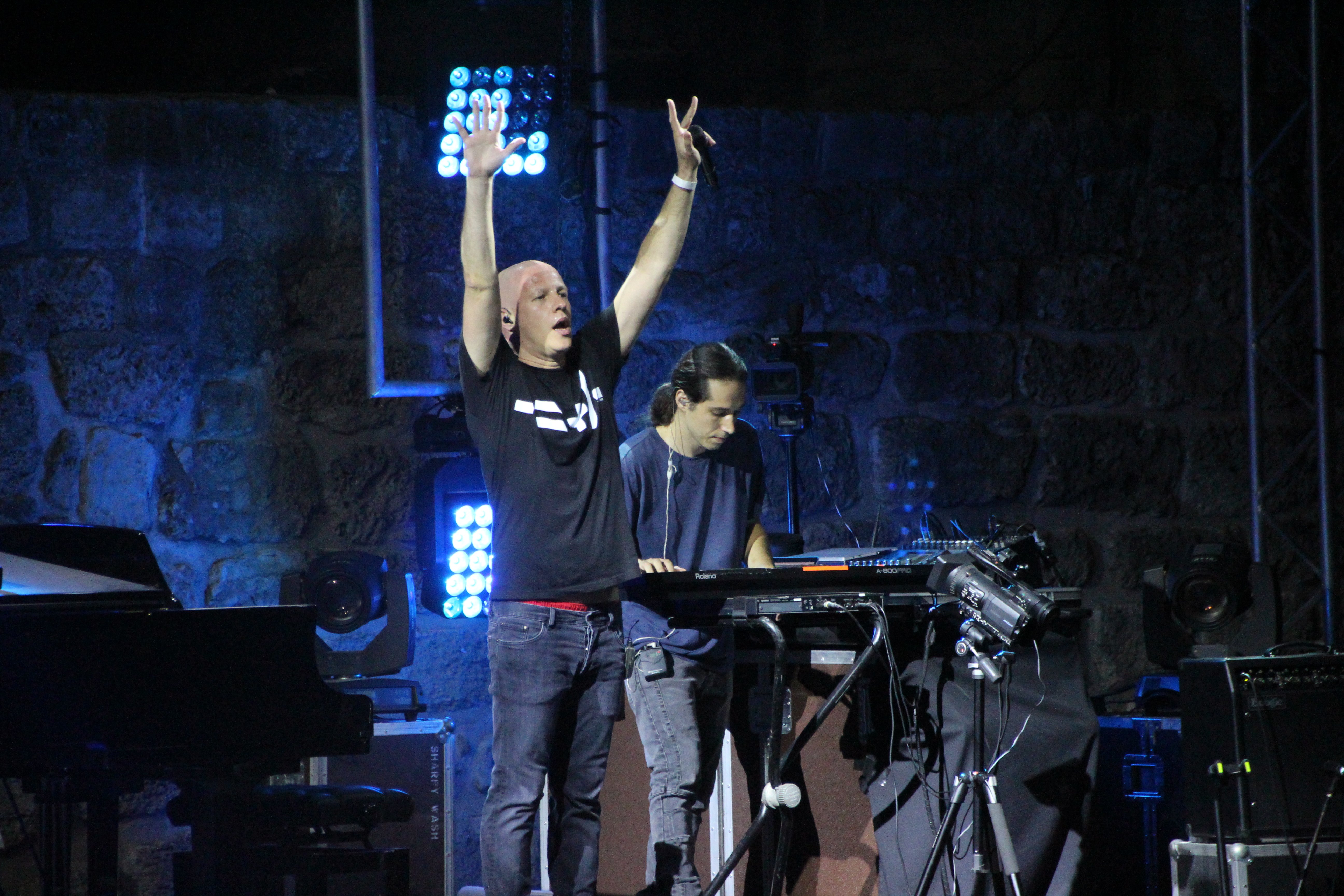
Infected Mushroom during their show in Amphi Shuni, Israel, 2015. (Photo:Wikimedia Commons)
A new youth culture blossoms around festivals, electronic music, natural scenery, hallucinogens and dissociatives. There is a degree of openness when it comes to race, gender, and sexuality—if you look good and can pay for it. In Israel, the spectacle and escapism is rare in bringing together the secular, conservative, and Orthodox. The fact that Goans themselves, who are separated from the revelry by ferocious barriers of racism and colonialism, are more or less barred from a genre called “Goa trance” is both ignorant and absurd. Yet it is not surprising, given the longstanding orientalist tendency to dehumanize the colonized and use them as backdrops for a European cultural fable. Goa is a setting and an aesthetic, not a political subject in its own right. Middle-class consumers erase the initial stigmas of debauchery and free expression, scheduling their vacations and holidays around the carnival seasons. If there are any questions about the Palestinians, they are either ignored or suppressed long before they are even articulated. The genre is quite typical for its commercial evolution from more simplistic beginnings, including how its most nostalgic fans romanticize the early days without admitting the serious and unavoidable issues present from the outset.
It is atypical, though, in that it is the only such scene linked so closely to the Israeli military and security establishment. Israeli DJ Eyal Barkan helps to pioneer a form of Goa psychedelic and trance music called nitzhonot with pulsating kicks that can reach up to 170 beats per minute. Nitzhonot comes from the Hebrew root letters נ-צ-ח (nun-tzadi-chet). In the Bible, the roots can mean to endure and to overcome (“eternity” in Job 14:20’s lamentations at mortality and limitless power) and to oversee or direct (the first line of 55 Psalms, which is set to music). In Modern Hebrew, the plural nitzhonot translates to “victories,” bridging the concepts of leadership, overpowering, awesomeness, and winning. In Kabbalah mysticism, the singular netzach is a sefira or emanation of YHWH, the God of Israel, one of ten sefirot in the Tree of Life. Netzach refers to the soul-power to overcome obstacles that stand in the way of one’s aspiration to bestow kindness and mercy to Creation. Ravers dance together in prayer, using drugs and extending to one another love, unity, and respect. Yet it would be a mistake to believe that a broader peace is being sought out in the music. The issue is not that a just resolution to the Palestinian question is politically and existentially out of reach. The problem is that the whole point of Israeli psychedelic trance, whether in Goa or elsewhere, is to dodge emotions and ignore imperial reality. It is neither joyous nor peaceful; it is a fantasy that exists to pull its dancers and listeners away from their own moral catastrophe. It thrives in an atmosphere of fear and division and points attention away from the destruction unfolding before them.
“After three years of totally destroying their identity, of causing their self-destruction, and of profoundly changing their view of the meaning of human life, then they get ILS ₪15,000 as a discharge bonus to go wherever they want to[...] to take out all that crap elsewhere,” explains Guy Saar Ruso in Flipping Out, working on the Hummus Trail after serving in an elite Gaza commando unit. “I think it’s strange. There are many things you have to face up to, things you did during your military service, that are very shameful. Many people can feel ashamed that their country does certain things. Others might take it more personally, and wonder how their hand, like the one I’m using now, was the very hand that shot people and caused devastation[...] they don’t actually realize what they did, it’s still fresh. That comes later, I think. [...] Then you choose whether to deal with what you did in the army, or not.”
“I like ecstasy,” Kibbutz member Eyal Goldstein tells the Flipping Out crew, perhaps on ecstasy himself. “I like to dance on ecstasy. Ecstasy. Ecstasy? It seems to open you up the most. But it’s a lie, and everyone knows it. Still, they all fall for it when they’re high. What kind of a lie? It’s the hypocrisy you see in Israel, that’s the lie.” He speeds off into the night on a motorcycle.
Israeli raving culture follows the model of the raving marketplace worldwide, notably in current Saudi, Emirati, and Jordanian tourism, to promote leisure and entertainment instead of serious democratic accountability. EDM more widely is now in essence promoted by a neoliberal order staving off its collapse. Socially liberal EDM fans are being pressured into disengagement by a rapidly evolving corporate fusion with the nation-state. Rich and developed countries, Israel among them, have now become even less democratic than they were in the 2000s. They seek to neutralize their populations, and like so much artistry in the capitalist epoch, raving is often a weapon against change in a world that desperately needs it. It is no wonder that an Israeli scene would develop to pull attention away from a state system that cannibalizes the region around it. Raving is a luxury option that is meant to sedate the mind and blind it to the horrors unfolding just nearby.
In 2000, the Camp David Summit between President Clinton, Israeli Prime Minister Ehud Barak, and Palestine Liberation Organization chairman Yasser Arafat fails to reach a settlement. Ariel Sharon, elected Prime Minister with Likud a year later, stages an incendiary march on Al-Haram Al-Sharif and the Dome of the Rock that September. For a half-decade, a second Intifada rages across Palestine, triggering Zionist responses with tight obstacles and security barriers in the West Bank and Gaza. A perimeter of walls and fences near Jabalia is reinforced with iron, concrete, and surveillance technology. Initially meeting elsewhere because of safety concerns, festivals and raves once again return to Wadi Nahabir.
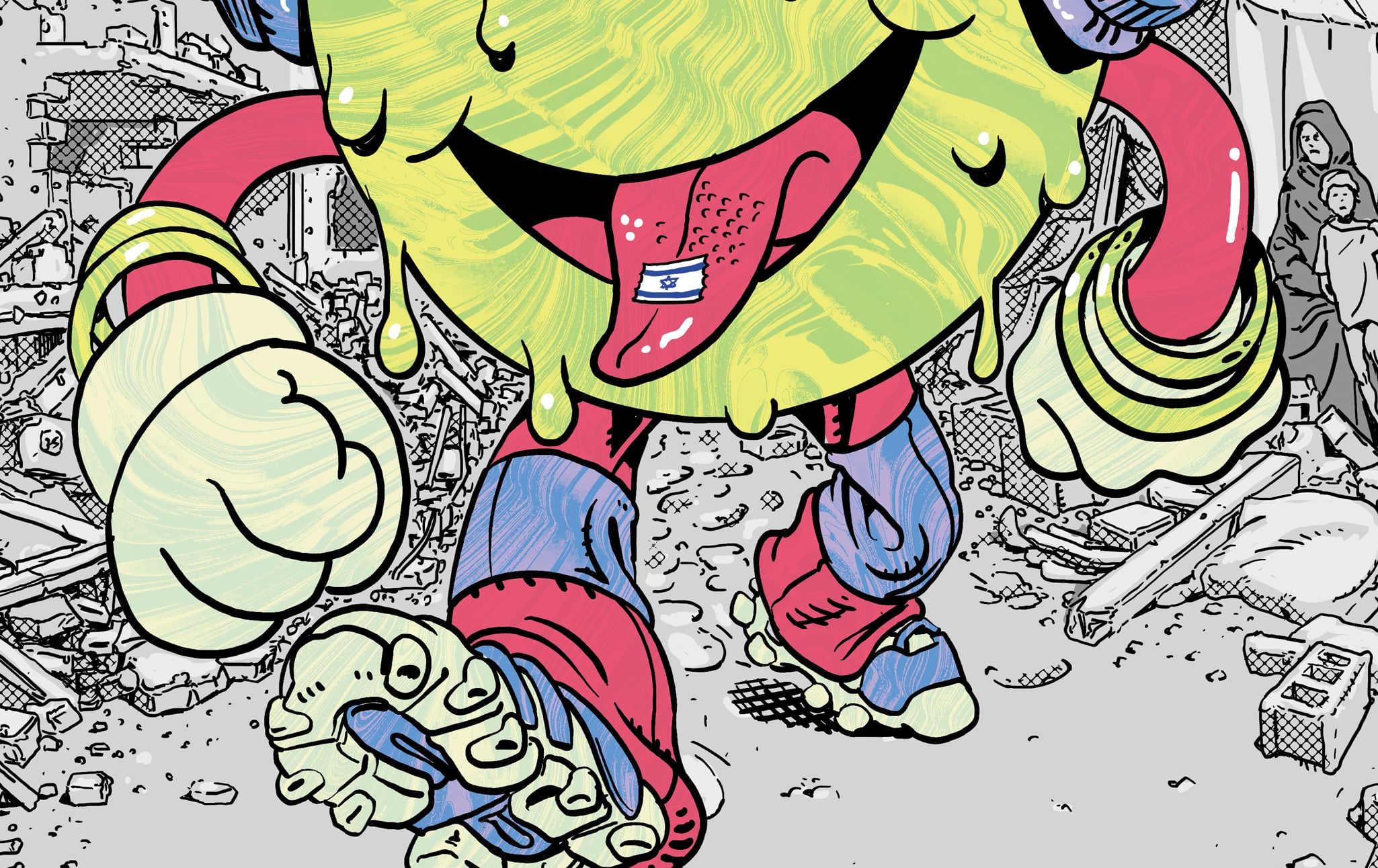
Stately domes are enjoyed as walls and towers lock Gazans inside the Strip.
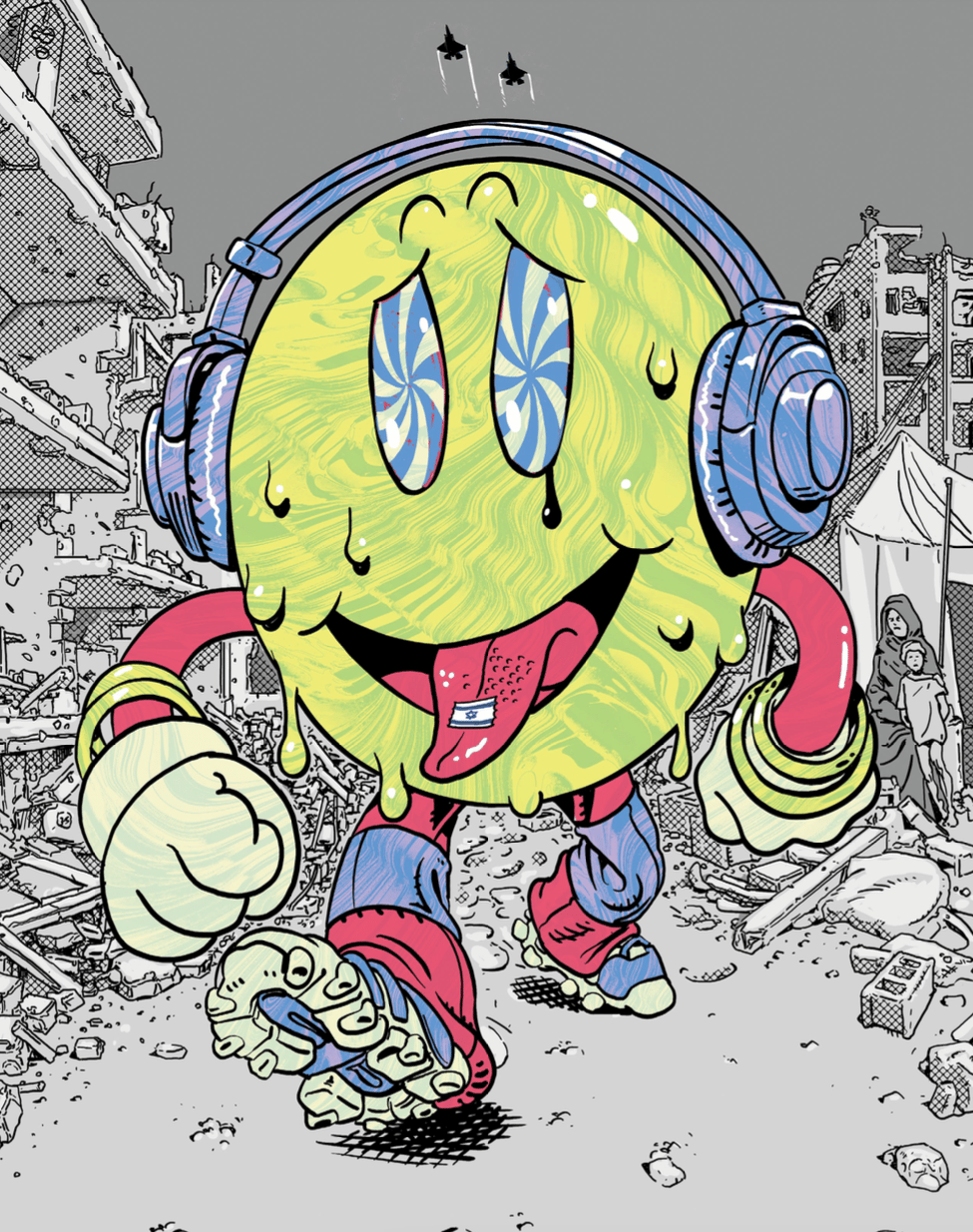
Art by Ben Clarkson from Current Affairs magazine, Issue 60, July-August 2026
Felaheen Couture (16 B7O - 3 B7O)
In 2007, Israel declares the Gaza Strip a “hostile entity,” deepening a blockade with restrictions on fuel, electricity, concrete, and other goods. While the move is backed by the United States, the United Nations and other international agencies agree with Palestinian organizations that it is collective punishment and illegal under international law. Israel blames rocket attacks, but a range of measures have been used to repress Gaza and its economy for decades. Kibbutzim and military bases are expanded partly to apply pressure on the Green Line, with Re’im Army Camp established six kilometers from the Gaza security fence as part of a strategic disengagement plan two years earlier. Elections take place with Hamas leading a Change and Reform list in a campaign focused on corruption, security, public order, nepotism, and unemployment, especially outside the relative prosperity of West Bank cities like Ramallah and Jericho. Israel condemns Hamas beating its rival Fatah with a parliamentary majority and 44.45 percent of the vote, pointing to its Islamic nationalism and open contempt for Palestinian Authority policies of disarmament and collaboration. Hamas must then preempt a coup attempt by Muhammad Dahlan of Fatah, supported by the Bush White House, and fully takes control in the Battle of Gaza. Israel bombs Gaza in multiple wars over half a generation.
For the last few decades, Palestinian and Arab artists have been developing rave music of their own, but raving becomes very difficult in Gaza outside small events and private gatherings like weddings and birthday parties. In the West Bank and elsewhere in the region, artists play to a growing, wealthy, and highly cosmopolitan audience that seeks hybrid styles. Bedouin zaghrouda vocals combine with neoclassical maqam instrumentation like tabla drumming, qanun soundboards, mijwiz woodwinds, and oud and buzuq strings. The world market comfortably assimilates a revival of traditional Arabic poetry and song. Syrian wedding singer Omar Souleyman suddenly explodes through synthesizers and melodic keyboards. Yasmine Hamdan moves on from her pioneering work in Beirut indie pop duo Soap Kills with new fusions of Arabic classical, hip-hop, jazz, rhythm and blues, and electronica. Mashrou’ Leila mixes poetry and indie rock, bringing together a diversity of genders and sexualities in their fanbase. In Palestine itself, bands from Sabreen to DAM to record label BLTNM experiment with a distinctly Arab style of lyricism, composition, rhythm, and street art. A liberation aesthetic is financed with hoodies and running shoes alongside hatta scarves, dabke dance, and tatreez embroidery.
_(5519121398).jpg?width=645&height=430&name=Omar_Souleyman_@_Becks_Music_Box_(5_3_2011)_(5519121398).jpg)
Omar Souleyman at Beck’s Music Box during the Perth International Arts Festival, Australia, 2011. (Photo: Wikimedia Commons)
Palestinian DJs, promoters, vocalists, and producers experiment not just in the established nightlife capitals of Beirut and Ramallah, but also Haifa, Amman, Riyadh, Dubai, Istanbul, and Cairo. Events in Palestine and for its refugee exiles continue to spiral at the same time as rich and well-connected tastemakers spread a chic version of Palestinian nationalism globally. The backlash to the three-week-long Operation Cast Lead bombings of Gaza in 2008 leads to growing waves of sympathy, a fresh interest in nonviolent activism (especially among students, intellectuals, and middle-class professionals), and critically acclaimed documentaries like 5 Broken Cameras and Naila and the Uprising.
Before long, whether in Paris, Berlin, London, Barcelona, New York City, or San Francisco, there are two major symbols of Palestine solidarity. One is the checkered kufiyah, a practical garment of felaheen peasantry and rural society. Another is the watermelon slice, at first a way to show the red, green, and white colors of the flag that bypasses Zionist censorship, later a new symbol of cultural resistance. Electronic music is brought into the broader project of affirming and rewriting Palestinian heritage, at the same time that a new generation of fedayeen in Gaza, Jenin, Tulkaram, and Nablus fight asymmetrically against Israeli military might. Yasser Arafat’s death in exile in 2004 coincides with a new political and cultural resurgence.
In 2018, livestreaming platform Boiler Room films the popular DJ Sama’ Abdulhadi, also known by the stage name SAMA’, playing a techno set in Al-Radio, a nightclub, bar, and performance space in Ramallah. SAMA’ features prominently in the followup documentary Palestine Underground, which includes the prominent rappers and DJs Julmud, Haykal, ODDZ, Muqata’a and Dakn. Radio Alhara begins a streaming service connecting Bethlehem, Ramallah, and Amman, prominently including Sonic Liberation Front. SAMA’, Muqata’a, and Nasser Halahih work with El Fanoun to record Electroseen, a Ramallah fusion of electronica with archived recordings a half century old. Ibtesam Zubeidat and DJ Wafa Zubeidat challenge norms as wedding DJs in the West Bank village of Az-Zubeidat, near Jericho. Sabaya in Jerusalem also works at weddings, mixing Palestinian traditional songs and Arabic pop music with a level of skill far outpacing her richer peers from powerful families. “We already live in suffocation,” she tells DJ Mag. “We need music to breathe.” Bruno Cruz records Olive Stones in Haifa. In Dubai, Karim Atari toys with synth compositions in Majzara Blues. Listeners are drawn to an emphasis on historic memory and engagement with the lived reality of occupation. It is an unapologetic, if heavily classed and otherwise privileged, cultural revival that directly confronts the failures of the Oslo Peace Process. “I’m not afraid to put resistance slogans in my music,” Atari explains to Clash Music about his neotraditional musical remixing of revolutionary chanting now a century old. “I think that these things have been unjustly twisted.”
In the West Bank, the electronica sits uncomfortably with the Palestinian Authority’s crackdown on political dissent. Fatah especially is eager to shift attention away from stagnant peace talks, encroachment by settlers and internationals, severe unemployment and inequality, a collapse in safety and public order, and its lack of functional state and institutional capacity (especially the continued use of the Israeli shekel as a currency). Organizers plot carefully given that the P.A. regularly shuts events down, enforcing a hostile regime of property rights, security agencies, moralizing conservatives, anxious investors, and most of all, the Israeli Occupation Forces (IOF). During the pandemic, SAMA’ herself is pulled into the moral panic, attracting worldwide attention when she is detained in Jericho after partygoers share videos of a private party at the Nabi Musa Compound. The P.A. ignores that SAMA’ has obtained the correct permits for the event from the P.A.’s Ministry of Tourism, instead mischaracterizing it based on a narrow image of raving as a subculture. Misinformation spreads online that SAMA’ played inside the mosque, allegedly seen in some of the social media posts, and that there is alcohol, drug use, and sexual promiscuity on the dance floor. Abdulhadi’s prominent family, which includes important writers and feminists, plead her case to the Palestinian Authority’s attorney-general who rattles his sabre by decreeing that “techno music is not part of Palestinian heritage.”
Meanwhile, in Gaza, Hamas faces opposition to unemployment and economic mismanagement, unsuccessful attempts to implement mandatory veiling on the Strip, and bureaucratic ineptitude more generally. Many Gazans also believe it is politically and militarily contained in the same way as Fatah. The Islamist armed factions have not disarmed like the Palestine Liberation Organization. The Qassam Brigades, Islamic Jihad, and the leftist Popular Front for the Liberation of Palestine continue the tradition of feda’i armed resistance. Yet they face a worsening battlefield situation, especially given rapid advances in Israel’s missile defenses and plans to expand the “Iron Dome” to include batteries on corvettes and submarines. The Trump White House has already brought several countries into the Abraham Accords and many believe Saudi Arabia will be next to recognize Israel. While Hamas still has ties to Iran, Hizb’Allah, and Ansar Allah, it has fewer funds and support for its revolutionary work. Always in the background is encroachment by Zionist settlers and pressure building toward an official Israeli annexation of land in the West Bank, especially in the Old City of Jerusalem. Once again, and nearly eight decades after the Nakba, Palestinian fedayeen meet in secret to discuss how they and their allies can shift the tide and face down another exodus of their people.
Raving after the Cataclysm (3 A7O)
The Israeli ground offensive does not stop in Gaza. It grows to include attacks on Lebanon, Yemen, Syria, Iran, and covert actions in western Iraq. The Green Line now includes a Yellow Line that cuts through the Strip. There is a new global opposition to Israel’s ferocious jingoism and the open racism of its cabinet, including Kahanist security minister Itamar Ben-Gvir. Yet it is unclear whether this more recent wave of dissent will turn out differently than that of the Intifada and Lebanon War four decades earlier. For their part, Palestinians face even more intense violence in every part of their lives. While a new generation of activists overseas speaks of an end to Zionism, the reality is that new shipments of weapons continue to arrive in Israeli ports regardless of the IDF’s genocidal warfare. Music itself seems to be a luxury for artists and listeners who pretend to be better people than is in fact the case. It is nearly impossible to imagine utopia in such circumstances, but as always, Palestinians continue to do so. In Cairo, having fled the bloodshed, Gazawi producer Siraj Sawa fuses his established style with the sounds of drones, machine guns, artillery, and bombing sorties currently obliterating the Strip. “I combine these sounds to tell the story of Gaza,” he tells DJ Mag. “Tense and dark, but always with a trace of hope, something distant we keep reaching for.”
“For me, techno shattered,” Sama’ Abdulhadi tells Resident Advisor. “I stopped seeing it the same way. I stopped listening to it the same way[...] but at the same time it kind of opened a blank new page. [...] Things have been crazy but now people see the crazy.” Abdulhadi outlines her cynicism with the recording industry, especially its censorship of techno artists and dealings with Israeli musicians and production companies. Family networks, class power, trendiness, and dealings with banks and financiers give the new artistry a platform, but privileges also mean Palestinians face unique obstacles. SAMA’ protests how the sale of European music giant Superstruct Entertainment to the private equity firm KKR & Co. Inc. means she and others are now financially linked to Israeli settlements and the war machine.
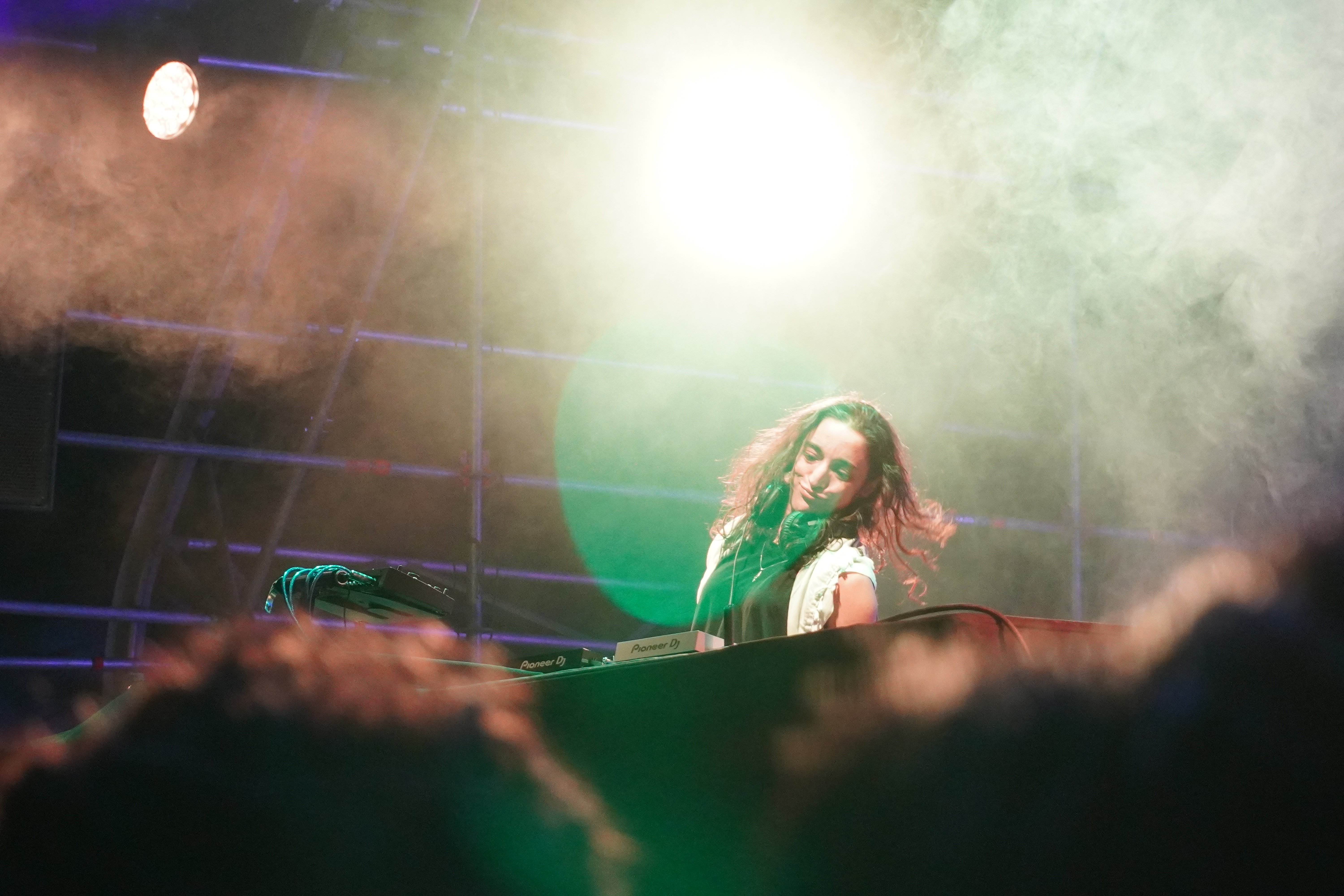
Sama’ Abdulhadi at thel 53° Festival Internacional Cervantino (FIC), Los Pastitos in Guanajuato, México, 2025.(Photo: Wikimedia Commons)
Writers often ask whether it is possible for music to be a soundtrack for peace, but it is rare for them to seriously consider whether financials even allow it. Israelis face this broader problem in psychedelic trance. Even if there was a serious grappling with a century of slaughter and erasure, rather than a deepening of denial through bomb shelter raves profiled in Rolling Stone, a whole cultural sector reinforcing blissful ignorance would need to unravel. Denial is built into so much of Israeli electronic dance music, and money and power has clearly latched onto it as a lifestyle choice.
It is the soundtrack for a new era of genocide and ethnic cleansing, and it is complicit in its tranquilizing of a public that must urgently mobilize to end it. Israeli electronica launders the reality of mass killing, managing the psyches of those whose lives are built through the violence of a racist system. It will be remembered for its fascistic utility like Wagnerian opera and Beethoven symphonies in Nazi Germany, and those who resist it will be remembered for their bravery and steadfast opposition to injustice. When the guns fall silent, and Zionist leaders like Netanyahu and Ben-Gvir are brought before a new version of the Nuremberg Trials, there must be a parallel discussion about Israeli raving and the roles it has played in the bloodshed.
For now, it is still an open question whether Israeli Jews will ever relax the divisions between psychedelic religiosity and the mishmash that is Palestinian rap and EDM. It is worth considering if Mizrahi Jews (those of Arab descent) will eventually be more open to the combination in a more inclusive Palestinian future. Mizrahis are pushed to suppress their Arab roots in favor of being “culturally Jewish,” a consequence of their hybridity as much as their potency. It is possible for Mizrahi heritage to be bridged partly through Palestinian electronica, at weddings in particular. While it is unlikely that this will happen on a mass scale, especially with Mizrahi soldiers, the opening could have productive outcomes if Zionism is forced to contract. The Israeli government is faced with numerous issues to its strategic partnerships and global standing as rabid settler politicians lead its most radically right-wing cabinet ever. It has been forced to disengage in the past, and may yet be deterred by an international community disgusted by its actions (though currently unwilling to step in).
After an era of complicity, electronic dance music may have a fresh resurgence as a composite genre playing equally to Arab, Palestinian, and Jewish audiences. That genre could emerge at the same time as Palestinians imagine new political horizons, especially as the Nakba generation dies and climate change sweeps the region. Haifa, with its rich diversity, may in particular be a stage for a truly inclusive rave culture.
Yet sadly, as with many storybooks, this wishful hallucination must come to an end. For such a soundscape to emerge, Palestinians would have to decisively get the upper hand against a state that continues to haunt their ambitions in much the same way that it did a century ago. A new era of political struggle and cultural production is beginning in Palestine with the Gaza genocide as its background. Its musical possibilities hinge entirely on the Palestinians and their quest to return home from exile.
Zenab Huriyah Ahmed is an activist, raver, freelance writer and editor, and PhD student in Comparative Legal Theory at SOAS, University of London. Zenab's research applies critical legal methods and weaponry analytics to study imperial constructions of shari'ah law and Pashtun customary law in the Afghan-Pakistani borderland. Zenab uses she/they/it pronouns and can be found @pakistanarchy on Instagram, Tiktok, and Snapchat.
Correction 8/7/2026: This article has been updated to correct Itamar Ben-Gvir's title and the day of the week of October 7. A reference to Hamas' recognition of the Oslo Accords has also been deleted. We apologize for the inaccuracy.