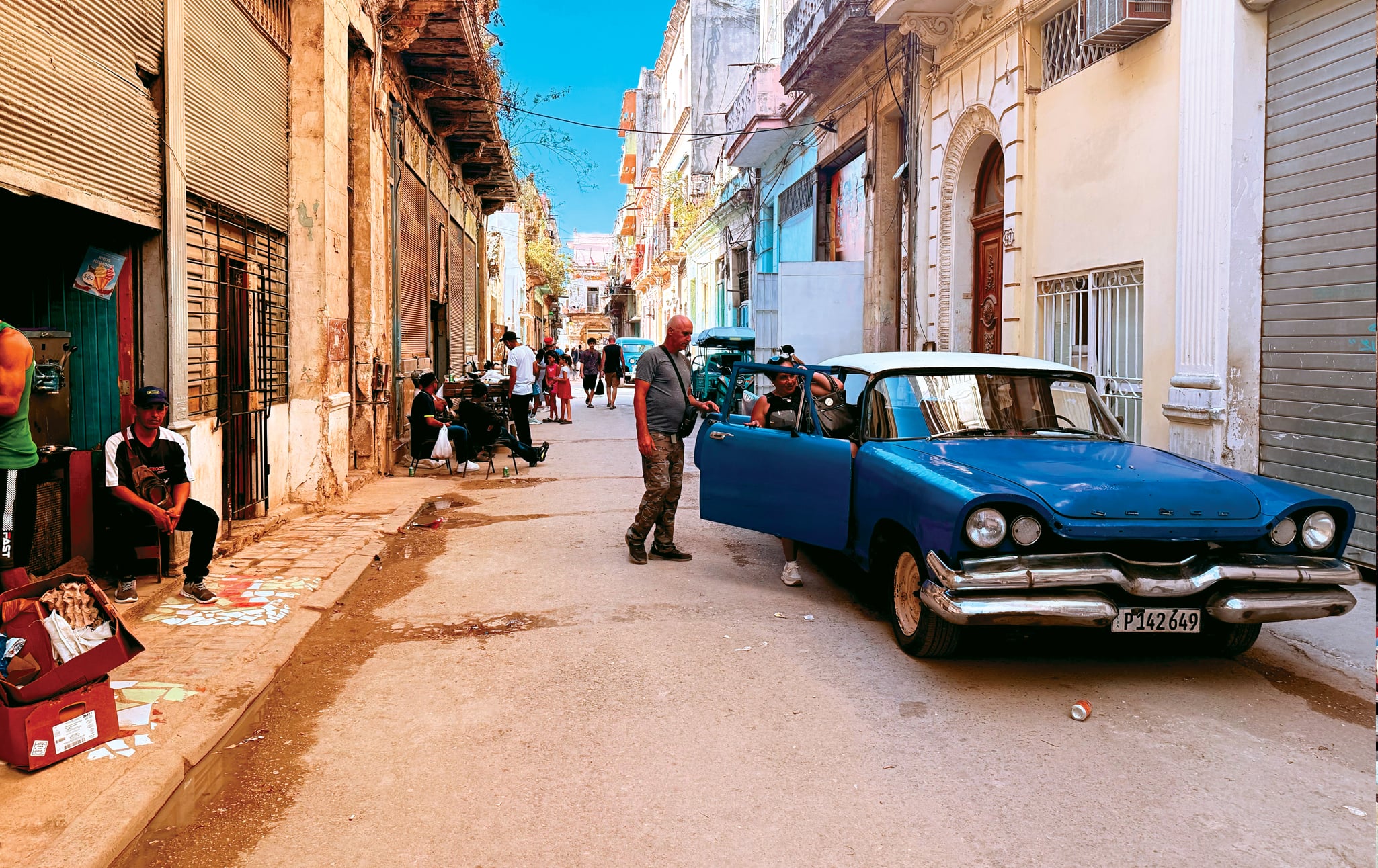
Being internationalists is paying our debt to humanity. Whoever is incapable of fighting for others will never be capable of fighting for himself.
— Fidel Castro, after the Battle of Cuito Cuanavale, 1988
Fidel Castro died, now a lot of possibilities for me.
— Sultan Ahmed bin Sulayem of the United Arab Emirates, in an email to Jeffrey Epstein, 2016
A couple of men sat in Washington, D.C. and planned how to strangle a nation to death, and we did our best to get in their way. There are a hundred things you could say about the Nuestra América mission to Cuba, and I’m going to say some of them, at some length. But in the handful of days I spent walking around Havana, I kept thinking of Ernest Hemingway, who lived there for a third of his life, rattling off manuscripts from his perch in the Finca Vigía. Despite his gallery of personal hangups, the old man knew his business. The simplest, most direct sentence is the truest, he always said. So this is mine. Donald Trump and Marco Rubio tried to strangle Cuba, and a remarkable group of people from all over the world came together to say no.
For four days, Current Affairs editor-in-chief Nathan J. Robinson and I traveled with them. Back in March, we heard that CODEPINK, the Progressive International, and a variety of other socialist and anti-war groups were putting together a humanitarian mission to Cuba. Inspired by the Global Sumud Flotilla to Gaza, they were going to deliver several thousand pounds of medical supplies, solar panels, and other badly-needed aid to the island, by plane and boat, breaking the world’s longest-standing economic blockade. It sounded like a hell of a thing. So we put our names on the dotted line to go along and cover it.
We wanted to see, firsthand, what it’s like for people to live under the most severe of U.S. sanctions. More than that, we wanted to see one of the only communist-governed nations on Earth, and report back about it, clear of the haze of propaganda that has surrounded Cuba for so long. And we wanted, in whatever small way we could, to help. So we got on a plane to Havana, armed with just enough optimism to think we might make a difference. This is what we found.
Thursday
The bearded man was hollering something in Spanish that I couldn’t understand. Like a lot of Americans, I remain shamefully monolingual, my Español limited to a handful of half-remembered phrases from high school. I can ferret out the locations of el baño and la biblioteca, ask for a cerveza con lima at a bar, and that’s about it. So all I can say for sure is that this guy was yelling something about socialismo, and it didn’t sound like he approved. He had a Cuban flag tied around his neck like a cape, and he wore a black T-shirt emblazoned with the words “MAKE CUBA GREAT AGAIN” in white letters. A few dozen of his compatriots surrounded him, similarly garbed, yelling and waving signs at cars as they drove by. Sometimes the drivers would honk and yell back. An older woman was waving a “Trump 2020” flag, now somewhat out of date. Someone else brandished a huge photo of Trump pumping his fist and yelling “FIGHT FIGHT FIGHT” in Butler, Pennsylvania, moments after his attempted assassination. Some of the younger demonstrators were livestreaming on their phones. All of them were loud. This was a crowd of right-wing, pro-embargo Cuban Americans—or, as they’re pejoratively known by Fidel Castro’s supporters, “gusanos.”
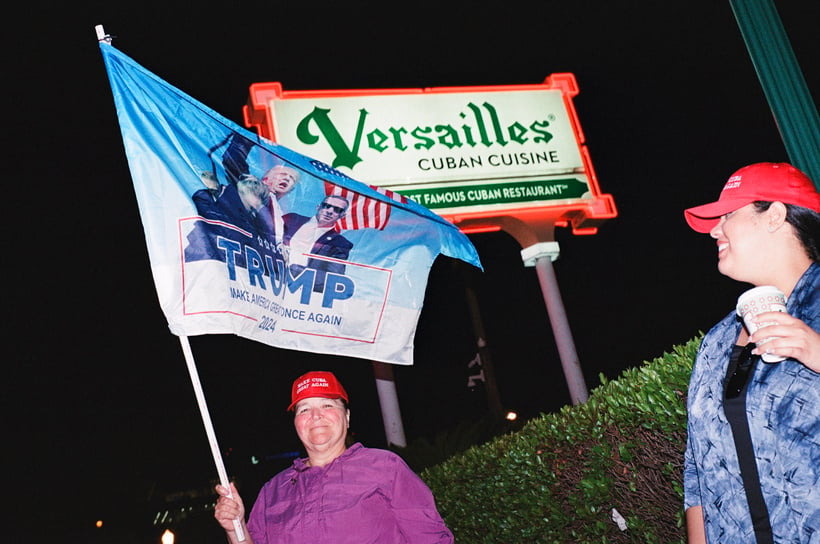
Photo: Steven goldberg, aka yung chomsky
It was a cloudy, humid Thursday evening in Miami, and we had found ourselves in the dark heart of Trump Country. The Versailles Restaurant is a gaudy old relic, barely changed since its construction in 1971. Its cavernous interior is like something out of The Godfather, full of ornate woodwork, cut-glass chandeliers, and floor-length mirrors covered in filigree. It’s also one of the most important meeting places for the right-wing Cuban diaspora, who come there to curse Castro and the Revolution over mojitos, plot their political lobbying activities, and as it turns out, hold big, shouty rallies on the sidewalk outside.
Versailles was founded by Felipe Valls, a Cuban tycoon whose chain of gas stations and glass bottle factories was expropriated during the Revolution, and who never really got over it. As the name suggests, it’s a place for people who fantasize about being kings. The dining room is immortalized in Joan Didion’s Miami—one of her most underrated books, by the way—as the site where someone broke a chair over journalist Luciano Nieves’ head, after Nieves wrote a column suggesting that political dialogue with Castro might be possible. Years later, Versailles would be the first place Donald Trump visited after his 2023 arraignment for mishandling classified documents, whereupon he famously yelled “food for everyone!”, then left without paying. It’s that kind of scene. But a few of us from the Nuestra América group had wandered out looking for somewhere to eat, and this is where we had ended up.
If the protesters knew we would soon be boarding a plane for Havana with tons of supplies onboard, in opposition to the U.S. embargo, they might have reached for another chair. I got a drink and some shrimp, and tried not to say anything too political, too loudly. “They just keep going, don’t they?” I remember asking Davidson Boswell, who had come representing the direct-action group Climate Defiance.
Indeed. Hours later, the sky was darker, and the demonstrators were still at it, yelling Cuba Libre! at passing Nissans as we left. For all I know, they’re still there. And why not? After all, they were closer than they’d ever been to getting what they want: the total devastation of Cuba, and retribution for their forebears, the plantation, factory, and casino owners who’d been uprooted along with Fulgencio Batista all those years ago. The U.S. Secretary of State, Marco Rubio, is one of them. In his 2012 memoir, Rubio recalls sitting at his grandfather’s knee and fantasizing that he would “someday lead an army of exiles to overthrow Fidel Castro and become president of a free Cuba.” Castro died of old age before Rubio got that chance, but the same dream still animates him.
As an adult, Rubio makes speeches railing against a world transformed by “godless communist revolutions and by anti-colonial uprisings,” strongly implying that his own views are pro-colonial. Ever since he was unanimously confirmed to run the State Department in 2025—for which 45 Democrats and two independents really owe the world an apology—he has been waging savage economic warfare against Cuba. Last February, Rubio introduced targeted sanctions against Cuban doctors who take aid missions to other countries, making the old phrase about no good deed going unpunished into U.S. law. And this January, the Trump administration went further, announcing punitive tariffs against any country that supplies “any oil” to Cuba. In effect, they imposed a total energy blockade, a devastating act of collective punishment against the entire Cuban population.
Rubio still frames his agenda in the language of Cold War liberalism, talking about “giving people economic and political freedom.” His boss Donald Trump, however, is more honest, saying that “I do believe I’ll be having the honor of taking Cuba[…] whether I free it, take it, I think I can do anything I want with it, you want to know the truth.” Like his old pal Jeffrey Epstein, Trump has a perverse enthusiasm for forcing himself on people and places that he believes can’t fight back. In the first few months of 2026, he rained death on Venezuela and Iran, killing or kidnapping their heads of state, and he made it clear that Cuba is next on his list. No wonder his supporters in Miami were in a rip-roaring state of enthusiasm. They smelled blood. A cheerful thought, as we prepared to set out.
Friday
In the face of that kind of high-powered aggression from Washington, our group began to seem a bit small and scruffy. Who exactly did we think we were, to go up against Trump, Rubio, and the powers at their disposal? As we queued up in the Miami airport, I kept glancing around and seeing a Who’s Who of the political Left in the U.S.—journalists, labor organizers, podcasters, and others I’d only known as two-dimensional presences on a laptop screen. Ahead of me in line was the ever-controversial Hasan Piker, towering over everyone else like an NBA player. Behind me, broadcaster Katie Halper, Chris Smalls of the Amazon Labor Union, and Brace Belden of TrueAnon in his bucket hat. Apart from Nathan and myself, our particular sub-group contained a lot of political comedians—Fareeha Khan, Jeff Seal, Mary Houlihan, Freddy G, and Kate Willett, who’d helped organize the whole thing in a frantic fusillade of emails, among others. (And here, special thanks are in order to photographer Julia Keane, who was the only person close enough to the Cuban embassy in Washington, D.C. to secure our press visas.) Everyone had done their research, and everyone had an idea of where they’d be volunteering, or what kind of journalism they’d be doing. Still, when your opposite number is the Secretary of State, you tend to want something stronger than a large-to-medium internet following on your side.
And yet, there were signs that some people in Washington were getting nervous about the whole Nuestra América business. By Friday morning, we had already been condemned in a congressional hearing by Representative Scott Perry of Pennsylvania. Channeling the ghost of Joseph McCarthy, he called the mission a “communist flotilla” that was “working to subvert the United States government openly,” and he demanded that the Department of Justice “investigate and take the appropriate actions.” The U.S. Embassy in Havana, too, issued a hair-raising bulletin about “pro-Cuban regime and anti-U.S. policy protests and rallies” during the exact timespan of our trip, warning everyone to stay away from presumably dangerous radicals like ourselves. It was a glowing, though unintentional, endorsement. If someone like Rep. Perry was getting red in the face, maybe we were onto something after all.
It is shockingly easy to go to Cuba, and people ought to know that. In the States, our politicians and news media like to give us the impression that it’s difficult, dangerous, and maybe even illegal to make the trip. In the days before I headed off, some of my family urged me to reconsider, visions of handcuffs and gun barrels dancing in their heads. But nothing could be more misleading. In fact, it’s perfectly legal to visit Cuba as either a journalist, a humanitarian volunteer, or in my case, both at once. The security screenings are really no different than what you’d experience going to London or Detroit. What’s more, it’s quick: roughly 90 miles from Miami, less than an hour’s hop in a modern jet. You’re not even on the plane long enough to need pretzels, and then you’re on communist soil.
You can actually feel the communism, too. It’s strange, but as soon as you’re in Cuba, you immediately know that you’re moving and breathing in a wholly different system than the one you’ve lived under up to that point. At first, you can’t quite pinpoint what’s different. The usual cliché, which you’ll see in a lot of travel writing and documentaries, is that Cuba seems “frozen in time,” a throwback to the 1950s or ’60s. But that’s not it. Yes, there are the magnificent old Fords and Cadillacs with their tail fins, still cruising around like big fish. But you’ll see plenty of modern technology and culture, too, whether it’s an electric bus with solar panels all over its roof, or the Jordan 4s on young people’s feet.
The difference is something deeper: there is no corporate presence whatsoever. No chain stores or restaurants, and no advertising. The only billboards you’ll see, traveling from the airport to the center of Havana, have inspirational quotes from Fidel Castro and Che Guevara on them. Most of the buildings are people’s houses and apartment blocks, with clotheslines hanging out the windows—or at most, corner stores and gas stations that are clearly small-time operations, like New York City’s bodegas. The kind of urban and suburban sprawl that has overtaken U.S. cities, where you’ll often see six-lane highway overpasses and vast asphalt parking lots, all leading to a Walmart, is completely absent.
On the bus from the airport, Jeff Seal points this out to me. In the U.S., he says, “You tear down working-class neighborhoods, usually brown and Black, to build a freeway so you can go downtown. Then you need more parking, so you tear down more stuff, and pretty soon there’s no reason to go downtown.” This is exactly what hasn’t happened in Cuba, and as a result, Havana is beautiful in exactly the way Houston isn’t. You see wild tamarind trees growing on the side of the road, their branches forming a lattice against the sky; a children’s play castle built out of cinder blocks, painted cerulean; a long stretch of tobacco fields, where people are tending to the plants by hand; huge birds, possibly vultures or pelicans, wheeling overhead.
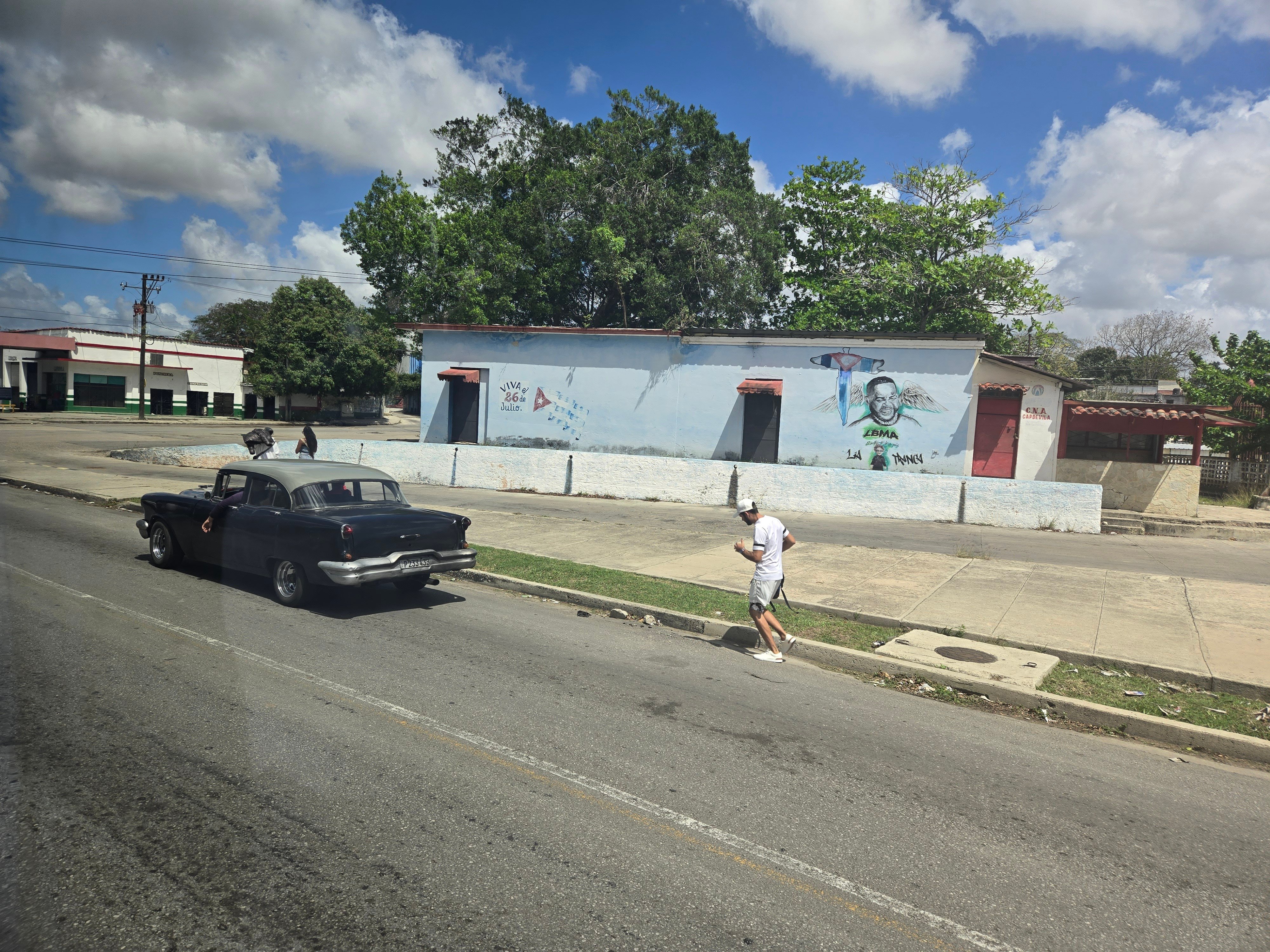
Photo: Alex skopic
Our first stop is the Havana Convention Center, where President Miguel Díaz-Canel is going to address his international guests. This is the seat of power in Cuba, where the National Assembly meets, and a historic site too. Back in 1979, the Non-Aligned Movement had one of its landmark summits here, convening nations who didn’t want to be satellites of the U.S. or the Soviet Union. It’s a last-minute addition to our schedule, which the president has decided to rewrite.
Here, the full scope of the Nuestra América project becomes visible. The U.S. is not the only country to send people and supplies to Cuba’s aid; not by a long shot. Conservatively, the United States might account for a third of the people who have shown up, and there are hundreds. Every continent except Antarctica seems to be represented. Across the Assembly hall, I see a crowd of serious-looking Palestinian medical students, plus another young doctor who I’d later find out is from Uganda. The MST, or Landless Workers’ Movement, of Brazil has sent a delegation, and so has the Communist Refoundation Party of Italy. On the far wall, the international flags are lined up: Puerto Rico, Argentina, Chile, Palestine, the Estelada Vermella of the Catalonian independence movement… and a ski mask in the colors of the Irish flag, hanging from a piece of string. The Belfast rap group Kneecap are here, too, and DJ Próvaí has donated his trademark headgear to the cause. The phrase “international community” is often used to refer to dubious institutions like NATO and the World Bank, but this gathering is what it ought to mean.
As we settle into our seats, it occurs to me that I don’t know a huge amount about Miguel Díaz-Canel. He’s a cagey guy, rarely giving interviews and appearing guarded the few times he does—although when your country is under siege, you have to be. Raúl Castro and the rest of the Communist Party trusted him enough to take over the presidency when Raúl’s health began to decline in 2018, though reports suggest the 94-year-old Castro still plays a role behind the scenes. Díaz-Canel is an electrical engineer by trade, and he spent the 1980s teaching technical classes before he got involved in politics. Today, he wears a grey suit with a sky-blue T-shirt beneath, a contrast from the military fatigues of the Castro brothers. As he told the Nation in 2023, he’s the first Cuban president to be born after the Revolution, and judging by his recent actions, he seems to be more a pragmatist than an ideological warrior. After being threatened personally by Trump, who demanded he step down days before our arrival, Díaz-Canel responded by offering to loosen economic restrictions on Cuban exiles, inviting them to make investments on the island for the first time. (He didn’t even call them “gusanos.”)
Today, though, Díaz-Canel’s tone is defiant, and he’s clearly trying to channel Fidel. It’s not subtle. Before his speech, the screens on the wall display a kind of SportsCenter highlight reel, with black-and-white footage of Castro’s most dramatic moments, cut together with bombastic music: Castro waving a rifle, Castro with Che, Castro shouting at the United Nations. Then Díaz-Canel takes the podium, and he says all the things you’d expect of him. He condemns Yankee imperialism, both in Latin America and the Middle East: “The danger over Cuba, the danger over the Palestinian people, is also a danger over the world. And if the world allows this aggression against a small island to change its political system, what world are we talking about?" He gestures emphatically, stabbing the air. He says the Cuban people have made “the decision that we will die defending the revolution,” and he follows it up with a loud Venceremos!—“we will triumph.”
It’s a contrast from his economic concessions just a few days ago, and I suspect the news that the Iranians are keeping Trump busy in the Strait of Hormuz has emboldened him. Or maybe he knows that he’ll soon have to make distasteful compromises, and wants to strike a bold pose while he can. But for all that he puts on a brave performance, Díaz-Canel doesn’t quite have the juice, the way Castro did. He’s an engineer and a Party loyalist, doing his best to act the part of a revolutionary commander. He can’t quite hide the worry in his voice. By itself, the fact that he took two hours from his day, in the middle of a national crisis, to come greet us is telling. If our hastily cobbled-together aid mission is an important element in his survival strategy, things have to be bad.
-jpg.jpeg?width=4000&height=3000&name=20260320_184826%20(1)-jpg.jpeg)
Photo: Alex Skopic
We would see just how bad that night, at dinner. We had gone to eat at a little bar and grill called La Terraza, which has a frankly alarming old elevator. (“Only four,” warned the doorman, and I believed him that something bad would happen if five people got on.) Because of the blockade, there aren’t many items on the menu, and the ones available are all local Cuban products: rice, pork, shrimp, plantains. I had something simply called “fish filet,” and it beat most of what I’ve tried in New Orleans’ fanciest seafood places. But then the blackout happened, and the menu ceased to matter.
One second the whole city is lit up, and the next it isn’t. We would only find out later that the entire country had been hit with a power outage on the night of March 20. At the time, all we knew was that La Terazza was now pitch-dark. I went to the little balcony with its cast-iron railings, and looked out across the street. The whole block had been thrown into shadow, with only a few rectangles of light where someone had a backup lamp running. There was just a heavy absence: of light, of music, of the mechanical background hum you don’t notice until it’s gone. The traffic lights hung from the wires like stones, useless.
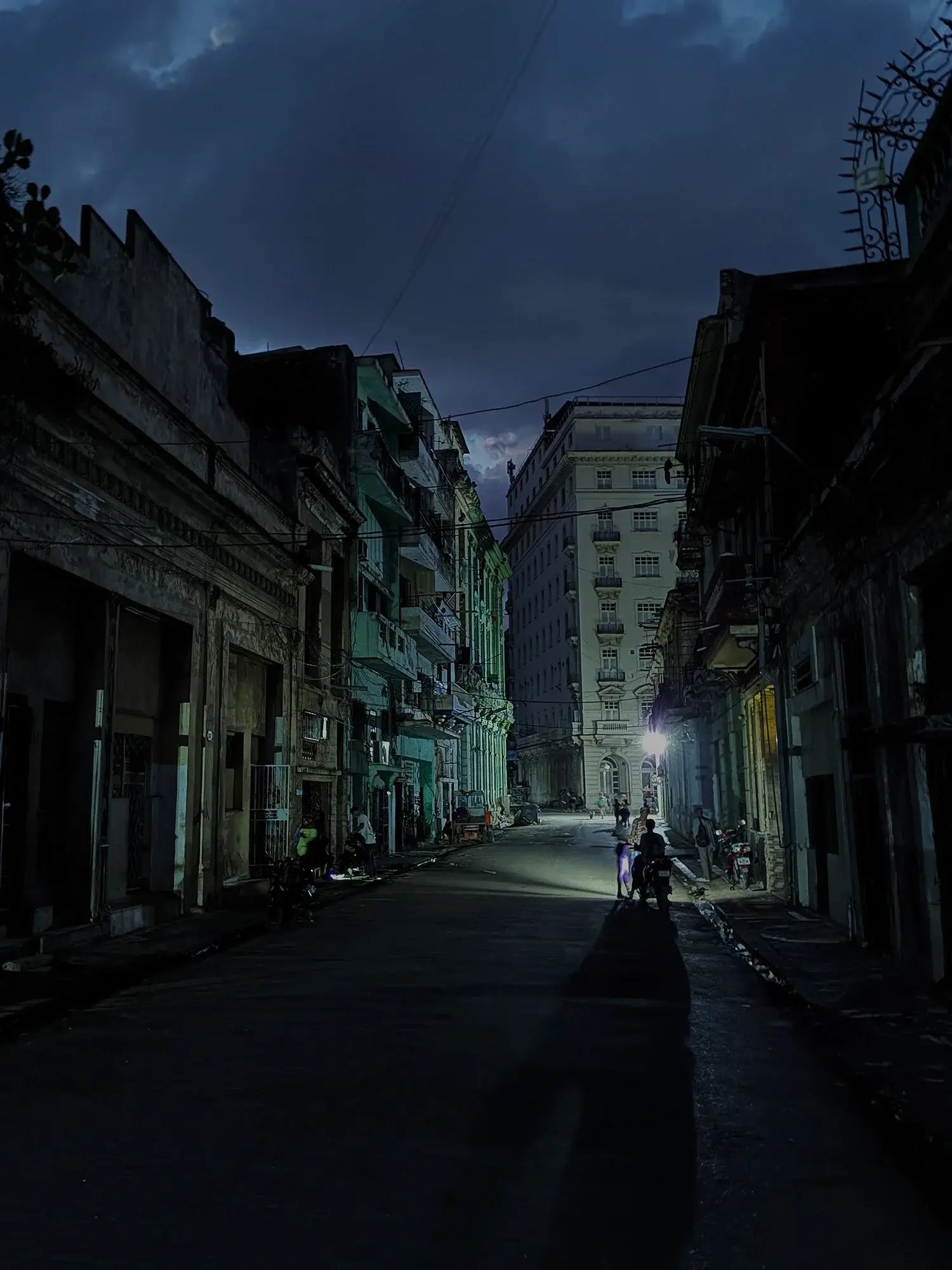
Photo: Gerard Dalbon
It’s not that blackouts are unknown in the States. There was the terrible one in Texas, back in 2021, when an estimated 246 people died after the power grid went down in a harsh winter storm. Even in New Orleans, our rickety Entergy grid sometimes flickers out, for unclear reasons or none at all. (As I write this, a “Mylar streamer” has caused a fresh power outage in the French Quarter. If we applied our standards consistently, this would be called a sign of the horrors of capitalism, justifying regime change in Louisiana.)
But there was nothing accidental about this blackout. This was something Donald Trump and Marco Rubio had chosen to do. From their faux-gold chairs in D.C., these two men had deliberately inflicted the equivalent of a natural disaster on the Cuban people, to hurt them, in the name of U.S. foreign policy. Later, Ryan Grim of Drop Site News would talk to doctors in a neonatal care unit, who told him that during these blackouts, there’s a gap of several minutes between the power flickering off and their emergency generators kicking in. In that gap, the medics have to “take their phone [flashlight], race, and hand-pump the ventilators,” otherwise infants will die. That, too, is Trump and Rubio’s doing. The word that comes to mind is premeditated, and if there’s any justice left in the world, one day they’ll stand trial for it.
Saturday
I remembered that the Cubans had changed the name of the Hilton Hotel in Havana to Havana Libre, and a U.S. telephone operator, in making the hookup of a call there, insisted the hotel was still the Havana Hilton, but the Cuban operator would have none of it. “Havana Libre!” she shouted. “Get used to it!”
— Amiri Baraka, 1960
The power came back the next morning, before going out again in the afternoon, and then coming back the following day, and so on. The whole time, we heard people in Havana gossiping anxiously about the possibility of a Russian oil tanker coming in. It finally did come in at the start of April, after we’d left: the Anatoly Kolodkin, stocked with 730,000 barrels. As much as there is to dislike about Russia under Putin, they deserve some credit there. But that was all to come. On Saturday morning, I walked past a gas station and found it shuttered, a CERRADO sign hanging in the door. There wasn’t even a price on the big board outside: no point numbering what isn’t available.
We spent a lot of time walking, in those few days. A sad side-effect of the oil blockade is that you can walk wherever you want, because very few cars will be coming. You can even stand in the center of a four-lane street, if you feel like it, and it’ll be a while before you have to move out of anyone’s way. The exceptions are the orange solar-powered mini-buses, people on bikes and three-wheeled pedi-cabs, and the handful of guys who line their big pink Cadillacs up near the Capitol building, hoping to entice tourists to pay them for a ride. But the tourists are gone now, so mostly they stay parked.

In the U.S., Cuba is regularly derided as a dictatorship, or called “the regime.” But really, it was striking how few signs of the state’s presence there were. We could walk around wherever we liked, talk to whoever we wanted, with no interference; there were no government “minders,” as there are in places like North Korea. Only embassies and military buildings had armed guards. I saw very few cops: a total of three, in fact. Two of them were sitting on motorbikes in the town center, joking around with a guy who’d walked up to them. Another was smoking a cigarette outside the Ministry of Public Health. (Apparently he’d never been inside and heard the health advice, or didn’t care; cigarettes, strong and unfiltered, are everywhere in Havana.)
Physically, the city reminded me strongly of New Orleans: same narrow streets, same Spanish colonial architecture. But in New Orleans, we’ve recently been dealing with a full-bore incursion of National Guard troops and ICE agents. They were led for a while by the noxious Gregory Bovino, who called his months-long crusade against Latino day laborers “Operation Catahoula Crunch.” In New Orleans, people who lack immigration papers have been hiding out in their homes like Anne Frank, for fear of getting grabbed and imprisoned in a huge warehouse, God-knows-where. On any given street, you may run into a 19-year-old soldier with a full camo uniform and a peach-fuzz pseudo-beard, carrying an AR-15. (Or leaving it behind in a Bourbon Street bathroom, propped up against the sink, as happened over Mardi Gras.) In Havana, I felt a lot less “policed” than I do at home.
You’ve got to be careful about drawing too many conclusions from a few days’ visit, of course. The big international human rights organizations, like Amnesty International, have concluded that Cuba has serious problems with censorship, political prisoners, and the death penalty; there have been reports of “warrantless searches” of the homes of people who run political YouTube channels, for instance. It’s possible, even likely, that gringos with notebooks who have obviously come from abroad get treated differently from locals. Still, I saw plenty of what you’d call signs of dissent. Political graffiti was surprisingly common in both Spanish and English. One piece read “IF HARD WORK LEADS TO SUCCESS, THEN THE DONKEY WOULD OWN THE FARM,” while another showed the good old-fashioned “ACAB” for “All Cops are Bastards.” Apparently it’s a universal slogan at this point. Marijuana, meanwhile, is still highly illegal under Cuba’s “zero tolerance” drug laws, but that didn’t deter the middle-aged woman I saw wearing a huge green weed-leaf T-shirt.
I didn't meet an outright opponent of the government, but Hasan Piker, Katie Halper, and several of the other journalists did, and they report that ordinary Cubans were surprisingly frank about their opinions, including their criticisms of the state—far more so than you’d expect, in a place that’s considered so thoroughly repressive. Now, things are probably different if you try to form an opposition party. Political repression happens in the sphere of politics, so if you’re not actively doing politics, it often doesn’t affect your day-to-day life. But at least, this doesn’t feel like a place where people are afraid to express themselves. There was none of the grey bleakness of the USSR in the Stalin era.
And then, there are different kinds of freedom and unfreedom. In the U.S., we like to pretend this is simple: we’re the Good, Free Country, and Cuba is the Bad, Unfree Country. But that’s a cartoonish way of looking at the world. Sure, in the U.S., we do plenty of voting, and we can publish whatever political ideas pop into our heads. (Well, unless you’re Rümeysa Öztürk or Mahmoud Khalil, and ICE decides to target you for your speech.) But in a lot of important ways, we’re not “free” at all. Private landlords control our homes, private insurers control our health, and private bosses decide whether we will stay employed and eating each month. We get to exist only to the extent that we’re profitable. People in Cuba may not have a variety of political parties to choose from, or an equivalent of the First Amendment. But nobody in Havana has ever had their medical care denied by UnitedHealth, either, and 85 percent of them own their homes. The concept of a “school shooting” is alien to them, because gun companies haven’t been allowed to write government policy. Nor do they seem any worse off for the lack of a Cuban Fox News affiliate, or a Nick Fuentes stream. It’s a question worth asking: would you rather have lots of elections and debates, but no healthcare and a spree killing every week, or guaranteed healthcare and safety in a one-party state? When you’re comfortable, it may seem obvious that the U.S. system is preferable to the Cuban one. When you have appendicitis or lung cancer, and no money, it may be less clear.
But the nature of the Cuban government is also totally irrelevant to the question of whether it’s acceptable to impose a fuel blockade on the Cuban people. Nothing can justify the man-made poverty and suffering we saw. There have been a lot of headlines about the trash piling up in the streets of Havana, because there isn’t enough fuel to run the garbage trucks regularly, and that’s real. Nothing can prepare you for the stench of it, as you round the corner of a narrow street and come up against a pile that’s been there for days: part fecal, part rotten vegetables, and a sour alcoholic note beneath it all. The flies cover the trash in a thick, black layer, and they buzz up into a cloud as you walk past. Undoubtedly, they’re laying eggs and multiplying in there, and spreading disease.
Nobody, from shopkeepers to government officials, likes to talk about the trash. They’re embarrassed by it; it hurts their pride to see their city like this. But the worst thing of all is to see an old man with a cardboard box, stooped over, picking through the garbage looking for aluminum cans. He finds one, puts it in the box, and goes back for more, over and over. This, too, has been deliberately inflicted on him, by some of the richest people alive.
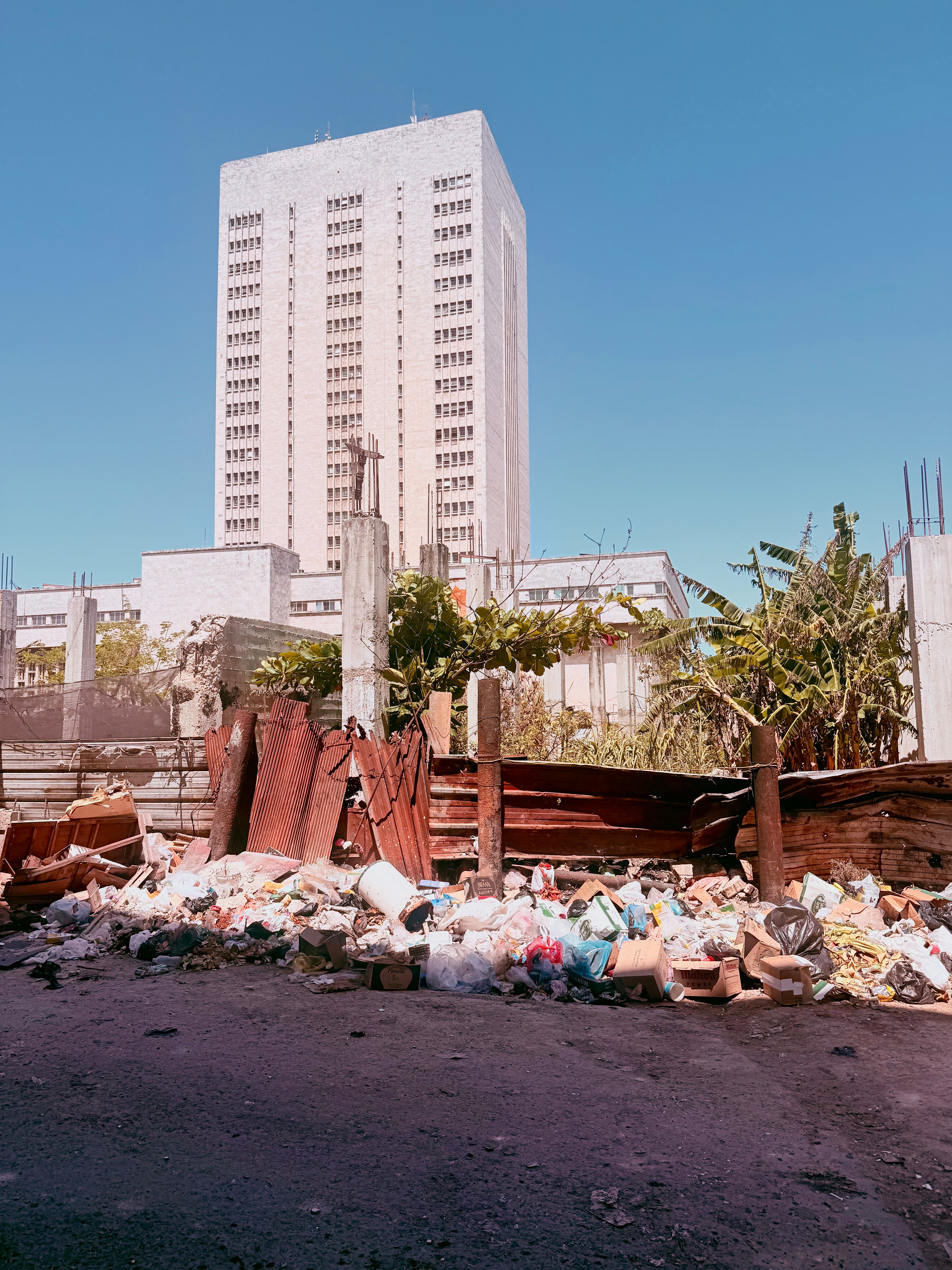
Photo: Nathan J. robinson
In dark and desperate times, everyone finds their hustle. At one point, a kid in a denim baseball cap sells me a copy of Granma, the Communist Party’s official newspaper, which on closer inspection turns out to be eight months old. (Fascinatingly, it also contains a review of the Netflix horror series Midnight Mass. The reviewer liked it.) Other people, either homeless or close to it, just ask you for money. Their playbook is to be as friendly as possible, and they strike up a conversation, in whatever jury-rigged combination of Spanish and English works.
“You’re from the U.S.A.?” asks Rafael. He’s a skinny, Afro-Cuban man, maybe 20 years old, with a shaved head and ragged jeans. “Thank you for Obama!” he says.
A lot of Cubans love Barack Obama, and look back fondly on the brief period of “normalization” from 2015-2017, when American cruise ships were allowed to dock here. “Cubans and the U.S. are like brothers, manos,” Rafael says, clasping his hands to demonstrate. “But President Donald Trump, he doesn’t like the Cubans. He says no money, no food for the children.” Obviously, he’s playing up his message, and I slip him some pesos. But he’s also right, and because he can distinguish between a country and its leadership, his political analysis is more sophisticated than most of what you’ll find on cable news.
In total, I saw maybe ten or 15 people who were definitely homeless, sleeping on the sidewalk with bruises on their bare feet. According to some of the volunteers who’ve visited Cuba before, that kind of visible homelessness is a new development, and a sign of how badly the government has been strained in the last few years. On paper, housing is a constitutional right in Cuba, delivered in a variety of ways: state subsidies to buy or construct homes, public construction projects, and “usufruct,” where people are granted the right to live on state-owned land for free. But now, after decades of sanctions making it hard to get construction equipment, and hurricanes destroying the houses that exist, it seems a home can’t actually be provided to everyone who needs it. (And yet, even then, Havana is still doing better than our city governments in the U.S., who don’t even attempt to provide housing, going straight for imprisonment instead.)
If U.S. policymakers hoped to eliminate joy from the streets, though, they’ve failed. Little clusters of kids kick a soccer ball back and forth, oblivious to the fact that the ball is half-inflated, oblong, and shedding bits of its covering. Other people, young and old, play frantic games of dominos, slapping down and rearranging the tiles in a flurry of clacking sounds. In the Paseo del Prado, couples hold a ballroom dance class, slow and romantic, with classical music emanating from a small radio with a solar panel strapped to it. On the Calle Obispo, a shirtless daredevil performs a fire act, chugging some kind of brown liquid and then blowing huge plumes of flame skyward. You wouldn’t know they’re in a national crisis at all, the way they take it with grace. Again, compare them to Americans, who threw full-blown protest rallies when they were told they couldn’t go to Applebee’s for a few weeks due to COVID-19. In the past century, the Cubans have outlasted dictators, invasions, pandemics, hurricanes, wars and rumors of wars, and here they stand, ready to outlast a century more. Whatever happens next, I wouldn’t bet against them.
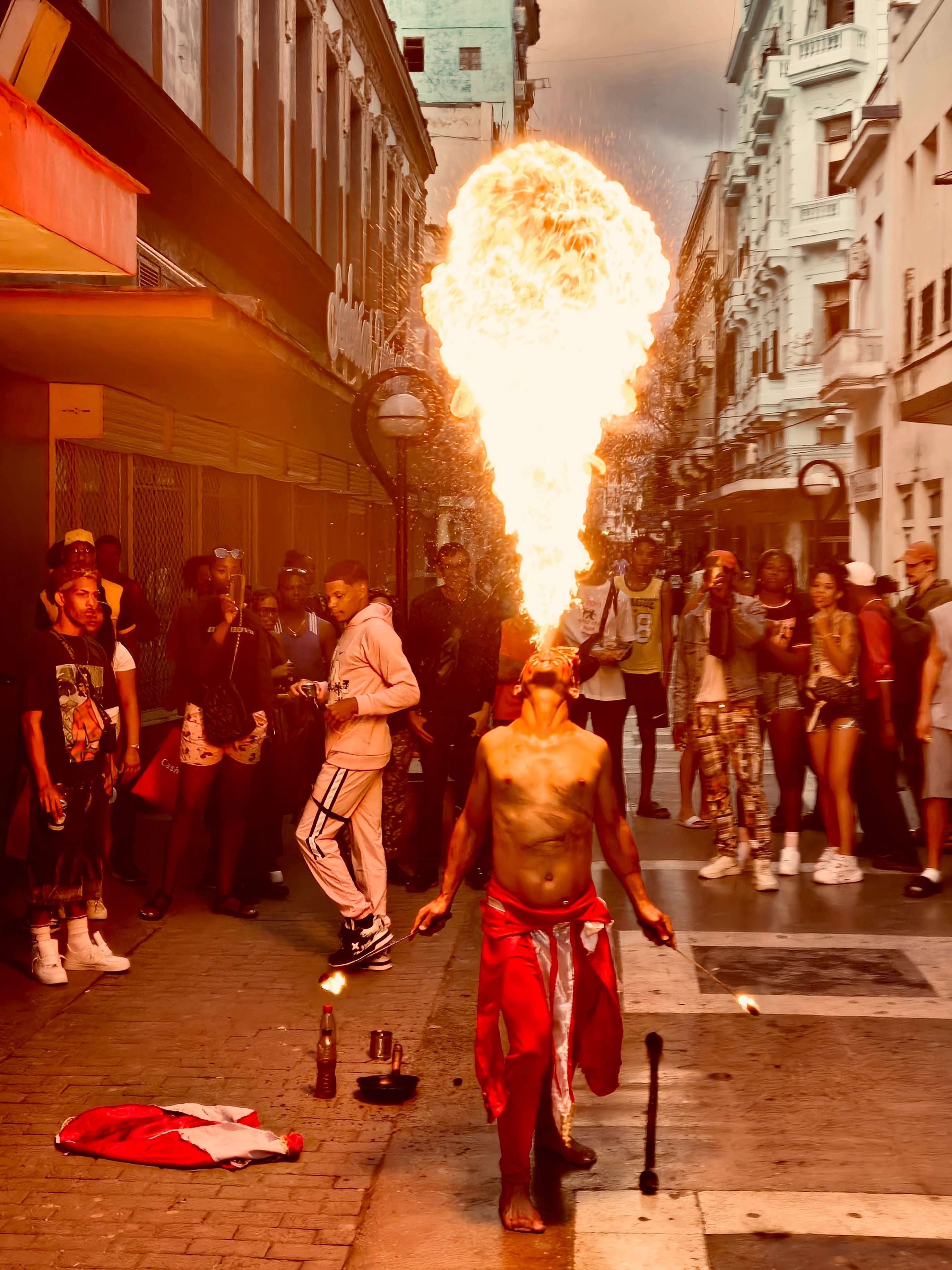
Photo: Alex Skopic
Carlos Fernández de Cossío, Cuba’s Deputy Foreign Minister, looks like he hasn’t slept well for some time. A group of the journalists have been invited to Havana’s International Press Center to speak with him, and through an hour-long press conference, he’s a consummate diplomat, careful not to say anything that could inflame the already-delicate situation. I ask him what he thinks of Claudia Sheinbaum, the impressive new president of Mexico, saying that she’d be willing to ship oil to Cuba despite the embargo; he says he’d welcome it, and be grateful. TrueAnon’s Brace Belden asks him about the pressure the U.S. is putting on other countries to expel Cuban doctors, and he condemns that. But it’s when he talks about the crisis the blockade has caused in Cuba’s own healthcare system that de Cossío gets visibly angry.
“That could be the difference, even of life and death for some people. Or the difference in agonizing illness, or having the same illness with less pain, less suffering,” he says. “You can’t imagine the pressure. Maybe you’ve talked to some of our doctors, when they have to decide, as if they were God: this product that I have here, should I use it on this individual who might die in a week? Or should I use it on this other one, who has a longer lifespan? And then you think, am I God? Am I to decide?”
He isn’t exaggerating. According to a new study in the British Medical Journal Paediatrics, U.S. sanctions are directly responsible for shortages of 364 essential medicines in Cuba, and any medical technology with more than 10 percent U.S.-made components—including “infusion pumps, cardiac catheters, haemodialysis machines and ventilators”—simply can’t be sold to them. Kidney specialists report having to wash and reuse blood filters, since no more can be found, causing hepatitis to spread. At the end of 2025, there were “9913 children awaiting surgery because of shortages,” and that was before the fuel blockade. Almost certainly, some are now dead.
There are, however, some people in Cuba who will have to suffer a little less now. That day, I stood on the stone steps of the Salvador Allende Hospital, waiting for the Puerto Rican delegation. It’s a magnificent place, and it’s fitting that it’s named for Allende: the medical doctor and Marxist who was elected president of Chile in 1970, then quickly driven to suicide by a U.S.-backed coup. He was a personal friend of Fidel’s, and a huge framed portrait of the two of them embracing hangs in the lobby. The doctors and nurses have lined up like an honor guard by the door, pristine in their white coats, and a cheer goes up when the first delegate walks in, carrying the Puerto Rican flag. “Long live Puerto Rico! Long live Cuba! Long live all the peoples of the world!” one of the doctors yells. Several more volunteers follow, rolling along huge suitcases full of prescription drugs: painkillers, antibiotics, inhalers, diabetes treatments, and everything else that’s been in short supply. Journalist David Montgomery of the Nation, a real pro who was there at the hospital, estimates that it added up to over 1,800 pounds in all, just shy of a ton.
Each pill is a victory. The entire U.S. government wanted to keep that medicine from reaching the Cubans—to keep them in pain and despair, until they surrender their sovereignty. But the Puerto Ricans wouldn’t let it happen. Today, there are people in those hospital wards who can sleep free of pain because of their solidarity. And keep in mind, Puerto Rico doesn’t have much in the way of wealth and resources itself, having been battered by hurricanes and maliciously neglected by the United States for decades. But they don’t let it stop them, so those of us who have comparatively more to work with really have no excuse for sitting idle.
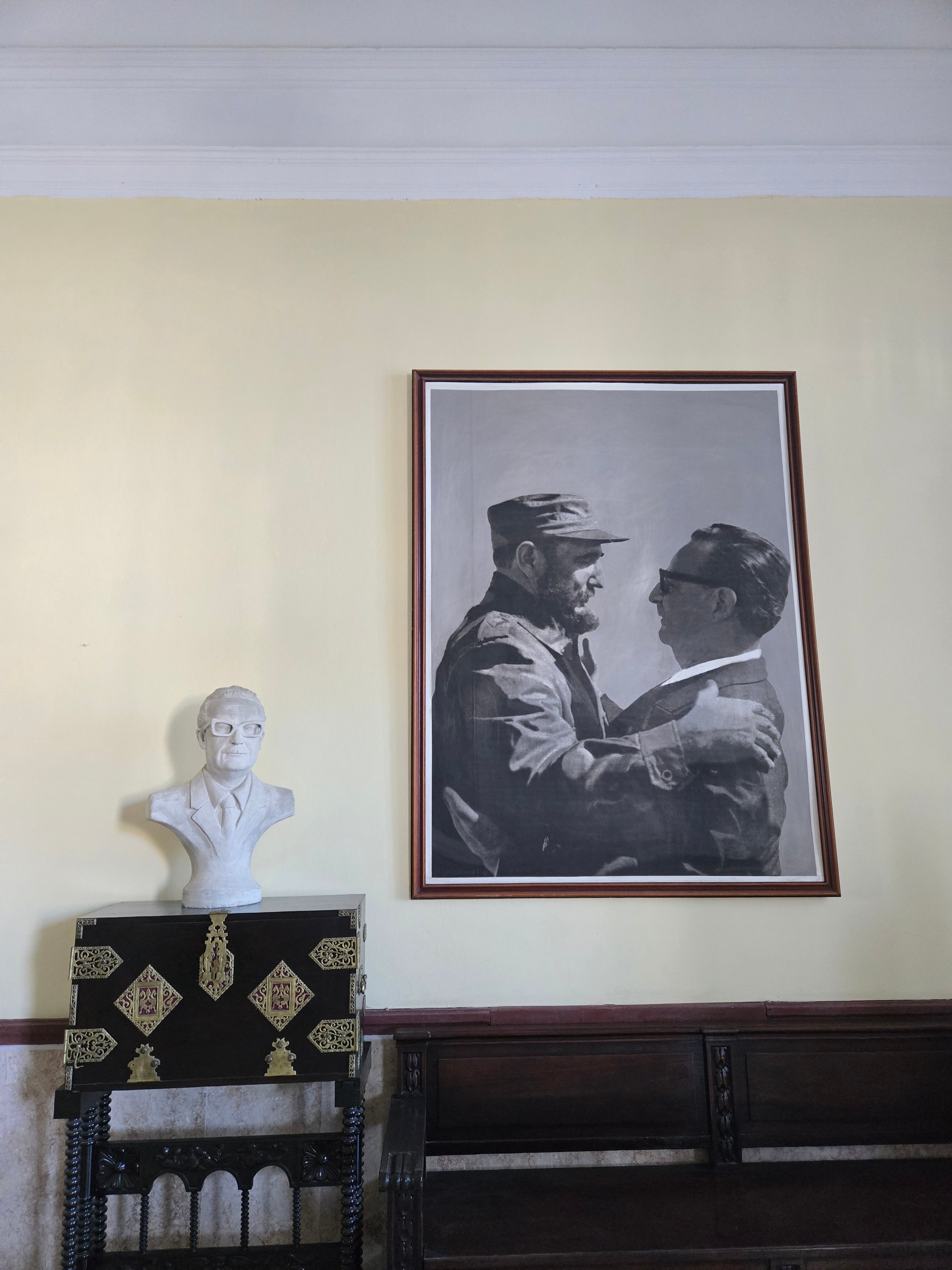
Photo: Alex Skopic
The picture was the same at a nearby care center for people with special needs. The facility itself is in rough shape: the tiled ceiling sags down in the middle, and there’s peeling paint and streaks of water damage on the walls. But the staff have done an admirable job of not letting the residents know there’s anything wrong. They’ve blown up balloons, kept some music playing, and painted a certain cartoon character on the wall. (I can’t tell you which one, since the company is infamously litigious, and I wouldn’t put it past them to invade Cuba to enforce their intellectual property rights.) Like kids everywhere, the younger patients light up when the volunteers bring them in some donations: school supplies, powdered milk, medicines, crayons. And here, you see the basic immorality of sanctions at its meanest and ugliest. Even if you believe Cuba needs sweeping political reform, it isn’t Miguel Díaz-Canel or any of the leadership who are hurt by sanctions. I saw their building, too, and they’re doing fine. It’s a little Cuban kid in a wheelchair that our country is really hurting, and his friends and classmates.
But we shouldn’t act surprised, because the same pattern of collective punishment has been playing out in Palestine for years. There, the U.S. and Israel impose the same kind of restrictions on what can come in and out, keeping food and fuel to a bare minimum, and forcing everyone to suffer. Just like in Cuba, children, sick people, and the elderly are the hardest hit; they’re the ones who starve and die first. And because we haven’t yet punished the U.S. political class for doing it in the Middle East, they’re now doing it in the Caribbean, too. Sanctions are often sold as a safe, humane alternative to war, but when you’ve seen them firsthand, it’s obvious that they’re not. They are war itself, waged against the most vulnerable. What can you call that but evil? Where will it stop?
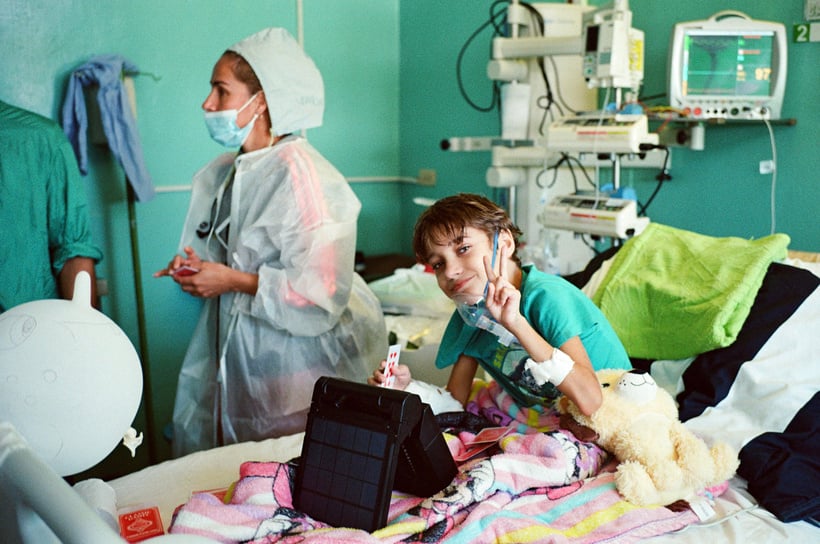
This 10-year-old boy, Carlos, has cystic fibrosis. Because of the American blockade, he is unable to receive Trikafta, the medication he needs. After our visit, Brace belden was able to have some Trikafta delivered to Carlos. (Photo and caption: Steven Goldberg, AKA yung chomsky)
Sunday
Bajé de la Sierra
Para acabar con capitales y usureros,
con generales y burgueses.
Ahora soy: sólo hoy tenemos y creamos.
Nada nos es ajeno.
Nuestra la tierra.
Nuestros el mar y el cielo.
Nuestras la magia y la quimera.
Iguales míos, aquí los veo bailar
alrededor del árbol que plantamos para el comunismo.
Su pródiga madera ya resuena.
I came down from the Sierra
To put an end to capitalists and usurers,
to generals and bourgeois.
Now I am: only today do we have and create.
Nothing is outside our reach.
Ours the land.
Ours the sea and the sky.
Ours magic and the chimera.
My equals, here I watch them dance
around the tree we planted for communism.
Its prodigious wood already resounds.
― Nancy Morejón, from “Mujer Negra”
It would take a lot more time and space than I have to properly describe what Cuba is like, let alone what it means. So I’ll flash-forward past some things. The sheer blueness of the Caribbean, seen from the stone walkway called the Malecón, and the groups of people teaching their small kids to fish from the edge. Talking to Chris Smalls, whose comments you’ll find elsewhere in this magazine. The woman in the park with her kite, catching the sea breeze and stretching so far into the sky it could barely be seen. Gerard Dalbon of New York City’s DSA, and his mad dash to deliver his suitcase of solar panels to community centers all over Havana. The huge turquoise mural the delegation’s art group painted, reading Humanidad. (Personally I’d have preferred Fidel’s slogan, Muerte al Invasor, but it’s a nice mural all the same.) James Ray, another DSA activist from Philadelphia, who gave us the incredible news that Cuban kids are just as obsessed with yelling “six seven” as their Yankee counterparts. Plenty more, along those lines. But there are two Cubans I met, in particular, who are memorable.
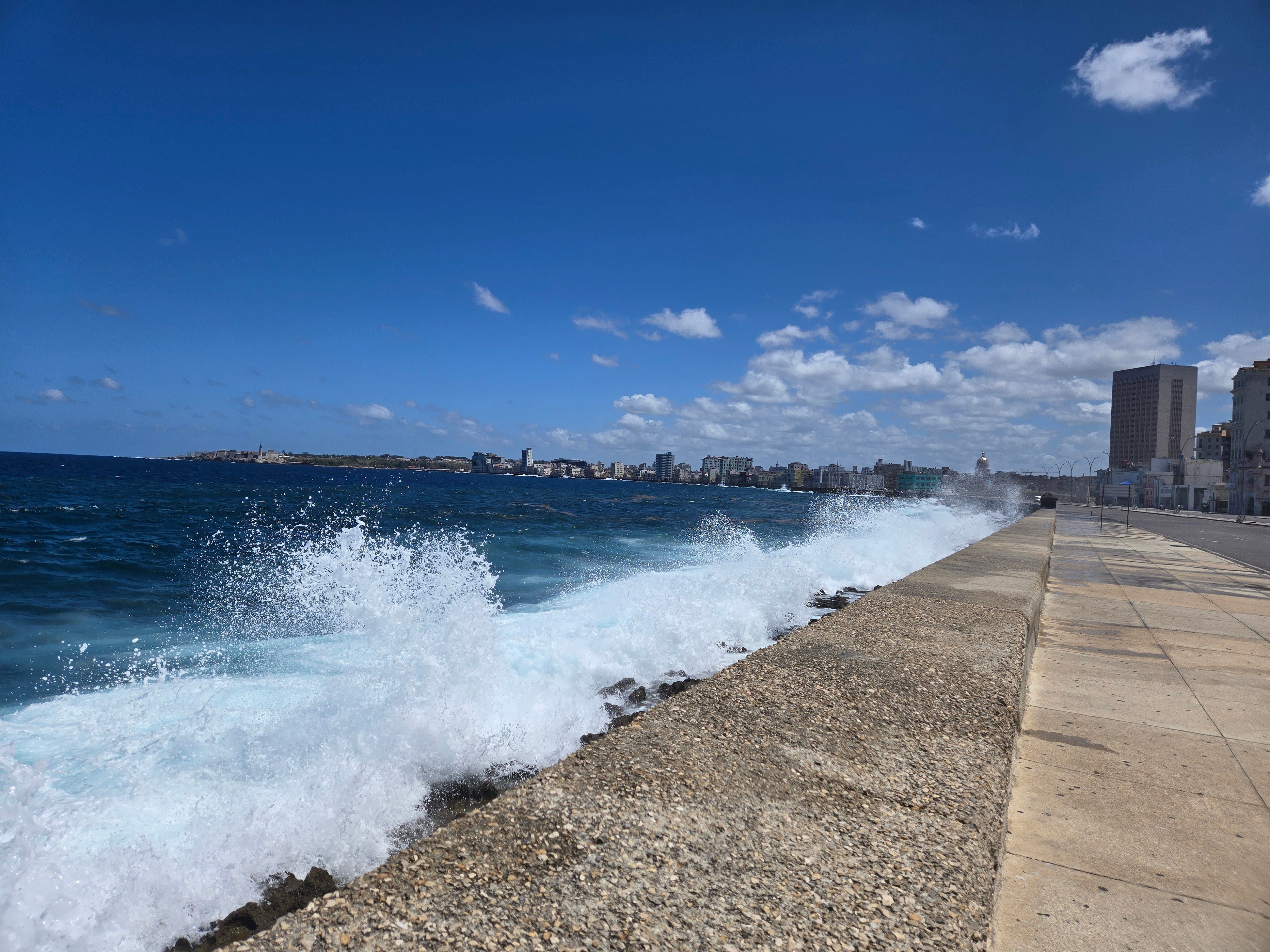
Photo: Alex Skopic
The first is Rafael Hernández, one of Cuba’s most prominent political scientists, and he’s complicated. In discussions in the U.S., Cuban intellectuals tend to get sorted into one of two boxes: either a loyal supporter of “the regime,” as it’s called, or a pro-U.S. dissident yearning for capitalism. Hernández doesn’t fit neatly into either category. In 1999, his important book Looking at Cuba: Essays on Culture and Civil Society (translated to English in 2003) staked out a third position, that of the constructive critic. In it, Hernandez is frank about the “problems caused by bureaucracy, censorship, or dogmatism,” and argues that it’s necessary for Cuba to “allow for readjustment, inspire a new generation of leaders, peacefully let go of old dogmas[...] reform the structures that were created earlier, reorder the economy and the legal system, promote more effective mechanisms, and at the same time carry out the delegation of power required for the viable transition to a more decentralized and democratic system.” But he’s still a socialist, and he firmly defends the gains won in the Revolution, like Cuba’s universal health and education services. He’s exactly the kind of person that U.S. leaders, if they actually cared about civil rights and liberties in Cuba the way they claim, could productively work with. But of course, they don’t.
Hernández spoke to a group of us from the Nuestra América mission, giving a kind of impromptu lecture and discussion, and to me, this was his most provocative question: “The U.S. deals with the Chinese Communist Party. They deal with the Vietnamese communist party. Why don’t they deal with the Cuban communist party?” Like any good political scientist, he has a theory. “Our different views, our different interests with the United States, our conflict, is not something that was created by a socialist system, that was created by the Revolution. It is older than that. The question of independence and sovereignty is much older than that.”
In his view, even if Cuba were a liberal democracy like France or Spain, it wouldn’t matter: the simple fact is that the U.S. wants the land, and always has. And the evidence bears this out. Certainly, the U.S. doesn’t actually care about democracy or human rights; you can tell because Saudi Arabia is still a valued ally. And Donald Trump has also threatened territories like Greenland that do not have communist governments, so ideology isn’t the deciding factor. But U.S. leaders dating back to Thomas Jefferson—who preached freedom with one hand, and whipped his slaves with the other—have always talked about making Cuba a U.S. territory, long before Fidel Castro was born. The aggressive intent has always been there.
What would they do, if their wildest dreams were realized, and they got control of Cuba? We can make some guesses. Free access to that beautiful seafront would have to go, of course, replaced by some kind of paywall system with private allotments. The “big six” hotel brands would come in, from Hilton to Wyndham, and build sprawling, Mar-a-Lago style resorts. Very probably, there would be a boom in the construction of loud, garish nightclubs, like the ones in Miami where online influencers like Andrew Tate and “Clavicular” are always hanging out. Around them, the drug and sex trades would flourish. Developers would bulldoze the crumbling old stone houses, and put Starbucks and Sephora and the AT&T Store where they used to be. The state healthcare system would be scrapped, and 11 million Cubans would have to contend with the ACA Marketplace for the first time, leading to a corresponding spike in mortality. Same with education, where they’d be introduced to the wonders of student loans and private charter schools. There would be golf courses and tanning salons, and rich white men in polyester pants to populate them. The GDP would go up, and everything beautiful and fascinating about the place would be destroyed. Before his still-mysterious death, Jeffrey Epstein was emailing with businessmen from the United Arab Emirates about this kind of thing. “I think your skill in transforming dubai, should be touted in cuba, its location is the best, no shortage of land,” he wrote to Sultan Ahmed bin Sulayem in 2009. What role Jeffrey himself hoped to have, as he cast his eye south, doesn’t bear thinking about.
On our last full day in Cuba, I would meet a kind of person I recognize immediately, and like immensely. His name is Roberto, and he runs a little bookshop on the Calle Obispo, called the Libreria Victoria. Everywhere I’ve been in the world, the proprietors of used bookshops are the same. They don’t make much money—how could they, selling their wares for eight bucks, or five pounds sterling, or 2000 pesos?—but they care deeply about literature, and they’re fiercely proud of their collections. Roberto doesn’t get many English-speaking visitors these days, and he’s eager to show me his shelf of Hemingway in English: A Farewell to Arms and The Sun Also Rises, which you’d expect, but also The Garden of Eden, which is a little more outré. He’s apologetic for not having any first editions—“only in Spanish.” He also has a Spanish copy of Harry Potter and the Goblet of Fire, garish against the surrounding books; even in Havana, you can’t get away from J.K. Above the shelves, a framed portrait of Che Guevara looks down on the whole operation, like a patron saint. Along with the books themselves, Roberto sells pins, postcards, vinyl records, empty cigar boxes, old coins and peso notes—plus plenty of what, I say with all the love in the world, can only be described as junk. There are two other middle-aged guys who work with him, having an endless, low-level conversation-slash-argument in the back, but Roberto is the Anglophone of the joint.
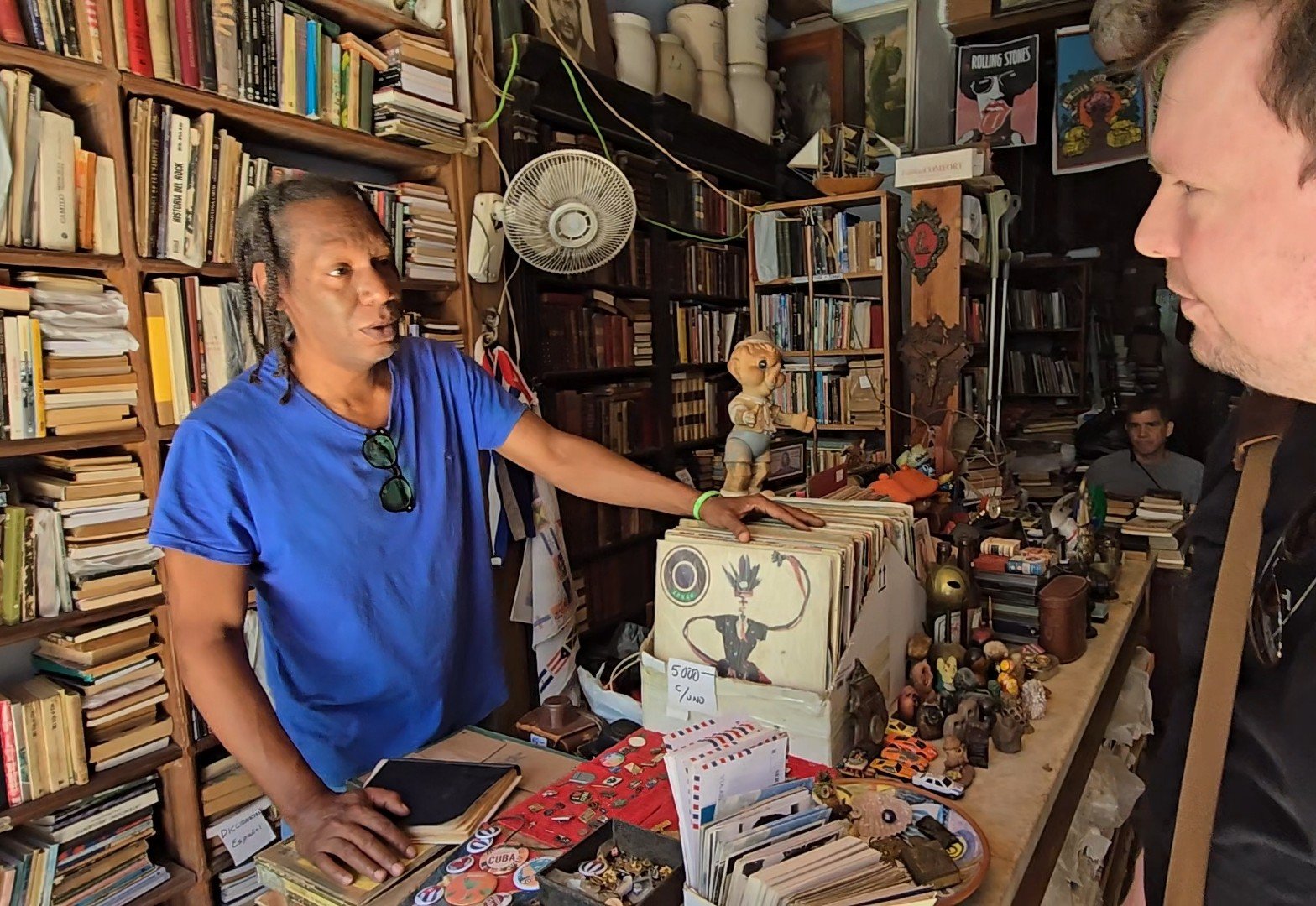
Photo: Alex B.
I buy some postcards of Hemingway shaking hands with Fidel in 1960, on the one occasion they met, but it’s Martha Gellhorn I’m thinking about. It’s one of the great crimes of literary history that her writing has been so thoroughly overshadowed by Hemingway’s, just because she happened to be married to him for a while. Secretly, she’s a better travel writer. In an essay for Granta called “Cuba Revisited,” she compared her experience living at the Finca Vigía in the 1940s, pre-Revolution, to her return to Cuba in 1986, on a scuba-diving trip. There, she’s shocked by the way Havana has changed, its streets now boasting “many bookstores, a real novelty; I remembered none.” In the years between Gellhorn’s stays, Castro’s government waged its campaign to eradicate illiteracy from the island, fielding 100,000 educators as if they were soldiers, and they succeeded. A whole new literary culture sprung up: poets like Nancy Morejón, novelists like Leonardo Padura, and too many others to name. (In her travelogue, Gellhorn casually notes that “Cubans love poetry, so poets abound and are widely read.” Can any community in the U.S. say the same?) Roberto’s Libreria, I realize, exists because of that great historic upheaval. In a very literal sense, it’s the fruit of the Revolution, and of communism. No wonder he has Che in a frame.
Like everyone else in Havana, the blackouts have been making Roberto’s life difficult. Mainly, he’s worried about his refrigerator. “You have something frozen, you have to put it out and cook it, or put it in salt, or something, because you have no electricity. How will you keep it?” he asks. “Then another thing is: people are nervous, because suddenly the electricity comes back, and then you don’t have a protector for your fridge, and the electricity is so strong, it can burn the system of the fridge, or another thing that you have connected. So when there is no electricity running, most of the people run to the house, disconnect everything, and then it’s a problem. You have a phone. If you don’t have how to charge it, it’s stressing, because most of the people now, most of the time, are using the phone to connect to your family, or to know something on the internet. It’s stressing,” he repeats. “You have a business like this, you have to protect your merchandise, because it’s your money. It's a lot of stress. And you don’t know when the electricity’s coming back. Because if you know, you can make a plan, or if you know when they’re going to take it.” A lot of the talk in the bookshop, now, is about rumors from other municipalities in Cuba, about people who do have power, and whether Havana might be next in line. But no one really knows.
Monday, and Return
Monday morning is all motion and chaos. Nathan and I grab breakfast, drop off the remaining packs of Tylenol and Advil we’ve brought for donation, say a few goodbyes to people who are staying longer, and then it’s back to the airport. When we reach Miami, the TSA agents scowl at us. “They were going to support the…” I hear one of them whisper, and I can’t hear the next word, but assume it was “regime,” because it always is. But because we’re white men in suits, we’re the kind of people cops’ potato-like brains are programmed to respect, and they let us through without incident.
Not everyone gets that leniency. Coming back through security, several of our people got pulled aside from the line and hauled into a side office for questioning, including Noura Erakat, Katie Halper, and Chris Smalls. But we’d been told that might happen, and the protocol is simple: tell them your name, where you’ve been and how long, that you were on a humanitarian mission, and nothing else. All other questions are met with a polite “I believe I’ve answered all I’m required to.” And then change all your passwords, when they finally let you go.
I don’t know what will happen next in Cuba. As I write this, the U.S. government has made a laughable indictment of 94-year-old Raúl Castro, likely in an attempt to set up a casus belli, and reports are coming out that Trump has moved the aircrafr carrier Nimitz into Cuba’s neighborhood. By the time you read these words, he may actually have attacked, and caused nightmarish death and destruction. The Cubans are brave, and Diaz-Canel has promised to meet any invader with a “bloodbath,” but they’re outgunned. It’s possible we could be some of the last people to see a sovereign Cuba before the end. We are standing at a terrible crisis point in history, and almost anything could happen.
But if this mission showed anything, it’s that history is not only made by people like Trump, or even Díaz-Canel. We are all agents within it, with our own parts to play. It’s easy to forget that, scrolling through the news every day. The media we consume is practically designed to make us feel helpless, like all we can do is spectate while the people who matter do things, and maybe leave a comment. But that’s a lie. When you read a history book, it’s easy to see what ordinary people have done, or what they should have done and didn’t, and the consequences it had. We’re those people now, and it’s up to us to write the next page. You can just get on a plane to Havana and give a kid some medicine, and their life will be different. Frankly, if you have the resources, you should. There’s no practical or legal reason there can’t be an aid flight every week, if enough people care about Cuba enough to launch one. Organizations like the National Network on Cuba, the Hands Off Cuba Committee, Cuban Americans for Cuba, CODEPINK, and the Progressive International are busy trying to set them up, and it’s worth giving them a Google.
We have been thoroughly lied to about who the “good guys” and “bad guys” are. We’ve been told Cuba is an irredeemable dystopia, in dire need of being “liberated” at the tip of a U.S. gunboat. But when you’ve been there, you realize how absurd that is. Cuba is a beautiful country, full of extraordinary people who don’t deserve what the U.S. has done to them—what it continues to do to them, even as we speak. And the most infuriating part is, it’s all so easily solvable. All that’s necessary is for U.S. leaders to give up on their aggression, sign an order, and lift the blockade. The so-called “Miami Mafia” that lobbies to keep the siege in place, like the pro-Israel lobby, is a numerically tiny group of ideologues. They’ve only gotten their way for so long because people have been kept in the dark about the facts, and there’s been very little pro-Cuba politics in the United States. But that’s changing. The more people see, the more obvious it is that the United States’ actions are completely indefensible. And with a serious political effort, people like Marco Rubio can be beaten. They have to be, because Cuba and its people are worth the fight.
Venceremos.