Trita Parsi on the Hidden Influences Behind the Pointless War in Iran
The foreign policy expert explains why the conflict strengthens Israel, weakens the United States, and devastates ordinary Iranians.
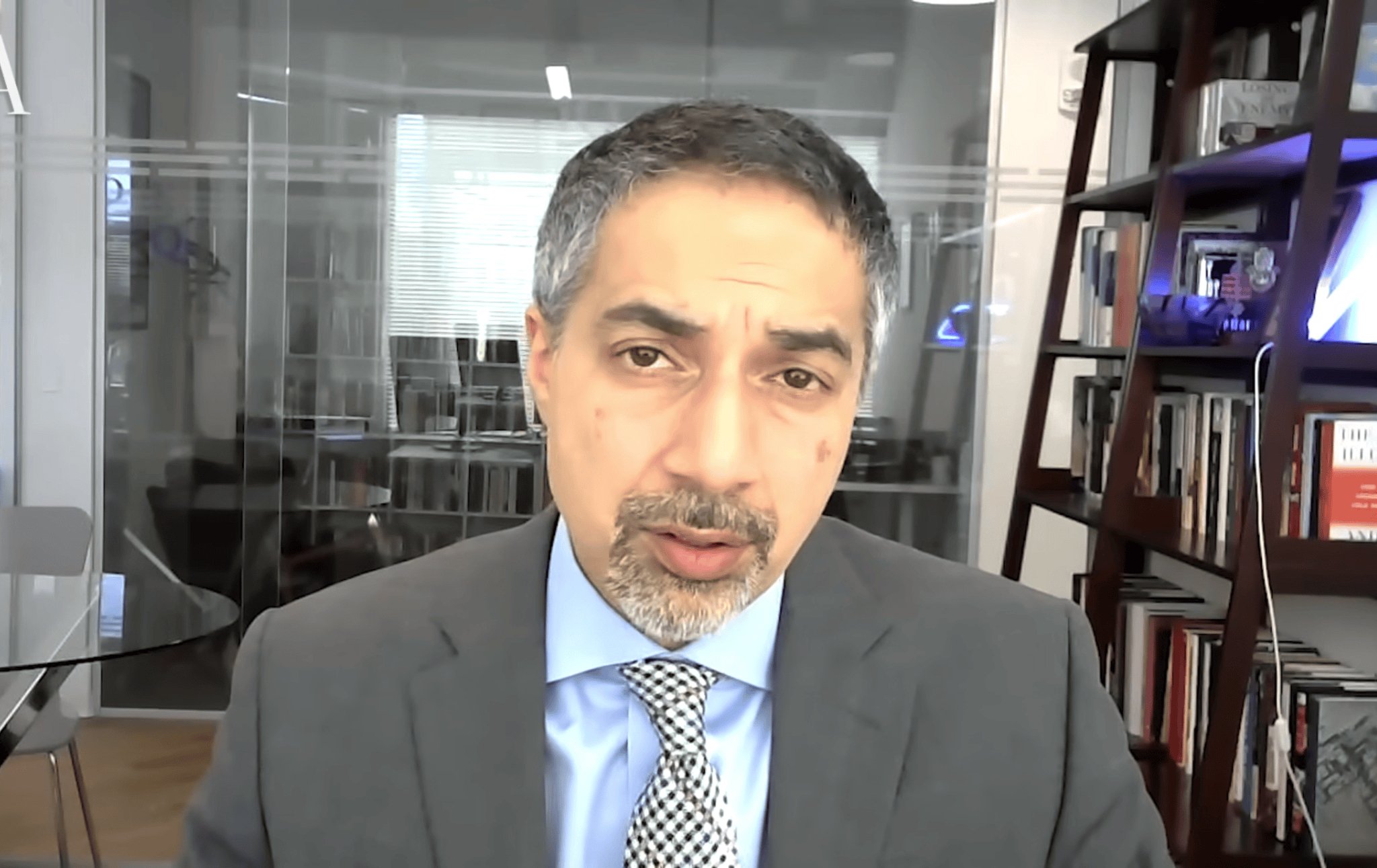
Trita Parsi is an Iranian-born foreign policy analyst, writer, and founder of the National Iranian American Council. He also co-founded the Quincy Institute For Responsible Statecraft, a think tank formed to move the U.S. "away from endless war" and toward the pursuit of international peace. Parsi joined Current Affairs to discuss the ongoing U.S.–Israel war with Iran and what Western media conveniently leaves out: from the devastating civilian toll to the decades of sanctions and covert operations that set the stage for the conflict. While the war may represent a strategic victory for Israel, he argues, it is a profound mistake for the United States.
Nathan J. Robinson
Let me start by asking you to elaborate on the aspects of this war that are sanitized or occluded in US media, that is to say, the effects that this war is having on ordinary Iranians on the ground.
Trita Parsi
There is so much that is being sanitized when it comes to what the mainstream media is covering. And it's not just the impact on the ground. There's also everything that happened before the war and how the war got started. But if we want to focus just on what's happening to the people, we're seeing clearly that there is a tremendous amount of civilian casualties. I don't believe we have a clear assessment at this point. Not a lot of information is getting out of Iran compared to during the 12-day war, and we have seen a shift in which the US is moving towards and has already started to attack what clearly are civilian sides. These are violations of the Geneva Conventions, article 54 or 56 of Protocol One; for instance, the targeting of the desalination plant in Kish Island, the targeting of the oil refineries in Tehran by the Israelis, and last night's attack by the United States on the power grid. All of these things are affecting the civilian population. These are not pinpointed targets against the military.
And on top of that, we have seen clear evidence of double-tap strikes, including the one that was done by the United States on the elementary school, which was, I believe, a mistake by the US side. They were targeting IRGC barracks or some sites there. But nevertheless, they struck this school twice. The first one hit the building right away, and the second one 40 minutes later, when people were going in there to save the children who had survived. And we've seen several pieces of evidence of this elsewhere as well. So much of the kind of warfare that the Israelis sought to normalize in Gaza that are complete violations of international law, complete violations of all norms around the use of force, are now being replicated in Iran by the United States and Israel.
Robinson
And we also saw recently that in the last couple of days, because of the destruction of oil infrastructure near Tehran, the entire city was blanketed in toxic acid rain, I believe.
Parsi
Yes. And for some of the population, I think a very, very small number—but nevertheless, a number—felt comfortable enough to express their views publicly and unapologetically that they wanted a foreign intervention, which I think is driven primarily by the repression of the state, the utter desperation that these people feel, particularly after years of sanctions that have just decimated the middle class.
For many of them, the argument was: No, the US and Israel are only going to attack Basij IRGC police stations. They're going to degrade the state's repressive capabilities and then pave the way for the people to rise up.
Now, seeing that the strikes are hitting desalination plants and oil refineries that don't even allow people to breathe afterward because the air is so poisoned, and you actually had acid rain and petroleum rain afterward, it's becoming clear to the vast majority what probably already was clear to many Iranians: this is not a war against the regime, this is a war against the nation. This is the perception that is really being cemented.
And you're also seeing that some of these folks on the outside in the Iranian diaspora, who for years had been pushing for this war, are now trying to distance themselves from this war as if they had nothing to do with it, even though they actually played a critical role in validating these fantasies that a quick, easy war could be pursued that would get rid of this theocracy.
Robinson
Certainly they wouldn't be the first population to somewhat idealistically assume that the United States means what it says about liberating a population from an oppressive regime. Of course, the first thing that came to mind seeing scenes of people celebrating in the streets after the killing of the Ayatollah was the collapse of the statues of Saddam Hussein in Iraq, which I'm sure also felt like a liberation for the first day, until the realization set in that the United States wages war consistently in a manner from Vietnam to Iraq to today in Iran, with a basic disregard for civilian lives.
Parsi
Yes. Again, the fact that not even 24 years after the Iraq debacle, there's a population or elements of a population that were willing to buy these arguments is not something that came about entirely naturally. It required a lot of manipulation. Now, of course, the fundamental factor here is that there is a repressive state that has been extremely uncompromising and left people increasingly feeling that there is no way out. But you also needed years of propaganda from Iran International, the Saudi-funded—I think, at this point, much closer to the Israelis—channel that has been very successful in just pushing propaganda onto the Iranian population.
We could see that even during the first Trump term, a lot of people thought that the American economy under Trump was doing amazingly well because that's what the propaganda channel said, which was very different from the reality. We have a lot of examples of seeing that the Iranian population seems to be under very strange impressions, and it is because of the penetration of that channel. But also, of course, the sanctions—the sanctions that for years have aimed explicitly to destroy the Iranian economy. They explicitly used the words "cripple the economy." It has decimated the Iranian middle class.
Some of the biggest protests took place in neighborhoods in Tehran that used to be middle class but are now in poverty because of the way that the sanctions have destroyed that economy. One-third of Iran's middle class went into poverty between the years 2018 and 2019 as a result of Trump's maximum pressure sanctions. So the combination of the repression of the theocracy, the devastation of the economy by sanctions, and the propaganda machine coming from Iran International had created a level of despair in which people, despite the fact that they live right between Iraq and Afghanistan, started to actually believe that the United States could be a liberator.
Robinson
You've come back a couple of times in our conversation to the years and the decades leading up to this war. One thing that tends to happen when war breaks out is that everyone forgets everything that happened up until three minutes before the war. One of the most common lines that's been used by the Trump administration and its allies has been "We didn't start the war. The war has been waged by the Islamic Republic for 47 years against the United States." And you point out that whatever hostility there has been by the Iranian government towards the United States, that hostility has been returned more than in kind by the United States. And it's not just sanctions. It was also crippling cyberattacks, for instance.
Parsi
Yes. And look, one of the things that has made it utterly clear that this war is not justified is the constant shifting justifications used by the administration and its supporters to be able to justify the unjustifiable. If they actually had a case, they would stick to it. It's precisely because they don't have a case that they constantly have to grasp at straws and try to come up with whatever argument, case, or claim that they can, including things that are as ridiculous as this. One senator actually said that the Iranians have been at war with the United States, not for 47 years, but since 1947.
Robinson
Okay, so even when we were funneling weapons to the Shah's dictatorship.
Parsi
Exactly. This is preposterous at the end of the day. It's all leading to the fact that this war was a massive mistake. Trump should never have done it. The only winners at this point are the Israelis. The Israelis could not care less if the name of the next Supreme Leader is [Mojtaba Hosseini Khamenei]. It doesn't matter. What they were looking for was the degradation of Iran's military, of its power, of its economy, and of its state apparatus, which is being achieved at the end of the day. Once this war ends, Iran will come out of it, in terms of capability, far degraded compared to what it was before the war. And that's what matters to the Israelis, something that shifts the balance of power in their direction. They believe that Iran has been set back 10 years, perhaps longer.
So, in this broader "mowing the lawn" type of strategy that they have vis-à-vis the Palestinians and the Syrians and the Lebanese, they're trying to bring Iran into it as well. This war has ensured that they don't have to do this again for another 10 years, rather than having to do it every two years or every eight months.
Robinson
You mentioned there that phrase "mowing the lawn," which is infamously how Israel described for many years its treatment of Gaza. That is to say that every time Hamas would build some strength, Israel would launch a sort of minor, short-term war to degrade their capacities for a little while to keep Gaza weak, then pull out, and then, as strength built up again, sort of go back in and "mow the lawn." And every time the "mowing the lawn" happened, it was accompanied by extreme violence. Hundreds or thousands of people were killed.
And it seems to me what you're saying there is that the kind of long-term strategy with Iran is to keep them weak, and every time they show signs of building strength, go in, destroy some military infrastructure, and keep the country in disarray. If they lapse into civil war, I think we heard some Israeli officials say, "That's just fine by us, as long as we don't have to deal with them, except through air power." Help me understand a little better what you think the strategy here is.
Parsi
The Israeli strategy is one in which they achieve security, not through deterrence, not through balancing other states, not by managing threats, but by eliminating threats and achieving dominance. Security through dominance. Which means that, from their standpoint, they're far less concerned about what type of a regime is governing a state and far more concerned about its capabilities. Look what they did as soon as Assad fell in Syria. As they said themselves on TV, within 20 minutes, they turned all of Syria into a shooting range. They blew up everything they could to ensure that whoever would follow Assad, whoever the next government would be, would not have the capability to challenge Israel's domination. It doesn't matter if they had the intent, because intent without capability is useless.
I spoke to an Israeli journalist—this must have been 20 or so years ago, when I was in Israel doing my dissertation on Israeli-Iranian relations—and he told me that Iran was once a friend of the United States, as was the case back in the '70s. They had very close relations, then it turned into an enemy. It can once again turn into a friend, but after that, it can once again turn into an enemy. As a result, Israelis are not as much concerned about who the government is, despite all of this talk about them wanting to have regime change and supporting the son of the Shah; that's much more of a PR campaign than an actual strategy. What they're concerned about is the capabilities, and the degradation of these capabilities at the hand of the United States is now being achieved. This is a major victory for Netanyahu, who has been seeking this war for more than 25 years now.
Robinson
Now, why is it that you say that for Israel this is a strategic victory, but for the United States, it is a major mistake that you don't think makes strategic sense?
Parsi
Because the United States has lost control over the war and doesn't know exactly how to end this war. And even if it tries to do a unilateral declaration of an end to hostilities and withdraw from the war, it does not necessarily mean that the Iranians accept. The Iranians will very likely continue the war, even if the US stops. Now I can explain why that is the case. So the US has gotten itself stuck in something that does not serve its interests. It should not have been in this war in the first place, because Iran was not an imminent threat. Its nuclear program was no longer a challenge. In that sense, there was a diplomatic deal on the table that would have been much better for the United States than this war.
So the US is going to get dragged into something that will be much more difficult to end. It's losing a lot of its credibility. Many of its Arab allies in the region are also very upset about it. They warned that this would happen, and the US did not listen to them. They are also seeing that the United States is doing much more to protect Israel from Iranian attacks and far less to protect US bases and their territory. And beyond that, of course, to the extent that it matters any longer, the US's international credibility and standing are definitely taking a huge hit, and it will take even more of this. So from the US standpoint, this is very bad.
On top of that, if you end up with a failed state in Iran—a collapsed state and a civil war—and if you have the same rough numbers fleeing Iran as they fled Syria—about 10% of the population fled Syria—this would be 9 million people. Most of them would be heading towards Europe. We saw what one or two million people did to the politics of Europe when one or two million Syrians left there. Very few of them will come to the United States, but no one will flee to Israel. The Israelis are completely insulated from some of these repercussions. The United States will pay the price for it. Europe will pay the price for it. As a result, this is costly to the US in a way that it simply is not to the Israelis.
Robinson
Is your explanation, then, for the Trump administration's decision-making here that it comes as the result of Israel's influence in the administration? We know there were some direct channels; for example, Senator Lindsey Graham said he went to Israel and figured out how to lobby Trump for the war. You're saying that, from a purely self-interested logic, the war doesn't make sense.
And you might wonder why Trump decided to go to war, given that public opinion isn't in favor of it, given that Trump faces an already challenging midterm election that's coming up, and given that now people are seeing an immediate direct impact in the form of gas prices, Americans killed, and this kind of global chaos. So what is your explanation for the Trump administration's thinking in abandoning what seemed to be a promising set of diplomatic talks?
Parsi
The available evidence paints a very clear picture: absent pressure from Israel, this war would never have happened. That does not mean that Israel was the only one pushing for it, although they were the main ones and the other ones were allies of Israel in the United States, nor does it mean that Trump does not bear responsibility, since he is, at the end of the day, the ultimate decision maker and the president. But had it not been for the Israelis constantly pushing for this, there would not have been a war. Trump was not obsessed about war with Iran in the same manner that Netanyahu has been for 25 years.
Trump would not have on his own gone in this direction, but the Israelis did manage to convince him that this is something that he needs to do, and then it ended up becoming very difficult for people around Trump to convince him not to do it. Many of them have also learned a lesson: those who were around Trump and counseled against the June war are no longer around Trump. They're no longer at the table. They're no longer in the conversation. And as a result, the lesson has been, do not push back hard against anything that Trump seems to be committed to doing; instead, what they did was that they essentially counseled that this would be very difficult. You need more military. You should wait a little bit, all in the hope that that eventually would convince Trump, on his own, that this was not a good idea. That did not work. Trump ultimately bears that responsibility. But if you take the Israeli factor out of this, there would never have been a war. I think that is utterly clear.
Robinson
Yes. I do remember you said in the lead-up to the war you were predicting that a war was very likely to break out. When you were talking to, I believe, Amy Goodman of Democracy Now, you said that both sides actually believed a short, intense war may improve their negotiating position: the Trump administration because of its overwhelming military power, and then Iran believes they can inflict significant damage on the US, shooting up oil prices, and that the cost to the US will be so immense they'll recognize that they would have to go for a longer war. Could you elaborate on that?
Parsi
So part of the issue here is that Trump was convinced by the Israelis that the Iranians are much, much weaker than they actually were, and as long as that was the case, it ruined the diplomacy, and it also made war much more likely. Because in diplomacy, he was only looking for their submission and surrender because he thought that they were so weak. When they didn't surrender, he went to war thinking, "Well, war will ensure that they surrender," and of course, they're not doing that, and so now it's leading to a quagmire. They were thinking on the Iranian side that a small war could be helpful in convincing Trump that the weakness that he had been told about Iran was not true, and that perhaps after a small exchange, they would go back to the table, and Trump would have a much more realistic assessment of what he could achieve, militarily or diplomatically, instead of living in these fantasies that the Israelis had sold.
All of that, I think, changed very quickly, because within the first 24-48 hours of the war, the Israelis assassinated the Supreme Leader, and at that point, things changed dramatically. The Iranians are not going to go back to the table, and also, they have realized that they cannot end this war in the short term unless the cost to the United States, Israel, and also the global economy has become so high that everyone concludes that this war was a mistake and should never have been started, and as a result, it should never be restarted.
If that conclusion is not reached, if that cost is not inflicted to ensure that conclusion, they believe the United States and Israel will just use the remaining time of that ceasefire to regroup, remobilize, rearm, and then relaunch the war, because that is the conclusion from the June war. But I think that the short war and then pivot to negotiation scenario was something that wasn't necessarily very likely but was conceivable up until the US actually killed their Supreme Leader, or Israel did.
Robinson
And now, as I take it, your assessment here from your recent article for the Quincy Institute is that you believe that Trump, based on what he said at his recent press conference, would like to end the war swiftly, declare victory, go home, and have another short war, and that it is Iran that will veto that through continuing to deliver the US the quagmire that would hopefully serve Iran's long-term interest in its own safety and not being attacked again.
Parsi
It's not 100% sure that the Iranians have that capability, but the thinking is, beyond what I just said, that the war has to be so costly that it doesn't get restarted. It's also important to understand what position Iran would be in if a ceasefire were to break out. Right now, the country is, to a large extent, very damaged. Its military capabilities are significantly degraded. Its prospects for sanctions relief have been obliterated. It cannot sell oil in the same manner as it could before, because damage to their oil industry and the prospects of getting anyone to come in willing to pay for, invest in, and rebuild the country are also very limited. This means that a ceasefire would not only lead to Iran being in a weakened position after the war but in a continuously weakening position because it doesn't have the capability of rebuilding because of the sanctions. So this would only then lead to a scenario in which, in a couple of months time, Iran has been further weakened, the US and Israel have rearmed, and precisely because Iran is further weakened, the temptation to restart the war will be significant.
The war has to end in a manner, in their view, that not only is overwhelmingly costly for the US but also in a manner that leaves Iran's trajectory positive. Obviously, they cannot be expecting a situation in which they're better off against the war immediately, but their trajectory should be one that is positive; otherwise, they will be continuously weakening. And continuously weakening, from their view, means that another war, another attack, will be forthcoming. That requires sanctions relief. I'm not sure the US is in any mood to offer that at this point.
But if this war continues, then you're going to see other states stepping in, putting pressure on both sides that this needs to end, because this is starting to become very costly for everyone. Just take a look at Bangladesh; they have now closed schools. I think it was in India that they have now turned it into a four-day workweek. The same thing is happening in the Philippines because they don't have the fuel in the oil as a result of the shortages caused just within a week of this war going on.
Robinson
Why was Europe so surprisingly—or not surprisingly, perhaps—supportive of this war?
Parsi
Strategic thinking is not even on a kindergarten level at this point. Not a surprise. But outside of Spain, Norway, Ireland, and Slovenia, who is even thinking strategically in Europe these days? Europe is destroyed intellectually, in my view.
Beyond the fact that there is something profoundly problematic, that Europe has completely given up any pretense of holding up any principles, they cannot even come out and say what is so obvious: this is an aggression; this is a violation of international law; this is a violation of the so-called rules-based order that they kept on invoking whenever the conversation was about Ukraine—they could not even get themselves to say that. But some of them even went out and praised this and said that this is the right move. The one who takes the prize is the Swedish Prime Minister, who on Swedish TV said that, "Well, if this works out, we are for it. If it doesn't, we're going to be against it." Congratulations.
Robinson
Very principled stance there.
Parsi
Extremely principled.
Robinson
But one of the conclusions that comes across from reading your work on the history of US-Israeli and Iranian relations is, I think, that it doesn't have to be this way. You emphasize repeatedly that this is not necessarily an ideological conflict between theocracy and democracy at all, in fact. And so to conclude here, I wonder if you could talk about how things could have been otherwise at many points, and perhaps things may be otherwise in the future if we start to think sensibly about Iran.
Parsi
It's going to be very difficult to get back towards a positive trajectory. But let's just do one mind experiment here. Imagine that the United States under Trump had not pulled out of the JCPOA. The Iranian nuclear program was still completely checked and could not turn into a weaponized program. The Europeans were investing in Iran, increasing the economic interdependence between the two sides. Both sides would have something to lose if they escalated the conflict with each other. And even if Trump had left and the Europeans had stayed—which they didn't; despite the fact that they said that Trump's sanctions were illegitimate, they nevertheless abided by them rather than the agreement that they themselves had signed—over the course of these 10 years, we would have seen an economy that would have been strengthened in Iran and a middle class that would have been strengthened and would have grown, whose position vis-à-vis a repressive state would have grown stronger. I believe we would have seen more protests.
But these protests would come from a position of strength, rather than from a position of desperation. So everything from Iran's conduct—for instance, would Iran have supported Russia in Ukraine if it had trade with Europe that it could have lost? I don't believe so. And I know that people in the Biden administration at the time also did not believe so. They believed that precisely because the JCPOA had been destroyed, the Europeans were out. Iranians felt that they didn't have much to lose by moving closer to Russia in that conflict. I think they did have much to lose. But nevertheless, these kinds of obstacles or guardrails against that type of escalation had been eliminated, primarily by the Western states themselves, not by the Iranians. In that scenario, I think we would have been in a very, very different world, and it was absolutely possible.
As I mentioned, Iran's middle class was decimated. A third of it went into poverty in just two years. Now we're talking about a scenario in which the middle class of Iran probably would have been somewhere between 60-70% of the population, which would have made it one of the strongest middle classes in the Middle East as a whole. Such a country would behave very differently externally and probably very differently internally. It would be a peaceful, gradual struggle for the Iranian people towards a better political system, not one driven by fear, desperation, and despair, which is what we see today. All of this could have been avoided. It is dumb, unstrategic decisions that have put us on this path. And those decisions have not just been made in Tehran—many of them have been made in Tehran—but primarily the ones that Trump took and the ones that the Europeans took. Remember, just a couple of months ago, the Europeans retriggered the snapback and reimposed all UN sanctions on Iran, under the belief that this would cause the Iranians to make a deal. And instead, we see here that we are at a war that the Europeans have also then expressed support for.
Robinson
Yes, anyone who thinks that these atrocities against civilians are going to strengthen the Iranian dissident movement, I think, is in for a very rude awakening. Well, we deeply appreciate your analysis, Trita Parsi of the Quincy Institute for Responsible Statecraft. And we encourage our readers and listeners to check out your new piece, "Trump press conference reveals a man who wants out of war" on Quincy's website. Thank you for joining us.
Parsi
Thank you so much for having me.
Transcript edited by Patrick Farnsworth.