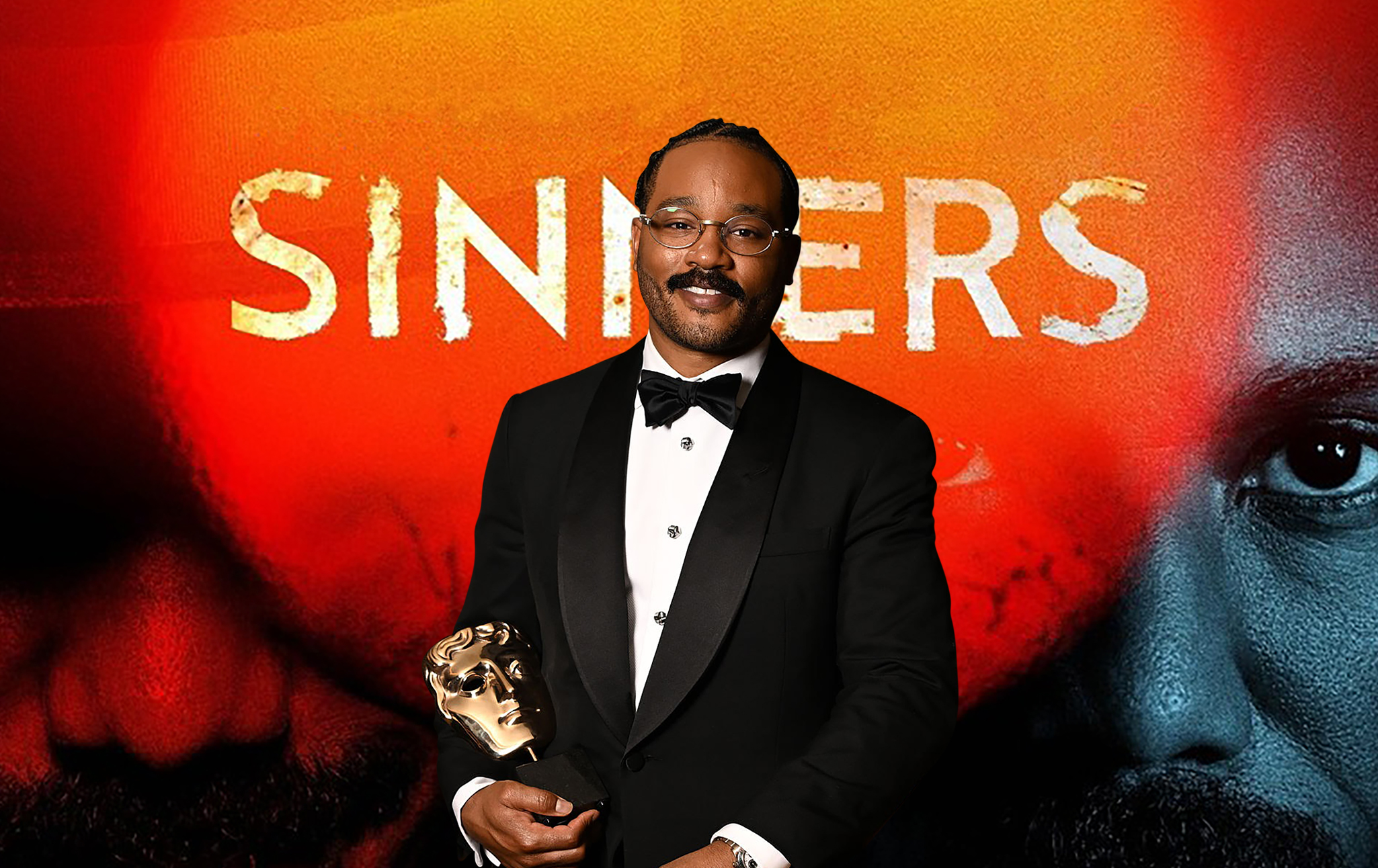
Ryan Coogler’s Oscar-nominated horror film is a compelling tale of black heroism, but its faith in entrepreneurship and cultural essentialism rings hollow.
As a professor of African American history, whenever I come across a black-oriented historical movie, the first thing I think about is whether the film makes my job harder or easier. Films like A Soldier’s Story, Glory, 12 Years a Slave, and Free State of Jones have enriched our understanding of the complexities driving American race relations. These movies—along with independent films like Nothing But a Man and Killer of Sheep and David Simon’s brilliant television drama, The Wire—offer explorations of human frailties and vulnerabilities that are alive to the possibilities available to human beings in their distinct times and locations. As good art invariably does, each takes some artistic license. However, the filmmakers’ sensitivity to context helps them avoid the kinds of anachronistic cliches and character archetypes that treat contemporary values and aspirations as eternal truths.
Its impressive box office returns, history-making accolades, and obvious entertainment value notwithstanding, Ryan Coogler’s Sinners does not make the grade. In fact, Coogler’s action-horror epic joins a long list of films that make it harder to teach the complex forces shaping the history of race in the United States. For the record, this list includes, but is not limited to, anything by John Singleton and Quentin Tarantino.
Since Sinners draws as much inspiration from From Dusk till Dawn (Robert Rodriquez) and Django (Quentin Tarantino) as it does Ava DuVernay’s Selma, it may seem unfair to compare Coogler’s latest blockbuster with films like 12 Years a Slave. Sinners’ 16 Oscar nominations, however, make clear it has touched a cultural nerve that 12 Years a Slave (which garnered just nine Oscar nominations) and Free State of Jones (which received none) did not. In fact, Sinners hasn’t just received more Oscar nominations than any horror film since William Friedkin’s The Exorcist—which received ten. Sinners has received more Oscar nods than any film, ever.
Sinners’ success is owed to Coogler’s undeniable talent for infusing contemporary sentiments about race, inequality, and identity into the blockbuster format. In a moment characterized by the dichotomous rise of Black Lives Matter and Trumpism, Coogler’s two Black Panther films and Sinners combine moving tales of racial struggles with thrilling visions for black liberation. Put another way, Coogler’s films inoculate his fans against the kind of fatalism that insists a better world is always beyond our reach.
And yet, the cultural resonance of Sinners also reveals the larger tragedy of the limits of our collective imaginations. For populations that have groped their way through the darkness for a generation or more, rousing mythologies may sometimes recast as liberatory the same cultural frameworks that have come to reinforce the inequalities these heroic tales formally challenge. Indeed, Sinners condenses into an attractive and accessible package two commonplace and counterproductive presumptions about race and inequality.
The first is what I call the “know your power” ethos—the presumption that belief in oneself and assertion of one’s “worth” will translate into triumph. This is personified by Michael B. Jordan’s twin protagonists, Smoke and Stack. The second is the notion of cultural proprietorship, which is exemplified by Coogler’s portrayal of the mystical power of black music and the ancient Irish vampire Remmick’s efforts to appropriate it. Both frameworks formally set out to counter the psychological and material blows racism has inflicted upon blacks and other people of color by inspiring confidence and faith in an individual’s or a people’s potential for greatness. And yet, because each construct is grounded in conservative presumptions about identity and visions of collective progress, notions of “personal empowerment” and “cultural proprietorship” tend to reinforce, rather than challenge, barriers to a more egalitarian society.
The Power of BDE
The “know your power” ethos is as strong in Smoke and Stack as the Force is in Luke and Grogu.
Many readers will already have seen the film and know its details. Still, a few elements of the larger narrative merit highlighting. The film is set in the Mississippi Delta a year before the New Deal (1932). Smoke and Stack return to their childhood home in Clarksdale, MS to open a juke joint. The charismatic brothers, who are veterans of both World War I and Chicago’s gang wars, blend Big Dick Energy (BDE), or masculine swag, with business acumen and a Marcus Garvey-like sense of civic virtue. Open to both black and Delta Chinese patrons, the juke joint’s deep consumer base promises profitability—despite the proprietors’ commitment to charging modest prices for admission and drinks.
The brothers’ confidence in their business model is reflected in the wages they pay. Indeed, Smoke and Stack don’t just offer their employees a fair wage, the twins nudge prospective hires to demand pay commensurate with their worth. For example, Smoke playfully encourages a girl, who is briefly in his employ, to negotiate a wage twice that of his initial offer. The twins adopt a similar approach when recruiting bluesman Delta Slim (Delroy Lindo) and bouncer Cornbread (Omar Benson Miller) to work at the club. Far from revealing any hints of antagonism, Smoke and Stack’s Bizarro-World approach to wage negotiations is wed to their transparent desire to “do right” by black people. Encouraging their patrons and employees to embrace “their worth” is at the heart of this project.
The twins’ encounters with the Ku Klux Klan offer, perhaps, the clearest window onto Smoke and Stack’s BDE. The Smoke-Stack twins first demonstrate that they “know their power” when they purchase the juke joint from the aptly named “Hogwood” (Dave Maldonado). A rotund white man who is also head of the local KKK, Hogwood is pained to conceal his contempt for uppity Negroes. The twins remain unfazed by Hogwood’s smarmy demeanor until he refers to them as “boys.” Announcing their prowess with the guns each keeps in his waistband, Smoke and Stack circle Hogwood like two fastidious sharks before announcing their willingness to kill any white man who threatens the twins’ business. Confronted by a couple of black men who knew their power, Hogwood has little choice but to back down and complete the transaction.
Though absent from the From Dusk till Dawn-like vampire melee, Hogwood returns for the film’s cathartic final action sequence. In a lull during the vampire apocalypse, Remmick (Jack O’Connell) reveals the Klan is planning to massacre the juke joint’s patrons and owners at dawn. The vampire master’s revelation brings to earth the film’s allegory about race. In real life, black businesses were not destroyed by nosferatu. They were destroyed by racial violence, discriminatory banking practices, undercapitalization, and reliance on a consumer base that had little disposable income. Thus, in Coogler’s film, as in reality, the dream of Wakanda in the Delta was doomed from the start.
Fueled by the loss of his brother, his lover, and his dream, Smoke—who is among just two human survivors—exacts his revenge on the Klan. Wielding a BAR, a Tommy gun, and a hand grenade, Smoke dispatches a dozen or more Klansmen before succumbing to a gut wound. He then fades into the afterlife where he is reunited with his love, Annie (Wunmi Mosaku), and their child.
If Smoke’s final act failed to right a past wrong, it offers viewers the kind of fleeting satisfaction derived from racist bad guys finally getting their comeuppance at the hands of a powerful black man. Smoke (and Stack, in spirit) won this battle, even if the brothers could not, then, win the war.
Catharsis as the Master’s Tool
The value of the catharsis film can afford viewers is not in dispute. However, the liberatory potential of the “know your power” narrative driving Sinners is in doubt. In the era of social media influencers, phrases like “know your power” and “know your worth” have fused with the air molecules we breathe. Still, long before Instagram or TikTok were a gleam in some money-horny tech bro’s eye, personal empowerment ideology was married to black nationalism. To be sure, black nationalists have always identified slavery and other institutional mechanisms of oppression as the ultimate source of sui generis racial inequalities. But black nationalists have also tended to attribute African Americans’ failure to overcome these barriers, partly, to the psychological traumas allegedly inflicted upon them by white supremacy. Nationalists ranging from Louis Farrakhan to Dr. Umar have attributed everything from exogamy to poverty, welfare dependency, and “black-on-black crime” to white supremacy’s pernicious effects on black culture.
When bound to a narrative of collective ambitions, the conservative underpinnings of the claim are often obscured by a militant style that elicits the feeling of “sticking it to the man.” When divorced from a larger narrative of racial pride, however, the contention that a “slave mentality” continues to hobble blacks today is transparently reactionary.
This is why Ye, formerly Kanye West, triggered a wave of outrage in 2018 when he tweeted that 400 years of slavery “was a choice” born out of “mental slavery.” One might be disposed to dismiss West’s assertions, from way back when, as the idiosyncratic ravings of a mad man; however, his comments harmonized with statements I hear from black undergraduates every year.
Like the fallen hip-hop star, many black students insist that slaves’ and then sharecroppers’ superior numbers in the South’s rice, cotton, and cane growing districts equipped them to break the shackles of bondage and debt peonage. As the story goes, feelings of inferiority nurtured by white supremacy prevented blacks from liberating themselves or even marshalling resources as other groups allegedly have. Most students reassess such views once we examine the Stono (1739) and Nat Turner (1831) Rebellions, the roughly 200,000 black men who fought for the Union Army, the Black Populist movement, and so on. Still, the disposition to attribute slavery’s long legs to African Americans’ failure to realize their power is hardly confined to rich, black MAGA fans.
The presumption that blacks were complicit in their own oppression is partly owed to the fact that few seem to appreciate the power dynamics that checked slaves’ and sharecroppers’ revolutionary potential. Informed by mass media as well as popular and folk histories, Americans tend to see: plantations as prisons, rather than sites of business; slaves as inmates punished for their blackness, instead of highly exploitable, rightsless workers; and Jim Crow as a system of racial domination, rather than brutal regimes in which white elites nullified the 13th, 14th, and 15th Amendments to secure a deep pool of tractable labor.
As historian Barbara Fields has quipped, the fundamental problem is that too many Americans imagine the point of slavery and Jim Crow was the production of white supremacy, rather than cotton and the wealth it generated for planters and capitalists. This foundational misconception results in a failure to appreciate that direct challenges to slavery and Jim Crow did not threaten the white identities of planters and southern industrial and commercial interests. Instead, slave rebellions, black enfranchisement, sharecroppers who demanded to be paid their worth, and even solidarity between the South’s black and white peasantry threatened the political and economic power of the region’s elites.
To be clear, racism was a feature, not a bug, of slavery and Jim Crow. Racial ideology functioned to harmonize otherwise incongruous practices and laws with liberal democracy. Indeed, race not only explained why (black) chattel slaves and (indigenous) victims of genocide were exceptions to liberalism. Politicians, business leaders, and the laws of the land would encourage poor and working-class whites to identify politically with the powerful people who often exploited them and sometimes threatened them with violence. Capitalism may have been the engine driving slavery and then Jim Crow. But race oiled the machine by nurturing “group identities” that buttressed and legitimated the “rightness” of the hierarchies baked into the so-called free enterprise system.
Chastening whites or educating them with pluralistic primers describing the genius of black art, the unique contributions blacks have made, or just the importance of recognizing black humanity, might have successfully undermined a system of racial domination rooted in the sort of tribalist affinities and antagonisms that can be succinctly expressed in the phrase “hatred based on skin color.” But admonitions and diversity trainings could do little to challenge systems rooted in economic exploitation.
Personal empowerment ideology’s emphasis on the especially motivated individual’s ability to conquer all obstacles displaces to the fuzzy periphery the political, cultural, and material constraints on individual agency.
To be sure, Hogwood and the Klan’s place in Sinners reminds us of the vulnerabilities and restraints Jim Crow imposed upon blacks in the South. Black men who stood up to whites risked the retribution of the mob, with no hope of reprieve from a state that denied African Americans its protections. And yet, Smoke’s efficient, single-handed defeat of Hogwood and the Klan washes away this very reality via a depiction of what could have been had blacks known their power.
Who Does Entrepreneurship Empower?
The juke joint is Sinners’ omnipresent expression of the “know your power” ethos that condenses in myth the pluralistic vision of racial justice that has dominated the last decade. In the wake of the brutal murder of George Floyd and a heated 2020 Democratic primary race between a collection of establishment Democrats and social democrat Bernie Sanders, activists, the DNC, and corporate America converged on the racial wealth gap as the key metric for assessing material inequality. They would also champion black-owned businesses as the most appropriate fix.
The current enthusiasm for black entrepreneurship as a vehicle for racial justice might give the impression of novelty. However, entrepreneurial uplift dates back to the late 19th century.
If the cast of players has changed over the subsequent decades, the basic premise has not. Booker T. Washington’s National Negro Business League, Marcus Garvey’s Universal Negro Improvement Association, Elijah Muhammad’s Nation of Islam, and Floyd McKissick’s Black Power-informed vision of black capitalism each identified the promotion of black business as essential to building racial self-reliance, black pride, and collective wealth.
Its enduring appeal notwithstanding, every iteration of black business-driven civil rights has faced the same fundamental problem. Entrepreneurial uplift necessarily conflates the aspirations of individual business owners with the collective ambitions of the race. In other words, proponents presume that black business-owners’ successes necessarily translate into psychological, social, and material benefits for all African Americans.
Individuals may, of course, derive personal affirmation from the accomplishments of other people “who look like them.” But this does not mean that material benefits trickle-down much beyond the proprietors we might aspire to emulate.
Recent studies by the Brookings Institution report, for example, that only about 4 percent of black-owned businesses are classified as “employer firms,” which is to say they have employees. The rest, more than 95 percent, are sole proprietorships, many of which are likely misclassified workers. According to Brookings, black-owned employer firms create just 10 jobs, on average, while more than 70 percent of black employer firms employ 9 or fewer workers. For comparison, non-black employer firms employ an average of 23 workers. Brookings affirms the contention that black employers are more likely than non-black employers to hire African Americans. The oft overlooked downside, however, is that black employer firms reportedly pay their workers an average of about $20,000 less per year than non-black owned employer firms.
Stack’s mid-film confession that the juke joint is “underwater” underlines the problem with the twins’ business model. Solvency and the logic of capitalism insist that employers receive a much larger share of a business’ material rewards than employees. Indeed, the twins’ willingness to accept sharecroppers’ wooden nickels would have been their undoing had Remmick and the Klan never showed up. In the end, the employer-employee relationship is asymmetrical and, in its best moments, paternalistic. So, when business owners liken their operation to a family, they are not just announcing affection for their workers. They are telling their employees: “What I say goes and unlike your parents, I can fire you without cause.” Shared blackness does not alter this dynamic.
In recent years, the “racial wealth gap” has performed the ideological work of conceptually collapsing the interests of black business-owners and black workers into one. Researchers including Matt Bruenig, Dionissi Aliprantis, and Robert Manduca have published useful studies on the racial wealth gap that reach three important conclusions. First, about three-fourths of the racial wealth gap is between the richest 10 percent of whites and the richest 10 percent of blacks. Second, the richest 10 percent of blacks and whites respectively possess about 60 percent and 70 percent of each group’s wealth. And third, because income and employment are the principal sources of wealth for the majority of Americans, the 50-year decline in real wages accounts for most of the “racial wealth” disparities.
The above findings, ultimately, beg the question: does the notion of a racial wealth gap help us understand inequality? Its popularity among researchers underscores the framework’s attractiveness to foundations, think tanks, partisans, corporate media, and multinational corporations.
But to assess the analytical utility of racial wealth for the rest of us, we should each ask ourselves a few simple questions. If I need a car loan or have a medical emergency, can I seek financial assistance from the designated repository of wealth for people who share my ancestry? Does such a repository even exist? Am I financially enriched by the billionaires and millionaires who share my ancestry? If 40 years of trickle-down has not worked for Americans as a whole, why would it work now for black Americans—as is implied by a racial justice framework centered on supporting black-owned businesses to grow racial wealth?
Powerful and influential people’s approval of the racial wealth gap has ensured its sway over popular understandings of inequality. Indeed, this is the story of Sinners—a tale of loss centered on a black-owned business’s unfulfilled promise of generating wealth for the black community.
But even had the juke joint and its patrons survived their run-ins with vampires and the Klan, if its proprietors hoped to stay in business they would have to reap the lion’s share of the establishment’s material—but not spiritual—rewards.
-gif-1.gif?width=1024&height=300&name=Pitch-Ad-Horizontal-V2%20(1)-gif-1.gif)
The Mystical Power of a People’s Culture
The notion of cultural proprietorship that informs Coogler’s liberatory vision is similarly dissatisfying.
Sinners’ opening narration announces the pivotal place of ethnic group culture to the film’s larger allegory on race and inequality. Voiced by Wunmi Mosaku, the narration tells us that Irish nationals, Choctaws, and West Africans each tell legends of musicians who are so gifted they can “pierce the veil between life and death” and conjure “spirits of the past and future.”
The importance of this narrative epigraph becomes apparent shortly after Smoke and Stack’s blues guitar-prodigy cousin Sammie (Miles Caton) takes the stage. A few moments into his performance, Sammie’s blues riffs and keening vocals seamlessly merge with a syncopated hip hop beat and a familiar looped chant that compels even the rhythmically challenged to nod with the music’s pulse.
As the score blends a century of black popular musical styles with African rhythms, the accompanying images reinforce the cultural ties that bind the continents. Sammie’s wizardry conjures a variety of ethereal archetypes representing the genius of black and East Asian art (specifically, Delta Chinese). Specters of west African Jeli, a hybrid Bootsy Collins-Jimi Hendrix funk guitarist, a Kangol-clad DJ, a Misty Copeland inspired ballerina, and the Chinese Monkey King all join in the Depression era juke joint’s revelry.
Unfortunately, Sammie’s music also draws the malevolent Remmick, who descends upon the club following the prodigy’s performance. Remmick and a white supremacist couple he had turned into vampires earlier plead their case for admission. The Smoke-Stack twins reject their entreaties, fearing the trio may be racist provocateurs. The travelers make a final pitch as fellow musicians, at which point they launch into a wholesome harmony that is as wrong for the juke joint as it would be right for Branson, Missouri.
Smoke and Stack do not relent. The troubadours depart without trouble. And the stage is now set for the vampire apocalypse.
Is Culture in the Blood?
If the action sequences that follow reaffirm Coogler’s directorial gifts, the dialogue and imagery that flesh out Remmick’s motivations put into sharp focus the problematic cultural essentialism driving the film.
Though Sinners presumes culture can transcend time and place, the film suggests it does not transcend peoples. This is first revealed by the spirits Sammie conjures—B-boys and B-girls, West African musicians, and funk artists commune with black Americans, while the Monkey King and characters from the Beijing Opera commune with Delta Chinese. Remmick’s hunger ultimately threatens the unique beauty and metaphysical distinctiveness of racial group cultures. In contrast to traditional vampires, Remmick does not simply nourish himself on the blood of individuals. He also sustains himself on the lifeblood of a people—their culture. By appropriating his victims’ cultures, Remmick strips his spawn of self-knowledge. To be sure, he claims to offer salvation from Jim Crow. However, the control Remmick exerts over his coven makes plain the price for liberation from the Klan and racist discrimination is enslavement to an undead Irishman.
In short, Remmick is the ultimate “culture vulture.” Inhabiting an unnatural plane between life and death for centuries, he is alienated from his homeland, his culture, and his “true self.” He, thus, consumes the art and values of others to re-connect with what he has lost.
In Sinners’ racial allegory, culture is not a constellation of beliefs, practices, customs, or vague sensibilities that are the learned product of ever-changing shared experiences; culture is intrinsic to the soul of a people. This is no mere inference. Coogler has said as much.
In a post-Black Panther interview about racial identity, Coogler claimed his childhood in the Bay Area was marked by pain he attributes to his ignorance of his African ancestry. He laments that he was taught that African Americans have a “bastardized culture” because they had been stripped of “the things that made [them] African.”
Coogler saw an opportunity to heal his childhood wounds when Marvel hired him to write Black Panther. He would ultimately convince the studio to finance a research trip to South Africa, where he was eventually invited to participate in a ritual that was purportedly thousands of years old.
When he and his companions arrived at the house where the ritual took place, Coogler observed a checklist of scenes reminiscent of his experiences in his hometown of Richmond, CA. He noticed “young cats” congregating in front of the house. As he ventured inside, he saw “OGs, aged 50 to 70,” clustered in one section, while women were preparing food in the kitchen. Finally, in the backyard, Coogler observed young men, about his age, sharing “a real cool African beer” as they cooked recently slaughtered livestock.
According to Coogler, the familiarity of the above scenes made him feel “completely whole.” It demonstrated that “this evil thing they did to us,” slavery, “could not wipe out what we were for thousands of years.” He concluded that black Americans remained essentially African, despite their separation from the continent. “Even though we were told you was being hood or being something else, we was being true to what we’ve been for thousands and thousands of years.”
Since I have observed similar scenes at transgenerational gatherings hosted by black Americans but also Puerto Ricans, Jewish Americans, Italian Americans, and gun-loving Midwestern WASPs, I drew a very different conclusion about the scene Coogler describes. In fact, Coogler’s anecdote reaffirms the pivotal role shared experience plays in shaping the common points of interest and affinities (i.e. culture) that inform who and what we find relatable. Teens, adults in their 20s and 30s, the middle-aged, and seniors often cluster within their respective age cohorts, partly, because at formative stages of life they listened to the same music, liked or at least remember the same fashion and athletes, and they were shaped by the same larger social developments—be they the Keynesian Consensus and the Reagan Revolution or the rise of “boy bands” and the cancellation of BET’s 106 & Park. This is to say that what Coogler reports as evidence of an intrinsic, eternal black identity may be better understood as generational divides, which are themselves expressions of culture’s fluidity rather than its rigidity.
Coogler’s celebration of the notion that racial groups are distinguished from each other by intrinsic cultures obscures the conservative presumptions at the heart of such beliefs. Here it is worth recalling that 20th century eugenicists insisted that human populations possessed unique temperaments, affinities, dispositions, and capabilities that were purportedly impervious to external influences. It was this very contention that justified Jim Crow and other forms of discrimination against American blacks; that informed restrictive immigration legislation effectively barring Jews, Mediterranean Europeans, Slavs and non-white immigrants from entry to the United States; and that fueled Nazi Germany’s extermination of several million Jews and tens of millions of Slavs in Central and Eastern Europe.
To be sure, early 20th century eugenicists did not simply presume that races were intrinsically different. Thinkers like Madison Grant, Charles Davenport, and Henry Goddard insisted on the existence of racial hierarchies that placed northern European whites at the top and blacks at the bottom.
Coogler is not reading from the same playbook as scientific racists of yesteryear. He is advancing an essentialist vision of ethnic or cultural pluralism.
Cultural Pluralism Can’t Save Us Now
Cultural pluralism is distinct in important ways from scientific racism. Cultural pluralists formally identify culture, rather than biological race, as the defining characteristic of a people. They also do not generally presume that any one racial or ethnic group is, on the whole, intrinsically better than another. These groups are just intrinsically different.
Cultural pluralism dates to the interwar period. However, two postwar developments helped propel ethnic pluralism into mainstream liberal discourse on inequality and democracy. First, Nazi Germany’s eugenics-fueled, expansionist war of annihilation precipitated a liberal backlash against race science’s emphasis on heredity. Second, Cold War anticommunism, along with bipartisan discomfort with the labor militancy that gripped the American working class after World War II, led foundations, researchers, and policymakers to view lingering inequalities and social strife through cultural or groupist frameworks rather than economic ones. By the 1960s, this turn away from the political-economic conceptions of inequality birthed an inadequate War on Poverty that would eschew direct interventions in labor and housing markets—in contrast to the New Deal—in favor of targeted measures and a growth agenda that was a precursor to “trickle-down” and “abundance.”
The Cold War context that contributed to ethnic pluralism’s appeal among liberals hints at only one of the construct’s problems. Although cultural pluralists’ formal rejection of biological race augured mainstream liberalism’s turn toward “inclusivity,” ethnic pluralists imputed to culture a durability that was closer to biological race than its champions usually acknowledged. In other words, ethnic pluralists tend(ed) to presume that the shared sensibilities and values we call culture were not simply rooted in group members’ common experience; ethnic pluralists presumed that culture could transcend time and place, operating independently of external influences. This is Coogler’s belief in the cultural ties that bind blacks across millennia and continents, as well as his depiction of Sammie’s conjuring of black specters.
In its best expressions, ethnic pluralism recognized and celebrated the disparate cultures comprising the greatness of America. For scholars like Nathan Glazer and Daniel Patrick Moynihan, this was the raw material for tales of the ethnic values-fueled ascension of Italian Americans, Irish Americans, and Jews from the slums to the suburbs. In their worst expressions, ethnic pluralism would be the stuff of “culture of poverty” and “underclass” driven narratives about irredeemable black welfare queens, crack babies, and “super predators.” These dichotomous accounts do not simply diminish the importance of the New Deal and postwar welfare states to the rise of the white ethnic middle class. By imagining that culture could, indeed, take on a life of its own, such narratives also legitimate(d) racial profiling, tough on crime policies, and draconian cuts to public goods—from welfare to public education.
There are many reasons cultural pluralism’s illiberal and conservative implications do not ring out to most of us, today. First, as political scientists Dean Robinson and Cedric Johnson have argued, the framework has been wed to declarations of African American pride since the Black Power movement. Recall Coogler’s reflections on black Americans’ intrinsic Africanness. Second, ethnic pluralism has always been bound up with calls for “inclusivity.” Corporate diversity initiatives, for example, presume that a culturally diverse workforce enhances productivity by capitalizing on the unique perspectives and talents that are purportedly the province of particular “identity groups.” Whatever the frame’s limitations, the elimination of soft and hard discrimination is the formal intent of such pluralist-informed endeavors. Finally, since partisan branding, even more than ideology, often determines whether Americans perceive policies or stances as “conservative” or “liberal,” the Trump administration’s aggressive attacks on Diversity, Equity, and Inclusion tend to affirm cultural pluralism’s progressive bona fides both because most of us equate diversity (pluralism) with affirmative action but also because Trump (the far-right other guy) opposes it.
Still, neither the rightness of the basic goal of inclusivity nor the wrongness of the Trump administration’s attacks on affirmative action changes the fact that ethnic pluralism’s mystification of culture prevents it from fully departing from eugenics-like notions of intrinsic group difference. So, while Coogler would not endorse the existence of racial hierarchies, his pluralistic commitment to the notion of cultural authenticity and intrinsic group distinctiveness shares too much ground with the illiberal, conservative frameworks that buttressed Jim Crow and animated the real-life Hogwood.

Escapism is Not Salvation
I saw Sinners at the suggestion of a good friend, who I will call Kevin. Kevin and I have been friends since the first grade, where we were classmates in a black Catholic school in Southwest Atlanta, Georgia. In 1979, when we were in the third grade, Kevin and his family moved to a predominantly white, upscale community about 20 miles north of Atlanta. On Kevin’s first day at his new school, a tow-headed white girl made a beeline to him, got in his face and said: “Get out of my neighborhood, nigger!” This was the first of many racist indignities Kevin would endure. His reprieve finally came when he had an opportunity to attend high school out of district, in Atlanta.
When I asked Kevin what he liked about Sinners, he told me he appreciates Coogler’s depiction of black men. Coogler’s black male protagonists are often confident, competent, courageous, and just beneath their tough masculine shells they are also compassionate. Crucially, Coogler’s black male characters are willing to stand tall in the face of seemingly insurmountable challenges. And in both Black Panther and Sinners, the heroes’ actions are constrained by a larger racist world.
Kevin’s reflections encouraged me to see Sinners, during its original theatrical run. Partly because of my own experiences with racism, I share this aspect of Kevin’s appreciation for Coogler films. In fact, I derive(d) a similar catharsis from Wesley Snipes’s Passenger 57. At the time of its release in 1992, I was working with several white people who had voted for neo-Nazi Klansman David Duke in his bids for U.S. Senate and Governor of Louisiana. Passenger 57 afforded me an outlet for the anger I often felt at my job, but whose full force I could not level at my racist coworkers. To this day, Wesley Snipes’s action hero line, “always bet on black,” still fills me with affirmation and joyous laughter.
This is to say that I genuinely appreciate the emotional value of Coogler’s films. Coogler speaks directly to the angst and frustrations that have for too long gripped black Americans and others on the margins. His films are a release valve for the pressures brewing in this country.
But escapism, as important as it can be, does not provide a path forward. In fact, escapist fantasies can encourage us to confuse self-affirming myth for reality as surely as letting off steam can blind us to the world that is before our eyes. This is Sinners.
Dr. Touré F. Reed is a Professor of History and CAS Distinguished Lecturer at Illinois State University. He is the author of Toward Freedom: The Case Against Race Reductionism, and a contributor to Jacobin and Common Dreams.