With daily life getting more expensive for working-class people, why are sports owners still being handed subsidies for publicly-funded stadiums?
Even in our politically divided times, there are a few things most people can still agree are good and appropriate uses of public funds. Usually, these revolve around physical infrastructure: roads, bridges, public schools, libraries, and so on. Simultaneously, sports remain effective catalysts for bringing communities together and building civic pride in a city and state, as we’ve just seen with the massive outpouring of joy over the New York Knicks’ championship run. Sports are not, however, social services, and despite what the teams and owners keep claiming, the stadiums they play in provide few tangible returns for the average taxpayer.
So why are our tax dollars still funding the construction of brand-new arenas, on behalf of owners who are already enormously wealthy, who keep jacking up the ticket prices beyond what any normal fan can afford?
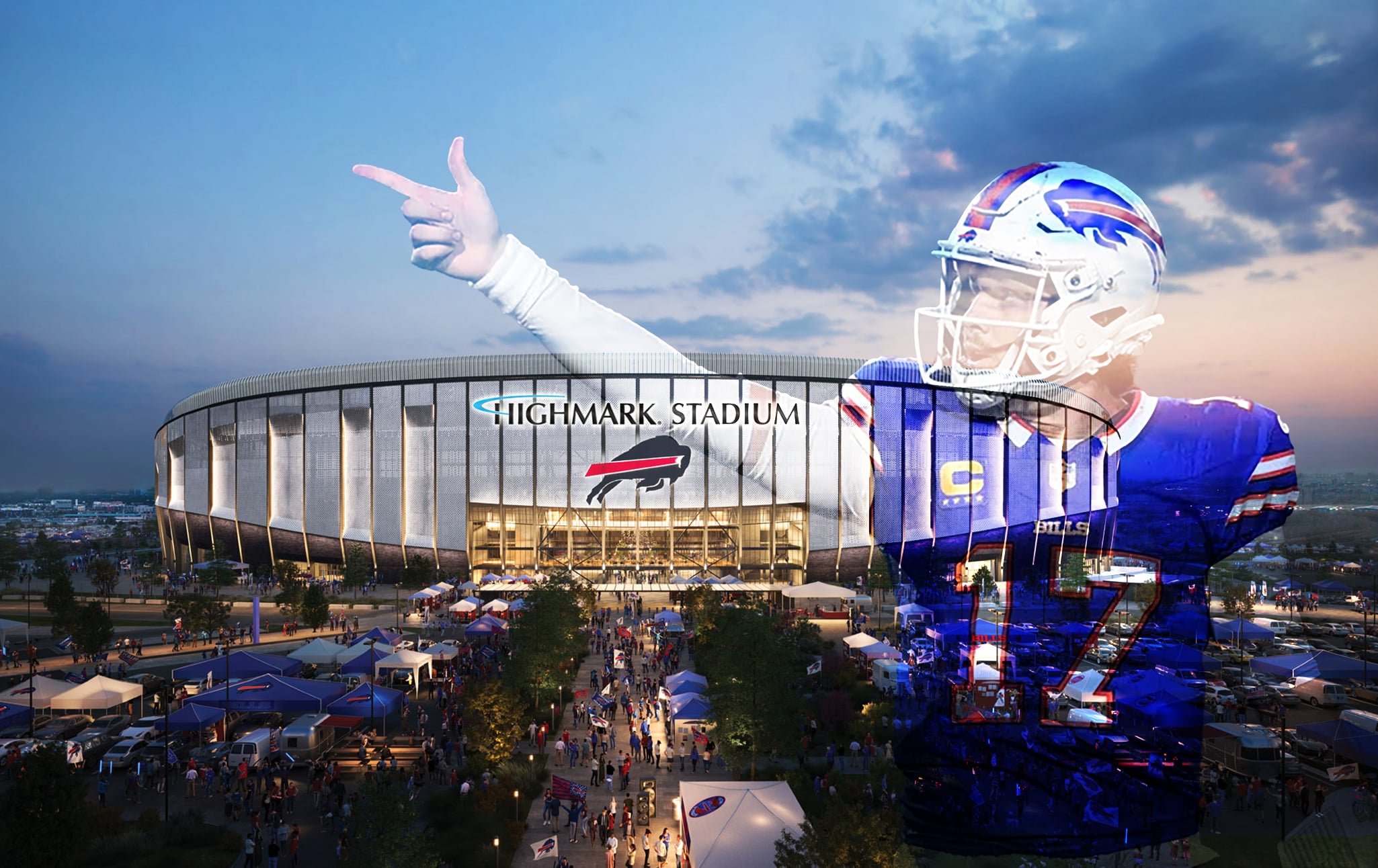
The Buffalo Bills have one of the most passionate fanbases in all of U.S. professional sports. Despite having one of the smallest home markets in the NFL—Buffalo itself has a population of only around 278,000, compared to millions of people in cities like Houston and Chicago—they routinely sell out their available tickets. “Bills Mafia” can often be found pile driving themselves through folding tables at 9 AM on fall afternoons in Western New York because, well, it’s just sort of what they do.
In 2026, those tables will be smashed at a new location, as the Bills will play in a brand-new Highmark Stadium in Orchard Park, New York. It cost a little over $2 billion to build, with over $800 million of that coming from public funds. According to the Bills’ ownership, this is all perfectly reasonable, and actually a good investment for everyone concerned—one of the oldest tricks in the sports owner playbook. “I think people need to realize, we contribute a lot of money from a tax standpoint, and every dollar that goes into this stadium will be paid back,” said Ron Raccuia, a spokesperson for Bills owners Terry and Kim Pegula, back in 2022.
But in an increasingly expensive country, where groceries, rent, healthcare, and everyday essentials are becoming less accessible by the week (nearly half of the country can’t afford what they need to live comfortably), it’s a hard sell convincing people in already-unaffordable cities that they must cover the costs of a new stadium simply because the owner says so.
That’s not stopping teams and owners from doing just that, though, and it’s not stopping local governments from bending the knee to them, as over 90 percent of NFL stadiums were built using at least partial subsidy money. Buffalo isn’t the only city shelling out eye-watering sums. The Tennessee Titans’ New Nissan Stadium, expected to open in 2027, is reportedly getting “$500 million from the state,” too, while Washington, D.C. recently voted to approve “investing roughly $1.1 billion for [a] stadium, housing, green space and a sportsplex” for the Commanders.
Now, if fans had access to these facilities, received some of the money made from ticket sales, food, or merchandise purchases inside the stadium, or got an actual ownership stake in the team, it would make more sense for the community to foot the bill for a new court or field. I would even take a free hot dog and soda at this point. In that case, arenas actually would serve as public goods, with everyone sharing in the benefits.
Instead, the people of major U.S. cities essentially pay for the privilege of spending more money once the stadium is fully built—or, as is becoming more common, paying for the privilege of being priced out of attending games when tickets go on sale. Not only can I not walk onto the 30-yard line of Lincoln Financial Field, home of the Philadelphia Eagles—which was paid for in large part by public money in the early 2000s—I must pay at least a few hundred dollars on any autumn Sunday to even attend a game.
One of the biggest falsehoods that sports franchises and local governments peddle is that new stadiums will stimulate the local economy so greatly that any tax money spent on building the stadium will somehow funnel back into the pockets of the people. It’s the sports world’s version of “trickle-down economics,” and decades worth of data prove otherwise. In the Journal of Economic Surveys, a comprehensive study on the impact that new stadiums have on local economies concluded in 2022 that “nearly all empirical studies find little to no tangible impacts of sports teams and facilities on local economic activity, and the level of venue subsidies typically provided far exceeds any observed economic benefits.” To the extent there were any measurable increases in spending, they happened “in the area immediately surrounding stadiums and arenas,” with “no evidence of[…] broad metropolitan-level effects.” In other words, a hotel or a pizzeria located near Highmark Stadium might see a boost in their business, but one on the other end of Buffalo will probably not. But they’ll still have to pay up.
For the record, that doesn’t mean I think we should stop construction of new stadiums altogether. Everything doesn’t need to be done with the economy in mind; in fact, way fewer things should be done with the economy in mind, and cities having a large venue for sporting events, concerts, etc, is a good thing. But if the foundation of the argument for why these venues must be taxpayer-funded is that they will stimulate the economy in such a massive way that everyone will benefit (and that is the argument made time and again), then we’re flatly being lied to—and the lie doesn’t take much sleuthing to see right through. Plus, if the owners of these teams are so confident that the economy will boom thanks to a sparkling new stadium, they should be chomping at the bit to finance the stadiums themselves! Don’t billionaires create jobs and stimulate economic growth? That’s what I’ve been told all along, and financing a stadium seems like the perfect opportunity for them to show us exactly how that works. All it would take is a chunk of change that is hard for regular people to fathom, but would still leave these people with more money than any one person ever needs. They never seem giddy to do that, though, causing the argument of economic prosperity to crumble in an instant.

The reason this woe is me, we need your money tactic still works, though, boils down to one emotion: Fear. Despite the endless loyalty from fans around the country, owners are shameless in claiming that, without an influx of cash, the poor ole’ team might have to move elsewhere, and that’s the worst-case scenario for fans. That playbook has been in action as recently as this year, as new Portland Trail Blazers owner Tom Dundon seeks public money for renovations to Moda Center and the surrounding area, while subtly implying that if the taxpayers don’t pony up the dough, he may uproot the team entirely. Fans are forced to believe these threats from owners because actually moving a team after not receiving public money is not unprecedented. The Seattle Supersonics, for example, relocated to Oklahoma City in 2008 because owner Clay Bennett couldn’t get at least $300 million in taxpayer money from the city. This is why local governments are more willing to cave in when teams ask for money from the community, and why owners and franchises don’t care if you know they’re lying about an economic uptick.
Unfortunately, owners really do possess the power to use a “no” from the city as grounds to move the team. The decision needs to be approved by other owners (a simple majority of NBA owners need to approve a possible relocation, while MLB and the NFL require 75 percent of owners to approve). Still, it typically is approved, because most of those other owners also used public money for a stadium, and are well aware of the value of keeping this economic threat in their back pocket. Basically, it’s a party that none of us are invited to. For some reason, we still have to buy the decorations.
City and state governments aren’t off the hook entirely in this matter, though. Sure, it’s a tough spot to be in; either speak on behalf of your constituents and tax them for something that doesn’t bring them real benefits (and effectively lie to them in the process) or defy the wishes of a billionaire and risk losing the team altogether, which does remove a big part of a community. For most fans, paying for a stadium they won’t ever reap the benefits of remains more palatable than losing the team entirely. But do those have to be the only options? If we’re forced to pay for these stadiums, there should at least be some clear way in which the taxpayer money gets “paid back,” like we’ve been told it does, and that responsibility is on local elected officials. If the stadiums are to be built, our representatives should actually turn them into the public goods we’re told they are.
Maybe that comes in the form of free (and more frequent) public transportation on game days. Taking the bus or subway to the stadium is far and away the most efficient choice, and making it more accessible for everyone would be a small, easy win.
Maybe it’s a concerted effort to prevent price gouging on tickets, which is becoming more egregious each season. Attending a postseason NFL or NBA game is essentially a pipe dream for anyone who makes a working-class wage in 2026; a ticket to an NBA Finals game at Madison Square Garden this year started at around $3,900, which would basically be two full months’ of work for anyone making NYC’s $17-an-hour minimum wage. The Philadelphia Eagles’ Wild Card round game against the San Francisco 49ers earlier this year would set you back over $200 for a nosebleed seat. Better, but still not realistic for most people, especially in a city where the minimum wage is still $7.25. Literally putting a cap on ticket prices would make crowds look more like a real, diverse fanbase and less like a corporate networking event, which they have trended toward in recent years.
Maybe it’s free, local TV access for fans to watch the games from their own homes, which should be the bare minimum, but has gotten more complicated with the emergence of streaming services. For instance, I am a citizen of Philadelphia. Last year, the cable streaming service I subscribe to, Fubo, had a contract dispute with all NBC channels, leading to Philadelphia 76ers games (which are broadcast on the local NBC Sports channel) being blacked out. Watching on NBA League Pass (the league’s streaming service that shows all non-nationally televised games) wasn’t an option either, because the league blacks out games for local teams, presuming fans already have access to local broadcasts. I apologize to the NBA for trying to watch the NBA.
A few teams, though, have put their local broadcasts back on basic cable, including the Phoenix Suns, who also gave away TV antennas to any fans who requested one in 2023. That’s a great way to make fans feel less strongly about covering the cost of an arena, if any billionaires or mayors are reading this. But other teams don’t feel the need to do things like this, because they don’t see public funding as taxpayers doing them a favor, even though that’s exactly what’s happening.
Or maybe the way to “pay back” fans for funding a stadium is to make the building more than a stadium. Remember when COVID-19 vaccine clinics were set up in NFL stadiums because they are so spacious? It was a perfect example of how we can—and should—utilize these behemoths of architecture for the greater good. When they’re not in use on game day, stadiums could also host free movie nights, concerts, fairs, or other events that would make them feel like public “third spaces.” Right now, the opposite is true. Stadiums are the largest venues in cities, but instead of feeling like meeting places for everyone, they remain highly inaccessible, no matter the event happening inside.
There’s another issue, too: not everyone likes sports, but with a subsidized stadium, everyone has to pay for them. Of course, I am extremely in favor of helping out your neighbors within your city, whether they’re your friends or total strangers. Wanting the best for someone you have never met and share nothing in common with is the best way to build sustainable communities. But that’s not what’s happening when teams and owners get subsidies to build their fantasy stadium with public funds. Non-sports fans aren’t paying for these stadiums so the diehard fans can thrive. Rather, sports fans and non-sports fans alike are paying for stadiums so that people who could pay for it themselves are allowed to profit off the backs of all of us in new and exciting (re: terrifying) ways.
This is clear exploitation by people who aren’t even members of the communities they are scamming. Without any pushback (and there is currently the foundation of pushback, in part from Bernie Sanders), this will continue unabated, and governments need real leverage to push back on team owners that could help fans both keep their teams and not pay for gaudy stadiums. The glaring problem is whether local officials would actually want to do that in their balancing act to keep owners satisfied, which sounds like my personal hell. At the end of the day, both parties know this decades-old strategy is a con on everyday people who have little say in where our tax dollars go. If we did have a say, I’m confident that more funding would be going to actual social services, not inaccessible stadiums—nor, for that matter, the fighter jets that always seem to be flying over them during the national anthem, on their way to Venezuela or Iran. But those in charge would rather we be fully in the dark about how public funds are being used.
At the grand opening of a library, everyone can walk into the building they helped fund and check out a book. At a public school, no student has their QR ticket code scanned at the front door. That’s because these public places are, well, for the public. So why can’t a Current Affairs employee in New Orleans get up from their desk right now and go shoot a three-pointer at SmoothieKing Center, the completely publicly funded stadium in which the Pelicans lose a bunch of games? It’s because taxpayer-funded sports stadiums are yet another long-running scam that working-class people have been subject to at the hands of the ultra-wealthy. Being aware we’re being scammed is the first step toward bucking the trend.
Quinn Everts is a sportswriter and food service worker based in Philadelphia. His writing primarily focuses on what happens outside the lines, and how sports impact our culture and society at large.

%20(crop).jpg?width=352&name=wile-e-coyote%20(resize)%20(crop).jpg)