After police violence in response to mental health crises, New York City should adopt the same system-level reviews that save lives in medicine.
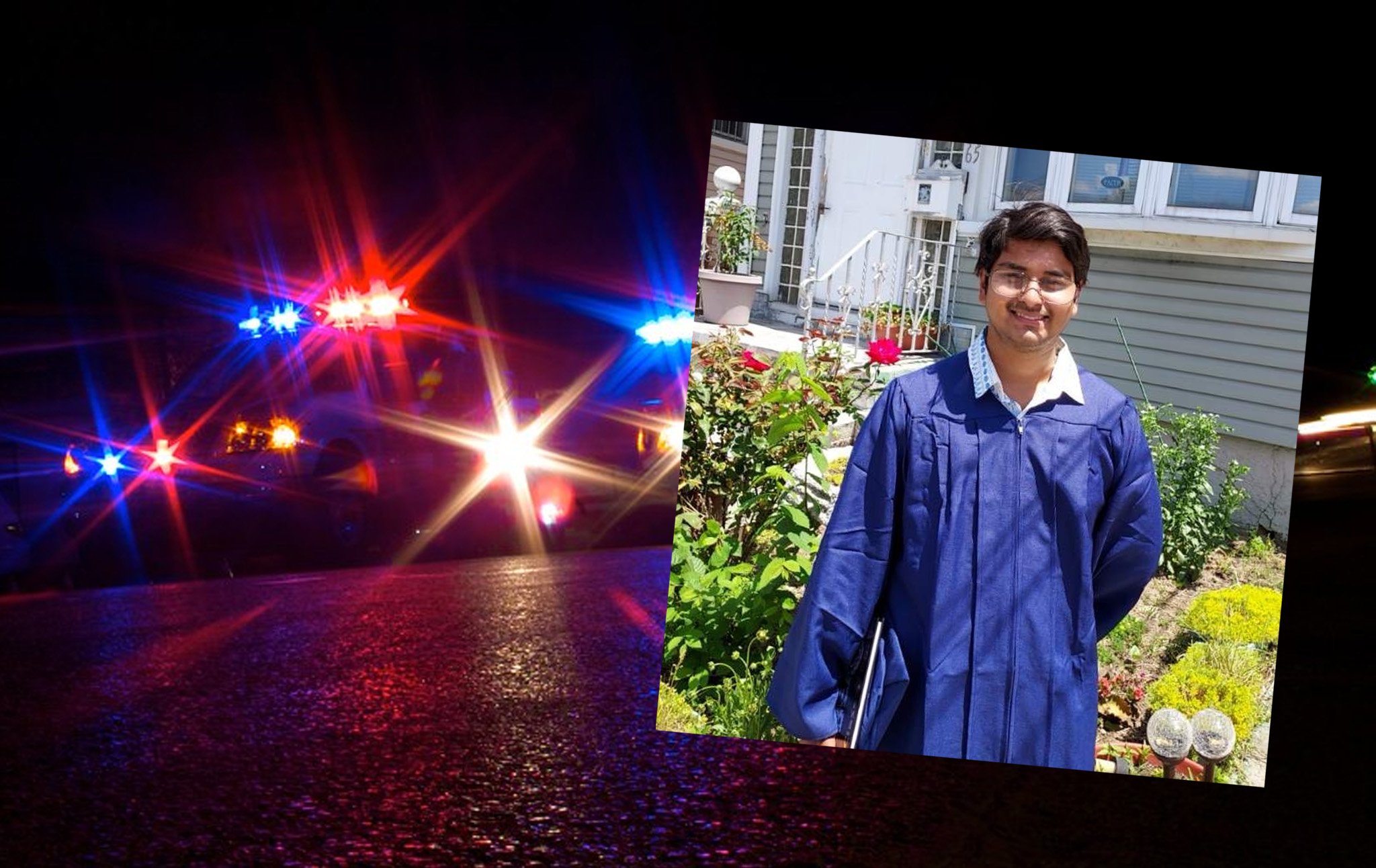
When the family of Jabez Chakraborty called 911 in Queens on January 26, they asked for an ambulance. Jabez, a young man who has lived with schizophrenia for many years, was in crisis. What arrived instead were police officers. Within minutes, Jabez had been shot four times in front of his family. After four surgeries to try to save his life, several days on a ventilator, and now a long road to physical recovery as he remains hospitalized, Jabez has been charged—despite the pleas and objections of Mayor Zohran Mamdani—with attempted assault for his reaction to the NYPD’s incursion into his home.
In American public life and the media that substantially shapes it, we have grown accustomed to reacting to hundreds of events like this each year as moral or political scandals. We argue about whether officers followed protocol, whether force was justified, whether officials condemned the shooting strongly enough, whether they threw police under the bus, and who was ultimately to blame. Then we move on—until the next family makes the same call for help and faces the same risk, hoping that their child, parent, or sibling will not be brutalized or killed by police like so many others have been.
In medicine, when a tragedy occurs, we respond very differently. When a patient dies unexpectedly or suffers serious harm in a hospital, healthcare institutions conduct what are known as sentinel event reviews to prevent such harm from happening again. New York should treat police violence in mental-health crises the same way.

Such reviews do not begin by asking who is to blame. In fact, they are explicitly designed not to assign individual fault. Doctors, nurses, technicians, and administrators are encouraged to participate precisely because the process is non-punitive. Instead, every individual action is examined as an extension of a system. If a clinician or support staff member made a dangerous decision, mistake, or oversight, the central question is not simply who erred, but why the system allowed or encouraged that error. Was staffing inadequate? Were protocols unclear? Was critical information unavailable? Was dual authorization needed to mitigate risk of error? Were people placed in roles they were not trained to perform?
When individual actions cause or risk harm, sentinel event reviews focus on redesigning systems so that people are no longer placed in positions where such harm is likely to occur. This approach, and the broader systems-based patient safety movement it reflects, saved an estimated 125,000 lives and $28 billion between 2010 and 2015 alone—by changing workflows, staffing models, training requirements, and institutional responsibility rather than relying on punishment after the fact, which not only does little to help but ultimately deepens risk and harm by encouraging defensiveness, lying, blame-shifting, and destruction of evidence.
If our goal is to improve outcomes, this is the framework we urgently need to apply to our intertwined systems of policing, crisis response, and community mental health.
Jabez Chakraborty’s shooting was not an aberration. It was a predictable outcome of a public safety infrastructure that continues to route mental health emergencies through armed law enforcement, despite decades of evidence that doing so increases the likelihood of violence and worsens outcomes for all involved.
In an important illustration of the problem we face, in the days after the shooting, Mayor Mamdani’s response notably evolved. His initial statement on the day that NYPD shot Chakraborty followed a familiar script: gratitude to officers, deference to an NYPD investigation, and assurances of public safety. Days later, after receiving criticism for his boilerplate response—which resembled the standard response by mayors before him rather than reflecting the visionary community safety agenda upon which Mamdani campaigned—he issued a second statement that marked key shifts: He had spoken directly with the Chakraborty family and visited Jabez in the hospital, he said. He named Jabez’s mental illness explicitly, explained that Jabez needs care rather than prosecution, called for no charges to be brought against him, and recommitted to building a Department of Community Safety so police are no longer the default responders to such crises, and so that the everyday care that would prevent such eruptive moments is ensured to those who need it.
The change in Mamdani’s response is important, in part because it illustrates the bind elected officials face. With intense media scrutiny and political attacks on anyone who attempts to address an entrenched and disastrous American reliance on policing as the basis of safety, our public language often appears to give leaders only two options: immediately defend the police and thank them for their service or, if you fail to do so, be prepared to be attacked for supposedly disrespecting and traumatizing public employees who risk their lives to perform their jobs. Neither approach prevents the next tragedy.
Sentinel event reviews offer a way out of this political trap that has major policy consequences in a country that has, for decades, repeatedly doubled down on policing spending—at the expense of community mental health systems—precisely because of these rhetorical binds, despite the fact that evidence has repeatedly shown that police cannot produce safety no matter how many billions of dollars politicians give them every year.
Applied to cases like Jabez Chakraborty’s, a sentinel event review would not begin with whether officers complied with department policy. It would ask why police were dispatched at all. It would examine 911 call triage, the availability of non-police crisis teams, gaps in ongoing mental health support, budgetary choices behind findings, and the revolving-door systems of narrow crisis response that repeatedly fail to provide people the required everyday care to stabilize them long before crisis erupts. Crucially, it would treat the shooting not as a tragic exception, but as evidence of a system functioning exactly as designed.
This perspective clarifies something perpetually obscured by dominant debates about police violence: the problem is not primarily individual officers or departments, but the nature of policing itself. Police are trained, equipped, and authorized to use force to establish control. Their roles are not designed to provide care, stabilize psychiatric distress, or resolve family emergencies rooted in fear and confusion. When officers are sent into these situations, escalation is not a failure of character; it is a foreseeable feature of the role they are assigned.
This does not absolve officers of ethical responsibility for the harm they cause. But focusing political attention on individual blame ensures ongoing collective failure. As long as police remain the default responders to mental health crises, and as long as crisis response alone—rather than a focus on investing in preventative community care programs—remains the limit of our imagination for preventing violence, shootings like this will continue, no matter how many investigations follow.
For decades, New York and other American cities have failed to build adequate public mental health and social care systems while expanding police responsibilities and budgets to fill the gap. Outpatient services, supportive housing, substance-use treatment, and community-based care via peer support workers and lay community health workers have been grossly underfunded and systematically privatized. Families are left to manage until they cannot. Crisis then erupts in public, and police are called to manage the consequences of years of social neglect and public abandonment that, as mountains of evidence has repeatedly shown, causes mental illness and the worsening of symptoms.
This is how cities manufacture permanent emergencies. Prevention is starved. Reaction is overbuilt. Care is treated as optional. Policing is treated as indispensable. Crisis is accepted as inevitable. And politicians debate how we should respond to emergencies rather than what can be done to stop them from ever arising.
Sentinel event reviews force us to confront this reality honestly. They shift attention away from symbolic blame and toward institutional design. They make visible how dispatch protocols, budget priorities, workforce shortages, and fragmented care systems produce predictable harm. They also provide political leaders with something they badly need: a credible, publicly legible way to acknowledge harm without defaulting to either defensiveness or scapegoating.

Mayor Mamdani’s proposed Department of Community Safety creates an opening to institutionalize this approach. To succeed, the Department must do far more than simply expand New York’s alternative crisis-response teams. It must adopt a governing logic that treats both violence and mental health crises as signals that something is fundamentally wrong with how safety is conceived and organized in our society.
Mamdani should commit to independent, transparent system-level reviews after such incidents—reviews in which NYPD is treated as one actor among many, and neither as a scapegoat nor as the default authority over truth, safety, or public needs. Furthermore, the findings of these reviews cannot be simply symbolic documents. They must be pushed forward as authoritative analyses to guide the reallocation of resources toward prevention—including stable housing, food security, accessible mental health care, sustained social support, and a publicly funded care workforce embedded in everyday life—and to meaningfully redesign systems to enable actually improved outcomes.
This is the political choice now facing New York’s leadership. Officials can continue managing these shootings as public-relations crises—issuing revised statements, promising that the police will investigate themselves again, and leaving the underlying system intact. Or they can treat shooting investigations as systems focused on improving outcomes: as warnings that demand and shape structural change.
The backlash to such clarity is inevitable. But so is the alternative: more families calling for help and watching it arrive with a gun. If Jabez Chakraborty’s shooting is allowed to fade into the familiar cycle of outrage and inertia, the horrific pain he and his family are now experiencing will not be the last such episode our long history of political myopia inflicts. But if it is treated as a genuinely sentinel event for New York City, it could help ensure that asking for help during someone’s most vulnerable moment no longer carries the risk of death and that our neighbors’ needs are met long before anyone picks up a phone to call 911.
Eric Reinhart is a political anthropologist, psychiatrist, and psychoanalyst. Alex S. Vitale is a professor of sociology and the coordinator of the Policing and Social Justice Project at Brooklyn College, and the author of The End of Policing.