The producers of “Kid Nation” expected chaos when they dropped 40 children in the desert. What they got was cooperation—until adults intervened.
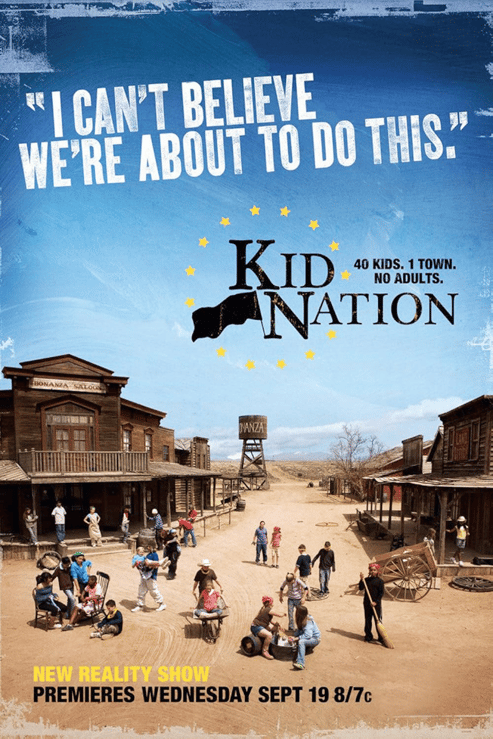
The year is 2007 and a school bus filled with several dozen kids is rolling through the barren New Mexico desert, approaching the outskirts of an abandoned ghost town. According to the creators of Kid Nation, these children are on their way to right their ancestors’ wrongs.
“This is Bonanza City—or what’s left of it, anyway,” declares a voiceover, as the camera pans across the wooden frame of a dusty Western saloon. “The pioneers who ran this place back in the 1800s ran it into the ground. Now, 40 new pioneers will try to fix their forefathers’ mistakes and build a town that works… and the best part: they’re all children.”
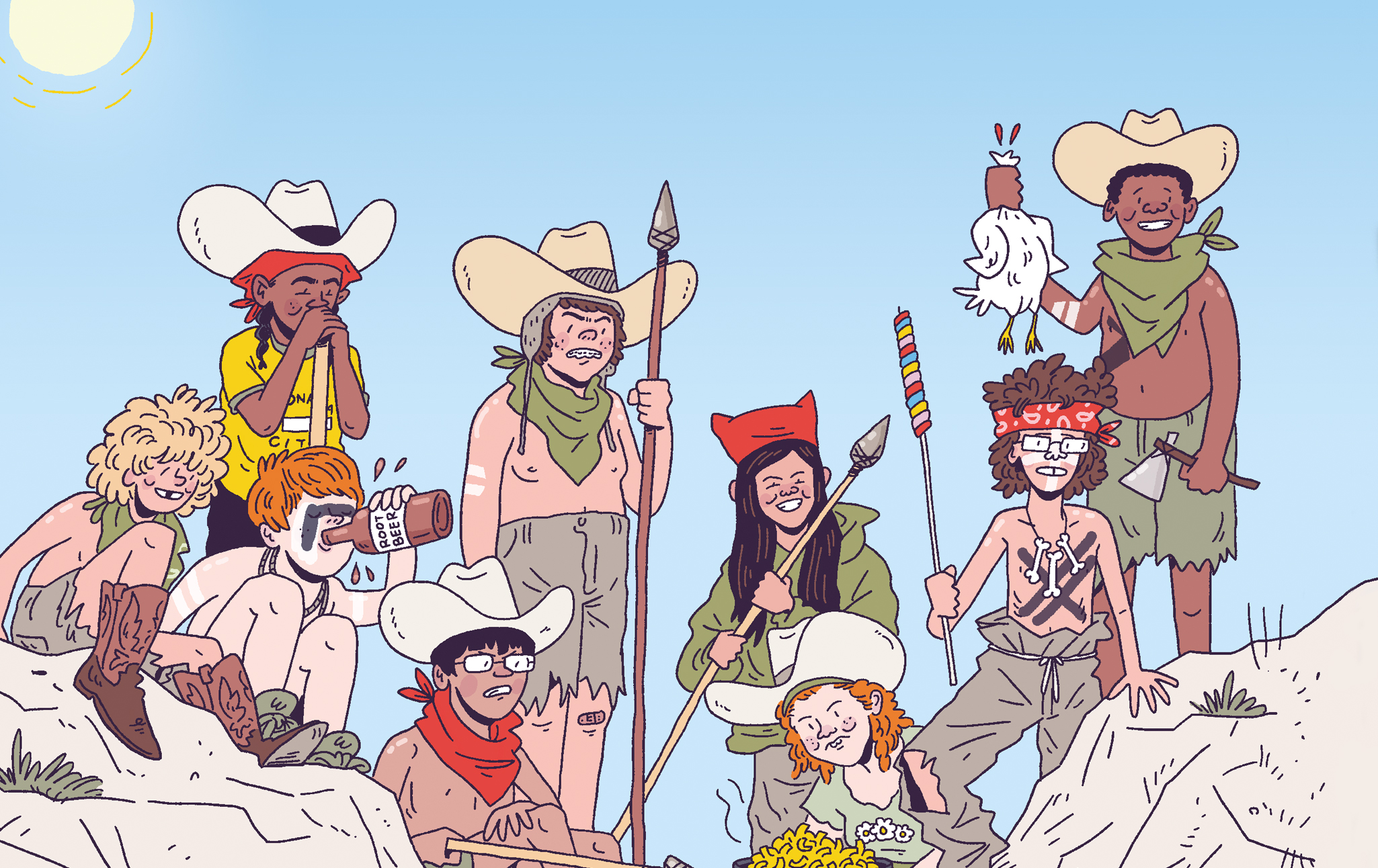
The shocking part: there were no grown-ups. For five weeks, a group of 8 to 14-year-olds from across the country were dumped onto a desolate movie set town and told to form a society. The only adults around were the omnipresent camera crew, who, like nature documentarians, were instructed not to intervene. (A handful of off-screen medics and child psychologists were also available in case of emergency.) The kids had to cook their own meals, keep warm in sleeping bags huddled on the floor, and haul water from an outdoor spigot—until the pipes froze. All the while, they were encouraged to address the more complicated aspects of adult life, from religious strife to political differences. Somehow, the entire thing was greenlit to be broadcast on primetime television.
The short-lived reality show aired on CBS for one magical and morally questionable season before legal threats and spooked advertisers relegated it to the stuff of legend. Nearly 20 years later, Kid Nation has developed a cult following, inspiring Reddit threads, rewatches, and impassioned debates over childhood exploitation. Ostensibly, the show’s producers set out to conduct a social experiment in response to an age-old question: Would the world be better off in the hands of children? But it was never a fair game. At first, the pint-sized participants actually worked remarkably well together—splitting chores democratically and making decisions as a team—but soon enough, the invisible adults in charge couldn’t help infusing a little class warfare. Despite the show’s stated goal of allowing kids to “build a town that works,” the producers quickly imposed a social structure: an “Upper Class” group earning a dollar per hour doing whatever they liked, while the “Laborers” scrubbed toilets for next to nothing.
If you can find it, Kid Nation makes for an insane watch. (The show isn’t currently available to stream anywhere; I had to hunt down a Google Drive folder of pirated episodes.) Viewed in a certain light, the show is a brilliant—and at times gut-wrenching—time capsule of a bygone era, one in which Americans still assumed some vague hope for our children’s futures. Yet rather than allow those children to build something better, Kid Nation constructs an infuriating miniature replica of life in this country: a place where compulsory systems of capitalism and consumerism suffocate the human instinct to care for each other. If the show’s creators intended to create a bitingly satirical class commentary, they did a damn good job—it just happened to be at the expense of elementary schoolers.
The first episode features an inconsolable child named Jimmy, wiping tears and snot from his face as it dawns on him that no grown-ups, in fact, are coming to help: “I’m only eight and I’m in the third grade. I think I’m too young to be doing this,” he blubbers. You’re right, Jimmy. You absolutely are. Now get up and go scrub that toilet, a CBS executive is counting on you!
After arriving in Bonanza City, the illusion of self-governance is broken before the kids even have time to figure out where they might sleep (hint: it’s the cold, hard ground). Four child leaders have been preselected by the producers for their “potential”—two boys and two girls—and are anointed “the city council.” Every few days, the council kids enter a secret shack, where they consult an old-timey pioneer journal for advice on how to run the town. The journal was apparently written by the mysterious founder of the city, who laments that the original settlement collapsed and expresses hope the kids will “do better.” The irony is never addressed that whoever wrote this book is clearly unqualified to give advice, since his own town went bankrupt. Oh, well. In His first revelation, Kid Nation’s mysterious God-like figure tells them to split into four groups.
Once the kids pick who they want on each team, the producers introduce the real twist: a rotating class ladder. Every few days, the town competes in choreographed challenges (think Survivor-esque giant puzzles, rope swings, sheep-wrangling, etc.), and whichever team wins becomes the “Upper Class” until the next round. Second place becomes “Merchants,” third place “Cooks,” and the losers become “Laborers”—faction names so on the nose that you almost wonder if Kid Nation’s producers were socialists after all. Because the children didn’t know why they were splitting into teams in the first place, the groups are also wildly unfair: one team with two 14-year-old boys consistently dominates against another of mostly 8-year-olds, earning the top spot again and again.
Those who become Upper Class are free to do whatever they want all day, but spend most of their time in the candy shop, earning whole dollars per hour to hand out sweets from behind a polished counter. The Laborers wake before dawn to tote buckets of drinking water and, of course, to scrub the communal town latrine. (The children are originally given one toilet to share among 40 people, until they later earn more by winning a challenge. Oh, and they were also forced to earn toothbrushes.)
The show frames this tiered system as “incentive.” But what it actually instills is the moral schema of capitalism: your worth is how little filth you touch. Labor is not dignified; labor is punishment, and the goal of a good life is not contribution, but escape. What’s most insidious is that the kids do not vote on this structure. They do not choose it. It is the water in which they are made to swim. The show’s question—can children build a fair society?—is never actually asked. The real question becomes: How efficiently will children learn to administer inequality when adults decree it natural?
Some kids refuse to give in to the shame. When 12-year-old Laurie’s team comes last yet again, she grins while picking up a broom, “This is the job, this is what makes the community run.” (Laurie’s hard-working nature stands opposite to the show’s one consistent villain, a 10-year-old who claims “pageant girls don’t do dishes.”)
But Kid Nation’s real incentive lasts beyond the confines of the show. Each episode, the city council chooses one lucky townsperson to reward with a solid gold star, worth 20,000 real American dollars. By the end of the season, it’s worth $50k. The star provides no immediate impact during filming, except that whoever earns it is allowed to call their parents with the good news—a prize that likely means much more to an 8-year-old. The introduction of the star immediately throws the children into a tizzy, with some saying they need the cash for college, while others pledge to give it to their Mom and Dad.
These phone calls are the only time we see an adult, besides the host, throughout the entire show. One has to wonder, watching these parents answer a call from their far-off child—the first time they’ve heard their tiny voice in weeks—what the hell they were thinking to agree to this. Years after the show premiered, a leaked version of the Kid Nation participation agreement appeared online, detailing a dizzyingly long list of possible consequences:
[G]eneral exposure to extremes of heat and cold; crime; water hazards; floods; drowning; treacherous terrain; collision with objects, including those submerged below water surfaces; … falling rocks and object(s); crevasses, cliffs, and rock avalanches; encounters with wild or domesticated animals; acts of God (e.g., earthquakes); food poisoning, encounters with dangerous flora and fauna; … loss of orientation (getting lost) in primitive areas; exhaustion, dehydration, fatigue, over-exertion and sun or heat stroke.
By signing the form, children also agree not to enter “personal and/or sexual relationships” with other contestants—and parents agree that if they do, all risks are assumed, including “sexually transmitted diseases, HIV, and pregnancy.” The document doesn’t even tell families where the child will be sent; only that it’s a “remote location” in a “less developed and wilderness area.” What could possibly possess a parent to accept those terms? Could it all really boil down to the following sentence, promising the possibility of “a grand prize of substantial value”?

One of Kid Nation’s first real moral quandaries is a matter of life or death. The kids are provided an assortment of food upon arriving, but only a limited selection of canned fruit, dry goods, and whatever eggs are collected from the chicken coop. It’s hardly a nutritionally-dense menu, and after their first attempt to cook a large vat of macaroni goes awry, the kids are left spooning a thick, starchy paste for dinner. Interestingly, the concept of killing an animal for meat is never considered—until a newly revealed section in that pesky pioneer book reminds them that chickens “are good for more than just eggs.”
The villagers put it to a vote. “As Shakespeare would say: to kill or not kill?” muses one wiry little boy in thick-rimmed glasses. The decision is far from unanimous, but the kids narrowly agree to kill two chickens for protein’s sake. They reckon that while people in the real world can be vegetarians, those people have access to vegetables and tofu: luxuries they haven’t been afforded. One girl named Emilie—a 9-year-old with chubby cheeks and a thick Southern drawl—is aghast. She conspires with two other children to lock themselves in the chicken coop and protect their feathered friends from getting their necks wrung. (“Like they did Saddam Hussein?!” one kid gasps, reminding viewers that the show was, in fact, filmed in 2007.) Eventually though, the adorable eco-terrorists are coaxed away from their stakeout after conceding that the vote was democratic and they have no right to overrule it.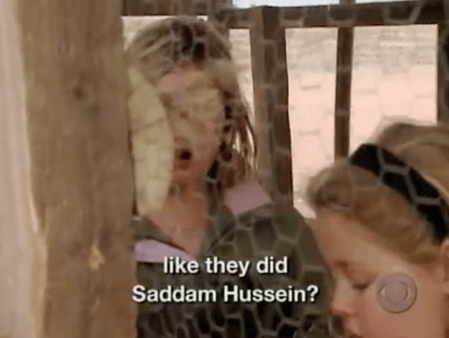
A teen boy named Greg says he’s worked in a butcher shop before, and he assumes the task of axing the birds’ heads over a wooden stump. The blade comes down; the decapitated chicken keeps flapping its wings. Greg assures his horrified audience that it’s only reflexes—the animal died instantly. That night, Emilie is filmed refusing a bowl of chicken noodle soup, fighting back tears.
It is one of the most shocking moments of the series, not only because you watch a group of kids hack a chicken with an axe, but because they hadn’t really wanted to. If they’d been given a better selection of supplies—or been stationed in a climate where they could grow food themselves—they might not have felt the need to kill an animal. They didn’t even consider it before the producers’ suggestion. What would have happened if the kids had gone with their original execution method of breaking the chickens’ necks? What if the animal didn’t die right away? Would a camera operator have intervened before an 8-year-old struggled to suffocate a bird using their bare hands?
Like many moments in the series, it feels like Kid Nation was making unfair commentary on its subjects. See, it’s human nature, the show seems to whisper. It’s like if a National Geographic photographer set a steel trap in the woods, filmed an animal stepping in it, then said: Look, it’s only natural for a wolf to gnaw off its own leg.
Clearly, the producers had a predetermined vision of lone children devolving into violence and lawlessness—a plot not-so-subtly borrowed from one of the 20th-century’s most famous novels. In a pre-release press tour, Kid Nation producer Tom Forman acknowledged the comparison: “The minute we started talking about it, we stopped and said, ‘Are we making a reality ‘Lord of the Flies’?’ and said, ‘Well, there will be elements.”
The thing is, Golding’s 1954 novel was an explicitly political piece of work. Golding said himself that his goal in writing it was “to trace the defects of society back to the defects of human nature.” The book expresses a deeply pessimistic worldview, and one that gets at a fundamental political question: what is human nature, anyway? For conservatives like Golding, human nature is always the same, and unless systems like religion, tradition, and authority keep them in check, humans are doomed to fall into the same old patterns of selfishness and brutality. (The author’s memoir makes you wonder if this darkly cynical perspective was a projection: in it, he confesses a “monstrous” side to his character, including the time he attempted to rape a young girl as a teenager.)
According to Golding’s ethos, if you take away rules and parents and strand kids on an island, they'll tear each other apart. Therefore any attempt to reform or elevate human societies, and most of all to make them more equal, is doomed. As he put it, “the shape of a society must depend on the ethical nature of the individual and not on any political system, however apparently logical or respectable.” The idea draws its basic outlines from Christianity, with its doctrine of original sin and innate corruption, solvable only by divine intervention, and it's always invoked to prevent social change.
The problem with this worldview, of course, is that it isn’t true. Throughout history, when humans find themselves in the darkest crises, they do not fall into Lord of the Flies style carnage. They help each other out, lift each other up. Even in the Nazi death camps, there are accounts of prisoners sharing their rations with each other, or propping each other up when the guards came around to inspect them. As the Irish Marxist Paul O’Flinn wrote in his brilliant critique of Golding, the mere fact that everyone is literate enough to read his novel in high school shows that society has progressed since past eras:
[T]hat William Golding is able to raise the question of the decline of superior cultural standards, and that you and I and the compositor can eavesdrop on his complaint, is evidence of immense progress. Formerly; you’d have been illiterate, I’d have been a serf and the compositor would have been dead, so none of the three of us would have given a twopenny damn about declining cultural standards.
Even in Kid Nation, we can see that selfishness and competition were not the kids' first instinct. It had to be introduced artificially by the CBS producers, who were concerned with chasing ratings and making money. Of course, unlike in Lord of the Flies, none of the Kid Nation contestants crush each other to death with rocks or set the forest ablaze. But the show’s creators seemed prepared for the possibility: “That said, like every reality show, there are adults off-camera waiting to step in if kids got violent. They didn’t,” Forman said. Perhaps a tiny part of them hoped they would.
Despite producers’ clear attempts to stoke division, in many instances the children show an impressive natural tendency towards acceptance. During Episode Four, the pioneer book suggests that the children establish a place of prayer: “You’re probably so busy feeding the town that you don’t have time to feed your soul,” it reads. “If you want to do better, you might want to have a little faith and hold a service. The question is: do you do it all together, or do you split everyone up based on beliefs?” Like class division, it’s just assumed that traditional religion is something the Kid Nation must have; they’re never given the option to be fully secular, or to invent new religious beliefs or practices. (Although one 14-year-old, Sophia, says she “stopped believing in God a while ago.”)
That day, the city council announces that there will be a mandatory worship session in the town square, during which all citizens can share their various religions—but the children revolt, claiming it will start arguments: “There’s been wars over religion,” warns one kid. “Like, with real guns and stuff.” Sensing the need to get a better gauge of the town demographics, a precocious 9-year-old named Alex takes it upon himself to perform a census, running around the cabins with a notebook to record each child’s creed. (His theological knowledge is impressive: despite the fact that none of the children seem to identify as Muslim, there is both a “Shi’ite” and a “Suni” option on the crayon-drawn form.) But when the time comes for the state-sanctioned worship session, nobody shows up.
Later that night, the kids decide to throw their own impromptu—and optional—religious service. Gathering around a trash can fire, they hold hands in prayer, thanking God for providing them such good friends throughout this experience. A Jewish child sings a hymn in Hebrew, while the other kids nod along. An 8-year-old is so moved by the experience that the dim light of the fire illuminates a tear streaming down his face: “It really touched me,” he says, hiccuping.
At the next day’s challenge—perhaps seeking one last opportunity to incite warfare—the producers offer the kids two prize options: a mini-golf course or a set of ten different religious books. The children pick the latter. Back at camp, they flip through the texts together, noting that both the Torah and the Bible begin with “Genesis.” For a fleeting moment, Kid Nation looks almost like the experiment it claimed to be, and its children choose curiosity over conflict.
From the beginning, Kid Nation existed in a legal gray zone that CBS sprinted to occupy. In April of 2007, two days after the series started shooting, New Mexico Gov. Bill Richardson signed an anti-child labor law limiting children to nine hours of work per day on film sets. The state opened an investigation into the production, but CBS lawyers argued that because the new law was not scheduled to go into effect until June—one month after filming wrapped—they were technically in compliance.
To avoid other existing labor protections, producers insisted the children weren’t working at all, they were at “summer camp.” New Mexico state officials countered that summer camps have rules too (like allowing children toothbrushes and showers) but the inquiry was eventually closed.
The sprawling 22-page waiver that parents signed, disavowing the network of responsibility for almost every imaginable form of injury, proved necessary. Eleven-year-old Divad Miles suffered a grease burn on her face while cooking for the group, an injury that caused her mother to file a complaint alleging abuse and child-labor violations. Producer Tom Forman responded: “This seems to be a parent who regrets the decision to sign her child up for Kid Nation,” and no charges were ultimately filed. Ambulances were reportedly called more than once, including the time four children accidentally drank bleach from a mislabeled container in the town saloon (this incident never made it onto the show). Still, many parents expressed no regrets, with the mom of one 10-year-old claiming her son “came home a stronger, more confident and more self-reliant child.”
Ultimately, the show was cancelled after a single season. Its creator went on to produce several more reality TV gems, including, but not limited to: Little Chocolatiers, which follows a candy-making couple with dwarfism; The Wiener’s Circle, based on a crew of kooky hot dog vendors and their shenanigans; Sex Box, in which troubled couples have sex in a box, then speak about it with a therapist; and My Teen is Pregnant and So Am I (self explanatory).
Often—in the crudest and most exploitative format possible—reality TV attempts to answer our deepest human curiosities: How do the wealthy live? The poor? The disabled? How do people fall in love? How do families act behind closed doors? What are humans, at their core, truly like?
The questions posed by Kid Nation don’t exist in a vacuum. The show is deeply rooted in a 2007 landscape: issues of violence, religion, and national identity are posed against the backdrop of the War on Terror—sometimes explicitly, when the children reference Saddam Hussein or George W. Bush. While the children are attempting to forge their own society, the viewer is reminded what it means to be American.
But Kid Nation also plays into the same cultural script that Lord of the Flies did more than 50 years before: the belief that human beings, when left to their own devices, slide toward chaos and cruelty. It’s the same worldview that made the Stanford Prison Experiment famous in the 1970s, a study long treated as proof that ordinary people will become sadistic the moment they are handed power. Decades later, previously unpublished recordings revealed that the experiment’s “guards” were coached to be brutal. In fact, one of the study’s most memorable moments—when a prisoner descended into madness, furiously kicking a door to escape and proclaiming “Jesus Christ, I'm burning up inside!”—was revealed to be fiction. “I took it as a kind of an improv exercise,” the participant later told reporter Ben Blum. “I believed that I was doing what the researchers wanted me to do.” When researchers attempted a similar project in 2002, the BBC Prison Study, the opposite happened: the participants didn’t descend into tyranny, they organized collectively and eventually overthrew the hierarchy. (Incidentally, the BBC study was also broadcast on television as a reality show called The Experiment.)
This myth of innate human depravity resurfaces again and again in moments of crisis. After Hurricane Katrina decimated New Orleans in 2005, leaving thousands of citizens in desperate need of government help, national reporters repeated lurid, unfounded stories of murders, assaults, and roving gangs inside the New Orleans Superdome. In a desperate outburst to news reporters, New Orleans Mayor Ray Nagin said people inside the building had witnessed “hooligans killing people, raping people.” In reality, no one was murdered inside the facility. Later investigation showed no credible evidence of sexual assaults. Instead, across the city, it was the rumors of opportunistic and violent looting—rooted in racism—that actually caused some of the disaster’s most harrowing tragedies, at the hands of the police. Yet national authorities hesitated to send help, not because the people were dangerous, but because the myth said they must be.
Kid Nation is built on that same assumption: not that children might cooperate, but that they will inevitably crack apart without adult control. So the producers didn’t wait to see whether a community could form—they engineered a class system first, and then filmed children adapting to it as if it were their own idea.
In the end, the show didn’t expose some feral, selfish child-id struggling to build a world without guidance. It exposed the opposite: an uncoached instinct toward fairness and friendship, until a hierarchy was lowered onto them from above. The children never invented inequality, but they were handed it, rewarded for administering it, and televised learning to justify it. Left alone, they built cooperation. And that is the quiet tragedy of the show: it accidentally proved that children can imagine a better society. It’s the adults who refuse to let them keep it.
But goddammit, if it didn’t make for great television.


%20(crop).jpg?width=352&name=wile-e-coyote%20(resize)%20(crop).jpg)