
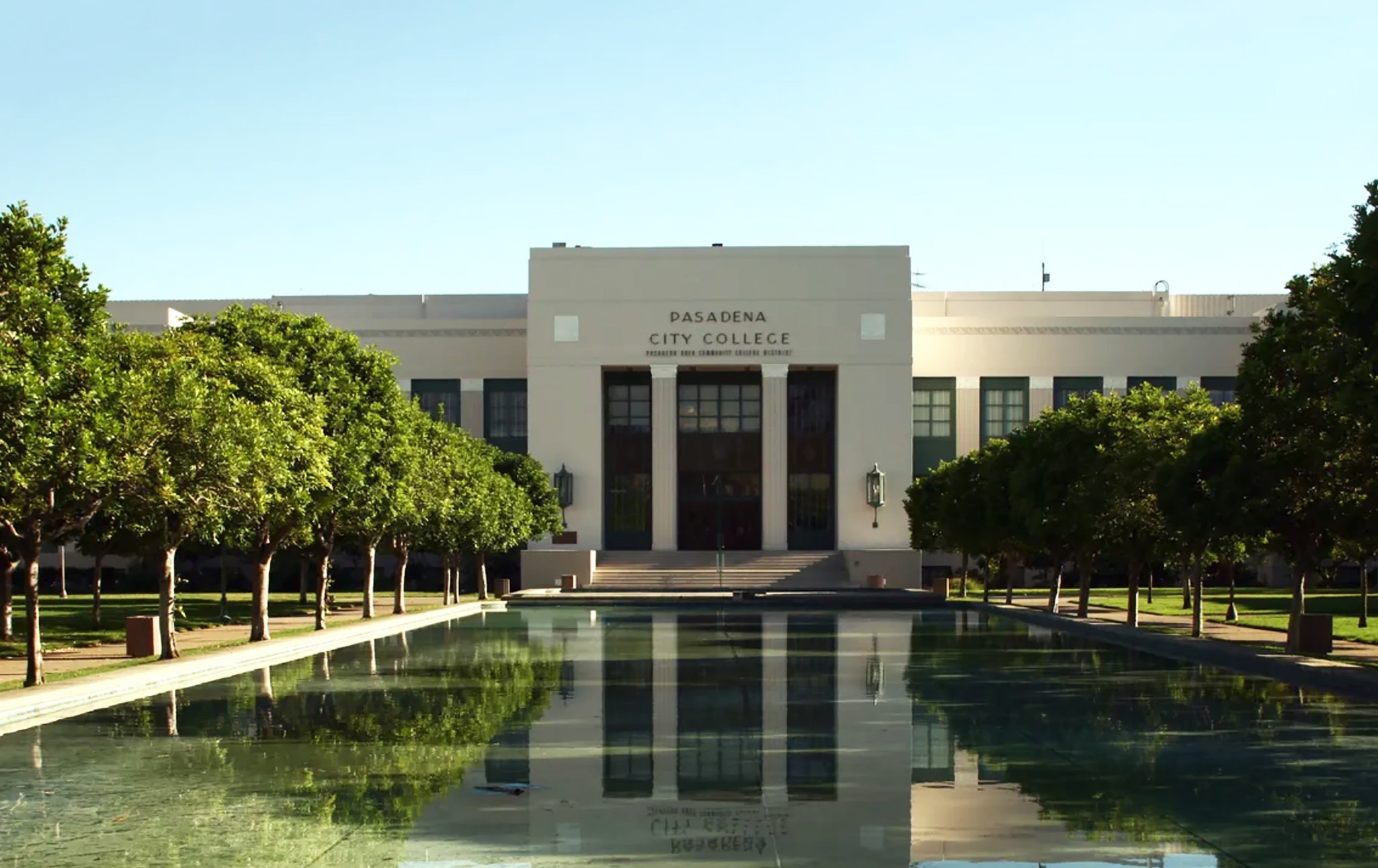
Community colleges unite students across class and race—something elite universities only pretend to do. Preserving and expanding them may be key to repairing our divided nation.
My journey to becoming a fully-fledged academic and emergency medicine physician included more than twelve years of post-secondary education at five different institutions. With each step I accrued more knowledge, earned another degree or attained a professional certification. But it was my two years at a community college in Southern California that I rank as perhaps the most important educational experience of my life.
When I started at Santa Barbara City College, I was a 19 year old blue-collar kid with a middling educational track record. I was undecided on a major, let alone a career. I saw community college as nothing more than a practical stepping stone toward whatever might come next. Much to my surprise, what I found instead was a lively intellectual environment with an incredibly diverse student body. The campus was a buzz with people from every rung of the socioeconomic ladder mingling between classes in philosophy, science, music or vocational training.
Poor and working-class Americans on both ends of the political spectrum share in their interest for a more equitable economic system. In the wake of the Supreme Court’s 2023 Students for Fair Admissions decision ending racial preferences for college admissions, the American community college system could represent a rare beacon of progress. These institutions provide real educational opportunities for working families and can enable the type of genuine racial diversity universities and their elite cohorts claim to value.
The history of community colleges in the U.S. dates to the Morrill-Land Grant Acts of the mid 19th century, which dramatically expanded the number of public universities and consequentially broadened the country’s thinking about who could and should have access to higher education. The 1862 Land Grant Act, introduced by abolitionist Senator Justin Morrill, gave states land to build public universities teaching agriculture and the mechanical arts. When Southern states resisted admitting Black students, a second Act in 1890 forced them to either integrate or establish separate schools, paving the way for many historically Black colleges and universities.
It was a little over a decade later that a high school principal in Chicago worked to establish the first public “junior college” in the country, which focused the first two years of post-secondary education with the goal of preparing students for transfer to four-year universities to complete baccalaureate degrees. Over the next several decades these “junior college” institutions evolved to offer vocational training and terminal degrees in addition to the traditional pre- baccalaureate path. They eventually came to be referred to as “community colleges” or “city colleges,” reflecting the role they play in educating local communities from which they are situated.

Accessibility has always been a defining feature. First, these institutions are almost all open enrollment, meaning there is no application process or prerequisites. Those not academically prepared for college level courses can start with remediation classes and work their way toward university credit. Even folks without a high-school diploma can often enroll and work toward a GED or vocational training. Most importantly, they are not cost prohibitive. Though tuition fees have ticked up recently, the average cost nationwide is about $4,000, which is less than half the cost of in-state tuition at an average four-year public state school—and a tenth of the cost of an average private university. States such as California, where I attended community college, have managed to keep the average cost of attendance even lower, with most students paying less than $1,500 per year.
While other countries have post-secondary educational opportunities that parallel American community colleges, most differ from the U.S. system in some important ways. For example,the United Kingdom has a system termed “further education,” which provides “non-university” training such as apprenticeships or vocational training, but there is no pathway to transition toward a baccalaureate or beyond. Similarly, Germany has institutions focused on adult remedial learning, technical and vocational training (but again, without a pathway toward traditional university studies). Australia’s comparable programs do offer a pathway to a traditional University, but they’re much more focused on vocational training.
The dual nature of these U.S. community colleges is one of their most important features. They provide technical training for vocations on the one hand, and traditional liberal arts studies on the other. Students training for careers in fields like auto mechanics or cosmetology mingle on the same campus and often take the same general education classes with others working toward transfer to traditional universities. For example, when I was at community college taking pre-medical school classes, I had a friend and roommate working through a vocational certification in welding. The fact that two students on such divergent paths could be studying at the same institution stands in stark contrast to traditional conceptions of higher education.
Select universities cultivate an ethos of elitism among their students. Their embrace of “legacy preferences,” the practice of giving an advantage to applicants with close ties to school alumni, is just one contributing factor to these schools’ insular culture of superiority. Their insistence on maintaining legacy preferences, despite the stifling effect on equity, sends a clear message about who does and does not belong. Furthermore, campuses are isolated from their surrounding communities by design, meaning a young university student will often socialize almost exclusively with other students at their own institution. The reverse of this holds for those forgoing university for vocational training or blue collar jobs—they are much less likely to have friends outside of their educational level or social class. The effect of this has been division. People typically attend college or job training at a pivotal time in their development as they start to distance themselves—whether emotionally, ideologically or physically—from their family moorings. These students’ worldviews are changing and they are being set on the course that will inform how they engage with their fellow citizens and the rest of the world.
Stratifying people of any age based on education—which is a proxy for social class in our society—is harmful. As one study explained, “college years represent a prime opportunity for students to develop prosocial skills through friendships that cross social boundaries.” At elite universities, however, those boundaries are largely drawn by class. Recent studies show that within “highly-selective” schools, only about three percent of students come from homes at the bottom income quartile, while more than 70 percent are from the top. For students of color this concentration of wealthy students is even more stark, with over 70 percent of Black, Hispanic and Native American students coming from homes in the 80th percentile for income. This siloing of university age Americans along educational (and therefore, economic) lines has had a significant effect on our political system. In recent decades, education has become perhaps the most dependable predictor of political identity and party affiliation. People without college degrees voted for Donald Trump in the 2024 election by a 14 point margin, a rightward trend that actually predates Trump’s MAGA movement.
The reason Americans without a college degree have shifted toward the Republican Party likely stems from a complicated interplay between class, education, and opportunity. A deep exploration of that trend is beyond the scope of this discussion, but a few related points are worth mentioning here. First, given that these voters are disproportionately poor and working class, it is peculiar that they would move toward a party that has made the decimation of the social safety net a central tenet of their policies. Second, that the most superficial explanation often touted by liberal pundits for this trend is a gross oversimplification. That argument can be summarized as the following: educated people have a better understanding of the issues and therefore more often find themselves on the right side of history, and the uneducated voters reject the “intellectualism” of enlightened mainstream liberal politics, driving them toward the right.

The truth is, there are more substantive reasons for the shift. Some of which I have discussed previously in this publication, such as the Democrats’ embrace of the billionaire class and their inability to advocate for the working class, particularly on issues like affordable healthcare and workers’ rights. If the anti-intellectualism argument were true, how would one explain that for most of the 20th century, higher education was associated with more conservative politics and Republican party membership?
Whatever the cause, one potential corrective to this growing divide is the U.S. community college model. Because these schools have programs in traditional liberal arts studies as well as vocational training, community college campuses offer a chance for greater connectivity across social class. Simple interactions between students headed toward the professional classes on one hand and blue-collar vocations on the other, allow for the opportunity to form real friendships across seemingly insurmountable barriers. This could have a profoundly positive impact on how young people view those from other social classes. It certainly did for me.
What’s more, the ability for students to pursue such disparate courses of study at community colleges is a solution to another all-too-common problem. For many graduating high school students, college is seen as the default next step. It is sold to them as a near guarantee of economic success. Unfortunately, increasing cost of attendance coupled with rising unemployment among college graduates challenges this orthodoxy. Far too many kids are coerced into going to college by guidance counselors, teachers, and their families, even when it might not be the best fit for them. Those who would have been better off forgoing college for other opportunities, such as trade or vocational training, often acquire an enormous amount of debt that they may never get out from under. This is particularly devastating for the many low income students that don’t end up graduating. Community college, on the other hand, allows students to explore both vocational programs and college level classes without the burden of exorbitant student loans. They can then make an informed decision about which direction suits them best.
It is therefore not surprising that evidence suggests that access to community college ultimately leads to an increase in the completion of a bachelor’s degree as well as increased earnings. Importantly, this increase holds true even for those who do not transfer to traditional universities and instead opt for vocational training or to finish their education at the associates degree level. In fact, in many scenarios graduates of community college vocational training programs out-earn those with bachelor’s degrees. Furthermore, the economic boost community colleges provide does not stop with the individual student. The broader community around these institutions experiences a “ripple effect” which helps to stimulate local economic growth. One major reason for this is that, as opposed to university graduates, skilled workers educated in community colleges tend to stay local. This feature of community colleges stands in stark contrast to the parasitic relationship traditional universities often have in regard to their surrounding communities.
What’s more, because community colleges serve as a viable pipeline to university for low-income students, they can help make up for some of the racial disparities on college campuses. This is because low-income students, particularly at community colleges, are disproportionately people of color. Since the 2023 Supreme Court decision banning race based affirmative action in college admissions, universities have insisted that they are interested in pursuing other ways of realizing diversity on campus. Increasing admissions from community colleges would be an effective way to do just that. And while traditional affirmative action did increase racial minority representation, it did so by disproportionately selecting for minorities from wealthy families. Community college transfers of all races, on the other hand, are more likely to be from poor and working-class families. Facilitating transfers from community colleges would increase both racial and socioeconomic diversity. Some colleges have already figured this out. Places like Cornell University and UC Berkey, for example, have actively recruited community college students via defined pathways that have been widely successful at graduating truly diverse student bodies. Other institutions such as Harvard, on the other hand, have been resistant to transfers, particularly from community colleges (transfer students typically make up less than one percent of Harvard’s accepted applicants, and vanishingly few from community colleges). If elite universities like Harvard cared about diversity as much as they claim, they would take advantage of the community college pipeline.

Despite the substantial value and proven track record of community colleges, they are under serious threat. Budget cuts and stagnant enrollment numbers are forcing many states to increase tuition and slash services. If access to community college is jeopardized for working class families, it would mean one less opportunity for a group of people who already have far too few. We should demand that community college not just remain affordable, but that it becomes tuition free. This is not a pie in the sky idea; Joe Biden floated it during his administration and estimated it would cost $11 billion a year. That’s not a trivial amount, but certainly manageable when you consider that Trump’s recently-singed spending reconciliation bill includes $45 billion for new ICE detention centers alone. Teachers and guidance counselors could also do their part by presenting community colleges as a viable option for any student, but particularly for those who are unsure about college or are likely to amass a significant amount of debt. Universities could step in by partnering with community colleges and supporting their students. They can help to develop transfer agreements with community colleges and simplify the transfer process making it easier on students. Professional and graduate schools could lend support as well. For example, at the medical school where I teach, we have a program that enrolls pre-medical community college students, mostly from low income backgrounds, and helps guide them through the arduous journey—which is far too inhibitory for working class students—from undergraduate to medical student. There is ample opportunity for more programs like this in other fields such as law and graduate school, which could similarly capitalize on the special nature of community colleges to improve representation and class mobility.
Attending community college did many things for me at an important time in my life. The dedicated instructors, who were focused on teaching as opposed to their research careers, inspired me and influenced the way I approach teaching to this day. It gave me a chance to take a variety of classes and discover a love for science and, ultimately, medicine. I had wealthy friends from Malibu, California and blue-collar friends from rural Idaho. Some were planning on transferring to a four-year university and others enrolled in vocational training in culinary arts, welding and nursing. The experience made me a better teacher, physician and person. It has led to a fulfilling career in which I have the honor and privilege of traveling the world as a doctor and public health researcher. I want other students to have those opportunities. I also want to live in a society where doctors and mechanics and professors and construction workers socialize as equals, and more importantly, work together as equal citizens to decide what type of society they want to live in. Community colleges are a uniquely American institution: one that we can be proud of. They are by no means a panacea for all the challenges our fractured society is facing, but they are a potential piece of the puzzle.



.png?width=352&name=Screenshot%202026-09-04%20at%204.00.52%20PM%20(1).png)
%20(1).jpg?width=352&name=miasma-1%20(1)%20(1).jpg)