Novels set during the height of COVID-19 fail to tell the full story of that era of mass death and despair.
Ever since the COVID pandemic hit in 2020, I’ve been eager to read novels that explore what COVID was, and continues to be like. At the time, writers joked incessantly about how Shakespeare wrote King Lear during an episode of plague in Renaissance England. How would we all use our time? Would we be writing masterpieces? Would the COVID pandemic generate a new, thrilling era of artistic production? Would everyone be writing a pandemic novel?
Seems like: no. Understandably, most people did not write incredible novels in 2020 and 2021, when they were busy homeschooling their kids, or trying not to go crazy while living in isolation, or barely surviving while working on the front lines. Less understandably, to my mind, as soon as the COVID vaccine hit, creative interest in the experience of living through a pandemic evaporated.
This became a personal issue for me because I was at high risk for complications from COVID, and in the fall of 2022, I got the virus and then developed Long COVID, as I’d both predicted and feared. I wanted to see my experience reflected in fiction, but I also wanted to see other people’s experiences: people on the front lines, in hospitals and in grocery stores. People who’d lost loved ones to COVID. Where were those books? For the most part, instead of writing about the pandemic, writers—and readers—seemed eager to move on, pretending that COVID hadn’t happened and wasn’t still a serious issue.
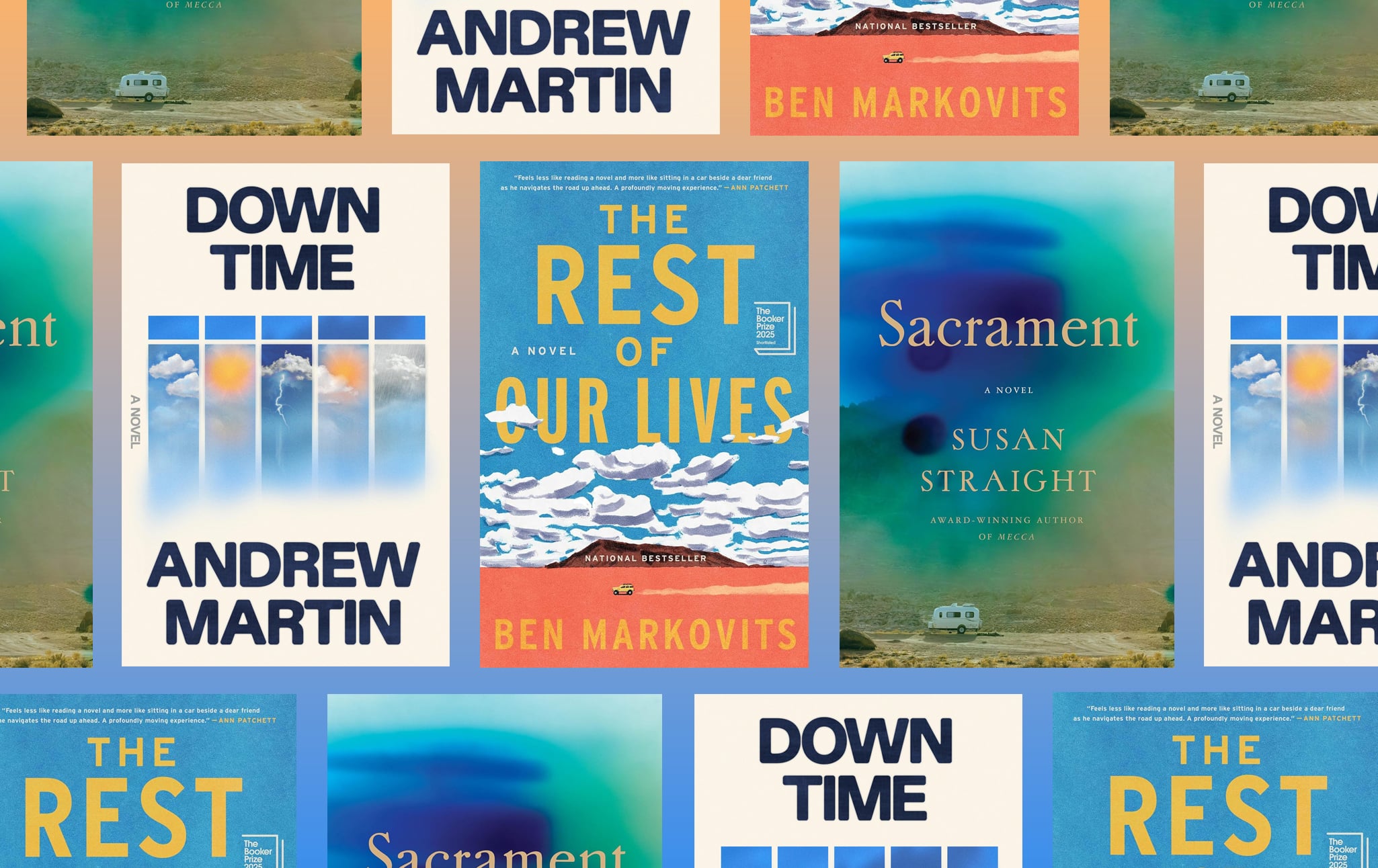
I was thrilled, then, to get an advance copy of Down Time, the new novel by Andrew Martin, which takes place largely during that first year of the COVID pandemic. In keeping with Martin’s earlier books, the novel Early Work and the story collection Cool for America, Martin focuses not on the medical or sociopolitical realities of COVID, but instead on how the pandemic affects the emotional realities of his characters. He begins just before COVID hits America, showing his characters in already precarious emotional conditions. These early sections are full of small-scale disasters: after picking up her boyfriend, Aaron, from rehab, protagonist Cassie takes him out for a misguided night of celebration; after an awkward evening, she wakes up and finds him gone. Malcolm, a writer, learns that an old friend of his has died in an accident and copes by trying to kiss his friend Antonia over dinner, only to be rebuffed. (His partner Violet is busy working as a doctor.)
But soon enough, global catastrophe arrives, subsuming these interpersonal dramas. “This virus stuff is so weird,” Antonia’s current fling comments on a vacation to Mexico. “[I]t seems crazy to just be like, sitting here… Like, what are we doing?” This question will animate the rest of Down Time.
Cassie, Aaron, Antonia, and Malcolm—our four main characters—find themselves living with family members, suffering from depression, and/or experiencing crises in their sexual and romantic relationships. Being forced to live in close proximity doesn’t solve Cassie and Aaron’s problems, while Malcolm’s lack of purpose comes up against Violet’s work in her COVID-wracked hospital. At first, Malcolm reflects, the global crisis makes them have sex more: “we had intense, desperate sex, some real going-off-to-war shit, Violet the soldier, obviously … [But a]fter that the foxhole got less, you know, foxy.” Their vastly differing experiences soon make it harder for them to connect. “If we were going to die or become very ill, I thought it might be nice to have a few more explicit memories to ponder on the old deathbed,” he thinks. Needless to say, this is not Violet’s immediate priority.
Down Time isn’t exactly the COVID novel I’d dreamed of: it’s primarily concerned with millennial malaise, not illness, death, or frontline work. But I still found reading parts of it bracing for Martin’s willingness to write explicitly about COVID, and it’s an unusual novel by the standards of literary fiction in 2026 in that it deals with the pandemic at all. While enough time has passed since 2020 that a number of influential authors have published novels that engage with the pandemic, for the most part, readers and publishing professionals have been hesitant to embrace COVID as a subject. As Lucyl Harrison, a scholar of COVID literature and the host of the Pandemic Pages podcast, told me, “There two camps of readers—those who want to categorically avoid [COVID], and those who want to process the pandemic through literature.”
Publishers, for the most part, have concluded their audiences fall in the first camp, and have also avoided books that explore the subject: in the process of getting Down Time published, Martin has said that “At least one foreign publisher was put off by ‘the COVID of it all.’” The podcast The Shit No One Tells You About Writing, which is hosted by agents who dispense advice to aspiring writers, frequently discourages writers from writing about the pandemic. On an episode released last year, for example, agent Carly Watters said, “The consensus right now in the industry, as far as I have experienced, is that there is not a reason to mention COVID unless you’re trying to do something specific about that time period[…] It makes people think about some of the worst times in our recent history. It just doesn’t really bring a lot of good vibes to a piece.” Well, no, “good vibes” isn’t exactly what any pandemic novel is going for.
As a result of both publishers’ and readers’ distaste for the subject, many aspects of the COVID experience remain under-explored. Most COVID novels, Martin’s included, eschew depicting severe illness, death, and the long-term effects of the virus that manifest as Long COVID. Instead, as Katy Waldman observed in the New Yorker, COVID novels have tended to depict the experiences of the “idle rich.” Two of the first novels to be written about COVID, Gary Shteyngart’s Our Country Friends and Elizabeth Strout’s Lucy by the Sea, feature characters retreating to second homes in the country. In the Atlantic, Lily Meyer has argued that the privileged characters depicted in most COVID fiction reflect their authors’ circumstances, and that “authors who spent their lockdown days safely at home may feel uncomfortable writing about essential workers.” As a result, COVID has primarily been represented in fiction as an emotional problem, not a sociological or medical one.
As frustrating as this can be, the problems in how COVID is being written about in fiction ultimately lie not with any one novel, but rather with how the wider publishing industry has failed to prioritize championing a more diverse range of voices. Still, reading these books, it’s hard not to wish a wider range of stories were being told.
Since the COVID vaccine was approved in 2021, the American government has made efforts to minimize the pandemic as a thing of the past. In March of 2022, for example, then-President Joe Biden declared that COVID “no longer need control our lives.” To people with chronic health issues, like myself at the time, this was cold comfort: we still needed to take precautions to avoid getting the virus. When I developed a debilitating case of Long COVID later that year, I learned just how much COVID could still control a person’s life.
Frustratingly, despite the fact that at least 400 million people live with Long COVID worldwide, this condition has been written about less than any other aspect of the COVID pandemic to date. Only one novel, Patricia Lockwood’s surreal Will There Ever Be Another You, has delved into the alarming, disorienting experience of living with the condition long-term. Yet even in that groundbreaking novel, Lockwood avoids invoking the term “COVID,” probably put off by publishing’s hesitancy to engage with the subject. (Even in an interview with NPR, she described her illness as “the long C word.”)
Most COVID novels have also avoided seriously reckoning with the trauma of mass death that COVID inflicted on America and across the world. According to the CDC, as of March 2026, 1.24 million people have died in America due to COVID. For various reasons, this statistic is undoubtedly an undercount: during lockdown, many people put off important healthcare appointments for fear of the virus, which will have led to premature deaths; COVID infections can indirectly cause heart attacks and other serious health issues; and in the last few years, testing has been much less widespread than in 2020 and 2021, meaning that many additional deaths likely went uncounted. While some novels, like The Rich People Have Gone Away, by Regina Porter, and The Diary of Lies, by Philip Miller, do show death or its aftermath, they are in the minority. And even in these books, COVID is a subplot, not a central concern.
After the first year of the pandemic, when the death count was shockingly high, fatalities plummeted, which has made it tempting for most people to believe that dying from COVID is a thing of the past. Yet as Sarah Jones reminds readers in her 2025 book Disposable: America’s Contempt for the Underclass, COVID continues to be a serious problem, even if journalists and medical professionals have minimized its effects. “Though COVID still kills hundreds every week,” she writes, “the deaths make few headlines now. The dead themselves feel almost forgotten.” As she documents, many people who have lost relatives to COVID are involved in the Marked by COVID movement, which has petitioned states to commemorate the COVID dead with a national day of mourning. Instead, for the most part, the country has been eager to move on.
Jones also points out that systemic inequities dictated by class, race, disability, and age had an enormous impact on whether or not people got sick and died during the first year of COVID. Until I got COVID in 2022, I was very cautious about exposing myself to the virus thanks to my preexisting conditions; I was also fortunate enough to have a stable housing situation, unemployment benefits, and later, work I could do from home. Most lucky of all, I didn’t personally know anyone who died from the virus. Meanwhile, my building’s superintendent, who is Jamaican, told me in the fall of 2020 about a single family he knew in our area of Brooklyn that had suffered several deaths. The disparity between our experiences did not escape me. As social epidemiologist Justin Feldman told Jones, both race and class determined mortality outcomes among Americans: “within every racial group, people with a high school degree or less were doing quite a bit worse than people with a college degree or more.” Mortality was not “fully explained by racial inequality, and racial inequality wasn’t fully explained by socioeconomic inequality, so they’re both operating at the same time.” If most fiction about COVID is written by, and focuses on, people with college degrees, it presents a fundamentally skewed image of how COVID affected Americans.
No single book can tell the entire story of the COVID pandemic, and it’s unfair to hold a single novel to that standard. Some novels simply use COVID as background context for plot, or for the emotional crises of their characters. Arguably, Martin is doing just that in Down Time. Yet as I read his novel, I wished Martin had explored the serious crises caused by lockdown more deeply. Alas, that’s not Martin’s style. The Atlantic’s Lily Meyer described the ensemble of Down Time as “a group of entitled 30-somethings sulking through the first year of the coronavirus pandemic,” a piercingly accurate phrase that made me laugh as I read it. Martin’s characters are entitled, and they are so wrapped up in their own problems that, despite the disaster happening outside, for most of the novel, they barely acknowledge the wider world.
Martin has said that he deliberately avoided trying to write “about” COVID: “If I’d set out to write ‘pandemic fiction’ I might have felt obliged to hit certain beats, to write something representative of the period [...] I wanted the pandemic to serve as the background for the dramas of these characters’ lives.” As a result, the novel reflects both his strengths and weaknesses as a writer: Down Time is consistently funny, and in its best sections, the characters are nuanced and complex. Yet his approach to its historical setting felt, to me, strange and sometimes off-putting.
As he’s shown in his previous work, Martin is adept at writing about millennial ennui and self-absorption, and certain parts of Down Time, especially the beginning, show off this skill. The opening section, showing Cassie’s anxiety about dealing with Aaron after picking him up from rehab, for instance, as well as her realization that taking him out on the town immediately after doing so may have been a mistake, is precisely rendered. She wants to take care of him, but also wants him to have a good time; she wants to have a good time herself, which would be a relief after the stress he’s caused her; she’s worried that he might relapse, and resentful that he might have had an affair with someone at rehab. But because Aaron just got out, she approaches him with kid gloves. Instead of addressing these concerns directly, she desperately tries to intuit his thought processes: “The more she thought about it, the more she suspected that Aaron wasn’t being truthful in some fundamental way. But maybe it was just the therapy and the drugs? … But what if his demeanor didn’t indicate a struggle for redemption, but was, rather, a sign of resignation?” It’s immediately clear to the reader that this couple is doomed. As the book progresses, however, their relationship will continue on life support as they find themselves living with Aaron’s father thanks to COVID.
Once the pandemic begins, Martin reproduces certain details of lockdown life that zapped me back to that era. Aaron’s stepbrother, for instance, describes one of his classmates pranking his teacher by pretending to be muted during a Zoom class, when he was actually just miming; when another classmate tells the teacher what’s up, she snaps and “started screaming and cursing at him and telling him she wanted to kill him and stuff, and then I’m pretty sure she was crying.” Anyone who knew teachers during this period will find this story plausible. Later, Malcolm reports to Antonia about the “endless barrage of fireworks [in New York], the last of which people had become convinced were psyops by the police due to their frequency and intensity.” I, too, remember going slightly out of my mind thanks to the endless fireworks going off outside of my building and becoming conspiratorial about their origin. This may seem trivial, but when a writer reproduces a random detail of a bizarre and terrible time in your life, it feels meaningful.
Yet as the book progressed, I felt it losing steam, or maybe just losing my interest. The interpersonal conflicts that animate the early sections did not become more interesting to me the longer I read; instead, I began to feel vaguely depressed as the characters slogged along. Cassie and Aaron, it’s no great spoiler to say, break up. Aaron begins writing fiction again after a long hiatus. After lockdown lifts, Antonia becomes obsessed with a much younger musician and descends into mania, until she finally accepts that her devotion isn’t reciprocated. Eventually, the book sort of sputters to an end. While this may reflect the reality of most of our lives—propulsive narrative arcs don’t bear much resemblance to real life—it didn’t grip me as a reader.

As I read Down Time, I found myself thinking about another recent novel that, though stylistically different from Martin’s, also focused on a narrator whose experience of COVID is secondary to problems in his romantic life. In The Rest of Our Lives, which was nominated for the Booker Prize last year, Ben Markovits follows his protagonist, Tom, on a haphazard road trip across America. After dropping his daughter off for college, Tom wanders out of his own life, abandoning his wife and his job without notice. His wife had an affair years before, and their relationship has deteriorated since then.
As well as running away from his family, Tom is trying to escape his own health. Since suffering a “mild bout of Covid” several months earlier, he’s been experiencing “palpitations, sudden fatigue […] I still got a head rush every time I stood up […] in the morning I woke up with a swollen face and leaky eyes.” His symptoms, understandably, alarm those around him; in one scene, he terrifies an old friend by emerging from her pool with a blue face and a purple chest, convincing her he’s dying. Yet Tom insists on minimizing his condition, telling everyone that he’s fine. When people urge him to go to the doctor, he resists. And though his medical episodes haunt the book, Tom is much more preoccupied with his marriage than his illness.
As Markovits has written, Tom’s medical symptoms mirror his own. When his doctors couldn’t find anything wrong with him, Markovits decided to put off dealing with his symptoms until after a family trip to America: as he says, “‘Middle-aged man complains of tiredness’ is not a medical emergency.” Similarly, as Tom explains to a friend, his doctor told him, “it’s probably long Covid. I can refer you to a treatment program, but the truth is, for someone like you, who is basically functional, there’s not much they can do.” Ultimately, Tom, like Markovits, is diagnosed with cancer—he never had Long COVID at all. But Markovits doesn’t reveal this until the end of the novel, and up to that point, The Rest of Our Lives is an unsettling depiction of what life is like for many people with Long COVID, or other complex health conditions. Most people with Long COVID can report similar experiences with doctors, who are often underinformed or dismissive about the condition. (I speak from experience.)
In fact, Tom’s experience of “Long COVID” is the best possible scenario for many: he is still “basically functional,” he has a vastly wider safety net than most Americans, and he possesses all the advantages that come with being white, cis, straight, and male in the healthcare system. I am still waiting to read a book about someone with Long COVID who scrambles to get on disability, struggles to navigate applying for SNAP, and is in danger of losing their housing. Still, Markovits’s novel shows that even the most privileged people receive inadequate care when their symptoms can’t be easily explained. Tom is dismissed by his doctor, who views his symptoms as trivial. Tom is thus given permission to write his illness off himself, with potentially grave consequences.
Tom’s avoidance of an increasingly serious health crisis also represents reality for many people dealing with Long COVID. When a person is diagnosed with a serious illness, it can be hard to accept; many newly disabled people live in a state of denial for some time, refusing to self-identify as “disabled” and persisting in trying to do everything they could do when healthy, even if those activities are no longer possible or safe. Tom’s neglect of his own body is surely due, in part, to depression; as a friend tells him after his pool scare, “I forgot what you’re like. … You don’t really care about anything.” Yet his behavior also exists in a wider social context, one in which Long COVID is frequently minimized or treated as a hoax. When society at large acts as though the pandemic is “over” and barely acknowledges that Long COVID exists, it’s even more tempting to behave as though you are still “normal,” even if your health has been severely impacted. It’s easier, instead, to avoid confronting an uncomfortable reality.
One COVID novel has confronted the reality of the pandemic head-on: Susan Straight’s Sacrament, published last fall. In Sacrament, Straight follows two ICU nurses living in San Bernardino, Cherrise Martinez and Larette Embers, as well as Charisse’s teenage daughter Raquel. The nurses are temporarily living in trailers within walking distance of the hospital, to limit potential spread of the virus; as a result, Raquel has been sent to live with her late father’s family, whom she barely knows.
Raquel tries to prevent this by bargaining: she wants to stay with her mom, but she’ll settle for staying in their house alone. Unfortunately, she’s still a minor. She resents both being treated like a child by her relatives and her mother’s absence, texting her, “U haven’t come all this time. U never took me 2 C dad. U just left that day. July. His BD is Wednesday & U prolly won’t come.” Beset by worry out in the country, she thinks, “She couldn’t sleep like this. She had to call her mom… Swear to God, if her mom didn’t answer soon, she was going to call Larette and ask if her mom had the virus.”
Meanwhile, Cherrise, Larette, and the other nurses are trying to keep their heads above water, the trauma of the ICU leaving them not only physically but emotionally isolated. Straight repeatedly refers to their experience as a war, a metaphor Martin has also invoked: his partner, the writer Laura Kolbe, is a doctor, and in an interview with BOMB magazine, Martin said, “My wife Laura was working at New York–Presbyterian Hospital [during lockdown], just genuinely as on the front lines as you can be, so there was also a real adrenaline in our household, a real sense of, like, We’re fighting the war.” One of the most annoying things about Down Time was that Martin never entered the perspective of Violet, Malcolm’s partner, who like Kolbe is a doctor working on the front lines. It was refreshing, therefore, to encounter Straight’s uncompromising depiction of how bruising working in healthcare could be during the peak of COVID.
Like veterans of other wars, the nurses in Sacrament find it nearly impossible to share their experiences with people who aren’t with them on the front lines, including their family members. As a result, Larette finds herself increasingly distanced from her husband, who is named Grief, yet as she reflects, “I can’t tell him about Jerry Jansen, his body shuddering. Rudy Magana’s lifeless hand in hers, like cement. How the heart stopped beating, the lungs were drowned, and the skin turned shiny. The women crying in their cars for those lips.” The trauma of working in the ICU not only estranges Larette from her husband, but also leaves the mothers on staff little time for parenting, practically or emotionally. Only Larette’s son, Dante, realizes the toll the work is taking on his mother: as he texts Raquel, “The trenches shell shock they don’t talk look it up.”
Over the course of the novel, this not talking will spark a crisis: after not hearing from her mom for days, Raquel and her sort-of boyfriend set off from her relatives’ home to go see her. As Raquel suspects, Cherrise is laid up in the hospital with COVID, and Larette has decided not to tell Raquel. Though Raquel eventually arrives home safely, she’s put in terrifying danger, showing just how bad things can get when people fail to communicate. But even if the nurses realize that it’s worth trying to explain to their families what they’ve experienced, they know their sacrifices will never be taken as seriously as the sacrifices of those in combat: as one nurse says, “They’ll never call this a war. We can’t be fucking soldiers because, A, no guns. B, we’re female. And C, they don’t believe in the enemy. Nothing to shoot.”
Straight is not a nurse; instead, she has explained, “Many of the moments are based on stories told to me by my nurse friends, or my men friends and family who were hospitalized and remember some of what happened to them.” Sacrament, then, is an example of a book written by an author who is willing to step outside of herself to tell the story of the pandemic through the eyes of essential workers who didn’t have the luxury to stay at home when the world shut down. Her perspective is broad, encompassing nurses, their family members, farm workers, what it feels like to have the virus, what it’s like to see death, and the effects of Long COVID. It is the most honest and expansive portrait of how COVID has affected Americans to date.

Reading Sacrament felt like a relief, a reflection of the reality that so many Americans have experienced since 2020. It also made me hungry for more novels to acknowledge the reality of COVID—not the privileged, cushy reality that has mostly been described so far, but a more honest reality, one involving financial strain, death, and serious and lasting illness. America and the world at large have mostly turned away from these uncomfortable realities because acknowledging them would force us to accept that COVID isn’t over and our response to the pandemic has been inadequate. It’s so much easier to pretend that COVID is something bad that happened but is now fully in the past, to focus instead on stories that bring “good vibes.”
But that’s merely a way of living in denial. Instead, I’m waiting for more COVID novels: slim works of autofiction that work through the grief of losing a loved one. Dark thrillers about the madness of having to work as a deliveryperson or hospital runner during the peak of 2020, or about finding yourself trapped with an abuser during lockdown. Experimental novels about living with Long COVID, passing countless days that all seem the same. A grand social novel that encompasses all these stories. Because we’re not living in a post-pandemic society: we’re living in a society that is constantly being shaped by a pandemic that never really ended. Art should try to tell that story.
Morgan Leigh Davies is a writer whose work has appeared in many publications, including the Sewanee Review, Jezebel, Electric Lit, and the Denver Quarterly. She lives in Brooklyn. Read more at www.mldavies.com.