Inside the Dark and Unregulated World of Roadside Zoos
Inspectors cite starvation, disease, and death—but animals stay in cages, while operators stay licensed.
The indoor enclosure that confined the lioness, Nasha, was wet and soiled with excessive feces, urine, soil, and food wastes with no clean bedding provided,” reads the December 2024 inspection report for a roadside zoo in coastal Oregon. The report, completed by the US Department of Agriculture, paints a grim and detailed picture of systemic animal neglect: “On closer observation, Nasha’s coat was matted with what appeared to be feces on various areas of her body, she was wide-eyed, crouched and reluctant to approach the enclosure door.”
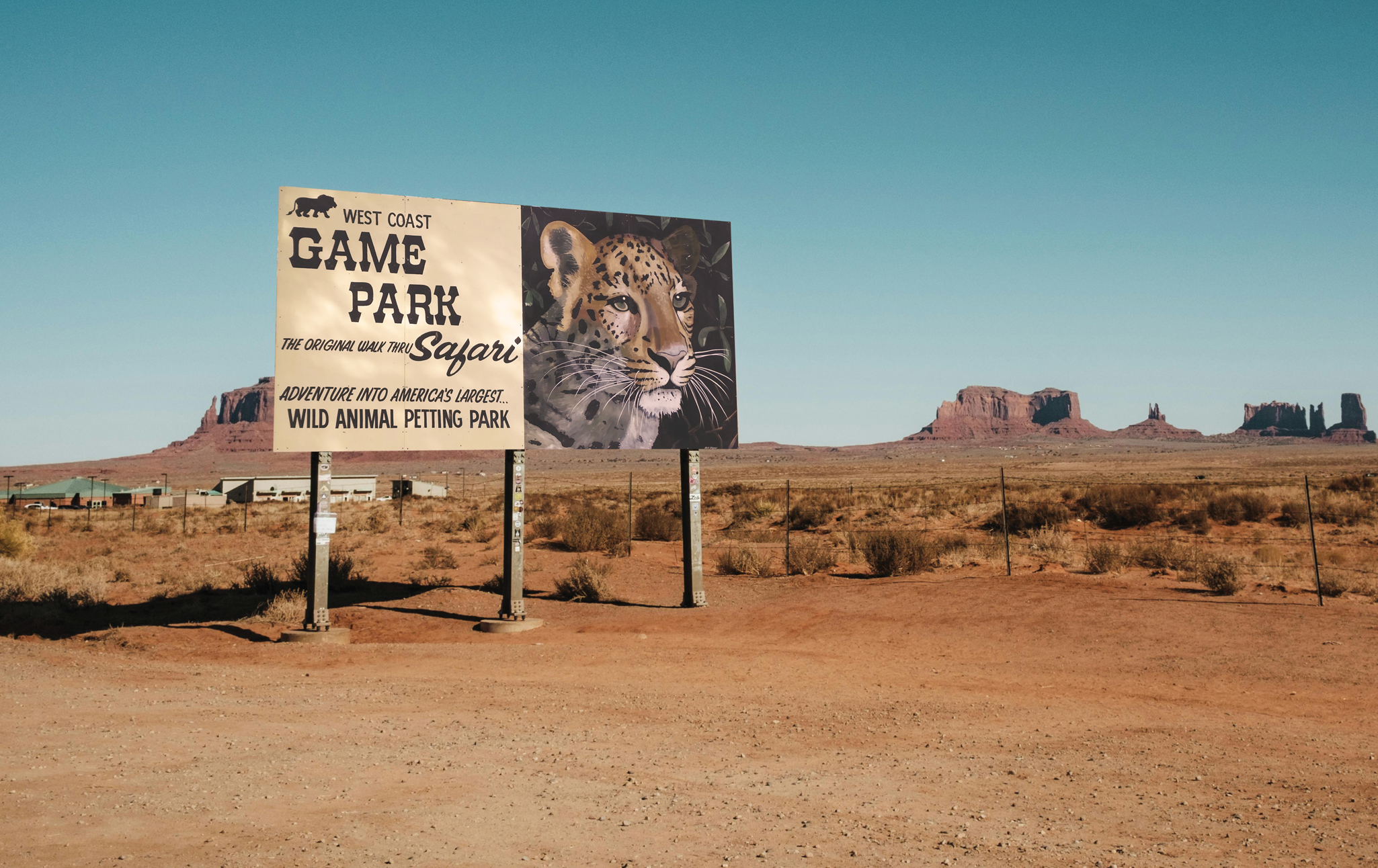
Over the course of one year, the USDA visited the West Coast Game Park Safari in Bandon, Oregon a total of ten times, citing them with 80 violations. Their reports describe animals being starved, crammed into unsanitary conditions, failing to receive medical care, and living in enclosures too small for normal postural movements. Some describe the mysterious death of several animals at the facility. Yet even as USDA inspectors personally witnessed these atrocities, the park remained open.
The roadside zoo, marketed as “America’s largest wild animal petting park,” was finally shut down in May after state, local and federal authorities raided the facility. Along with hundreds of suffering animals, police discovered 44 firearms on the property (including one modified into a machine gun), $1.6 million in a concrete vault, and 80 grams of methamphetamine. Most of the animals were relocated; three needed to be euthanized—a camel, chicken and kinkajou.
The zoo’s owner, 52-year-old Bryan Tenney, was initially arrested on drug charges and was later hit with more than 300 indictments of second-degree animal neglect. But after more than a decade of damning inspections by federal agencies, the real question is: what took so long?
As a local of Southern Oregon, I first discovered the inspection reports for the West Coast Game Park Safari earlier this year while doing research to end the use of wild animals in circus performances. Since then, I have championed for the animals within that park and beyond, pouring countless hours into research and meeting with other advocates. What I’ve discovered is appalling: across the country, wild animals living in zoos and circuses exist in a legal grey area—and the ones who are responsible for ensuring their proper care aren’t even trying. While the hundreds of animals left to suffer in that decrepit Oregon zoo have now been relocated, there are likely thousands more just like them.
Who’s Supposed to Protect These Animals?
The care of these creatures falls under the jurisdiction of several state and federal agencies. First, there’s the Animal Plant Health Inspection Service (APHIS), a branch of the USDA, which issues licenses and inspects facilities under the Animal Welfare Act (AWA). The act is supposed to guarantee humane care for animals used in exhibits and research facilities, as well as those being transported, yet loopholes allow abusers to keep returning.
To become licensed as an exhibitor, one must submit an application that includes details of the facility, which must then pass a USDA inspection. Licenses are technically denied to any applicant who has violated animal cruelty laws in the last three years; but once those three years are up, they’re inexplicably free to apply again. This allows for shady facilities to be run by even shadier owners—people who should never be allowed near animals, let alone to profit off them.
Take, for example, Great Cats World Park: a USDA-licensed facility that is also based in Oregon but travels around the country performing at Renaissance fairs. Its owner, Craig Wagner, has a lengthy rap sheet of mistreating animals. First, he was convicted of animal neglect in Wisconsin in the ‘90s for failing to provide enough food and water for his cats, landing him a $40,000 fine and nine months in jail. Later, while running a park in Minnesota, he was cited again for withholding food and water; two years after, his business partner was found mauled to death by a tiger on the compound.
After relocating to Oregon, Wagner pled guilty to forging documents in order to smuggle an ocelot across state lines—and yet the park stayed open with only a $10,000 fine. In 2011, one of his tigers attacked a toddler in the gift shop and another bit a teenager, according to a civil complaint by the USDA. Years later, an employee was hospitalized from a lion bite. Today he is still operating with a valid USDA license and his park is open to the public. If you feel like visiting, however, maybe keep an eye out—a jaguar recently escaped its enclosure there just two months ago.
The USDA is not the only federal agency responsible for these animals’ wellbeing. Some animals residing within these parks fall under the Endangered Species Act, which is also enforced by the Departments of Interior and Commerce. But zoos and circuses often sidestep the rules, exploiting exemptions like claiming that their ownership of an endangered animal somehow “enhance[s] the survival” of the species.
Lastly, there is the Big Cat Public Safety Act, signed into law in December of 2022, which prevents the private ownership of big cats like tigers, lions, and cougars. It also restricts the public’s ability to interact with them at roadside zoos, imposing fines of up to $20,000 and/or imprisonment of up to five years for violators. This federal act is enforced by the US Fish and Wildlife Service.
The law gained traction partly due to Tiger King, the 2020 Netflix docu-series that exposed the shady world of big cat breeding, made Joe Exotic a household name, and fueled countless memes. The show’s anti-hero Carol Baskin was one of the leading advocates to push the Big Cat Safety Act through Congress. While its passage was a big step, it isn't always enforced: Tiger King’s Bhagavan "Doc" Antle is still actively posting videos of the public interacting with tiger cubs on his Facebook page and advertising “up close and personal encounters” with the animals, in clear violation of the law. Yet federal investigators have not filed any injunctions, despite Antle being recently placed on house arrest for violating the Lacey Act, a U.S. law that combats illegal wildlife trafficking. (Joe Exotic might also be trafficking animals to this day, if he wasn’t in prison for hiring two hitmen to kill Carol Baskin.)
If Tiger King showed us anything, it’s that spectacle sells, and the law still struggles to keep up with the people profiting off that spectacle. Circuses across the country still use wild animals in their shows—such as Jordan World Circus, Culpepper & Merriweather, Shrine Circuses, and others—forcing animals to live in cramped cages and often only releasing them to perform.
The animals are often treated inhumanely, yet the show goes on. For example, the Jordan World Circus actually lost its exhibitor license in the ‘90s after repeated violations, including keeping tigers in travel cages for up to eleven days without exercise, forcing sick cats to jump through flaming hoops, and delaying veterinary care for a malnourished tiger with a broken leg. You might be wondering how this circus still in business, touring cross-country with elephants, camels, and bison in tow? It turns out, even though they lost their license, they’re able to lease animals from licensed exhibitors with no consequences.
Last summer, one of their rented elephants made national headlines when she escaped from a performance in Montana, weaving through traffic until she was recaptured—a full year after the elephant’s owner claimed she would be retiring in a sanctuary “with the rest of [her] herd on 200 acres of grass.” The circus who leased the animal, Carson & Barnes, was cited by the USDA, but Jordan World Circus wasn’t. Both facilities are still allowed to use elephants in their shows.
Violations Without Consequences
The USDA’s inspection system is supposed to help animals, but it mostly ends up documenting neglect without fixing it. According to the agency’s guide, inspectors are supposed to take photos of any violations, which are categorized by severity: noncritical, critical, and direct—which means an animal is actively in danger or being harmed. If a facility receives either a critical or direct violation during their inspection, they are given a timeline to correct the issue, after which an inspector will return to ensure it has been rectified. If not, the facility is simply given a “repeat” violation. That essentially means you can repeatedly fail to provide fresh water or starve your animals to the point where they are visibly underweight and the USDA will simply write “repeat violation” in your file.
APHIS inspectors have the power to confiscate animals when they are “in a state of suffering” and “there is no evidence relief will be provided in the immediate future.” But in practice, these creatures are often left behind.
Take the West Coast Game Park Safari in Oregon, for example, where local authorities confiscated hundreds of animals earlier this year. Nearly ten months earlier in August 2024, USDA inspectors cited the park for the conditions of several sheep and one yak, whose matted coats were in desperate need of shearing. Their coats were moist—likely from urine and feces—causing flies to swarm the animals. In a follow-up visit, inspectors learned that the yak was no longer there, with no record of it being sold either.
A few months later in December, a USDA inspector noted that the park’s big cats were visibly thinner than in the previous inspection and agitated due to hunger: “It is unclear how long the cats were without food or were rationed,” the document reads. That inspection also revealed two nanny goats, with baby kids on their side, who were kept in an enclosure without food or water. When a facility representative finally provided water for them, the goats drank until the container was empty, then immediately finished the next container.
Not providing food and water are both listed as reasons for confiscation in the agency’s guide. So why were the animals left there? This failure to take any enforcement action led to prolonged suffering. When local authorities finally stepped in, it was already too late for some of these animals and three had to be euthanized. (APHIS has not responded to any of my requests for comment regarding this failure, nor have they responded to my Freedom of Information Act requests regarding this park.)
Confiscating animals isn’t the only option for inspectors, however. The USDA does have another enforcement route, but it involves a whole bunch of bureaucracy and red tape. Inspectors can refer cases to be reviewed by the Investigative and Enforcement Services (IES), who will perform their own inspection, then either issue yet another warning or negotiate a settlement. If the violator doesn’t agree to settle, and if the Office of General Counsel says there’s legal grounds for a case, then a hearing is brought before an administrative judge. The judge can suspend or revoke a license, but because these courts are civil, no criminal charges are filed. It is sometimes possible to get the Department of Justice involved if the crimes are severe enough—but this typically only happens in cases of dog fighting rings, like the one run by former NFL player Michael Vick.
When inspectors do pursue enforcement, cases often take months or years before they even end up in court. There is the case of Vernon Miller, owner of Dutch Creek Farm Animal Park in rural Indiana, who collected a whopping 90 violations over a two-year span before his license was temporarily suspended, not revoked. Miller has violations as both a breeder and as an exhibitor, including a two-month stretch where seven animals passed away unexpectedly in his care, and an outbreak of parvovirus killed numerous puppies at his facility. When the USDA finally suspended his license, Miller posted a handmade sign leading into his property that reads: “Due to USDA overreach, we have been required to close our doors with no notice.” Apparently 90 violations wasn’t enough of a warning for him.
Meanwhile, at the West Coast Game Park, inspectors actually did refer the case to IES for enforcement, but it never reached a hearing. The USDA simply let the facility’s license expire—which, as we discussed earlier, does not disqualify you from obtaining a license in the future.
Even if a violator accepts a settlement, the fine can be slashed to nearly nothing. According to the Office of the Inspector General, which did an audit on APHIS back in 2014, the agency had been discounting imposed fines an average of 86 percent, with the highest discount discovered at 96 percent. Imagine being fined $100,000 for breaking federal law and then only having to pay $4,000 of it. According to PETA Vice President and attorney Delcianna Winders, who discussed the issue during a recent panel at Harvard Law School, “because of the discounting, the penalties are being treated as a ‘cost of business.’”
What Needs to Change
I grew up in a rural environment where budget constraints affect our everyday lives. So when I started to dig into the systematic failures of this process, I assumed that federal agencies simply lacked the funding to properly enforce the Animal Welfare Act. This idea was reinforced by a 2023 congressional research paper that shows the number of USDA inspectors has been shrinking over the years. In 2021, APHIS also moved from one-year license renewals—which required yearly inspections—to a three-year system, meaning facilities can go nearly three years without a visit. The agency said this would allow them to focus their efforts on high-risk offenders.
All of these things had me truly convinced that enforcement failures were about money—until I discovered APHIS’s yearly budget. In 2024, the agency was allocated $4.59 billion for their operations, yet only used $2.74 billion: a mere 59 percent of their total budget. That’s better than 2021 and 2022, where they spent even less. (One could argue that the agency spent less due to the pandemic, but shutdowns or not, someone was still responsible for caring for these animals, meaning APHIS was still responsible for regulating them.)
Despite this overflow of cash, the number of inspectors on staff with APHIS has been steadily decreasing, from 122 in 2021 to 98 in 2023. Now we know they aren’t seizing animals, since local authorities have been stepping in across the nation. We know they aren’t employing more inspectors. They have the budget to do more—why aren’t they using it?
One of the primary things the agency could do is hire more inspectors. That’s not rocket science when you consider that there are more than 13,000 licensees and registrants across the United States, all of whom the APHIS is responsible for regulating using only 98 trained staff. If they were to visit every licensee and registrant just once per year, each inspector would need to complete a new inspection roughly every two days, covering facilities that are often hundreds of miles apart. This isn’t even factoring in the re-inspections for facilities with violations.
The issue is, due to the hiring qualifications of the USDA, bringing in more inspectors isn’t exactly that easy. Of the 98 inspectors at last count, most were licensed veterinarians, while 33 had bachelor’s degrees in biology or science and were specifically trained as animal care evaluators. If those 33 people could be trained to identify welfare issues, why not extend the same training to police officers, animal control staff, or even veterinary technicians, who usually have an associate’s degree? By reducing requirements and reserving veterinarians for complex cases, the USDA could drastically expand its inspection force. Not only would this be a better use of funds, it would improve outcomes for animals and reduce public risks.
Aside from the USDA changing their practices, the federal government can also implement additional laws to prevent the suffering of these animals. Currently, advocates have been pushing for The Better Collaboration, Accountability, and Regulatory Enforcement (CARE) for Animals Act, which would improve the ability of the Department of Justice to intervene in cases involving welfare violations. This bill would give the DOJ the proper tools to collaborate with the USDA to enforce the Animal Welfare Act to address the repeat offenders. Many lawmakers see the need and agree that this bill should be passed, with 83 co-sponsors in the House.
State legislators can also prevent cruelty by passing laws that stop private ownership. Currently, there are only 20 states with comprehensive bans on the private ownership of exotic pets and dangerous animals—most of which have some form of an exclusion for USDA-licensed facilities. In recent years however, twelve states have enacted laws surrounding the use of exotic animals in traveling performances that either restrict the handling methods they may use, restrict the type of animal used, or prohibit it entirely. This is a massive win for animals owned by circuses and performers, and should be repeated nationwide.
Lastly, the public can personally take action to prevent more animals from suffering. First, I highly encourage you to follow any bills introduced into your state’s legislation regarding animals and submit your thoughts as a public comment, or simply reach out to your district’s legislators and encourage them to support the bill. I would also encourage writing to your federal legislative members, encouraging them to push for the CARE for Animals Act. Hearing from constituents is crucial when it comes to legislative matters.
Finally, don’t support circuses who still use animals in their performances. It is also important to do research prior to visiting a zoo—check to see if they are accredited with either the Global Federation of Animal Sanctuaries or the American Zoological Association. In the event that you do accidentally end up at facility where you see something that isn’t right, snap some pictures (if it’s safe to do so) and file a report on the APHIS website. I also highly recommend submitting any concerns to your local law enforcement agencies, as well as your state’s agricultural department to ensure all agencies are aware. You can also view all inspection reports and enforcement actions for the last ten years on the APHIS website utilizing their Animal Care Public Search Tool to see if inspectors have made any comments regarding a specific facility.
Don’t be afraid to speak up if you see something harmful, because your thoughts and opinions can sway others. Remember: great things are achieved by a series of small actions that are brought together and repeated consistently.
When I first discovered the inspection reports for the West Coast Game Park Safari, a facility located right in my hometown, I feared that its operators would never face justice, and that its animals would continue to suffer. I honestly don't think I have ever been so happy to be wrong before. I’m also happy that I never stopped asking questions and pushing for answers. Even after the seizure, I have continued to push—to find out why the USDA didn’t step in earlier, and how we can make sure atrocities like the ones that occurred there will never be repeated.
It’s 2025, and the days where we abuse animals for entertainment should have been long gone for many, many years.


.png?width=352&name=Screenshot%202026-09-04%20at%204.00.52%20PM%20(1).png)
%20(1).jpg?width=352&name=miasma-1%20(1)%20(1).jpg)