Signaling our convictions to one another is an important part of the push for moral progress.
A friend of mine on Facebook recently expressed his disapproval of non-Palestinians who wear keffiyehs. My friend said that this was a classic example of “virtue signaling”—an empty gesture that accomplishes nothing, but gives the person making the expression the warm satisfaction of being on the morally correct team. This friend would, presumably, prefer that these non-Palestinians not wear a Palestinian garment.
Now, there are certain valid critiques of non-Palestinians wearing keffiyehs. Palestinian websites consistently argue that it’s important to wear the keffiyeh as a gesture of solidarity with Palestinians, and not as an empty piece of fashion. They recommend that non-Palestinians who wear the keffiyeh make sure to educate themselves on Palestinian history and culture, to buy an authentic keffiyeh from Palestinian artisans, and to bear in mind context. A keffiyeh at a march for Palestine is perfectly appropriate, while a keffiyeh worn to look cool at a music festival cheapens it. I share my colleague Briahna Gray’s view that instead of talking about “cultural appropriation” it might be better to talk about “cultural disrespect”; there is no barrier to taking part in the culture of others, so long as you respect and understand it.
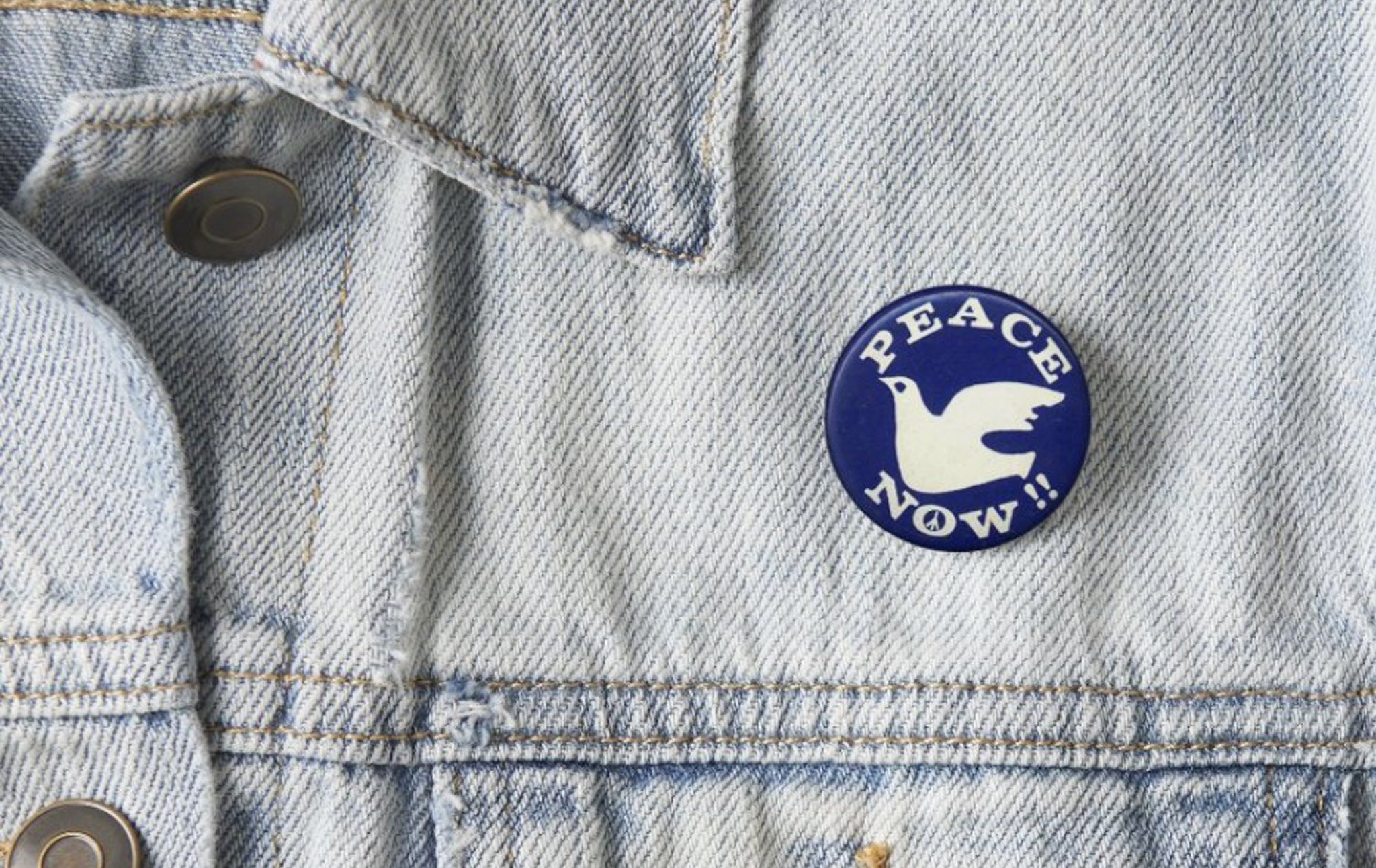
But my friend was not making the “cultural appropriation” critique. They weren’t taking issue with the fact that a keffiyeh worn by a non-Palestinian is culturally inauthentic, but rather suggesting that it is an empty gesture. The term “virtue signaling” is used to describe “an attempt to show other people that you are a good person, for example by expressing opinions that will be acceptable to them, especially on social media.” Another definition says it is “the sharing of one’s point of view on a social or political issue, often on social media, in order to garner praise or acknowledgment of one’s righteousness from others who share that point of view, or to passively rebuke those who do not.” A student presentation on virtue signaling (not an authoritative source, but a good example of how the average person may interpret the term) gives examples of it: “Posting about environmental disasters,” “Wearing shirts with a message,” “Protesting with signs,” “Posting on social media a message.”
One of the difficulties with figuring out whether we are dealing with a case of “virtue signaling” is that the term implies a kind of bad faith: a person is pretending to be expressing a moral point of view because they believe in it, but is in fact expressing that opinion because they are vainly seeking the approval of their peers. Because the contents of an individual’s mind are impossible for an outsider to penetrate, determining what someone is trying to achieve by expressing a sentiment is challenging. We can say, cynically, that someone is wearing a keffiyeh because they want others to approve of them, but the other possibility is that they are wearing it because they believe the Palestinian cause is important. Furthermore, in Western countries, wearing the keffiyeh might carry cache in certain communities, but it’s a rather odd way to seek status in a country where being a pro-Palestine activist comes with major career risk—you may be more likely to be thought a sympathizer of terrorism and get investigated by the federal government. I feel about the same about this claim as I do about the claim that kids become transgender in order to obtain the approval of their peers—believe me, in the U.S., you do not become transgender or pro-Palestinian in order to be popular or successful!
But even if we set aside the “insincerity” component of the definition of virtue signaling, and concede that people might mean it when they post political messages on social media, or wear shirts with messages, we might still critique the ineffectiveness of the action. Wearing a symbol of support for Palestine does not free Palestine. It is an empty gesture, even if not done for egotistical reasons.
Or is it? Certainly, wearing a shirt is no substitute for political organizing. But I think we are too quick to dismiss the importance of “symbolic” actions. Findings in social psychology show that people’s willingness to express their opinion is often conditioned by what they think other people think about the issue. The famous Asch and Milgram experiments showed that people are highly sensitive to the moral stances expressed by those near them. In the Asch experiments, people were unwilling to point out something obvious if those around them were denying it. (If everyone else says one line is shorter than another, but it is longer, a person is more likely to defer to the obviously wrong consensus.) In the Milgram experiments, people were more likely to voice objections to an inhumane experiment if someone else expressed their own objections first. Other work in social psychology shows that groups can suffer from “pluralistic ignorance”—because people haven’t expressed what they think, the group is unaware of what its own opinions are. Seeing others express a point of view can have a powerful effect on whether people express it themselves. In one experiment, “When the group said that trade unions should have more power 72% of the subjects answered ‘yes’ as compared to only 29% when the group said ‘no’ resulting in a difference of 43%-points.”
The moral influence of one’s peers can be powerful, and while it’s true that wearing a T-shirt is not likely to convince anyone individually to change a hardened political stance, visibly demonstrating one’s commitment to a belief, especially when that belief is stigmatized, has a real function. Words like “performative” and “virtue signaling” to describe posting, say, “All Eyes on Rafah” on Instagram downplay the psychological importance of norms. We often make moral judgments in part by looking at what our peers think. If all of my peers think that a war is wrong, the evidence from social psychology suggests that I will be more likely to reconsider my views on the war. But I won’t know my peers’ views on the war unless they find some way to signal that belief to me.

In 1965, five students in Des Moines, Iowa wore black armbands to school to protest the Vietnam War. Several were suspended, launching a free speech case, Tinker v. Des Moines Independent Community School Board, that eventually went to the Supreme Court, establishing an important free speech precedent that protected the right of students in public schools to exercise their First Amendment rights. It can easily be argued that the Tinker kids were merely “virtue signaling,” wearing black armbands to “signal” their superior regard for the victims of U.S. military aggression. And did they stop the war? No, it dragged on for another ten years. But, even setting aside the important legal victory they won, the Tinker kids were making a gesture that was morally important. They were forcing their classmates not to forget the Vietnam war. U.S. wars often slip into the background, undiscussed, their victims made invisible. It is important to force them into public attention. Acts that raise the visibility of the war may be interpreted as an effort to enhance the moral reputation of the person doing them, but they also have a function. They are, as I say, minor when compared to organizing political movements that can actually change the balance of power and shift the policy. But the flight attendant who wears a Palestine pin is not doing something “merely” symbolic. They are refusing to allow Palestine to be forgotten.
Even if someone was making moral gestures for purely selfish reasons, they might still have value. Philosophy professor Evan Westra, in “Virtue Signaling and Moral Progress,” argues that “widespread virtue signaling is not a social ill, and[...] can actually serve as an invaluable instrument for moral change, especially in cases where moral argument alone does not suffice[...] if a group of influential virtue signalers can be convinced that publicly committing to some new normative standard will increase their moral reputations, then they stand to play a valuable role in spreading that new norm throughout the broader population.” If we live in a society with slavery, for instance, then it may help the cause of abolition if people start seeing the rejection of slavery as a personal badge of honor. Even if they do so for the approval of their peers, if the norm they’re promoting is good, meaning the “virtue” being signaled is actually a virtue, it may help push us toward becoming a more virtuous society.

I think there are examples of cases where someone publicly demonstrating their virtue in a symbolic way for purely self-interested reasons is objectionable. The paradigmatic example is surely when in the wake of George Floyd’s murder, Democratic members of congress wore kente cloth and took a knee for a photoshoot. But I think what’s objectionable here is not that they took a knee, but that these are people in positions of power who were taking symbolic action in lieu of actually reining in police violence. It is grotesque to take symbolic actions instead of taking meaningful substantive ones if one is capable of more. But many of the people criticized for virtue signaling are doing what they can within the boundaries of their capabilities. A flight attendant, for instance, cannot introduce a piece of legislation, and perhaps they have no time to organize protests, but they can make a small, powerful gesture.
We should also object to hypocritical virtue signaling. I recently wrote about Democratic senator Cory Booker, who famously gave a 25-hour speech on the Senate floor, and has literally just published a book about how important virtue is. But I note in my article all the ways in which, while Cory Booker puts great effort into publicly proclaiming his commitment to virtue, in his actions he has supported some of the most heinous violence of our time. My problem, however, is not with the virtues he signals, it’s with the actions he takes.
What about something like the black squares people posted on Instagram in support of Black Lives Matter in 2020? This act of protest became somewhat infamous for not actually accomplishing anything. Millions joined, to the point where entire Instagram feeds turned into nothing but black squares, but activists “pointed out that the posts drowned out organizing efforts, and others called out people who posted black squares but had done little to advance the Black Lives Matter cause.” But this example demonstrates what we should really be complaining about: not the “signaling of virtue” but the mere signaling of virtue without a theory of how an actual change is supposed to happen. If the black-squares campaign had been linked to some kind of demand, and there had been a theory for how that action fit with the overall push for that demand, it might have been valuable. I think about it in contrast with something like the 1988 “NO” campaign that opposed Augusto Pinochet’s rule in Chile, encouraging people to vote down his referendum on extending his rule. That campaign used the techniques of marketing and advertising, and certainly involved encouraging individuals to signal where they stood, but with a very clear goal in mind: getting to a majority negative vote on the referendum. (It succeeded.)
So obviously, it’s preferable to have forms of activism that do not involve mere expression of an opinion. I’ve been somewhat critical of the No Kings protests in the United States because they are so lacking in a political program and so amorphous in what they’re actually trying to do, beyond demonstrating that there is widespread opposition to Donald Trump. And yet I’ve also tried to make clear that I think No Kings protests are not enough, not that they’re bad. In fact, I think they’re quite important, precisely because of their “virtue signaling”—they help remind Americans what their values are, demonstrating that there is a critical mass of people who disapprove of the government, and thereby setting the stage for political action.
The black squares on Instagram did not meaningfully advance the movement, but it’s valuable to have some way of finding out how widespread support for Black Lives Matter is. If people realize that all of their friends are concerned about racist police violence, they may be jarred into thinking about the issue. Without a way of signaling what we think to each other, we may not realize that everyone we’re friends with online is actually highly primed to be part of a political movement. Did “All Eyes on Rafah” Instagram posts prevent Rafah from being destroyed? No, but I do think the totality of social media efforts to expose what was being done to Gaza have contributed to the steady erosion of public support for Israel, which is now slowly translating into a shift in politics, with even longtime Israel supporters like Rahm Emanuel calling for the end to U.S. weapons aid.
The use of the word “virtue” is clearly meant as a kind of scoff. But if we understand “virtue” to be a synonym for “morality” and “signal” to mean “expression,” the expression of moral stances is a crucial part of building a more moral society. I worry far more about a society where people do not signal virtue than one in which they do.