The independent socialist speaks out on her Washington congressional race, winning higher wages, and the uselessness of the Democrats.
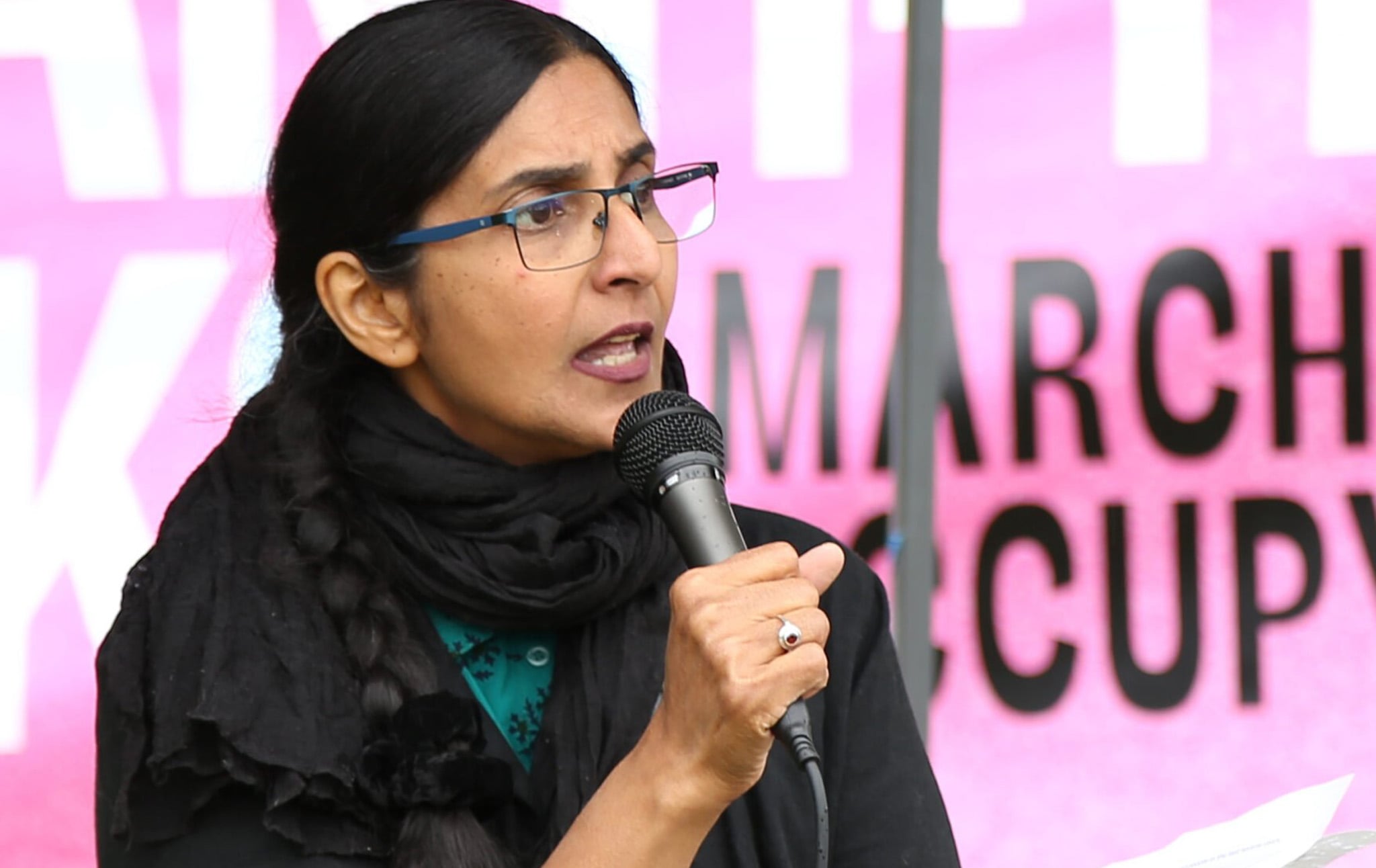
Kshama sawant is an independent socialist who served on the Seattle city council for a decade. She had a key role in winning a $15 minimum wage for the city in 2014, and more recently in the movement to raise it to $21.30, giving Seattle one of the highest wages in the United States. Now, she’s running for the House of Representatives against Adam Smith, a corporate Democrat with a penchant for supporting overseas wars. She joined Current Affairs editor-in-chief Nathan J. Robinson to discuss the state of the race,
Nathan J. Robinson
Let’s talk about Adam Smith first. Why don’t you tell us a little bit about your opponent here in this race?
Kshama Sawant
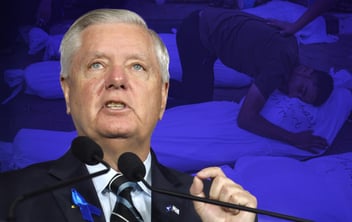
Yes, my main opponent is Adam Smith, as you said. He’s a 29-year incumbent Democrat. He is an arch-Zionist and warmonger. He has voted for every war that has come across his desk. In fact, he is one of the five remaining Democrats who vote in the House who voted for the war in Iraq. He has voted for tens of billions of dollars for the genocide in Gaza, along with votes to ban United Nations food assistance to Gaza, at a time when there were reports of catastrophic levels of mass starvation. He is also one of the Democrats who voted to create ICE and has also voted repeatedly to fund ICE. My campaign did a rough calculation estimate of how much money he has voted for funding ICE, and we came up with nearly $115 billion. Also, he is obviously one of the Democrats who has voted repeatedly for war and now for this ongoing genocide in Gaza, but he is much more villainous than that. He is the ranking member of the House Armed Services Committee, and when the Democrats had a majority in the House under Biden—when they had a majority in both houses—he was the chair of the House Armed Services Committee. If the Democrats take the House again next year, and if he is re-elected, he will be the new chair of the House Armed Services Committee. So he is a general among the warmongers. In December, he co-sponsored a bill to give Trump over $906 billion for war, which is the money Trump has been using this year for the war on Iran. Just last month, in June, he co-sponsored a bill to assign a trillion new dollars for war, and alongside that, a massive expansion for funding for Israel’s weaponry, and also what is called Section 224, which is the fusing of the Israeli and U.S. military. He was celebrating all of that.
Robinson
So, I asked you about him in part because he seems like a very useful example or case study in the pathologies of the Democratic Party. Obviously, there’s a lot of effort by Democrats to portray Donald Trump himself as the problem with American politics. If we got rid of Donald Trump—“No Kings”; get rid of the king, get rid of the autocrat—then we would have democracy again. But you really are running against someone who displays the rot in both parties. So let’s broaden from Smith to talk a little bit about the Democratic Party as a whole and your critiques of it.
Sawant
Yes, absolutely. The relevance of Trump is obviously central, because this is the year of the Trump administration and the majority of the Republicans. And as you alluded to, Nathan, we are constantly bombarded with this idea that if the Democrats just take the House and Senate, if we just elect a Democrat as president, if we just elected one more Democrat...the “one more Democrat” mythology is really damaging, because it obscures the reality that’s unfolding. The “one more Democrat” idea is political theater to obscure what’s really behind the scenes, which is both the Democratic and Republican parties being the political representatives of US capitalism. They are the representatives of the billionaires and multimillionaires, but they have some superficial differences to obscure the idea that regardless of which party you’re voting for, you are ultimately voting for the agenda of the billionaire class, which is why the Democratic establishment fought so hard and used every chicanery they could to rid themselves of Bernie Sanders and what was called the political revolution against the billionaire class. And as we told Bernie, and as I, personally, told Bernie Sanders many times publicly, there is no way that a party of the billionaires is going to allow you to carry out a political revolution against the billionaire class.
And so I think the origination of Trump, the Trumpism phenomenon itself, is a result of the fact that the Democratic Party has also betrayed the working class, and people are disenchanted with both parties. When the Democratic establishment anointed Hillary Clinton as a candidate, there was just mass disgust and anger, because if there ever was an epitome of the Goldman Sachs type of class, it was her. And so, in other words, the Democratic Party opened the way for Donald Trump. And then all the betrayals under Joe Biden opened the way for Trump 2.0. And so the fight against Trump, Trumpism, and the right wing is very much tied to defeating the Democratic Party as well. And just to give you one statistic, when you look at that major bill in 2024, which allocated over $26 billion for the genocide in Gaza, and also the bill that banned United Nations food assistance to Gaza—of course, there were many bills after that—that was the pivotal action that the Democratic Party took under Joe Biden. Remember, the genocide started under Joe Biden’s leadership. And so 173 House Democrats voted in favor of that. The December bill that I talked about, the $906 billion for Trump’s wars, was not only co-sponsored by my main opponent, Adam Smith, but it was also voted for by a majority of Democrats in the House and Senate. That’s the Democratic Party.

Robinson
Are you saying there that you believe it doesn’t matter at all whether Democrats win the Senate or the House in the fall?
Sawant
I think if you look at the track record of both the Democrats and Republicans, the differences are minor enough that it actually raises the question of the need for a new party for the working class. If you look at what the Democratic Party did concretely, they had Democratic presidents, Bill Clinton, Barack Obama, and Joe Biden, and then each time they had two years of majorities in both the House and the Senate. What did they do with those majorities? What did we get in those three eras? We got the complete dismantling of welfare and social assistance; we got the gruesome expansion of the mass incarceration system; we had hundreds of billions of dollars slashed from Medicare and Medicaid under Bill Clinton’s Balanced Budget Act of 1997, which was something that Adam Smith also voted in favor of; and then you had under both Republican Bush and Democrat Obama massive bailouts of the billionaires and multimillionaires of Wall Street who had precipitated the Great Recession in the first place. You saw them getting bailed out and millions of working people being left in the lurch. That was a bipartisan policy.
And then also under Barack Obama, you had military assaults against seven nations, including many nations in the Middle East. Also, you had the historic betrayal, the gatekeeping against any form of universal healthcare, or even a strong public option. And then under Biden, you had a Democratic majority and a Democratic president who refused to repeal Trump’s tax cuts to the rich. They refused to do anything about even something minimal, such as making the enhanced subsidies of Obamacare permanent. Predictably, we all knew that if Trump was re-elected, he and the Republicans were going to go after that, and they did. And they have denuded 22 million more people of any basic healthcare, and young people are not even enrolling in healthcare because they can’t even afford it, and they’re playing Russian roulette with their lives. Above all, what were the main hallmarks of the Biden administration and the Democratic Party? They broke the railroad workers’ strike in 2022; every Democrat in the House, except for Rashida Tlaib, voted for that. And they presided over the launching of the genocide in Gaza. So I would really appeal to your viewers to think about this in the framework of the need for a new party for the working class, not that there aren’t differences between those two parties, but that those differences pale in comparison to the fact that they both, for the most part, represent the agenda of the warmongering billionaire class.
Robinson
If you were elected to Congress, you would be only one person out of 430 people in the House of Representatives. Because we don’t have such a party that’s built this kind of power, and because inevitably in 2026 at least, most people other than yourself would be a member of the Democratic Party or the Republican Party, don’t you worry you would find yourself in a somewhat powerless position within that body? What is the theory for how getting elected to Congress can help build that power, even if you can’t win votes in Congress?
Sawant
Actually, what we have shown on the city council is that building mass power, using your office to build mass movements, is what wins the votes on historic, substantial improvements for the working class. And I’ll come to Congress in a second, because obviously it is a bigger situation; there are hundreds of members in Congress, and the Seattle City Council is a smaller body and a smaller question. But my contention is that fundamentally it’s no different. Fundamentally, I had no less opposition from the billionaire class and from the Democratic Party in Seattle. It was just happening on a smaller scale, but fundamentally, the features were all the same, which is that when I was elected to the city council, I was the only socialist when I was first elected in 2013, and I remained the only socialist, and now it’s all Democrats. At that time, it was me, one socialist, and all others were Democrats. And at that time, I was told the same thing, that it’s good that you were an activist, but now you need to start governing; you’re only one socialist, and you’re not going to be able to win any votes.
In fact, after I took office in January 2014, just a few weeks into my term there, two of the most powerful Democrats on the city council came to my office, sat me down, and told me in very clear terms that it was all well and good that I had rabble-roused my way into city hall, but that city hall worked on their terms, and I was not going to win any minimum wage whatsoever, let alone $15 an hour. Keep in mind $15 an hour was the flagship demand of my campaign in 2013. And they issued that type of threat, and what happened less than six months after I took office? We had won a unanimous vote on the $15-an-hour minimum wage, including those two Democrats who were forced to vote on it. But the strategy of how we won is the crucial part of the story here. We used what I call a class struggle-based fighting strategy. And this is a fundamental difference; this is not a small side point. It’s a fundamental difference between me and virtually every other progressive elected representative, which is that I didn’t go into city hall to help administer the capitalist state just in a slightly nicer way, with a slightly more left-leaning rhetoric, and expecting that I would not win anything because I was one vote. And as a matter of fact, a lot of reporters asked me on day one, "How many votes do you have for $15 an hour?" And I told them very openly, if the vote was held today, you have one vote for $15. That was me. No other Democrat was willing to support it, but when we won it, less than six months later, we had won it with a unanimous vote. The way we won it was by me using my office not to engage in moral persuasion of the Democrats or try to make backroom deals. The way I won it was by launching the 15 Now campaign and having a mass movement of working people put pressure on the Democrats. The kind of pressure is important. It is putting a political price tag on their own political careers because it’s exposing them. Either you vote yes on this, and we win, or you vote no, but you’re exposed as not really a progressive Democrat; you’re just another shill for the big business class. That is how we won. And that strategy can, should, and needs to be absolutely applied in Congress, and that’s what’s missing. So, I’m not going there to be one vote and be a team player, whatever. I’m going there to disrupt business as usual, which is what we need urgently.
Robinson
I think what’s interesting there is what you seem to be saying is you can’t rely on Democrats to fight for working people, but what you can do is alter their calculus of self-interest. Or threaten them. And if you threaten them, you can still change their votes; you can actually get a lot of them to vote the right way for reasons of political self-interest. So even a chamber that is majority Democratic could pass legislation that you believe in if you were able to exert the right kind of external pressure. Is that the theory there?
Sawant
That is not only what I’m saying; I am being emphatic about that. Because there is this mythology that, maybe you can shift a little bit of the rhetoric if you are like me, Kshama Sawant, but then you can’t really win. No, actually, I completely disagree with that because the statistical evidence is completely to the contrary of that idea. So, if we’re going to be engaged in serious political discussion, then you have to look at the evidence. The only substantial wage increases that working people have won in the nation in the last 10 to 12 years have been because of the 15 Now movement we built here in Seattle. Not only have we won the nation’s highest minimum wage, which is now at $21.30 an hour because we won inflation increases—that was a bitter class fight when we won the vote because every Democrat was trying to eliminate inflation increases for workers, and we won that bitter fight. We built the 15 Now movement here and won that historic victory, which was international viral news. The 15 Now campaign got built in many other cities, and tens of millions of workers have won billions of dollars worth of wage increases, which obviously are not enough, given the cost of living crisis, but they are a real lifeline that they have been able to use.
Compare that to the national, or what we call federal, minimum wage. That minimum wage is $7.25 an hour, and the wage for tipped workers is $2.13 an hour. So my contention is, what’s the strategy of not doing what I’m doing—trying to build votes and all of that, all the vote calculation, the electoral math that these Democrats do? What have they won for working class people? If substantive victories for the working class people are the metric, then what have they won compared to what we have won? We also defeated Jeff Bezos to win the Amazon tax, which raises hundreds of millions of dollars for affordable housing every year. And that was also another bitter fight. In fact, in 2018 we won it. Then the Democrats repealed it less than a month later. Then I won my re-election, despite the Amazon money bomb against me in 2019. And then in 2020 we rebuilt the Tax Amazon movement, and then we won a four times larger tax that has survived all kinds of legal challenges from the Chamber of Commerce. Compare that to the Democratic Party; when they had the majority, they did not even repeal Trump’s tax cuts.
And one other pivotal example here, Nathan, is Medicare for All. We have had Medicare for All bills brought forward by the so-called progressive Democrats, in my calculation—I might be underestimating the number—at least 13 times in the last 20 years. That bill has been brought forward in press conferences and whatnot 13 different times. It is used by progressive Democrats to win elections, but not a single time has it been brought to a vote. Do you know why? Because bringing it to a vote is what brings the battle to a head. It exposes individual Democrats to what they’re going to do. It brings up the concrete question: are you going to vote yes or are you going to vote no? We don’t have any Democrat who’s willing to put forward the bill for a vote and go on a national tour and build mass movements to win that fight, even to bring the vote to the floor, which first of all exposes the house speaker when they refuse to bring the vote to the floor. So all of that is not electoral calculus inside the halls of Congress. You bring the battle to the terrain where you can actually empower working people. Working people are not empowered inside the halls of Congress; they’re empowered outside on the streets. And so what we did was a strategically, fundamentally different approach, which is we brought the fight to the street, to the workplaces, empowered working-class people to have a voice and expose the Democrats in their actions, and that is what we will need. And one other thing on Medicare is to look at what’s happening in California. In California, the California version of Medicare, CalCare, has been brought forward many times. They’ve actually tried to bring it to a vote as well. What did the Democrats do? They crushed it four times in the last 10 years. Four times, including earlier this year, and this is despite the California governor being a Democrat and the Democratic Party having a near supermajority in the Senate and Assembly. So I think there is a mountain of evidence that that strategy of trying to get votes doesn’t work, and there’s tremendous evidence that this type of fighting strategy and using your elected office to build movements works.
Robinson
This is a question that’s a little bit more about your theory of change. Obviously you are a socialist, so your ultimate goal is to change the fundamental structure of the economic system, but some of what you’ve had to push for in office are things that are incremental reforms. They are things like a $15 minimum wage; they are things like taxing Amazon. How do you think about how socialists should think about reforms and things that are piecemeal? Medicare for All, for instance, is expanding an existing government program. It is not even moving to a fully socialized healthcare system. So, how, as a socialist, do you think about how to be pragmatic about what things you fight for and when?
Sawant
I think, above all, the reason we have been successful is in winning historic victories, and obviously, as you correctly said, these are victories on the basis of capitalism. So, what we have won is not obviously dismantling capitalism. But yes, I am a revolutionary socialist. I am fighting to overthrow capitalism. That is absolutely accurate, but the truth is that actually winning the most far-reaching reforms under capitalism is very much tied to a revolutionary understanding of capitalism itself. When you have what many on the left understand as a reformist ideology, meaning you are willing to make peace with capitalism, that actually leads you to a very flawed understanding of trying to make peace with the bosses. So in other words, one of the major obstacles to winning any real shift in American society right now is the overwhelming majority of the labor leadership being what I call business unionist, meaning they have made their peace with capitalism, which means they’re not revolutionary and don’t have a revolutionary understanding or acceptance that you have to overthrow capitalism.
Because of that, it ends up being a logic in itself, where if you accept that capitalism is the system that’s going to be in perpetuity, you’re not going to fight for any fundamental change. That logic leads itself almost inevitably—not in every case, but almost inevitably—to the logic of then accepting the rule of the bosses, refusing to fight back against them, refusing to organize militant fights against them, and also making peace with the parties of the bosses. Which is why it’s no surprise that most of the labor leadership being business unionists in the United States also means that they are tied by a thousand threads to the Democratic Party. And so in reality it’s not just our example—obviously I think our example in Seattle is a pivotal example of how it’s actually revolutionaries who make the best fighters for and winners of the most far-reaching reforms under capitalism, but it’s not the only example. If you look at how Canada won its healthcare nationally, first, as I’m sure many of your viewers know, it was won in one province, Saskatchewan, but the reason it was won in Saskatchewan was because they were revolutionary socialists who were pushing for it.
Being a revolutionary, having a revolutionary understanding, actually enables you to understand clearly the class forces that are arrayed against you and against the working class. It also actually brings a fundamentally different, I would say, deeper commitment to the working class struggle, because in my mind being a revolutionary socialist is completely antithetical to being a careerist leader. That is crucial, because if you’re a careerist leader, then it sort of goes hand in hand with making peace with capitalism as well. When you do what I do, you will have a target on your back at all times. No re-election will be a cakewalk. In fact, if your re-election is a cakewalk, you’re not actually fighting for the working class in the way that you need to. And so it’s no surprise that even though I won every election of mine in City Hall, including defeating an attempted recall against me by Trump-supporting billionaire landlords, I won every single election, including the recall.
Every single election was a fight because the billionaire class and the Democratic Party never relented. I was always a thorn in their side. At no point did I make it comfortable for myself and say, “Okay, I fought now, I won $15 an hour, I won the Amazon tax, now I want a comfortable existence. I’m not going to engage in this fight.” That is when the sellout begins, whether you like it or not, even with the best of intentions. And that is why a revolutionary understanding of capitalism also has to, it does not always, but it should, enable you to fight against careerism. That’s very crucial, because careerism on the part of leaders is the death knell of movements. And that’s why Canada’s lesson is also important. It’s far from the only lesson, but it’s a really important lesson of how they won healthcare because of militant mass movements, in part led by revolutionary socialists and also other militant leaders, and that is the way that they won in Saskatchewan. And then it was so popular that people across Canada were clamoring for it, and it was actually the Tories who ended up establishing it nationally, because both parties, the Liberals and the Tories, were so afraid that this third party that they had built, the Co-operative Commonwealth Federation, would win power federally. So it was the actual revolutionaries on the ground forming an actual party for the working class and then building that party to the point that it became a threat to the two parties of the ruling class. It took all of that process to win public healthcare in Canada.
Similarly, with the New Deal in the U.S., it’s not like FDR, as we’re told, gave it out of the goodness of his heart. No, he actually said, “I’m the best friend that capitalism has at this moment,” and what he did was have a brain and understand that the business class had to concede the New Deal, because the pitchforks were coming for them, and those pitchforks were the result of what? It was the general strike in Minneapolis, the auto sit-down strikes; it was all of these strike actions, predominantly, not exclusively, but predominantly led by Marxist revolutionaries. It takes that type of revolutionary understanding to carry out the kind of fight back that is needed to win any significant reforms. So, in my mind, winning significant reforms and building for a revolution are not separate. But there’s yet another thing that’s very important here, which is that the reason we win—we have won these phenomenal victories—is because we have mobilized and organized the masses to fight. We don’t say, “Come and tell city council members this is the right thing to do.” No, we tell them, “Shame on you if you don’t do that, and you need to be thrown out of office.” So, from the ground up on a day-to-day basis, our organizing strategy is confrontational. It is by design. Because capitalism is confrontational. Capitalism is class warfare against the working class. We make this very clear. There is no way to be at peace with the capitalist class, because they are not at peace with you. They are at war against you, and your only choice as the working class is to roll over and accept that warfare, or to go to class war back on them. So, the way we build these struggles from the ground up, they not only help us win the biggest victories that have been won for the American working class, but they also help build the revolutionaries of tomorrow, because it’s the process of going through that struggle that builds revolutionary consciousness. Many young people have joined our struggle because of their actual experience on the ground with us.

Robinson
Let me conclude here by just asking if you could give us a quick introduction to the agenda that you’re running on. We began with your opponent and what he stands for and what he does, but if people go to your site and click “demands,” they can see some of the things that you’re pushing for. And I think when they read that list, it will become quite clear to them what we’re talking about when we’re talking about the difference between your independent socialist candidacy and a Democratic Party candidacy. So introduce us a little bit to the demands that you’re putting forth here.
Sawant
Yes, as we started our conversation with, Adam Smith is the darling of the war profiteers. His biggest funder in 2024 in his election was AIPAC, the prominent Zionist pro-genocide lobby group. And our campaign is completely the opposite of his. We are demanding an end to all military aid to the Israeli state. We’re demanding an end to all weapons and tech, including AI, for genocide and imperialist war. We are fighting for a permanent arms embargo on Israel. We’re fighting for free healthcare for all, funded by taxing the rich, for national rent control, and for a massive expansion of publicly owned, affordable, high-quality housing, also funded by taxing the billionaires and multimillionaires. We’re fighting to stop the data centers and the mass layoffs and counter them with public sector living wage job guarantees, and we’re also fighting to shut down ICE and the detention centers for full citizenship rights for all undocumented immigrants. Obviously, there’s much more to what we’re fighting for. People can look at our full program on our website, KshamaSawant.org, but the point is that these demands are extremely popular, not only in the district, which they are and have seen—we have talked to tens of thousands of people by now in the district—but also nationally. Nationally, poll after poll shows that there’s phenomenal support for all of these demands.
Robinson
Well, we thank you so much for joining us here on Current Affairs today to introduce us to your independent candidacy. We know you are probably not going to be on CNN anytime soon, getting to talk about Adam Smith. So we do what we can here at Current Affairs to elevate independent candidates. The election is next month. I believe the way it works is the top two, and then the general?
Sawant
Yes, it’s what’s called a jungle primary. So, regardless of party affiliation, you’re all in the same primary. So, I’m running as an independent socialist, but I’m still in the same primary with all the other candidates, including Adam Smith. The primary election is August 4. Only the top two vote-getters move to the November election. And if I might just quickly add that is the challenge we’re facing, and we really appreciate you covering this on your program, because, like you said, CNN is not going to cover our campaign. The corporate media has completely invisibilized our campaign, and the reason is that they have seen our track record. I’m not an unknown quantity. They have seen our track record. I was on the Seattle City Council for a decade. They have seen us defeat the establishment and the corporate landlords and the billionaires repeatedly, and they don’t want anything to do with us in Congress. They don’t want someone like me in the US Congress, and that’s why they’re hoping that I won’t make it in the November election. That is why I need everybody’s support here, because on the ground there is tremendous support for our demands and for our campaign and for our track record, but we need to reach as many people as possible to be one of the top two vote getters. It’s less than a month. It’s on August 4. So, please help us spread the word.
Transcript edited by Patrick Farnsworth.