As public institutions are gutted and ecological crises mount, volunteer scientists are creating a model of collective action worth believing in.
On one of the first proper spring days in New York City, I found myself wandering through Broad Channel, a quiet, strikingly conservative neighborhood in Queens, to watch Park Rangers drill bits of plastic into the sides of mating Horseshoe Crabs.
The 10th Annual Horseshoe Crab Festival, organized by the Jamaica Bay-Rockaway Parks Conservancy and the National Park Service (among others), took place in the shadow of one of Robert Moses’ pet-project bridges, along the jagged, brackish edges of one of his uncapped landfills. It was, as many outcroppings into Jamaica Bay are, stunning: fields of wildflowers, vibrant tidal pools, and swaths of scurrying sandpipers ebbed and flowed in stark contrast to the stoic, blue-hued background of Downtown Manhattan, miles away. At Sunset Cove Park, the air buzzed with the sound of kids, thrilled at the opportunity to see and handle living fossils up close, as their parents gathered in small battalions of parked strollers, socializing and crisping under May’s tough sun. Parks Department employees demonstrated Horseshoe Crab banding to groups of onlookers, carefully drilling white, plastic plates with serial numbers into the empty shell space along the side of the crab's shell. The water gleamed, the many volunteers tending their tents glibly smiled and conversed, and the dozens of wild horseshoe crabs we were all gathered to celebrate dragged themselves slowly back towards the bay.
In attendance among the crowd of volunteers were members of the NYC Bird Alliance, alone in their position on the beach and without a tent to save their necks from impending sunburn. Two embalmed victims of window strikes—a Scarlet Tanager and a Dark Eyed Junco, both laid up in plastic caskets—were the center of conversation and one of the reasons I'd made the trip.
In the last year alone, Donald Trump’s second administration has cut billions in federal funding in place for the protection of America’s sprawling, diverse environments. Likewise, he has proudly deregulated industries capable of causing mass extinctions and ecological devastation, lifting Obama-era measures on limiting emissions and directly challenging the Endangered Species Act, in place since 1973. Under DOGE, the Fish and Wildlife Administration was gutted swiftly and thoroughly, leaving the fate of protected species like the Florida manatee to chance. Systemically, the Federal Government’s support of sciences concerned primarily with the protection and preservation of American land, and all things living on it, is being kneecapped.
I’m an avid birder, having spent my entire childhood outdoors chasing new species high in tree canopies and low along water’s edge. I adored, and continue to adore, the grounding exercise of trekking over glacial erratics and through grasslands alike, catching momentary specks of brilliant orange and deep blue gracing the backdrop of a frost-hued morning sky. Now, as an adult, I shuttle myself across New York City’s mass transit system to log migratory warblers, chasing tips from social media or Discord. I know firsthand how difficult it is to look on as Nixon-era wildlife protections are rolled back—to see an entire country turning away from the sciences, knowing what it’ll take to put everything back together when the time finally comes. Hope is a precious resource these days, and it’s one well worth guarding and cultivating. Which is why it’s incredibly important to know of the good being done by Citizen Science: community-led projects that empower the everyman to act as wildlife conservationists, researchers, and countless other roles in any science. Practiced since antiquity and likely to outlast cascading anti-science sentiment, citizen science protects and fosters a sense of community care and curiosity to keep us moving forward, acting as a beacon of hope.
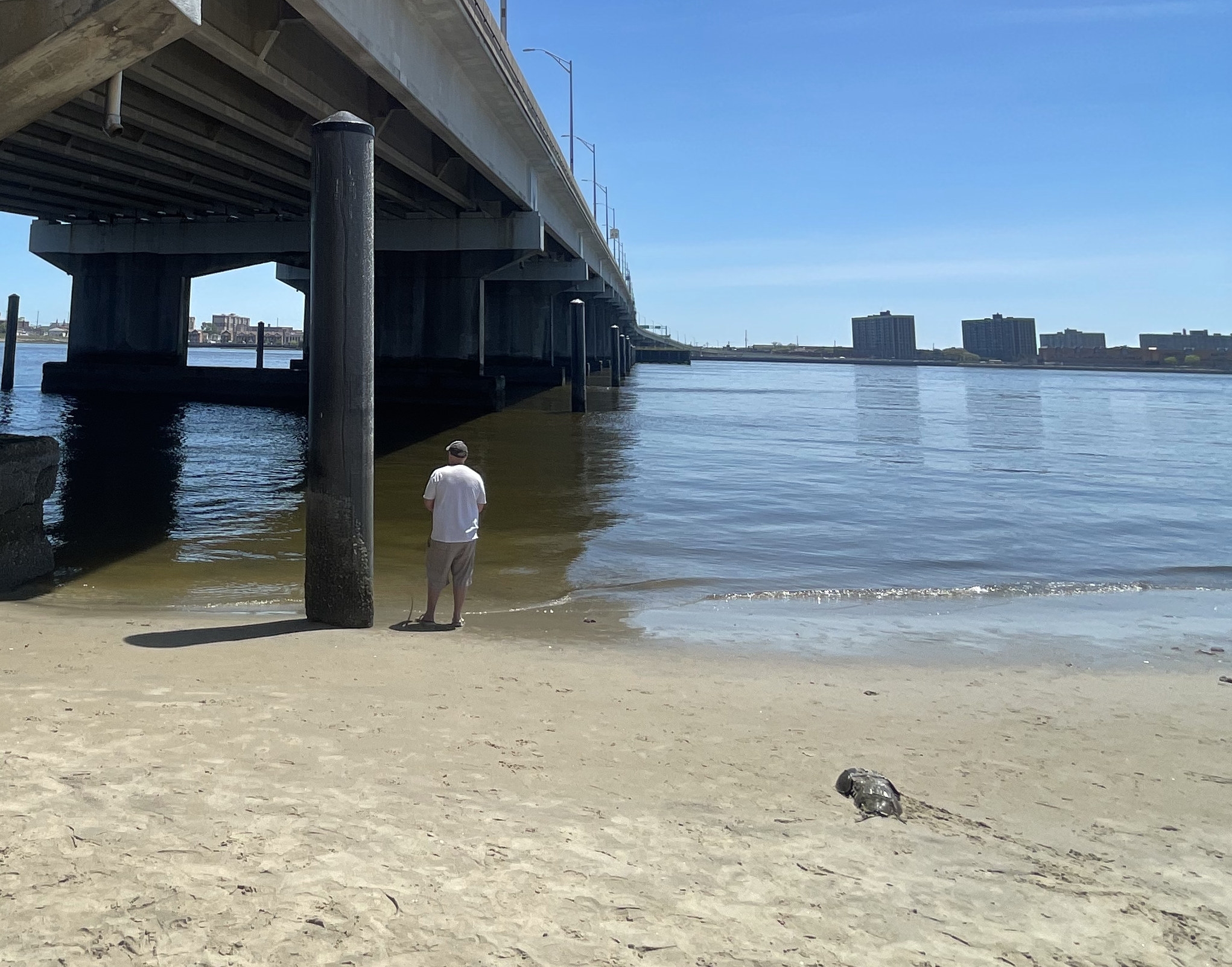 An attendee of the annual Horseshoe Crab Festival looks out across Jamaica Bay, while one of the event's namesake creatures drags its way back to the water. The crabs— considered "one of Earth's oldest residents" according to the National Park Service—come ashore to lay eggs during May and June. (Photo by Jay Tobin.)
At Sunset Cove Park, among the first tents at the Horseshoe Crab Festival was the NYC Plover Project, a non-profit organization committed to protecting the critically endangered Piping Plover as it nests along New York’s ocean beaches during summertime. With a handful of staffers and a sizable army of volunteers, the group collaborates directly with the National Parks Service to clean beaches and report observed data concerning nests. Plovers themselves are the only nesting bird that passes through New York on its yearly migration to still be listed as an endangered species. The Plover Project’s volunteers are actively working to build hospitable shorelines for the yearly gamut of cottonball-sized chicks, and are likewise responsible for outreach projects educating local high schoolers on the importance of wildlife conservation.
“We could not do this work without volunteers. They’re the lifeblood of this organization,” says Chris Allieri, founder of the NYC Plover Project. He explained, by conservative estimates, that volunteers have logged some 18,000 hours to date combing beaches, clearing trash, coordinating observations, and doing in-person outreach and education along New York City’s many ocean beaches.
A few hundred miles north, the Massachusetts Audubon is doing tireless work along the state’s countless rocky coastlines to protect the Plover—and have rigorous, publicly-available data to show for it. The National Audubon Society itself, parent organization to the Massachusetts Audubon, was founded over a century ago by Harriet Hemenway and Minna B. Hall, two concerned citizen scientists determined to combat the then-lucrative practice of birdhunting for hatmaking. Since its founding, the Audubon has stood as one of the foremost authorities on actionable data concerning bird migratory patterns, wetland conservation, and countless other fields. Its annual Christmas Bird Count is among the nation’s oldest ongoing citizen science initiatives.
Citizen science’s background is deeply entwined in the history of science as we know it today. Among the first demonstrable citizen science projects, in which hundreds of enthusiasts contributed measurable evidence to an organized set of data, was Wells W. Cooke’s 1905 work Routes of Bird Migration. Working together across the U.S., birders collated findings to build one of the first studies on patterns in bird migration in history. Following Cooke’s precedent, the U.S. Geological Survey formalized data collection on birds into a federally-funded practice, a testament to the importance of the everyman’s research.
As a similar, century-old citizen science project, the Christmas Bird Count provides a yearly list of observed species—when, where, how many, and where they’re headed—compiled into a massive dataset. This information is used by organizations, governmental and private, to inform migratory patterns, population loss, or unforeseen trends indicative of greater changes in climate. Gathered data is often used to support pushes for legislation, like New York City’s proposed “Lights Out” bill, which would mandate limits to light pollution at night to help minimize the risk of migratory birds colliding with windows, colloquially called window strikes.
Citizen sciences are for much more than just the birds. On my nearly two-hour commute out to Broad Channel, the F train carried me several dozen feet directly over the Gowanus Canal. Among the most polluted waterways in the country, the canal has been designated an Environmental Protection Agency superfund site: a location so polluted the federal government allocates funds specifically towards its cleanup. Now 17 years deep in remediation, the pallid, sickly-green waterway has lost its gleaming technicolor topcoat of miasmic oil thanks to tireless rehabilitation and cleanup efforts. At the center of advocacy for the canal is the Gowanus Dredgers Canoe Club. This group of waterway enthusiasts is as committed to making the canal a safe place to kayak as they are to bringing wildlife back, all the while keeping their own meticulous records of waterway health.

The club was started in 1999, before the site became a Superfund. Since then, the water’s health has improved significantly—but stark reminders of a century’s worth of heavy industrial waste still float to the surface. “In the summer of 2023, the club was participating in City of Water Day, and it was, you know, a hot day,” says Dr. Corinne Brenner, a board member of the Gowanus Dredgers. “There were lots of people out on canoes, and we noticed that there were thousands and thousands of dead fish in the water."
Brenner described a fishkill event brought on by a lack of oxygen in the canal, a common event in deeply polluted waterways and an unfortunate consequence of the EPA’s ongoing cleanup efforts to dredge a hundred years worth of toxic “black mayonnaise:” a sludge of both inorganic and organic pollutants congealed into a paste at the bottom of the canal. Among the EPA’s efforts to aid in excavating the waste is the installation of hundreds of feet of bulkheads—massive, corrugated sheets of steel along the water’s edge, which hold the shoreline in place during the intensive dredging process.
“In the old wooden bulkheads, in the little crevices in the wood, there were all of these colonies of ribbed mussels, but those are largely being taken out in order to do the remediation,” Brenner explains. To offset the loss of habitat, the Dredgers are developing ways of making the new structures more hospitable to mussels.
“[We’ve] done a lot of experimenting in partnership with the Gowanus Canal Conservancy and local schools to see if you can use this particular concrete material to hang in the spaces in the bulkhead to give organisms something to hang on to,” she says. The project has potential to do good on a national level, as the bulkheads used in the Gowanus are the same being used in cleanup sites across the country: “In theory, if we can show it's not damaging the bulkhead and [that] things live on this material, this could be a tool that gets scaled up in other places.”
The Dredgers also host community events encouraging community members to log animals they find along the canal on iNaturalist, a free-to-use app connected to an enormous database of wildlife sightings. The app itself was originally a citizen science passion project made as a final project at UC Berkeley’s School of Information. Eymund Diegel, another board member of the Gowanus Dredgers and Brooklyn’s foremost “forensic geographer,” spoke to me about crowdsourced science like iNaturalist: “It’s one of the primary places you go to if you want to see what kind of ant has migrated where.”
On iNaturalist, members of the public are able to conduct peer reviews and contribute swathes of data to an established data bank. This crowdsourced science has proven instrumental in advancements like the discovery of two new scorpion species and a first-of-its-kind “provisional taxa" pilot program, used to identify existing species of fungi and codify new ones based on their DNA sequences. Even NASA runs on citizen science: it has a collection of 42 such projects, which are open to and entirely contingent on contributions from the public. These track meteoric impacts, map moon topography, and even monitor water quality in environmentally at-risk locales across the country.
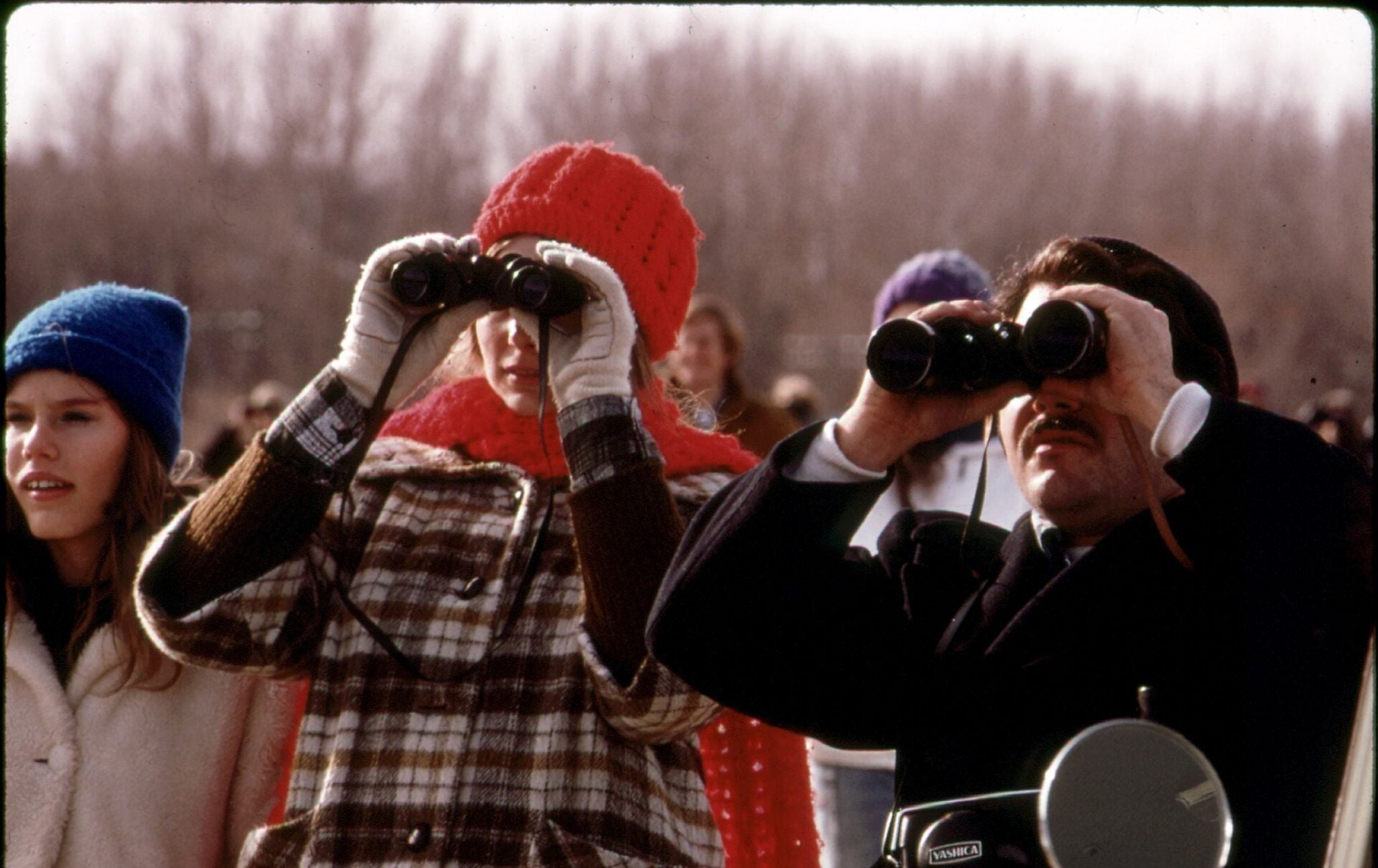
Back on the beach on Broad Channel, I thumbed through a “Birding by Subway” pamphlet and held conversation with some volunteers at the NYC Bird Alliance, their listserve signup sheet nearly carried off by a blustery sea breeze. Mid-conversation, a girl no older than 10, wielding binoculars and an oversized tote, wandered up to the Bird Alliance’s table, eyeing the preserved window strike victims in their plastic cases.
“Are these stuffed?”
The volunteers nodded.
“Did they die in a window strike?”
I eyed the volunteers, all of us sharing the same surprised grin. A volunteer turned to her, “Yes they did, very good! How do you know about window strikes?”
“I learned about them in class. My teacher likes birds.”
In my interview with the Dredgers, Brenner left me with a final thought. “I think the world is interesting and it’s worth knowing about. Being able to be the person who gets the data, who knows the method, who’s doing it themselves, who’s interpreting it themselves—that’s actually incredibly powerful.”