The “internet’s busiest music nerd” weighs in on the economics of streaming platforms, what makes a great album, and whether Zohran Mamdani should rap again.
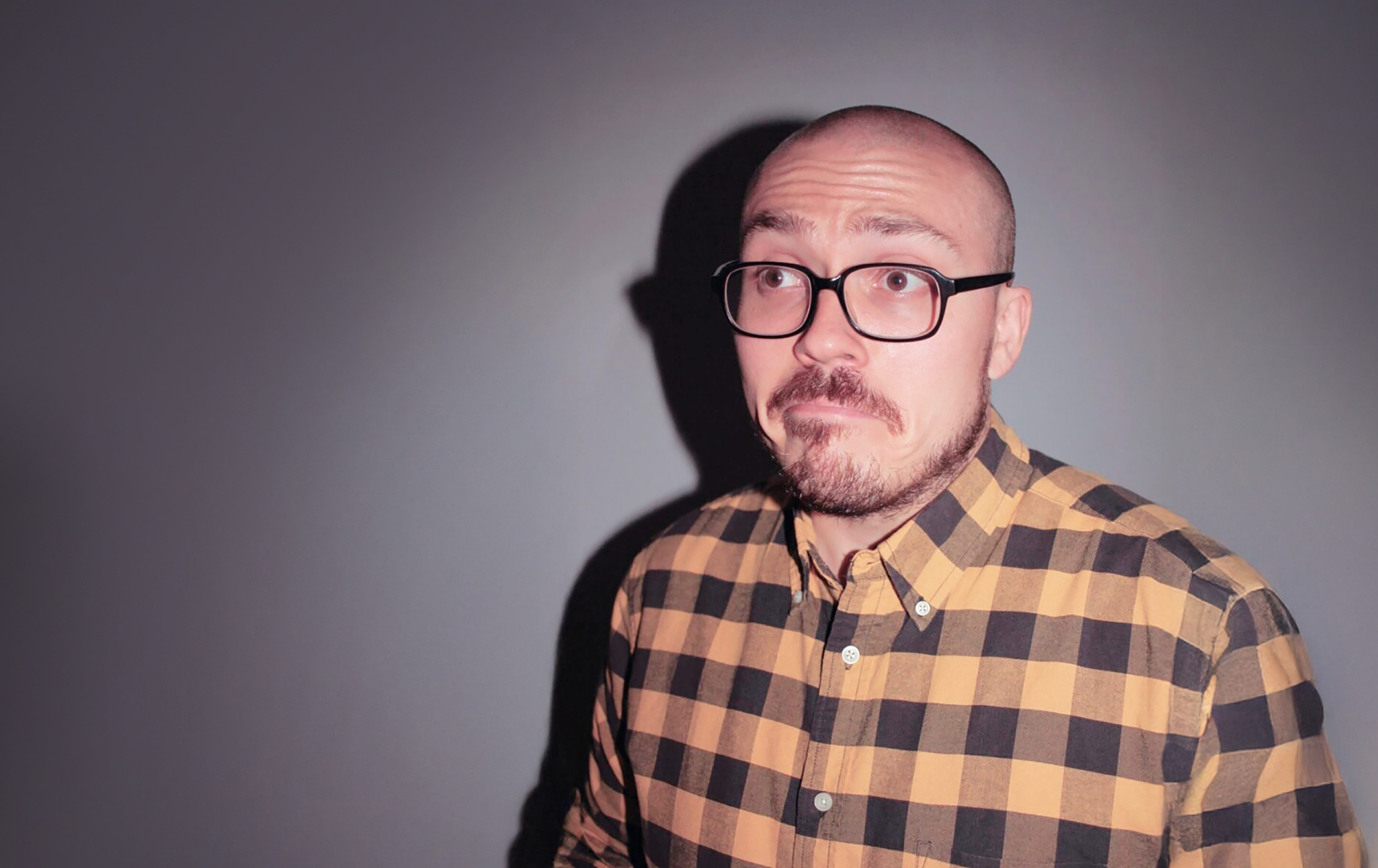
Anthony fantano is the biggest music critic on YouTube, and the self-described “internet’s busiest music nerd.” The New York Times calls him “The Only Music Critic Who Matters (if You’re Under 25),” and his show The Needle Drop has over 3 million subscribers. Fantano is known for his provocative takes, like “AI Music is Evil” and “Taylor Swift is a Coward.” He joined Current Affairs editor-in-chief Nathan J. Robinson and associate editor Alex Skopic to talk about the state of the music industry, how streaming platforms exploit artists, and whether Zohran Mamdani should rap again.
Nathan J. Robinson
I want to start by asking you about criticism itself: about having opinions on music, what right one has to criticize, and the standards one uses to evaluate. You were on Adam Friedland’s show recently, and he was very incensed that you had the audacity to think that you could criticize one of his favorite albums, Abbey Road. He basically said, how dare you even imply that the great Paul McCartney could do anything wrong? Which I think raises an interesting question about what standards you as a critic use. When you do this, are you just saying what you like or what you don’t like? How are you coming to music? What are you telling people when you produce a critique of an album?
Anthony Fantano
I think that’s what most people are doing. I feel like, as far as opinions, whether I say something or critique something or not, the way social media currently works, it’s pretty much open season as far as people just kind of saying what they do and don’t like, and why. I figure if there’s going to be this free-for-all culture of opinions on everything in any direction from anyone, why not at least try to put a little bit more thought into it in terms of background research and trying to reason why certain things do or do not work for us individually? When we’re talking about our preferences, what we like and what we don’t like, let’s try to give ourselves a little bit of pause instead of just kind of letting music happen in the background and not really thinking about why it sounds the way it sounds, or why it messages what it messages and does what it does, and actually think about why it’s making certain emotions come out of us, or why it’s making us feel certain ways.
Robinson
Is there music that you come to and you can appreciate without enjoying? Like, you realize that they are accomplishing what they set out to accomplish, but you personally would never turn it on? What is the connection or gap between your personal level of enjoyment and your evaluation as a critic?
Fantano
Yes, there are most definitely albums, maybe like certain classic records, I would classify in that way. Or albums that I would consider to be almost like, if you are going to consider yourself to be a serious kind of critic or observer of anything or everything in music, and you want to have context for certain stuff, or know where certain ideas might stem from or might have been born out of, I call that stuff homework music. It’s the sort of thing that you have to listen to to be aware of it, to talk about things that kind of spread beyond it. One example that I have used in the past when I’ve made certain reviews of older records is Captain Beefheart’s Trout Mask Replica—classic record, beloved record, critically acclaimed record. And I like Captain Beefheart. There are other Captain Beefheart albums that I like quite a bit, like Doc at the Radar Station. But I don’t really get a lot of enjoyment out of listening to Trout Mask Replica, to be honest. It is not a record that I put on casually just to listen to for the vibes. I own it, and it’s cool, and I respect its place in history and everything. And I have criticized certain things about it that don’t appeal to me personally, but it’s something that you have to listen to and be aware of to understand where it sits in the greater canon of rock music and experimental music. There are other records for sure, but that’s a key example for me. You don’t have to like everything that you have to be aware of.
Robinson
You don’t hold it against Trout Mask Replica that you never, ever want to listen to it?
Fantano
I don’t enjoy it, again. But do I hold it against it in terms of, do I think it’s trash? I think it’s ahead of its time; I think it’s ahead of the curve, but that doesn’t mean I enjoy listening to it. There are certain things, though—here’s the thing. While I don’t enjoy putting it on and listening to it, I can at least respect the fact that it’s ballsy and that it’s trying to do something different and forging its own path. There’s some stuff that I don’t like listening to and feel like the ideas are trite, or maybe it’s not impressive at all at what it’s doing or attempting to do. And also, on top of that, I feel there’s a lot of music that—I can’t exactly formulate the words here, but I’ve been seeing discourse lately with many people kind of trying to separate the idea of music or art being simply entertaining versus stimulating, or I guess gratifying or important to experience for other reasons. Some of my favorite pieces of art that I’ve enjoyed over my life, the emotions or the experiences that inform it, are actually pretty harrowing or dark or disturbing. And while I’m listening to those records or experiencing them, I don’t know if I would always classify my feelings coming out of it as being enjoyment or entertainment. But it’s still something that I’m glad I listened to when I got something out of it emotionally.
Robinson
I want to turn it over to Alex, but I have one more question first. It seems to me, having watched a lot of your videos now, that you place great value on originality and creativity. One of the recurring critiques in your work would be if something is trite or derivative. That seems to weigh very heavily on you—whether someone is trying something new. And it seems to be a major part of your bitter disdain for AI manufactured music, which, by its nature, cannot possibly have this quality of originality or creativity.
Fantano
I’ll say my biggest point of contention with the AI stuff is not even really just the lack of sentient original creativity, but really just the fact that we have not worked out the processes at all in terms of regulating this thing to get the artist whose music is being used to train the stuff paid or compensated or acknowledged in any sort of way. And since this has originally kind of bubbled up as an issue, a lot of these platforms have only figured out ways to do a better job of hiding or obscuring the reference points or the sources that they’re borrowing from to have these AI-generated songs. That, to me, is primary issue number one.
Number two, I do take your point there. It is true. I do kind of harp on this as a criticism on a lot of records. But with that being said, you can only, I guess, push that point so far. Originality only helps an album’s or a piece of music’s case to a point. When I’m listening to a piece of music, or when I’m praising an album, I would hope at least on some level, there is something about it that is maybe not entirely, wholly original, but is at least distinct and recognizable, in the same way that I could recognize one person from another person. Two people are not wholly original or different from the one end of their DNA strand to the next. They’re still people, and they still have average people-like features that we can hit a checkbox on for the most part. But I like to be able to kind of recognize and see a sense of separation of style or distinct characteristics between a lot of the artists that I’m praising. And look, completely original music out there—it is a possibility. But the thing is, I fear that if you were to push an artist, or force an artist, maybe at gunpoint in the studio to make something that’s completely, wholly original, inspired by nothing—nothing whatsoever, not even sort of the traditional parameters by which we judge something to be music, chromatic scale, and so on and so forth—they would probably come out with a mess of complete noise that’s totally unrecognizable or just unfamiliar as music to any of us.
Alex Skopic
Yes, and on that note about originality, we’re getting toward the end of the year. We’re in the middle of November as we record this. And at the end of every year, you do your roundups of the best and the worst albums of the year. I was looking back through some of your reviews from this year, and I was really struck by how a lot of established, really beloved artists have dropped albums this year that were mid, for lack of a better word. I’m looking at Taylor Swift’s The Life of a Showgirl, Lil Wayne’s Tha Carter VI, Ed Sheeran’s Play, Drake’s $ome $exy $ongs 4 U with PartyNextDoor, and even Young Thug’s UY Scuti. And there have been some exceptions; there have been some really great things, like the Clipse’s Let God Sort Em Out, which you gave one of your first 10 out of 10s in a very long time. But why do you think these really well-established artists, at this point in their careers, are starting to put out uninspired stuff, and what are the economic factors behind that in the industry?
Fantano
Honestly, I feel like the reason for all of those records being as mid as they are is really a case-by-case basis. Lil Wayne has been on the downturn creatively, as far as his album quality, for years now. His past couple of projects have not been great. Drake’s project with PartyNextDoor—I didn’t think it was going to be amazing out of the gate just by virtue of the fact that it was going to be a collaboration, and with PartyNextDoor, who I’m not really a huge fan of to begin with. But for him, I think he didn’t really put a whole lot into that project, because I think he sort of used that record as maybe a bit of a transition point, or “I’m going to start putting out music again after this massive beef [with Kendrick Lamar] that kind of ruined my reputation completely for a time, but I’m not going to come back immediately with a whole new solo album, because in the current rap and social climate, it’s going to get absolutely ‘murdalized’ based off the fact that people are feeling very hot and intense off this rivalry still.”
I feel Taylor Swift has her own reasons for finding herself at a weird crossroads creatively. I feel, and there are some other Swifties who agree with me, that she didn’t really give herself a whole lot of time to develop and marinate on this album. She’s been nonstop promoting, touring, recording her past records, and so on and so forth. And even from her descriptions of the process behind this album, it doesn’t really seem like she got the time and space to really sit down, create, and write this record like she has past successful albums. And in retrospect, there is a question of whether going back to Max Martin was necessarily the move, while it did result in a more direct, punchy, poppier record fans have been asking for, because her past couple of records have been just kind of endlessly sprawling. This record, by comparison, doesn’t really seem to have that kind of same Max Martin punch that he did back in the day when she did 1989, nor did it really achieve the glamorous, showy aesthetics that you expect of an album titled The Life of a Showgirl. And then Young Thug, obviously, I think even some of his biggest fans expected that a comeback record post-his very arduous and draining trial period was probably going to be rough around the edges in some way. I think after maybe a bit of a grace period and some time to let his life settle down again, he could come back with a more quality project. I have faith that there’s some potential for that there.
Skopic
Yes, I think Young Thug is kind of the odd one out there. The rest of them, the connective tissue I sort of see with it is that these are all people who have been very famous and very successful for five years, 10 years, longer in Wayne’s case, and at a certain point they have kind of run out of things that are interesting to say. But at the same time, the industry wants their reliable release that’s going to do numbers.
Fantano
There is also a case of artists getting to a certain point of fame, and they plateau, coast, and stop being as hungry or putting out their best work. When I first started reviewing music, I felt like, in a way, we were almost faced with that possibility in the alternative rock world. Because that’s when Radiohead came out with The King of Limbs. It was one of my first super big reviews, and I think I was still living at home when that album came out—my parents’ house. I hadn’t even fully moved on yet. YouTube wasn’t even completely full-time for me at that point. And it was such a controversial record at the time, because it had been a while since Radiohead really came out with a record that disappointed fans in any way. And even to the extent that Hail to the Thief did at the time, in retrospect, there were a lot of people who said, “It’s not their best, but it’s still a pretty good album; it’s not trash. Radiohead has never missed. They never missed. They’ve never missed, except for Pablo Honey, whatever.” So I think a lot of Radiohead fans had that narrative in their heads that they always put out good, quality stuff. Even In Rainbows is getting better with each passing year. And then The King of Limbs comes, and people were just in disbelief. And the thing is, bands and artists get to a certain age, and either they start resting on their laurels and stop putting out good stuff, or they continue to experiment and challenge themselves. And the thing is, there is risk involved with that. Sometimes you go out on a limb, a king of a limb, you try something new, and it doesn’t work out completely. Or you risk it all, and you try something different and weird and a little experimental and left field, like David Bowie with Blackstar, and you fucking knock it out of the park before you pass away.
Robinson
Even in what you’re saying there, it has struck me watching your videos that even though people might know you for being harsh about the things you’re harsh about, putting on the red flannel and giving some real devastating takes, you go out of your way to be fair to things that a lot of us would kind of wave away or not think deserve the level of granular detail and analysis of something that we just think is trash or we don’t like. You were quoted in this New Yorker article recently that was about, have music critics gotten too nice? And you were pointing out that people like Lester Bangs and Robert Christgau would just wave something away in a sentence, and that would be all they needed to say about it. But you, even with the things you don’t like, give credit to the part of the song that you do like. Can you tell me a little bit about why you feel the need to take seriously things that you could just wave away as trash?
Fantano
Look, I think if you are going to be successful at being a critic in any way, shape, or form, you do have to take out the trash sometimes. You’re going to have to crack a few eggs to make an omelet. And look, there are some really super negative reviews that I’ve done, but I feel maybe because I have to listen to so much, I am a little desensitized to some stuff that some people would just say is completely trash. I’m also maybe desensitized to some stuff that some people would say is really impressive, and maybe I think it’s okay, it’s good, it’s pretty good, it’s fine. I reserve the highest amount of vitriol for the worst, worst, worst things that I hear, and the most annoying things that I hear.
What was my most recent zero? I know one that pops up in my head and other people’s heads too is Green Day’s Father of All [Motherfuckers]. Kid Cudi’s Speedin’ Bullet 2 Heaven, a record that, in retrospect, I can appreciate a little bit more just for how Kid Cudi went out on a limb with that one. But it’s still an album that I don’t find myself going back to. But with that being said, look, even if I am going to crap on something and give it a negative review, I feel like anybody can say anything is shit, and not that I feel your opinion is invalid just for simply stating this is shit—again, that’s fine. If you’re just your average person and nobody’s waiting on you to give the most well-thought-out opinion, or you’re not doing it professionally, that’s cool. That’s fine. Me, personally, because of what I do, I feel like I at least need to put in a little bit of effort to justify why I think something is shit while simultaneously showing it, because I know there are a lot of people who blindly react this way, regardless of what I do and say. But I also need to showcase that there are some things here that I can see some good in, or I can see some admirable intent behind.
And my opinion here isn’t just coming from pure, blind hatred of this person. Which, unfortunately, is a bit of a perception or a bit of a reality, as it were, that I feel like I’m constantly contending with people who watch my videos, who sort of, for some reason, seem to think every single time I do a negative review, or even sometimes give something a seven out of 10, it must be out of some kind of personal vendetta I have against that person when I literally don’t know any of these people—I don’t know any of them. There’s no possible way I could have anything personal against any of them in a deep, deep sense, because I’ve never even met a single one of them outside of maybe a spare interview here or there, which, even then, it’s not like we’re going to each other’s birthday parties afterward. And that’s also by design. In my line of work, and with the amount of attention that I’ve gotten that you brought up earlier, a lot of opportunities come up to go to this event—do this, do that, schmooze, whatever—and it’s always nice to sort of get some appreciation from an artist I’ve reviewed, either in a comment or in a message after a review comes out, and respond, be chill about it, and be supportive. That’s all great. But also, I know in my head I can’t bridge a personal gap there, because if I do, it gets to a point where my emotions connected to this person or my thoughts around them are going to influence whether I enjoy their music or how I talk about it.
The relationship I’m more interested in, or I guess am more concerned with most of the time, is my relationship with my audience. As much as it is true, labels and artists do pay attention to a lot of the reviews that I do, even if they pretend that they’re not paying attention. I don’t make my reviews for musicians to watch and get hints from or get perspective from. I make it for music fans who are curious to be like, “What should I listen to? What’s worth my time? I just listened to this record, but I’m not really sure what to think about it. What does this guy think?” That’s the relationship, and that’s the sort of viewer and perspective that I’m trying to write for. Obviously, people with other perspectives who are coming at it from different approaches are welcome to watch anyway. And there are a lot of musicians who watch me just because they’re music fans. They’re like, “I like that record too, or maybe Anthony could put me on to something that I haven’t heard before.” And that’s great as well. But the reviews are not written in mind with like, “Hey, musician whose record I’m reviewing right now, this is for you. Listen to everything that I say because I’m right and you’re wrong, and I’m telling you how you should make your music.” It’s just my opinion. It’s just my thoughts on whether the record was successful or unsuccessful artistically, from my own perspective, as a means of just trying to put music fans on to more music, get passionate about more music, and thinking a little bit more about what it is they like, what it is they don’t like, and why.

Skopic
So another thing I want to ask about is censorship in music, and the climate that we’re looking at with that right now. So we’ve just seen cases in the UK where acts like Kneecap and Bob Vylan have faced criminal charges over things they’ve said about Palestine in songs. Here in the U.S., we’ve got things like Young Thug, who we talked about earlier, who was put on trial in part because of his lyrics. Now he has all these probation restrictions where he can’t mention certain things in songs. And as we are facing three more years of the Trump administration, how worried are you about artists either being censored by the state or self-censoring in advance?
Fantano
I think those things that you just mentioned are threats. I also think they’re not really seen. It’s kind of like an invisible, algorithmic hand that I feel many artists are influenced by in terms of the content that they put into their music and the audience that’s consuming it, and the reception that they see in their music based upon what they’re saying in it as well. There have been people as big as Cardi B and people who are seen in a similar lane to her creatively get constant flak for, hey, why are you only writing songs about shaking ass or doing this or that or whatever? She’s been pretty public about, well, I’ve written love songs and put them on my records before, and when I do, they don’t stream as well. You guys don’t listen to them, you know what I mean. So, I think especially given just how trash the revenue is from streaming generally, the way to be successful is each artist, on the back end of the streaming platforms, are seeing the metrics and the songs that are popular and the songs that aren’t, and they’re seeing what other people’s songs are doing well. And through all these metrics, they’re seeing narratives, and they’re reading the tea leaves in terms of what does well and what doesn’t. Whether they’re an independent artist or a top-tier rapper, because it’s all being fed through these same streaming platform mechanisms, everybody’s got to scale in exactly the same kind of way. It’s putting a lot of different types of music and artists on a similar track, which they were all never meant to compete on.
And I think that also is creating a bit of censorship in a way, creatively and lyrically. Because truth be told, making super political protest music isn’t exactly super profitable. Labels these days, behind the scenes, are definitely pushing and influencing artists to gear their music in a way to where it will be successful on these platforms. I recently did a reaction to a video from Summer Walker where she was talking about having to fight with her label about having songs on her new record that are three and five minutes long. She’s like, I actually would have loved to have done super long songs, maybe even seven minutes long, but I’m already butting heads with my label doing three- and five-minute songs. We see these artists put out these singles repeatedly that are just two minutes long, or maybe even 90 seconds sometimes, because they know the shorter it is, the more it’s going to get played over and over by some of those fans. So, there’s really all kinds of censorship, be it political censorship or artists kind of pulling in the reins in terms of what they want to say, or the types of messages they can communicate, or the kind of sounds they want to explore, just by virtue of being scared. Is this going to do well algorithmically? Is this going to just be buried? Is anybody actually going to engage with this?
I feel like another thing on top of this is a lot of artists, unfortunately, are scared by how murderous and aggressive a lot of the online discourse is about them. Sadly, music fans have been kind of, by platforms like Spotify and the like, propagandized in a way to the point where they’re just fucking obsessed with numbers so deeply that the prevailing narrative of, if it’s popular, it’s good, has kind of won the day again and has become common accepted knowledge, like the rule of thumb. If an artist comes out with a new record, and in their own perception, it flops because it doesn’t do the expected numbers that their last record did or even better, it becomes this whole hilarious thing we’re all pointing and laughing at, and we’re kind of losing faith in you because we only want to listen to stuff that we perceive as successful. Which is why everybody’s botting now and fudging the numbers around their records.
So, look, these kinds of pressures that you’re talking about, they’re real. They’re there. I’m sure they are messing with artists heads or influencing them to make decisions where, maybe creatively, they’re less honest than they would have been in other contexts. And that’s not to even say that music or art that reveals every single thing about a person is inherently good, but you expect at least a little bit of authenticity. I’m sure there are a lot of artists who are reconsidering certain authentic statements because of what kind of flak they could catch, either politically or socially, or whether fans will see their latest song or single as doing well because of whether it’s commercially successful or whatever. So I feel like artists are creatively getting it at all sides right now.
Skopic
With that being the case, with it being the market itself, as much as any intervention into it, what do you think a possible solution looks like? Do we need to go back to buying albums, doing physical media?
Fantano
I feel, in part, that is maybe somewhat of a little tiny solution in terms of at least helping out and engaging with independent artists. I feel if you’re talking about artists who you actually like and care about and are invested in their success, and they’re not on a major label or a smaller independent label, it may be best for you to go out and purchase their album or find some way to support them, in addition to just streaming their music or whatever.
Obviously, I’m not in a position to tell artists everything they need to do, but I feel a thing that would at least—and there are organizations working tirelessly to make this sort of thing happen—be helpful for artists at this point, I think, is if there was some kind of widespread music industry union where they had at least a little bit of leverage to be able to twist the arms of the labels a bit, to either have the kind of rights or benefits that they need to cover their health care costs and a host of other things, and also have the potential leverage to twist the streaming platform’s arms a little bit. For example, there was a time when Taylor Swift, we all remember, was holding out with Spotify and not allowing her music to stream over there because she personally felt she wasn’t making the kind of streaming revenue off the platform that she deserved. She waited it out until the last minute. And she most likely, from what we understand—because obviously, these platforms are not as transparent as they could be—waited until she got the deal she wanted, and very quietly stopped her anti-Spotify campaign and just allowed her music to live over there. However, not every artist is in her position, in terms of being able to bargain with one of the biggest and most successful catalogs in pop music. So for the rest of them, what are they supposed to do? And we have seen in the past, I believe UMG, holding out in terms of having their music play on TikTok for a while until they got the kind of deal that they wanted. But unfortunately, labels, especially given that they are invested in Spotify and in these platforms, and they’re invested in their success and making money as long as the platforms are making money, are not really going to bat for their artists in the way that they should. Artists need their own collective and their own kind of bargaining power to be able to communicate to labels and communicate to these platforms, like, hey, could you at least do a penny per stream? Christ. But that’s my thought on that.
Robinson
Not to accuse you of sounding like a Marxist, Anthony, but I do think that a lot of what you said does conform to the kind of classical Marxist analysis that the culture you get is, in part, a product of the economic system you have and the way the institutions are designed. You’re describing how the system under which music is produced is actually affecting the kind of music that you’re going to hear, the kinds of choices, even creatively, that artists are going to make. And so, if we want better music, we almost have to have a better system or set of incentives under which music is produced.
Fantano
Yes, most definitely, that’s exactly what I’m saying. And the thing is, look, I don’t know if there’s anybody watching this on Current Affairs as a result of just kind of randomly passing by or just being into me and not super politically plugged in, and they hear that terminology and all of a sudden their ass tenses up or whatever, and they’re like, these ideas are Marxist or whatever. I’ll just say there’s an entire spectrum of political thought that involves unions. Obviously, Marxism acknowledges those types of realities in terms of worker exploitation and profit and so on and so forth. But there are entire spectrums of political thought that involve worker bargaining and collective action before you’ve even gotten to the line of Marxism.
There are some people who, even once you’ve accomplished that, are going to look at the state of things and be like, well, this is not Marxist enough. Which is fine. I’m not ragging on anybody’s sort of personal preference in terms of political endpoint. But, yes, I feel, unfortunately, your average American, your average consumer, has been just propagandized to believe in unfettered capitalism and completely—I’m not even going to say uncontrolled—monopolized markets. Because let’s be real here. Again, people proselytize over the great things that capitalism has brought us and markets have brought us, and so on and so forth. But the thing is, going back to even the days of Adam Smith, a key point of their philosophy and understanding of capitalism was that, okay, in order for this to work, though, we cannot be having monopolies ruling every single market that is operating out there in the economy, because once you have that, it’s not capitalism. It’s not capitalism.
Obviously, there are economic and Marxist philosophers who would believe, well, that result is actually the end point of capitalism. If you just allow capitalism to happen, you’re going to get there anyway. And that’s fair, and that’s fine. But the thing is, even the people who were capitalism’s adherents and supporters back during the time of the early years of America were like, okay, this isn’t going to work if monopolies are operating and are happening. And in the music industry, we’re seeing monopolies in every direction. We’re seeing consolidation, and we’re seeing fewer and fewer major labels. When I was a kid, there used to be five or six. Now those have been whittled down and purchased by the remaining three, and they’re taking up more and more of a share of all the music that we’re listening to all the time. So no wonder we have artists who are getting screwed, getting ripped off, and are finding themselves with fewer places to sign to or fewer options in terms of marketing and bargaining, because there’s not a whole lot of shops in town to sell their music to. It’s like, well, if you’re not going to get screwed over by me, get screwed over by one of the other two major labels that you can get signed by, if they’re even interested in you. I think to get to a point, maybe not an end point where everything is equitable and the fairest it can be, but I think a way to sort of maybe at least start taking some baby steps and ease some of the pain and inequity that we’re seeing in the music industry is that we need to break some of these major labels up and force them to be their own separate entities that kind of operate completely independently, like they used to be before they all became subsidiaries of these larger three.
Skopic
So just as we start to wrap up here, we’ve got one very important question for you. Which is, one of the bright spots in the political scene this last little while has been the election of Zohran Mamdani in New York. He’s got a lot of firsts. He’s the first Muslim mayor, the first immigrant mayor. He’s also the first mayor who was a rapper. He had this brief career as Young Cardamom.
Fantano
Yes, I’ve messaged him. I’d be like, “Can I interview you about your rap songs?” And if he’s still down to come on and talk about his rap songs, I’d love to talk to him about his rap songs.
Skopic
So the question we want to ask is, in your professional opinion, as a music critic, was Zohran Mamdani a good rapper, and should he rap in office?
Fantano
In my estimation, I don’t think he was a great rapper, but I do think he was good enough that I think he should do a rap verse at some point. Bill Clinton was on the stage with the sax. Why not? Let Zohran drop a beat and just spit a verse. It could be fun.
But here’s the thing. For many millennial politicians who have been coming up, I feel we’re going to have to contend with the reality that every new politician who’s coming in to get elected to something at some point, in some way, has been a younger, more cringe version of themselves on the internet, either personally or ideologically. And now that they’re at this point where they’re fighting for our votes, hopefully, once they’ve explained it and been fully transparent, they’ve changed. They are either somebody who has grown, or they’ve learned from their ways and try to explain to us how they’ve come to this point where maybe their views have shifted, or maybe they’re not as cringe as they used to be—maybe they’ve boned up on their rap abilities or something like that. Everybody who we’re going to see elected at some point is going to have a terrible blog or a really mid indie band that they were in at one point, or maybe they directed a very awful, impossible-to-sit-through indie film. It’s going to be the case. Or maybe they were a Minecraft streamer and let some “gamer words” fly. I don’t know, but I feel like we’re going to have to kind of wrestle at some point with the fact that, because we are living in a modern tech panopticon, whether we want to or not, everything everybody is doing is being logged or recorded, or there’s a digital paper trail in some way, and we’re going to have to find ways, personally and broadly, to sort of come to a greater understanding that we can’t decide not to elect this guy who maybe has our best intentions in mind just because he made a few cringe rap songs or something.
Skopic
It makes sense.
Robinson
I was not that impressed by his rapping, but I was quite impressed by his music. He has an EP that he did with another guy who incorporates a lot of African and Indian music.
Fantano
The songs themselves are fun.
Robinson
Yes, they’re fun. They’re very cosmopolitan, with a lot of different cultural influences. Just one final question that I have here for you, Anthony Fantano, is, what do you think it takes to make a perfect piece of music? When you look over the things that you’ve really liked, I noticed that actually your most popular reviews are things that you’ve liked—they’re things of you reviewing the yellow shirt, not the red shirt. When you look at those things that have really just blown your mind, what is common across them?
Fantano
It’s kind of case-by-case, but I would say they’re either bold or daring in some way. Some of those records can be quite conceptual and heavy, ambitious, and mind-bending. Maybe feature awe-inspiring instrumentation and production that maybe I haven’t heard done quite as well anywhere else. Those are some thoughts.

Skopic
One last question. As we go into the next year and as we’re looking at all this horrible corporate music industry stuff, what sorts of maybe lesser-known or underground artists are you listening to right now that you think people ought to know about?
Fantano
That’s a good question. Hold on a second. Give me a second while I think about this a little bit. I will say off the bat, I am enjoying the new Chat Pile and Hayden Pedigo record. It is a bit of an experimental, not so easy to digest, rock record with some dazzling finger-picked guitar there in the mix. But it’s actually a really sick listen once you kind of get through the entire thing. Also really enjoying the new record from Guerilla Toss—“Guerilla” as in the kind of soldier. And they’re like this kind of zany post-punky, synth-punky rock band with some big Devo influences and that sort of thing. It’s very cartoony and very oddball, and the songs are quite catchy. Also I’ve been liking the new Gaby Amarantos record. She’s this fantastic, beloved singer from Brazil who came through with this Rock Doido record, which sort of sounds like this massive, almost DJ-set type of thing. The vocals are really strong. The sequencing between all the tracks is seamless and high energy. It’s like being on cocaine. The new Geese record, Getting Killed, which a lot of people have been loving, is one of the best rock records of the year. A big kind of jammy hard rock and classic rock vibes on this one, but done with a kind of rough-around-the-edges, punky indie spirit. Also enjoying the new Maruja record and the new Hives album. Also want to give a shout-out, lastly, to Mon Laferte. She is an artist from Chile who just came through with a record, Femme Fatale, which is this big combination of vocal jazz and Latin jazz with just some stunning vocal performances. Her vocals are just absolutely killer on the record. It’s super powerful, super dramatic, and it’s some of the best singing you’re going to hear this year.
Skopic
So we’ll add those to the list.
Fantano
Please do.
Transcript edited by Patrick Farnsworth.

%20(1).png?width=352&name=obrien-trump%20(1)%20(1).png)